
Intro
Between 3 and 6 months, infants often become more active, visually attentive, and purposeful in their movements. They may gain steadier head control, reach toward interesting objects, bring their hands to midline, grasp toys, and begin experimenting with rolling or supported sitting. Development is variable, so the goal is not to accelerate milestones but to provide safe, repeated opportunities for movement, exploration, and responsive interaction.
The activities below can be incorporated into short periods of alert, contented play. Follow your baby's cues, adapt positions to their abilities, and ask a pediatrician or pediatric physical or occupational therapist for individualized guidance if you have concerns.
Highlights
Short, frequent sessions of awake, supervised floor play support practice without overwhelming an infant.
Tummy time can strengthen the neck, shoulder girdle, trunk, and upper limbs needed for later mobility.
Reaching, grasping, transferring, and releasing objects build early hand-eye coordination and fine motor control.
A baby's interest, comfort, and movement quality matter more than completing a particular activity or reaching a milestone on a schedule.
What motor development may look like from 3 to 6 months
Motor development during this period includes both gross motor skills, which involve larger muscle groups and whole-body control, and fine motor skills, which involve the hands and fingers. Many infants gradually improve their ability to keep the head centered, lift the chest during prone play, move the arms more symmetrically, and visually track objects across their field of view. They may also bring both hands together, touch their knees or feet, swipe at a toy, grasp a rattle, and hold an object briefly.
Some babies begin rolling from tummy to back or back to side during this age range; others need more time. Supported sitting may become more stable as the trunk develops, but independent sitting is not expected at the beginning of the period. Skills emerge through repetition and maturation rather than formal instruction. A preterm infant’s healthcare team may recommend using corrected age for developmental assessment, depending on the clinical context.
Observe the overall pattern rather than judging one isolated performance. A baby may be more coordinated on one day and less interested on another because of fatigue, hunger, illness, or a busy sensory environment.
Build strength with tummy time
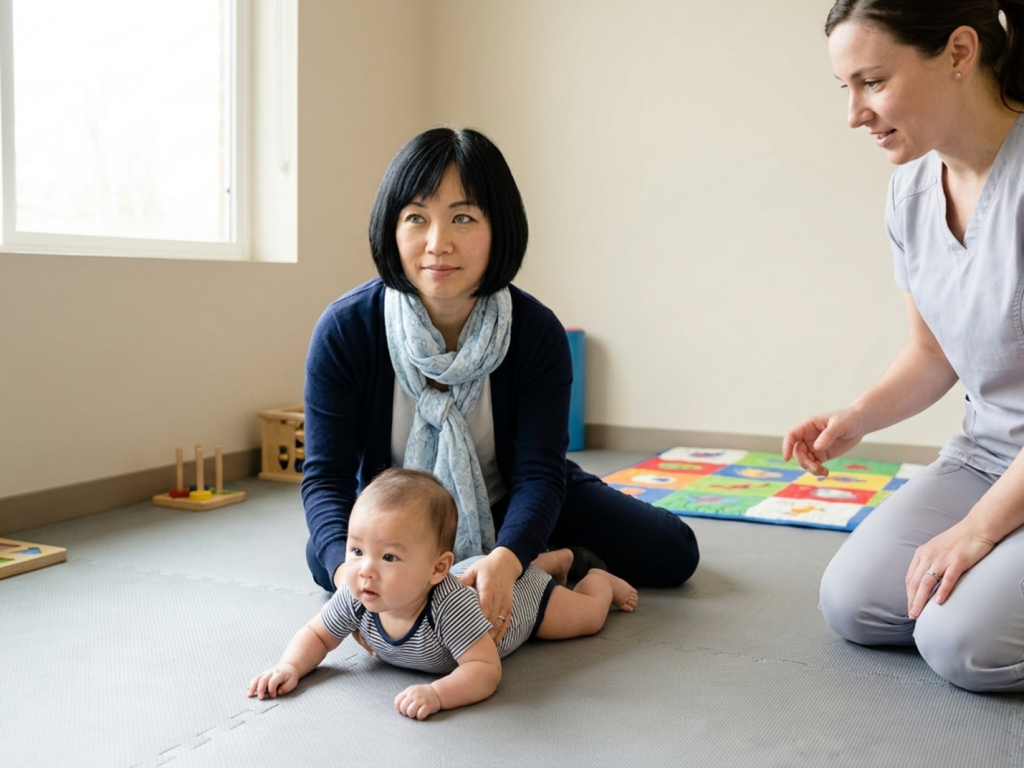
Tummy time is prone positioning while the baby is awake and watched continuously. It gives an infant practice lifting and turning the head, extending the upper trunk, bearing weight through the forearms, and eventually shifting weight from one arm to the other. These components contribute to later rolling, sitting, crawling, and reaching.
Offer supervised tummy time while awake on a firm, clear floor surface. Get down at your baby’s eye level, speak calmly, sing, or place an interesting toy within easy visual range. A rolled towel under the upper chest may provide temporary support for some infants, but positioning should remain comfortable and allow free breathing. You can also place the baby across your lap or chest while you are fully awake and supervising.
Begin or continue with brief sessions and repeat them throughout the day. If your baby becomes frustrated, change position, offer face-to-face contact, or pause and try again later. The aim is accumulated practice, not endurance. Sleep positioning is different: infants should be placed on their backs for sleep, on a separate safe sleep surface, according to current safe-sleep guidance.
Encourage reaching and early hand-eye coordination
Reaching is a useful bridge between visual attention and purposeful movement. During calm floor play, hold a lightweight, age-appropriate toy within your baby’s visual field and allow time for them to look, track, swipe, and attempt to reach. Move the object slowly from the center toward one side, then offer it near the opposite side on another occasion. This encourages head turning, trunk rotation, and use of both arms without forcing a range of motion.
Choose toys that are easy to see and grasp, such as a soft ring, textured cloth toy, or small rattle designed for infants. Present one object at a time so the visual target is clear. As your baby reaches, pause before placing the toy directly into the hand. That small delay gives them an opportunity to initiate the movement. Celebrate effort with your voice and facial expression rather than repeatedly moving the toy out of reach.
Face-to-face interaction is also a motor activity. Your baby’s effort to orient toward your voice or face involves visual tracking, head control, and active movement. Music and sound play can add motivation, especially when you vary the location of your voice or a gentle sound source while keeping the environment calm.
Practice grasping, holding, and releasing
At 3 to 6 months, many infants are learning what their hands can do. They may close the fingers around a toy, hold it against the palm, bring it toward the mouth, shake it, or lose their grip unexpectedly. These actions are normal components of early object exploration. Offer safe items that are too large to swallow, have no detachable parts, and are made for the baby’s age.
Place a toy lightly against the palm or offer it at the midline, where both hands can reach. Once your baby is holding it, allow time for looking, mouthing, shaking, and changing position. You can offer a second object only when the first is no longer being held securely. The activity is not about teaching a mature grasp; it is about giving the hands repeated sensory and motor feedback.
Hand play can be included during routine care. Gently name fingers, touch the palms, or help your baby bring the hands together while singing. These routine care developmental moments support body awareness and social connection without requiring additional equipment. Always supervise mouthing and inspect toys regularly for damage.
Support rolling and body control
Rolling develops through coordinated movement of the head, shoulders, trunk, pelvis, and legs. You can encourage this pattern during awake floor play by placing a toy slightly to the side rather than directly above the face. Your baby may turn the head first, follow with the shoulders, and then shift the trunk or pelvis. Give them time to attempt the movement instead of completing the roll for them.
Another option is to place your baby on the back and bring attention to the feet. Let them look at, touch, or hold their knees and feet. This promotes flexion of the hips and trunk and helps the infant discover the relationship between the upper and lower body. Gentle side-lying play can also make it easier to bring the hands together and reach toward a toy, provided the baby is awake and continuously supervised.
Avoid pulling an infant by the arms or using force to make a roll happen. Do not leave a baby unattended on a bed, sofa, changing surface, or elevated mat. As soon as an infant shows attempts to roll, review the sleep environment and remove loose items from the sleep surface.
Introduce supported sitting thoughtfully
Supported sitting offers a different view of the room and allows practice with head, trunk, and postural control. Sit on the floor with your baby between your legs, supporting the trunk with your hands or body. You may place a toy at chest level so your baby can look, reach, and return the hands toward the body. Keep the period brief and stop if the head repeatedly falls forward, the trunk collapses, or the baby appears uncomfortable.
At this age, many infants still need substantial support. A seat or cushion should not replace active floor play, and a baby should not be left unattended in a position they cannot independently maintain. Supervised changes in position allow the muscles to work in different ways and reduce prolonged pressure on one area of the body.
Use the same principle for all activities: provide an appealing opportunity, stabilize only as much as necessary, and allow your baby to participate. The transition toward sitting is gradual. A 6-month developmental milestones list can help you understand common patterns, but it should not be used as a pass-or-fail test for an individual infant.
Follow cues and make practice safe
Infants learn best when they are alert and regulated. Signs that your baby may be ready include relaxed hands, quiet attention, eye contact, soft vocalizing, and interest in a toy or person. Signs to pause include turning away, yawning, hiccupping, fussing, stiffening, frantic movements, color change, or difficulty maintaining an open airway. A calm reset, feeding, nap, or change of activity may be more helpful than continuing.
Use a firm floor surface, remove choking hazards, and keep small objects, cords, plastic packaging, and unstable furniture out of reach. Stay within arm’s reach during activities involving elevated surfaces, water, or objects placed near the mouth. Active play should happen only when the baby is awake and supervised. Tummy time is not a substitute for back sleeping.
Contact a healthcare professional if you notice persistent asymmetry, marked stiffness or floppiness, loss of a skill previously acquired, difficulty lifting or turning the head, or limited use of one side. These observations do not establish a diagnosis, but they are appropriate reasons to seek professional assessment. Early discussion can clarify whether monitoring, screening, or referral to pediatric therapy is indicated.
Safety and medical cautions
- Use prone play only when your baby is awake and continuously supervised.
- Place your baby on the back for sleep on a separate, firm, uncluttered sleep surface.
- Stop an activity if breathing, color, comfort, or alertness changes.
- Never force a limb, roll, sitting position, or stretch.
- Discuss persistent movement asymmetry, unusual tone, regression, or feeding and breathing concerns with a healthcare professional.
Tools & Assistance
- Firm floor mat or blanket used only on a clear, supervised surface
- Age-appropriate soft rings, rattles, and textured grasping toys
- A rolled towel for temporary supervised positioning support when recommended
- Pediatrician, public health nurse, or pediatric physical or occupational therapist
- Local developmental screening or early intervention service
FAQ
How long should tummy time last at 3 to 6 months?
There is no single duration that suits every infant. Offer several short, comfortable sessions across the day and gradually increase practice as tolerated. Quality, supervision, and regularity are more useful than forcing a long session.
Should I help my baby learn to roll?
You can encourage rolling by placing toys slightly to the side, offering side-lying play, and allowing time for your baby to initiate movement. Avoid pulling the arms or physically forcing the body through a roll.
Is supported sitting appropriate before independent sitting?
Brief, closely supervised supported sitting can provide practice with head and trunk control. Your baby should remain well supported, and supported sitting should complement rather than replace varied floor play.
What if my baby dislikes tummy time?
Try shorter sessions, face-to-face positioning, a toy or mirror placed nearby, or tummy time across your lap or chest while you are awake. Pause when your baby is distressed and try again at another calm time.
When should I ask about motor development?
Ask your pediatrician or another qualified healthcare professional whenever you are concerned, particularly if there is skill loss, persistent asymmetry, unusual stiffness or floppiness, or difficulty controlling the head. Professional assessment is more informative than comparing babies.
Sources
- Children's Wisconsin — Your baby at 3 to 6 months
- NHS Wales — Helping my baby learn through play: 3 to 6 months old
- Raising Children Network — Play ideas for baby movement and physical activity
Disclaimer
This article is for general educational purposes and is not medical advice, diagnosis, or treatment. Consult your pediatrician or another qualified healthcare professional for guidance tailored to your baby.
















Please log in to leave a comment.