
Intro
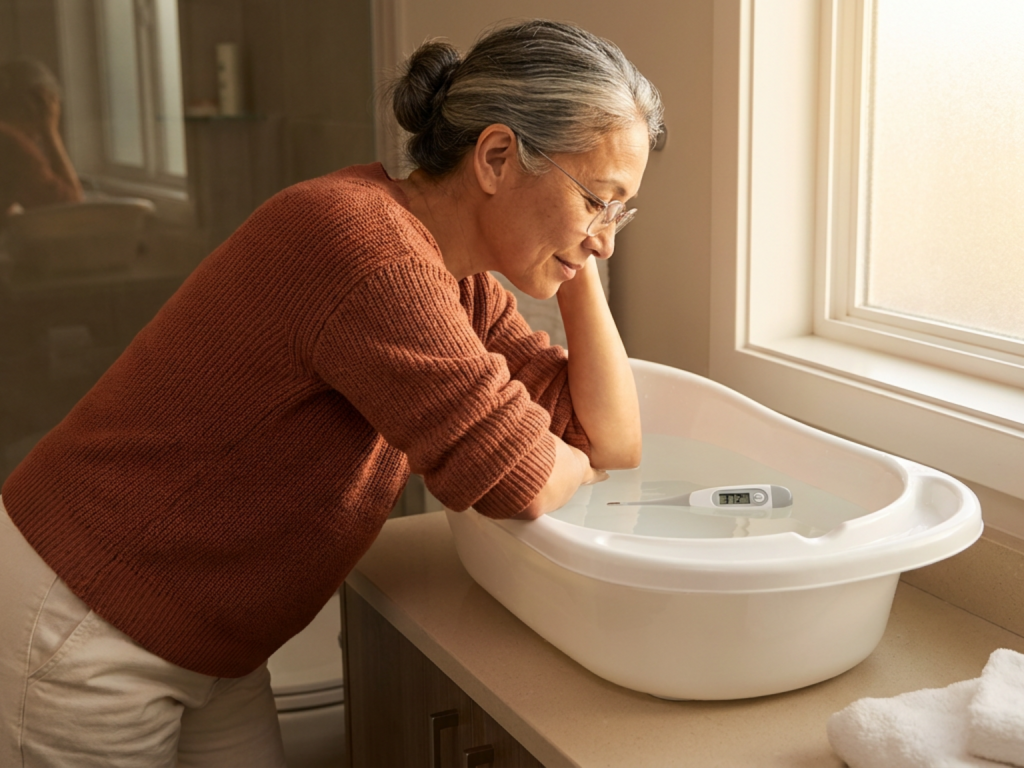
Bath time should feel calm, not stressful. For most babies, the goal is water that is comfortably warm rather than hot: about 37 C to 38 C (99 F to 100 F), and never above 38 C/100 F. That range helps reduce the risk of scalding while still keeping a small baby comfortable.
Because infant skin is delicate and babies can lose heat quickly, safe bath temperature is only one part of the picture. Water should be mixed well, checked before the baby goes in, and paired with close touch supervision and a warm room. If you are ever unsure, pause and ask your pediatric clinician, midwife, or other qualified health professional for individualized advice.
Highlights
A safe baby bath is usually 37 C to 38 C, with 38 C (100 F) as the upper limit cited by major child-health guidance.
Checking the bath with your wrist or elbow is more reliable than using fingers, which can tolerate hotter water.
Mix the water thoroughly before testing so hot spots do not stay hidden near the tap or in one corner of the tub.
A warm room and continuous touch supervision matter as much as the water temperature itself.
Why temperature matters so much
Baby skin is thinner and more sensitive than adult skin, so water that feels pleasantly warm to an adult can still be too hot for an infant. The Cleveland Clinic advises keeping bath water no higher than 100 F, about 38 C, while the Raising Children Network gives a safe range of 37 C to 38 C. That small window is important because a few degrees can meaningfully change comfort and burn risk.
Babies also regulate body temperature less effectively than older children and adults. If the water is too cool, they can lose heat quickly and become unsettled. If it is too hot, they can be injured before anyone notices. The goal is not a lukewarm bath that feels uncertain; it is a consistently warm bath that has been checked carefully and feels body-temperature-like at the point of testing.
How to check bath water safely
Check the water before the baby enters the tub, and mix it well first so the temperature is even throughout. The NHS recommends dipping your elbow into the bath; it should feel similar to body temperature, not hot and not cold. Cleveland Clinic also notes that the wrist or elbow is better than the fingers, because fingers can tolerate hotter water before signaling discomfort.
- Run the bath and stir the water thoroughly.
- Test with a thermometer if you have one, or use your wrist or elbow.
- Do not rely on a quick fingertip touch alone.
- If the skin flushes or the water feels hot, it is too hot.
If you use a thermometer, recheck after stirring, especially when water from the tap has just been added. Hot water can collect in one area of the tub, so a single test is only useful if the bath has been mixed evenly.
Setting up a safer bath environment
The bath room should be warm enough that the baby does not cool down quickly once undressed. The NHS specifically recommends a warm room for this reason. Before you start, gather the towel, clothes, clean diaper, and any washing supplies so you do not need to step away mid-bath.
Touch supervision is the key safety principle: keep a hand on the baby or stay within immediate reach for the entire bath. Do not leave the baby unattended, even for a moment. If you need to answer the phone, open the door, or look for a missing item, lift the baby out of the water first. A bath is safest when every necessary item is ready before the first drop of water goes into the tub.
If your home has very hot tap water, remember that the tap itself can be a hazard. Raising Children Network advises that hot water taps should deliver water at a maximum of 50 C to reduce scald risk. That setting does not replace testing the bath water, but it lowers the chance of a dangerous surprise.
Newborns need extra caution
For newborns, the phrase newborn bath water temperature comes up often because the early weeks can feel especially delicate. If you are still building a safe newborn bathing routine, keep the same 37 C to 38 C range in mind unless your clinician has given you different instructions. Newborns are small, their skin is sensitive, and they can cool off quickly if the room or water is not well managed.
That said, temperature is only one part of newborn bathing safety. A calm setup, a stable hold, and a well-prepared space all reduce stress for both baby and caregiver. If your baby was born early, has a medical condition, or you have been told to use special bathing instructions, ask your healthcare professional for individualized guidance rather than relying on a general rule alone. In those situations, a quick conversation can prevent unnecessary worry and help you feel more confident at bath time.
What to do if the water seems too hot or too cool
If the bath feels too hot, do not place the baby in it. Drain some water, add cooler water, mix thoroughly, and test again. If the bath feels too cool, warm it gradually and recheck. The important point is to avoid guessing. A bath that has not been mixed well can hide hot patches that are not obvious from a quick touch.
After the bath, watch your baby’s color, comfort, and behavior. Mild pinkness can happen, but strong flushing, obvious distress, or any sign of a burn needs prompt medical attention. If you are taking a body reading, temperature after a warm bath can be misleading for a short time, so wait until your baby has settled before interpreting the number. If you are uncertain about a reading or symptoms, consult your clinician rather than trying to interpret it alone.
Common mistakes that raise risk
Most bath temperature problems come from simple, preventable habits. One common mistake is testing the water before it has been mixed well, which can hide a hot layer near the tap. Another is trusting a hand that is already accustomed to warm water, since fingers are less sensitive than the wrist or elbow. A third is assuming that water that felt fine a few minutes ago is still fine after more hot water has been added.
A safer routine is repetitive and boring in the best way: fill the bath, mix it, test it, keep the room warm, and stay with the baby from start to finish. If you find yourself second-guessing the bath every time, consider using a thermometer consistently. Some caregivers feel more relaxed when they can verify the water numerically instead of depending only on sensation. If concerns continue, ask a pediatric clinician or health visitor to review your routine with you.
Safety warnings
- Never leave a baby alone in the bath, even briefly.
- Do not use water that feels hot on your elbow or wrist.
- Do not trust a bath until the water has been mixed thoroughly.
- Stop the bath and seek care if you suspect a burn or see blistering.
- If your baby is persistently distressed, unusually red, or hard to settle after the bath, ask a clinician for advice.
Tools & Assistance
- A digital bath thermometer for quick, repeatable checks.
- Your wrist or elbow as a backup temperature test when a thermometer is not available.
- Your pediatrician, midwife, or health visitor for individualized bathing advice.
- A warm bathroom setup with towel, clothes, and diaper prepared in advance.
FAQ
What is the best bath temperature for a baby?
Most guidance points to 37 C to 38 C, with 38 C (100 F) as the upper limit.
Is the elbow test really reliable?
Yes, it is a practical check because the elbow should feel like body temperature, not hot.
Do I need a thermometer?
Not always, but it can make checking easier and more consistent, especially if you feel uncertain.
Should the bathroom be warm too?
Yes. A warm room helps prevent your baby from cooling too quickly during and after the bath.
What should I do if the water seems too hot?
Do not use it as is. Adjust the water, mix it well, and test again before bathing the baby.
Sources
- Cleveland Clinic — Baby's Bath Temperature and Other Safety Tips
- NHS — Bathing your baby - Best Start in Life
- Raising Children Network — Safe bath temperature: babies and children
Disclaimer
This article is for general information only and does not replace advice from your pediatrician, midwife, or other qualified clinician. If you suspect a burn, your baby seems unwell, or you are unsure about bath safety, seek medical advice promptly.













Please log in to leave a comment.