
Intro
It is completely understandable to worry that exercise might somehow "set off" labor early, especially if you have had a scare, a complicated pregnancy, or conflicting advice from friends and online sources. The short evidence-based answer is reassuring: for most people with uncomplicated pregnancies, workouts do not appear to cause preterm labor or increase the risk of preterm birth.
That said, pregnancy is not one-size-fits-all. The type of exercise, your baseline health, pregnancy history, and current symptoms all matter. If you are having contractions, bleeding, fluid leakage, pelvic pain, or you have been told you are at higher obstetric risk, it is important to review exercise plans with your obstetric clinician or midwife rather than relying on general advice alone.
Highlights
For uncomplicated pregnancies, available evidence does not show that exercise raises the risk of preterm birth.
Aerobic activity performed at moderate volumes has been studied repeatedly and is generally not linked to shorter gestation.
Exercise can create normal sensations such as an increased heart rate, uterine tightening, or fatigue without meaning labor has started.
The main issue is not that workouts usually trigger preterm labor, but that some symptoms during exercise deserve prompt medical review.
A personalized plan matters more than a universal rule, especially if you have a high-risk pregnancy or prior preterm birth.
What the research actually shows
The strongest summary of the evidence is reassuring. A systematic review and meta-analysis found that in normal-weight women with singleton, uncomplicated pregnancies, aerobic exercise for about 35 to 90 minutes, 3 to 4 times per week was not associated with an increased risk of preterm birth or shorter gestation. In other words, the best available research does not support the idea that routine exercise causes preterm labor in otherwise low-risk pregnancies.
This conclusion is consistent with the broader obstetric literature. An evidence review from the International Olympic Committee expert group reported no evidence that leisure-time physical activity or exercise increases the risk of preterm birth in the general obstetric population. That does not mean every type of training is identical or that every pregnancy is the same, but it does mean the common fear that a reasonable workout will “make the baby come early” is not supported by current evidence.
Why exercise usually does not trigger labor
Labor is a complex biologic process involving uterine activation, cervical ripening, inflammatory signaling, and hormonal changes. A workout temporarily raises maternal heart rate, ventilation, and body temperature, but those physiologic responses are not the same as the pathway that leads to preterm labor. In most pregnancies, the uterus is not mechanically “provoked” into labor by ordinary movement, walking, cycling, swimming, or strength training done at a sensible intensity.
People often notice uterine tightening during or after activity and assume it means labor has begun. Mild, irregular tightening can happen with exertion, dehydration, a full bladder, or simply increased awareness of the abdomen. By itself, that is not the same as regular contractions before 37 weeks, which are more concerning because they may signal cervical change. The distinction matters: the presence of a sensation does not automatically mean a workout caused preterm labor.
Research also suggests exercise has few effects on preterm birth rates overall and may decrease or have no effect on labor duration in some populations. That is one reason many obstetric guidelines support continued physical activity when pregnancy is uncomplicated.
When exercise deserves extra caution
Even though exercise is usually safe, there are important exceptions. If you have a history of preterm labor, cervical insufficiency, placenta previa, significant bleeding, ruptured membranes, or another complication, your clinician may recommend specific limits or temporary rest. The same is true if you are carrying multiples or if you develop new symptoms that make activity unsafe.
Intensity also matters. Moderate-intensity exercise in pregnancy is the level most commonly studied, while extremely intense training, prolonged overheating, or activities with a high fall risk may require modification. Athletes and highly active patients may need a more individualized plan because training load, recovery, hydration, and heat exposure can differ substantially from casual fitness routines. This is one reason it can help to ask about pregnancy strength training modifications rather than assuming a pre-pregnancy program still fits perfectly.
If a workout happens in a hot environment or involves heat-stress-prone workouts, caution increases further. Dehydration and overheating are not the same as preterm labor, but they can make you feel unwell and may complicate safe exercise. If you are unsure whether your routine fits your pregnancy, a brief discussion with your obstetric team is worthwhile.
Which workouts are usually better tolerated
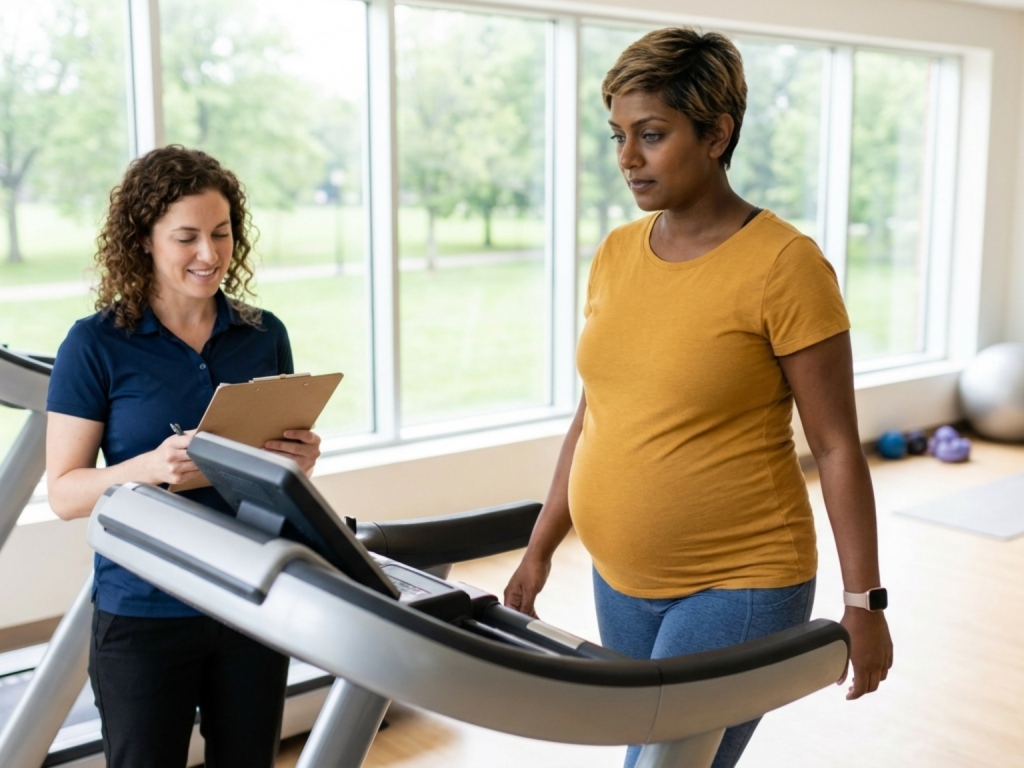
For many pregnant people, the most comfortable options are low-impact and rhythmical. Examples include brisk walking, stationary cycling, swimming, water aerobics, and many forms of prenatal yoga or supervised resistance training. These activities can support cardiovascular fitness, muscular endurance, mood, and sleep without placing excessive strain on joints or balance.
The key is not to chase a specific performance goal but to match the workout to your body and pregnancy stage. A conversation about pregnancy-safe cardio options can be useful if you are trying to stay active without aggravating pelvic discomfort or fatigue. Some people do well with short bouts spread through the day; others prefer a single moderate session. Both can be reasonable if they leave you recovered, hydrated, and symptom-free.
It is also normal for exercise tolerance to change across trimesters. What feels easy in early pregnancy may feel much harder later on because of blood volume changes, ligament laxity, shifting balance, and the mechanical effects of a growing uterus. Adjusting pace, duration, and posture is often the best solution.
Warning signs that should not be ignored
The most important safety question is not “Did my workout cause preterm labor?” but “Are my symptoms concerning enough to stop and get checked?” If you develop regular contractions before 37 weeks, vaginal bleeding, fluid leakage, persistent abdominal pain, marked pelvic pressure, dizziness, chest pain, or shortness of breath that does not improve with rest, contact your maternity care team promptly. Those symptoms need medical assessment regardless of whether they started during a workout.
Exercise-related warning signs also include a racing or irregular heartbeat that feels abnormal for you, headache with visual changes, or calf pain and swelling. Dehydration can mimic or worsen discomfort, so stopping to rest, rehydrate, and cool down is appropriate even when the problem turns out to be minor. A practical rule is that symptoms that are new, worsening, or not resolving after rest should be taken seriously.
If you are ever uncertain, it is safer to pause exercise and ask for guidance than to push through. That approach protects both maternal reassurance and fetal well-being.
How to think about exercise if you are worried
If you are anxious because you have felt contractions, have a history of pregnancy complications, or have heard that exercise might “bring on” labor, you are not overreacting. Many people become more protective during pregnancy, and that instinct is understandable. The reassuring part is that the evidence does not support routine exercise as a cause of preterm labor in uncomplicated pregnancies.
A good next step is to review your specific situation with your obstetric clinician or midwife. They can help you decide whether your current activity level is appropriate, whether you need modifications, and whether any symptoms deserve testing or monitoring. If you have been given restrictions, ask for clear examples of what is and is not allowed so the advice is practical rather than vague.
For most patients, the goal is not to stop moving. It is to stay active in a way that is safe, sustainable, and responsive to your body. That usually means listening to symptoms, avoiding extremes, and treating concerning contractions as a medical issue rather than an exercise question.
Seek urgent medical advice if you notice
- Regular contractions before 37 weeks that do not settle with rest
- Vaginal bleeding, fluid leakage, or a sudden gush of fluid
- Severe pelvic pressure, cramping, or persistent abdominal pain
- Dizziness, chest pain, fainting, or shortness of breath that feels unusual
- Reduced fetal movement later in pregnancy, especially if it is new for you
Tools & Assistance
- Obstetric clinician or midwife appointment for personalized exercise guidance
- Prenatal exercise class or physical therapist familiar with pregnancy modifications
- Written symptom diary to track contractions, hydration, and activity triggers
- Urgent maternity triage or labor and delivery assessment if warning signs appear
FAQ
Can a normal workout start preterm labor?
In an uncomplicated pregnancy, current evidence does not show that routine exercise causes preterm labor or increases preterm birth risk.
Why do I feel tightening after exercise?
Mild tightening can happen with exertion, dehydration, or a full bladder and does not automatically mean labor has started.
Should I stop exercising if I have a high-risk pregnancy?
Not necessarily, but your exercise plan should be individualized by your obstetric clinician because some conditions require limits or modification.
What exercise intensity is usually considered reasonable?
Moderate-intensity exercise is the level most often supported in pregnancy research, but the right target depends on your health status and symptoms.
Sources
- PubMed / National Library of Medicine — Exercise during pregnancy in normal-weight women and risk of preterm birth: a systematic review and meta-analysis
- British Journal of Sports Medicine — Exercise and pregnancy in recreational and elite athletes: 2016 evidence summary from the IOC expert group meeting, Lausanne. Part 2—the effect of exercise on the fetus, labour and birth
- University of Utah Health — Can Exercise Cause Preterm Labor?
Disclaimer
This article is for general education only and is not a substitute for individualized medical care. If you have contractions, bleeding, fluid leakage, or other concerning symptoms, contact your obstetric clinician promptly.
















Please log in to leave a comment.