
Intro
Choosing between disposable and cloth diapers in the US can feel surprisingly loaded. Parents are often balancing skin health, sleep, cost, childcare rules, laundry access, environmental concerns, and the simple reality that babies can go through many diapers in a day.
There is no single best choice for every family. The most supportive approach is to compare the evidence and the day-to-day logistics, then choose the diapering system that keeps your baby comfortable and your household functioning.
Highlights
Disposable diapers are typically more absorbent and convenient, which can be especially helpful overnight, during travel, or when caregivers need a simple system.
Cloth diapers can reduce household trash and may cost less over time, but they require more frequent changes, washing, drying, and careful fit management.
Available evidence does not show a simple, universal skin-health advantage for either diaper type; diaper dermatitis prevention depends heavily on moisture control, stool contact time, gentle cleansing, and barrier protection.
Environmental comparisons are complex because they depend on water use, energy source, laundering habits, raw materials, manufacturing, and landfill waste.
Many US families use a hybrid approach, such as cloth at home and disposables for daycare, overnight, illness, or travel.
The basic difference: absorbency versus reusability
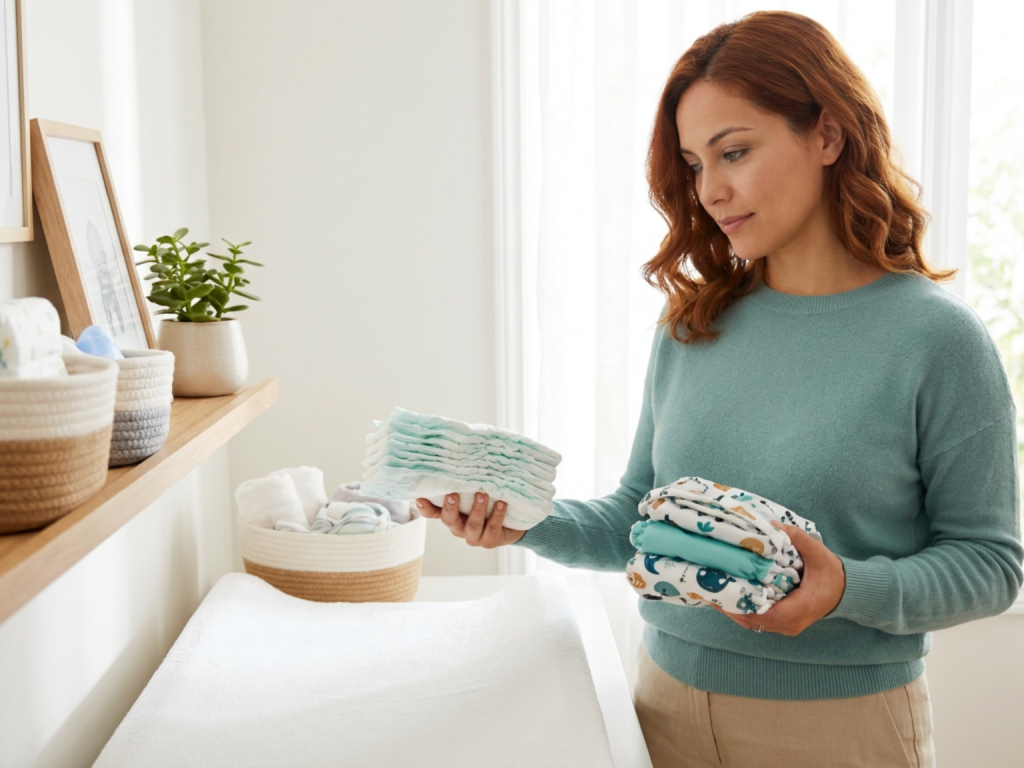
Disposable diapers are single-use products designed to absorb urine quickly and lock moisture away from the skin. Most include a moisture-wicking top sheet, absorbent core, elastic leg cuffs, and adhesive tabs. Their main advantage is convenience: after a diaper change, the soiled diaper is thrown away. This is why many families prefer disposables during the newborn period, after a cesarean or difficult delivery, on road trips, at night, or when multiple caregivers are involved.
Cloth diapers are reusable systems. They may be prefolds with covers, fitted diapers, pocket diapers, all-in-ones, or hybrids with washable covers and inserts. They require rinsing or storage of soiled diapers, then a wash routine that removes urine, stool residue, bacteria, and detergent buildup. Their main advantage is reusability. Families who have reliable laundry access, enough drying space, and predictable routines may find cloth diapering manageable and satisfying.
In practice, the decision is not purely medical or purely environmental. It is a caregiving workflow decision. A diaper that is theoretically ideal but cannot be changed, washed, or stocked reliably may not protect the baby’s skin well. Conversely, a well-fitted, frequently changed diaper of either type can be part of excellent diaper hygiene basics.
Skin health and diaper dermatitis: what matters most
Diaper dermatitis is an irritant contact dermatitis caused by prolonged exposure to moisture, friction, urine, fecal enzymes, and changes in skin pH. Secondary Candida involvement can occur, especially in warm, moist skin folds or after antibiotic exposure. Parents often hear strong claims that one diaper type prevents rash, but the evidence is more nuanced. A recent exploratory study reported similar diaper-dermatitis frequency among infants using cloth and disposable diapers, suggesting that family practices and hygiene patterns matter as much as the diaper category itself.
Disposable diapers are usually more absorbent, which can reduce wetness against the skin. This can be useful overnight or when a caregiver cannot change the diaper immediately. Cloth diapers may feel wet sooner and often require more frequent diaper changes. That early wetness cue can be helpful for some caregivers, but it can also become burdensome if the baby stools frequently or if laundry supplies are limited.
For diaper dermatitis prevention, the core principles are consistent: change promptly after stool, avoid excessive rubbing, allow the skin to dry, use fragrance-free products when irritation is present, and consider a barrier ointment for diaper rash when skin is red or exposed to frequent stooling. If a rash is severe, bleeding, blistering, spreading beyond the diaper area, associated with fever, or not improving with routine care, a pediatric clinician should evaluate it rather than assuming it is simply a diaper problem.
Cost in the US: upfront price, ongoing purchases, and hidden labor
Disposable diapers spread cost over time. Families buy boxes repeatedly, and the total expense depends on brand, baby size, frequency of changes, overnight diapers, subscription discounts, and whether a baby needs sensitive-skin or specialty products. The predictable advantage is that no washing equipment, diaper pail system for reusable diapers, or drying routine is required.
Cloth diapers usually cost more upfront. A full stash may include diapers or inserts, waterproof covers, wet bags, liners, a diaper sprayer, cloth-safe creams, and possibly extra laundry supplies. Over months to years, cloth can become less expensive, especially if used for more than one child or bought secondhand in good condition. However, the savings are not automatic. Water, electricity, gas, detergent, wear on a washer and dryer, and paid diaper-laundry services can narrow the gap.
Hidden labor also matters. Cloth diapering requires sorting, prewashing or rinsing according to the system, main washing, drying, stuffing pocket diapers, and troubleshooting odors or leaks. That labor may be acceptable, or even worth it, for one family and completely unrealistic for another. In the US, where parental leave, childcare support, and laundry access vary widely, the most economical option on paper may not be the most sustainable option for the household.
Environmental tradeoffs: less trash is not the whole story
Many parents consider cloth because disposable diapers contribute to household solid waste and landfill volume. That concern is reasonable. A baby may use thousands of diapers before toilet training, and disposables are not typically recycled through standard municipal systems. For families trying to reduce visible waste, cloth can feel like a tangible step.
However, environmental comparisons require a life-cycle perspective. Disposable diapers use raw materials, manufacturing energy, transportation, packaging, and landfill disposal. Cloth diapers use cotton, bamboo, hemp, microfiber, or synthetic covers, plus repeated water, detergent, and energy for washing and drying. The environmental impact of cloth improves when diapers are washed in full loads, air-dried when practical, reused for multiple children, and not washed with excessive hot water or repeated unnecessary cycles.
Because US households differ in water scarcity, electricity source, washer efficiency, climate, and housing type, there is no universal environmental winner. A family in an apartment with coin-operated dryers may face a different calculation than a family with an efficient washer and sunny outdoor drying space. The most honest answer is that disposables create more solid waste, while cloth shifts much of the burden toward laundering resources and caregiver time.
Fit, leaks, overnight use, and childcare realities
Fit is a major determinant of success. A diaper should sit snugly at the waist and legs without leaving deep marks, and the absorbent area should be positioned to match the baby’s anatomy and sleep position. Leaks can happen with either type: disposables may leak if the size is wrong or the absorbent core is overloaded; cloth may leak if inserts are saturated, repelling fluid because of detergent buildup, or gapping at the legs.
Overnight diapering is where many families prefer disposables, even if they use cloth during the day. Longer sleep stretches increase urine volume in the diaper, and disposable overnight products may keep the skin drier. Cloth can work overnight with boosted absorbency, but the result can be bulky and may require experimentation.
Childcare policies are another US-specific factor. Some daycares accept cloth diapers only if they are preassembled and stored in sealed wet bags; others allow only disposables for sanitation or workflow reasons. Before investing in a full cloth stash, families using daycare should ask about written diapering policies. Grandparents, babysitters, and nursery staff may also need clear instructions. If a system is too complicated, missed steps can lead to leaks, prolonged stool contact, or skin irritation.
Laundry and infection-control considerations for cloth diapers
Cloth diapers can be used safely, but the wash routine needs to be adequate. Urine contains urea and other compounds that can contribute to ammonia odor if diapers sit too long or are not washed thoroughly. Stool contains organisms and enzymes that should be removed effectively. Families generally need enough diapers to avoid stretching the interval between washes too far, plus a storage method that limits odor and moisture problems.
A practical routine usually separates diaper laundry from delicate household laundry, uses an appropriate detergent amount, and ensures diapers are fully rinsed and dried. Underwashing can leave residue and odor; overwashing or harsh additives can damage fabrics and irritate skin. Bleach, sanitizing cycles, or stripping routines may sometimes be discussed in cloth diaper communities, but families should be cautious with strong chemicals and follow manufacturer guidance. If a baby has recurrent fungal rash, open skin, diarrhea, or a contagious gastrointestinal illness, ask a pediatric clinician whether any temporary diapering or laundry changes are appropriate.
For families without in-home laundry, cloth diapering may be difficult. A diaper service can reduce labor, but availability and cost vary by region. Disposable diapers may be the safer practical choice if clean storage, reliable washing, and complete drying cannot be maintained.
How to choose: a flexible decision framework
The most realistic diaper plan is the one that works during ordinary days and stressful days. Consider your baby’s skin, your budget, your laundry access, your sleep needs, and your childcare setting. If you are curious about cloth, you do not need to buy a full stash immediately. Trying a small set at home can show whether the fit, washing routine, and caregiver tolerance are realistic.
A hybrid plan is common and valid. Some families use cloth during daytime at home and disposables overnight. Others use disposables during the newborn stage, then transition to cloth when feeding and sleep become more predictable. Some switch back temporarily during diarrhea, travel, antibiotic-associated rash, or periods of caregiver exhaustion.
It is also reasonable to choose disposables exclusively. Convenience can be a health-supporting feature when it helps caregivers change diapers promptly, sleep more, and avoid overwhelming laundry. It is equally reasonable to choose cloth if your household can maintain a clean, consistent routine. The goal is not moral purity; the goal is a clean, dry, well-fitting diaper and a caregiver system that can be sustained.
When to seek medical advice
- Call a pediatric clinician if diaper-area skin is bleeding, blistering, ulcerated, very swollen, or rapidly worsening.
- Seek care for rash with fever, poor feeding, lethargy, or signs of dehydration such as fewer wet diapers.
- Persistent diaper dermatitis that does not improve with routine care may need evaluation for Candida, bacterial infection, allergy, or another condition.
- Do not apply steroid, antifungal, antibiotic, or medicated creams to an infant unless directed by a healthcare professional.
- If diarrhea is frequent or prolonged, ask a clinician how to protect the skin and monitor hydration.
Tools & Assistance
- Keep a one-week diaper log noting leaks, rash, stool frequency, and overnight performance.
- Ask daycare or babysitters about diaper policies before purchasing a full cloth system.
- Use a small trial stash or sample pack before committing to one diaper type.
- Discuss persistent diaper rash with your pediatrician or family clinician.
- Check local diaper banks, WIC-adjacent community programs, or mutual aid groups if diaper costs are difficult.
FAQ
Are cloth diapers healthier for a baby’s skin?
Not automatically. Skin outcomes depend on fit, moisture exposure, stool contact time, cleansing, and change frequency. Either type can work well with consistent care.
Are disposable diapers better overnight?
Often, yes. Many disposable diapers are highly absorbent and can keep moisture away from the skin longer, but some cloth systems work overnight with extra absorbency.
Can I use both cloth and disposable diapers?
Yes. A hybrid approach is common, such as cloth at home and disposables for daycare, travel, illness, or nighttime.
Do cloth diapers always save money?
They can, especially if reused for more than one child, but savings depend on upfront cost, laundry expenses, diaper service fees, and how much caregiver time is available.
What should I do if my baby gets diaper rash?
Change diapers promptly, cleanse gently, dry the area, and consider a barrier ointment. If the rash is severe, persistent, or associated with illness, contact a pediatric clinician.
Sources
- PubMed Central (PMC) — Cloth versus disposable diapers: an exploratory study on family habits
- HealthyChildren.org, American Academy of Pediatrics — Diapers: Disposable or Cloth?
- The Bump — Cloth Diapers vs. Disposable Diapers: Pros and Cons
Disclaimer
This article is for informational purposes only and does not replace medical advice. Consult a pediatrician or qualified healthcare professional for concerns about rash, infection, hydration, or your baby’s individual needs.














Please log in to leave a comment.