
Intro
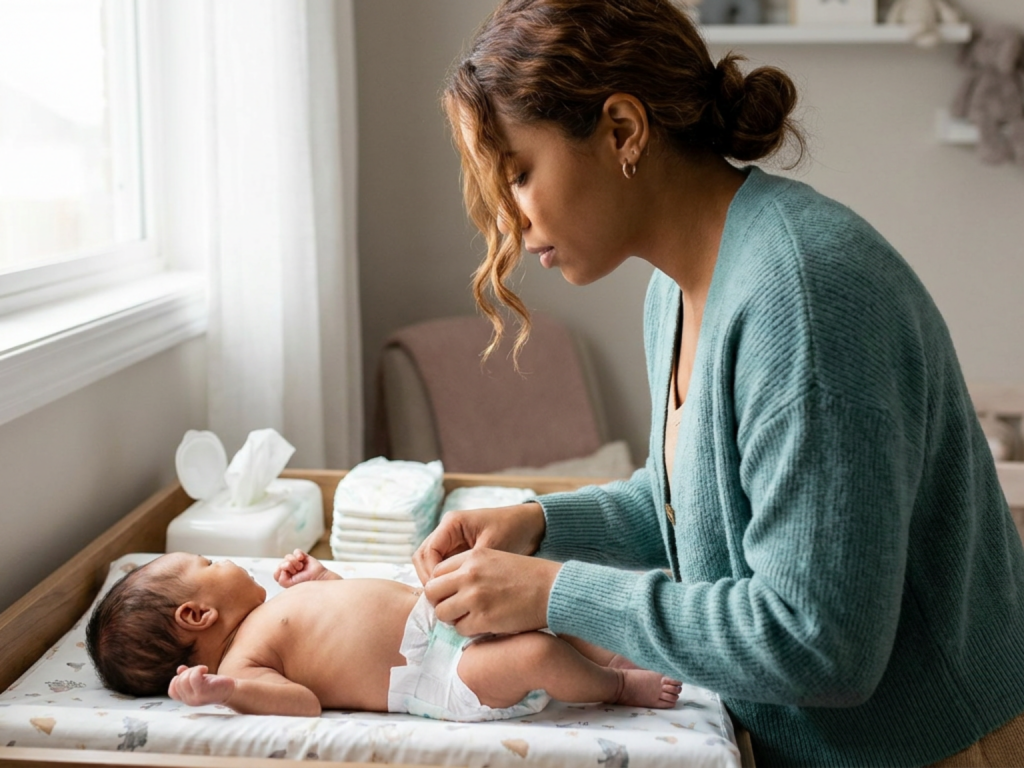
In the newborn period, diaper changes are more than a housekeeping task. They are part comfort care, part skin protection, and part clinical observation. Many parents feel surprised by how often they are changing diapers, especially during the first weeks when feeding, sleep, and output repeat in short cycles around the clock.
A practical expectation is that many newborns need about 8–12 diaper changes in 24 hours, often every 2–3 hours during the day and promptly after a bowel movement. The exact number varies with age, feeding pattern, stool frequency, urine output, diaper type, and your baby’s skin. If diaper output seems unusually low, stools change dramatically, or your baby appears unwell, contact your pediatrician, midwife, or other qualified healthcare professional.
Highlights
Most newborns need frequent diaper changes, commonly about 8–12 times per day in the early weeks.
Change a diaper promptly after stool to reduce prolonged skin contact with irritants and lower the risk of diaper dermatitis.
Wet diapers are useful clinical clues, especially when paired with feeding behavior, weight checks, and newborn jaundice assessment.
Overnight changes can often be minimized if the diaper is only wet, the baby is comfortable, and there are no skin concerns, but stool should still be changed promptly.
The usual newborn diaper-change range
For many healthy newborns, a realistic benchmark is 8–12 diaper changes per 24 hours. Some babies will be at the lower end, especially in the first days after birth, while others seem to need a fresh diaper almost every feeding. A common daytime rhythm is every 2–3 hours, which often aligns with feeding intervals. This is a guide, not a strict rule.
During the first week, the pattern evolves quickly. In the first 24–48 hours, urine and stool output may be lower while colostrum intake is small but concentrated. As milk volume increases or formula intake becomes established, wet diapers generally become more frequent. First-week diaper output is often one of the simplest ways caregivers and clinicians monitor whether intake is moving in the right direction.
It is also normal for bowel frequency to vary. Some newborns stool after many feeds, while others stool less often once feeding is established. The key is the overall clinical picture: urine output, stool transition, feeding vigor, alertness, weight trajectory, and signs such as jaundice or dehydration.
When to change immediately
Stool is the clearest reason to change a newborn diaper right away. Newborn stool contains digestive enzymes and bile pigments, and prolonged contact can irritate the stratum corneum, the outer barrier layer of the skin. Frequent loose stools can increase the risk of irritant diaper dermatitis, especially if the skin is already macerated from moisture.
- Change promptly after every bowel movement.
- Change when the diaper feels heavy, saturated, or leaking.
- Change if the baby’s skin looks red, raw, weepy, or unusually sensitive.
- Change after spit-up, urine leakage, or stool leakage soils clothing or bedding.
- Change before a longer sleep stretch if the diaper is already wet or the skin is irritated.
For urine alone, there is usually more flexibility. Modern disposable diapers and many absorbent cloth systems pull moisture away from the skin. Still, newborn skin is thin and easily disrupted, so a very wet diaper should not stay on for long periods.
Daytime routine: every 2–3 hours is a practical starting point
During the day, many families find that checking or changing the diaper with feeds creates a predictable rhythm. If the diaper is wet, change it before or after feeding depending on what keeps your baby calmer. Some sleepy newborns feed better after a diaper change because the stimulation helps them wake. Other babies become upset if changed while hungry and do better when fed first.
Newborn diaper output tracking can be especially helpful during the first month, after discharge from the hospital or birth center, and during any period of feeding concern. You do not need a complicated system. A note on your phone, a paper log, or a newborn-care app can record wet diapers, stools, feeding times, and any concerns such as very sleepy feeds or decreased interest in feeding.
Try to treat the number as a trend rather than a single isolated datapoint. One slightly quieter diaper interval may not be concerning if the baby feeds well and then has several wet diapers later. However, persistently fewer wet diapers, very concentrated urine, poor feeding, lethargy, or worsening jaundice deserves prompt clinical guidance.
Nighttime diaper changes and newborn sleep
Night care is a balance between hygiene, feeding, and preserving sleep for both baby and caregivers. If a newborn has only urinated, the diaper is not very full, and the skin is healthy, it may be reasonable to wait until the next waking. If there is stool, leakage, rash, or discomfort, change the diaper even at night.
Many families pair nighttime diapering with feeds. For example, change before feeding if the baby needs help waking, or change between breasts or midway through a bottle if the baby tends to fall asleep too quickly. This approach can be useful when waking a newborn for feeds has been recommended by a clinician because of age, weight, jaundice, prematurity, or feeding concerns.
Keep nighttime changes boring and safe: dim light, minimal talking, supplies within reach, and the baby always on a safe surface. After feeding and changing, return the baby to a safe sleep space. Safe sleep basics for newborn care still apply during exhausted overnight routines: place the baby on the back, on a firm flat surface, without loose bedding or soft objects.
What diaper output can tell you medically
Diapers provide useful, noninvasive information. Urine output reflects hydration and kidney perfusion in a broad sense, while stool output reflects feeding, gastrointestinal transition, and bile pigment clearance. In the first days, stool typically changes from sticky black-green meconium to greenish transitional stool and then to yellow, seedy stool in many breastfed babies. Formula-fed babies may have stools that are tan, yellow, or brown and more paste-like.
Clinicians interpret diaper output in context. A baby with adequate wet diapers, good tone, effective feeding, and appropriate weight follow-up is different from a baby with low output, increasing sleepiness, poor latch or low intake, dry mucous membranes, or deepening jaundice. Newborn jaundice and poor feeding can overlap, because inadequate intake may reduce stooling and bilirubin elimination.
Do not use diaper counts alone to diagnose a problem. They are a signal to observe more closely and, when needed, call your healthcare team. This is especially important for premature infants, babies with medical conditions, babies who had a complicated birth, and babies who are not yet back to birth weight.
Protecting newborn skin during frequent changes
Frequent diapering can be gentle when the skin barrier is protected. Use clean hands, a soft wipe or damp cloth, and pat rather than scrub. For urine-only diapers, especially at night, some clinicians and caregivers prefer minimal wiping to avoid unnecessary friction. For stool, clean all skin folds carefully and dry the area before closing the new diaper.
A barrier ointment containing petrolatum or zinc oxide may help protect skin that is red, exposed to frequent stooling, or prone to irritation. This is general skin-care information, not a prescription; ask your baby’s clinician which product is appropriate if your newborn is premature, has open skin, has a suspected yeast rash, or has a complex medical history.
Fit matters too. A diaper that is too tight can create friction and pressure marks; one that is too loose can leak and keep stool against the skin. The waistband should sit comfortably below the umbilical stump if it has not fallen off yet, and the leg cuffs should be pulled out gently to reduce leaks.
When the pattern changes
Diaper frequency changes as newborns grow. By several weeks of age, some babies continue stooling frequently, while others stool less often. Wet diapers should remain regular, but the total number of changes may gradually decrease as sleep stretches lengthen and bowel habits mature. This is one reason newborn schedule first month explained resources often include diaper patterns alongside feeding and sleep.
Call your baby’s healthcare professional if you notice a sustained drop in wet diapers, no urine for a concerning interval, signs of dehydration, blood in stool, black stool after meconium should have passed, pale or white stool, fever, marked lethargy, repeated vomiting, or a rash that is severe, blistering, spreading, or not improving with basic care. If your instincts say your baby is not acting right, it is appropriate to seek advice.
Parents often worry about doing diaper changes perfectly. You do not need perfection. You need a responsive pattern: check often, change stool promptly, protect the skin, observe output, and ask for help early when something seems off.
Call for medical advice urgently if
- Your newborn has a sustained decrease in wet diapers or no urine for an unusually long interval.
- Your baby is difficult to wake, feeds poorly, has dry mouth, or seems weak or floppy.
- Stool is white, gray, bloody, or black after the meconium transition period.
- Jaundice appears to worsen, especially with poor feeding or low diaper output.
- Diaper rash is severe, blistering, bleeding, spreading, or associated with fever.
Tools & Assistance
- A simple diaper and feeding log for the first week
- A well-stocked changing station with diapers, wipes, barrier ointment, and spare clothes
- Your pediatrician, midwife, lactation consultant, or family doctor for individualized guidance
- A safe, flat changing surface with one hand kept on the baby at all times
- After-hours nurse line or urgent care pathway for concerning output or illness signs
FAQ
How often should I change a newborn diaper?
Many newborns need about 8–12 diaper changes per day, often every 2–3 hours during the day and immediately after stool. Your baby’s age, feeding, skin, and output pattern can change the exact number.
Do I need to change every wet diaper overnight?
Not always. If the diaper is only mildly wet, the baby is comfortable, and the skin is healthy, you may be able to wait until the next waking. Stool, leaks, rash, or discomfort should be addressed promptly.
Is it normal for a newborn to poop after every feeding?
It can be normal, especially in early weeks. Frequent stooling is less concerning when the baby feeds well, has good wet diapers, and is otherwise well. Ask a clinician if stools are bloody, white, very watery with illness signs, or accompanied by poor feeding.
Should I wake my newborn just to change a diaper?
Usually not for a mildly wet diaper, unless your clinician has advised waking for feeds or the diaper is very wet. Wake or change promptly for stool, leakage, significant rash, or if diapering is part of a medically recommended feeding plan.
Can too many diaper changes irritate the skin?
Friction from repeated wiping can irritate newborn skin. Use gentle cleaning, pat dry, avoid scrubbing, and consider a clinician-approved barrier ointment if redness develops or stools are frequent.
Sources
- Full Feedings — How Often to Change a Baby Diaper: Newborns, Overnight & When to Worry
- Texas Diaper Bank — How Often Should You Change Baby's Diaper?
- Judes Family — How Often Should I Change My Baby's Diaper?
Disclaimer
This article is for general educational purposes only and does not replace medical evaluation, diagnosis, or treatment. Contact your baby’s healthcare professional for concerns about feeding, hydration, stool, rash, jaundice, fever, or behavior.
















Please log in to leave a comment.