
Intro
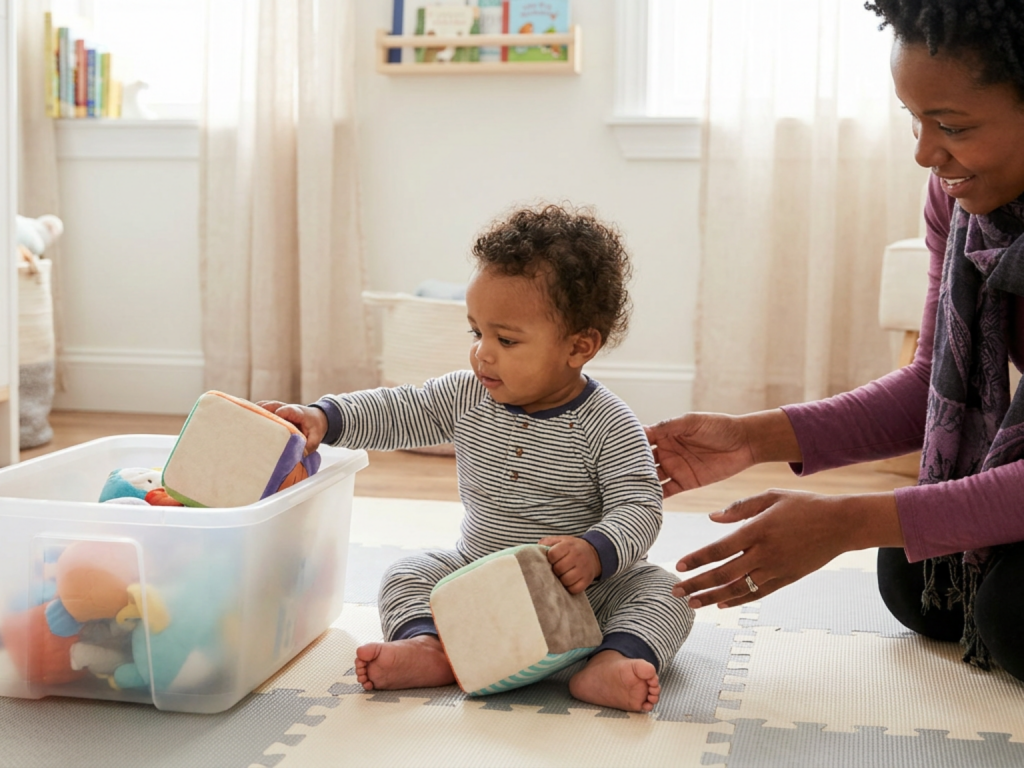
Older babies are busy learners. Between about 6 and 12 months, many infants begin to refine reaching, grasping, transferring objects between hands, poking with one finger, banging toys together, and using an early pincer grasp. These small hand movements are called fine motor skills, and they develop alongside vision, sensory processing, posture, attention, and social interaction.
This article offers practical, safe, developmentally flexible activities for older babies. It is not meant to turn play into a performance test. Babies vary widely, and corrected age for preterm infants matters. If you are worried about motor delay, asymmetry, feeding difficulty, unusual stiffness or floppiness, or loss of skills, a pediatrician, pediatric occupational therapist, or physical therapist can help you decide what support is appropriate.
Highlights
Fine motor play works best when it is brief, repeated, supervised, and matched to the baby’s current abilities.
Older babies build hand control through everyday actions: reaching, grasping, releasing, poking, transferring, squeezing, and exploring textures.
Posture matters. Stable sitting, supported floor play, and supervised tummy time while awake help the hands become freer for exploration.
Safety is central because many fine motor objects are choking hazards. Choose large, sturdy items and supervise closely.
If one hand is consistently ignored, milestones regress, or muscle tone seems unusual, seek individualized medical or developmental guidance.
What fine motor skills mean in older babies
Fine motor skills are the small, coordinated movements of the hands and fingers. In older babies, these skills are still closely linked to the whole body. A baby who can sit with increasing stability, rotate the trunk, or prop on one arm has more freedom to use the other hand for exploration. For that reason, fine motor play should not be separated completely from infant motor development, posture, vision, and sensory-motor development.
Common fine motor patterns in the second half of the first year include reaching toward a toy, grasping with the whole hand, transferring objects from one hand to the other, raking small safe pieces of food with the fingers, poking or pressing with the index finger, banging two objects together, and deliberately dropping items. Toward the end of the first year, many babies begin using the thumb and index finger together in an immature or more precise pincer grasp. This is not a race; babies may show these skills in different sequences, especially if they were born prematurely or have medical complexity.
Fine motor play also supports cognitive and language learning. When a baby squeezes a soft block, watches it change shape, hears you label it as squishy, and tries again, the brain is integrating touch, vision, movement planning, and social feedback. These repeated experiences build neural pathways through practice, not pressure.
Set up the body before asking the hands to work
Before focusing on fingers, consider the baby’s position. Hands work best when the head, trunk, and shoulders have enough support. A baby lying on the back may reach up for a hanging toy; a baby in supported sitting may use both hands at midline; a baby in tummy time may shift weight onto one forearm while reaching with the other. These are safe movement opportunities for babies when they are awake, observed, and placed on an appropriate surface.
For floor play, use a firm mat or blanket on the floor rather than a high surface. Place toys slightly to the side to encourage reaching across the body, but keep the distance manageable. If a baby is newly sitting, sit close and offer support at the hips or use your legs as a boundary. Avoid leaving a baby in a seated position if they cannot maintain it safely.
Supervised tummy time while awake can indirectly improve fine motor control by strengthening the neck, shoulders, arms, and trunk. You can place a large soft toy, board book, or baby-safe mirror in front of the baby and encourage reaching, patting, or turning pages with help. If tummy time is frustrating, try shorter sessions, chest-to-chest positioning, or a rolled towel under the chest if your pediatric clinician has said this is appropriate.
Some babies tire quickly or become overwhelmed. Watch for turning away, arching, fussing, finger splaying, yawning, or gaze avoidance. A short pause, cuddle, feeding break, or quieter toy may be more helpful than pushing through.
Everyday grasp and release activities
Grasp and release are foundational. At first, babies may be better at grabbing than letting go. Dropping toys from a highchair or stroller can feel repetitive to adults, but it is a meaningful experiment in hand opening, timing, gravity, sound, and cause and effect.
- Large block transfer: Offer one soft block or large wooden block at midline. After the baby grasps it, present a second block to encourage transferring the first object to the other hand.
- Container play: Give the baby a wide, shallow container and several large toys that cannot fit fully in the mouth. Help them put objects in and take them out. This practices release, wrist rotation, visual attention, and problem solving.
- Scarf pull: Place a lightweight scarf or cloth partly inside an empty tissue box or a large container with a wide opening. Let the baby pull it out. Use only fabric that is safe, clean, and supervised, and remove it if it goes into the mouth in a concerning way.
- Two-hand banging: Offer two large blocks, rattles, or silicone utensils and model banging them together. This supports bilateral coordination, shoulder stability, and timing.
To make an activity easier, use larger, lighter objects, place them closer, or stabilize the container. To make it harder, place objects slightly farther away, use a container with a smaller opening, or invite the baby to release the object on request, such as saying, “in,” “out,” or “drop.” Keep your language warm and simple rather than corrective.
Pincer grasp and finger isolation play
The pincer grasp, using the thumb and index finger together, emerges gradually. Before a precise pincer grasp, many babies use a raking motion with several fingers. Finger isolation means using one finger, often the index finger, to poke, point, press, or explore. These skills are important later for self-feeding, turning pages, pointing to communicate, manipulating fasteners, and eventually drawing or writing.
For babies who are developmentally ready for finger foods, self-feeding can be a powerful fine motor activity. Follow your pediatrician’s feeding guidance and use soft, appropriately shaped foods that reduce choking risk. Place one or two pieces at a time on the tray rather than a pile. This encourages visual scanning, reaching, and controlled grasp. Never use hard coins, small beads, dried beans, or tiny craft items with babies, even though similar tasks may be used for older children under different safety conditions.
- Sticker touch without peeling: Put a large sticker firmly on the outside of a plastic container or on paper taped to the floor. Let the baby pat, scratch, or poke at the edge while you supervise. Do not allow loose stickers in the mouth.
- Bubble popping: Blow bubbles and let the baby reach, poke, or clap to pop them. This supports finger isolation, visual tracking, and arm control.
- Button pressing toys: Offer baby-safe toys with large buttons, sliders, or simple cause-and-effect features. Press together, then wait to see if the baby initiates.
- Board book pointing: During reading, pause and touch a picture with one finger. Some babies will imitate by patting first, then poking more precisely over time.
Celebrate attempts. A swat, open-hand pat, or awkward poke is part of the motor learning process.
Hand strength through squeezing, crumpling, and texture exploration
Hand strength in infancy is not about resistance training; it is about varied, safe sensory experiences that invite the fingers to open, close, press, and adjust grip. Older babies often enjoy toys that change shape, make a soft sound, or provide different tactile feedback.
Offer a soft silicone teether, a clean damp washcloth, a large crinkly cloth book, or a baby-safe textured ball. Let the baby squeeze, mouth, pat, and transfer it. Mouthing is a normal sensory-motor behavior in infancy, so materials must be non-toxic, intact, washable, and too large to choke on. Inspect toys regularly for tears, loose parts, or fluid leaks.
Paper play can be engaging, but it requires close supervision. A baby may crumple a large sheet of tissue paper or parchment paper while you hold part of it. Remove torn pieces immediately because wet paper can become a choking hazard. For a less messy alternative, use a crinkle book designed for infants.
Water play is another useful option when an adult is within arm’s reach. During bath time, a baby can squeeze a washcloth, pat floating cups, or grasp a large sponge. Empty all water containers afterward, and remember that babies can drown in very small amounts of water. Fine motor learning should never compete with water safety.
If a baby strongly avoids certain textures, gags frequently outside typical feeding exploration, or becomes distressed by routine touch, discuss sensory concerns with a pediatric clinician or occupational therapist. The goal is to understand the baby’s nervous system, not to force exposure.
Bilateral coordination and midline play
Bilateral coordination means using both sides of the body together. For older babies, it may look like holding a toy with both hands, passing an object from one hand to the other, stabilizing a container with one hand while removing a toy with the other, or clapping. Midline play, bringing hands together in front of the body, supports visual attention, body awareness, and coordinated hand use.
Try offering a ring toy at the center of the body and letting the baby grasp it with both hands. You can gently tug just enough to invite the baby to hold on, then release before frustration builds. Play pat-a-cake with open hands, or help the baby clap after a song. Use nesting cups or stacking rings in simplified ways: instead of expecting accurate stacking, let the baby remove rings, bang cups, or hold one cup while exploring another.
Rolling a ball slowly back and forth while the baby sits with support can encourage two-handed reaching. A large, lightweight ball is easier than a small one. If the baby uses only one hand because the toy is always presented to that side, alternate placement. However, if one hand is persistently fisted, ignored, or much weaker, or if the baby consistently reaches with only one side, ask your pediatrician for guidance. Early assessment can be reassuring and, when needed, can connect families with therapy.
How to adapt activities without overdoing it
Fine motor activities should feel like shared play, not a therapy session unless a qualified therapist has provided a specific plan. Many families find that Daily activities for baby development are easiest to sustain when they are folded into diaper changes, feeding, bath time, reading, and floor play. One or two minutes of focused hand play several times a day is often more realistic than a long structured session.
To reduce difficulty, choose larger objects, fewer choices, slower pacing, and more body support. Put the toy directly in the baby’s line of sight and allow extra time. To increase difficulty, vary the texture, change the container, place the object slightly off center, or pause expectantly before helping. A useful rhythm is: offer, wait, narrate, assist, and then wait again.
Consider corrected age for preterm infants when thinking about expectations. A baby born two months early may reasonably show skills closer to their corrected age, especially in the first years of life. Medical history, vision, hearing, muscle tone, feeding coordination, and opportunities for practice all influence skill development.
It can also help to rotate toys rather than buying many new items. A few blocks, cups, cloth books, teethers, balls, and safe household containers can provide many variations. If you want a broader framework, Simple baby activities by age can complement fine motor ideas by reminding caregivers that communication, movement, sensory play, and rest all interact.
When to seek professional advice
Variation is normal, but some patterns deserve a conversation with a healthcare professional. Contact your pediatrician or another qualified clinician if your baby loses previously acquired skills, seems unusually floppy or stiff, has persistent hand fisting beyond what is expected for age, consistently ignores one hand, shows marked asymmetry, has feeding or swallowing concerns, or is not engaging with people and objects in a way that worries you.
You do not need to wait until a problem is severe. Pediatric occupational therapists and physical therapists can evaluate posture, tone, sensory responses, grasp patterns, and functional play. They can also adapt activities for babies with prematurity, congenital conditions, neurologic differences, visual impairment, or medical fragility. If everything is progressing typically, a professional visit can still provide reassurance and practical coaching.
Caregivers know their babies deeply. If something feels off, it is appropriate to ask. At the same time, try not to measure your baby against every video or milestone chart online. Fine motor development is built through warm repetition, safe exploration, and responsive support.
Safety and medical cautions
- Avoid small objects such as coins, beads, buttons, dried beans, and loose stickers because they can be choking hazards.
- Supervise all fine motor activities closely, especially when the baby mouths toys or food.
- Seek medical advice promptly for loss of skills, persistent asymmetry, unusual stiffness or floppiness, or feeding and swallowing concerns.
- Use corrected age for preterm infants when considering developmental expectations, and ask the care team if unsure.
- Do not force textures, positions, or tasks if the baby is distressed; pause and consult a professional if concerns persist.
Tools & Assistance
- Pediatrician or family doctor for developmental concerns and referrals
- Pediatric occupational therapist for fine motor, sensory, and feeding-related skill support
- Pediatric physical therapist for posture, tone, mobility, and positioning guidance
- Age-appropriate large blocks, cups, cloth books, teethers, and textured balls
- A firm floor mat for safe supervised play
FAQ
What age is meant by older babies?
In this article, older babies generally means about 6 to 12 months, while recognizing that corrected age, medical history, and individual variation matter.
How long should fine motor play last?
Short, frequent play is usually best. A few minutes at a time during floor play, feeding, reading, or bath routines can be enough if the baby is alert and comfortable.
Are beads, coins, or pasta good for baby fine motor practice?
No. Those items are common in activities for older children but are unsafe for babies because they can be choking hazards. Use large, sturdy, baby-safe objects instead.
Should I worry if my baby does not have a pincer grasp yet?
Not necessarily. The pincer grasp develops gradually, often after earlier raking and whole-hand grasping. Ask your pediatrician if you are concerned, especially if there are other motor, feeding, or asymmetry concerns.
Can tummy time help fine motor skills?
Yes. Supervised tummy time while awake can build shoulder, arm, and trunk stability, which helps the hands become freer for reaching and play.
Sources
- OT Mom Learning Activities — Fine Motor Skills Activities for Older Kids - Simple and Effective
- NAPA Center — 35 Fine Motor Activities: Therapists' Ultimate List
- Similac — Motor Development and Skills for Infants
Disclaimer
This article is for general educational purposes and does not replace medical evaluation, diagnosis, or individualized therapy. Consult a qualified healthcare professional about concerns regarding your baby’s development, feeding, tone, or safety.













Please log in to leave a comment.