
Intro
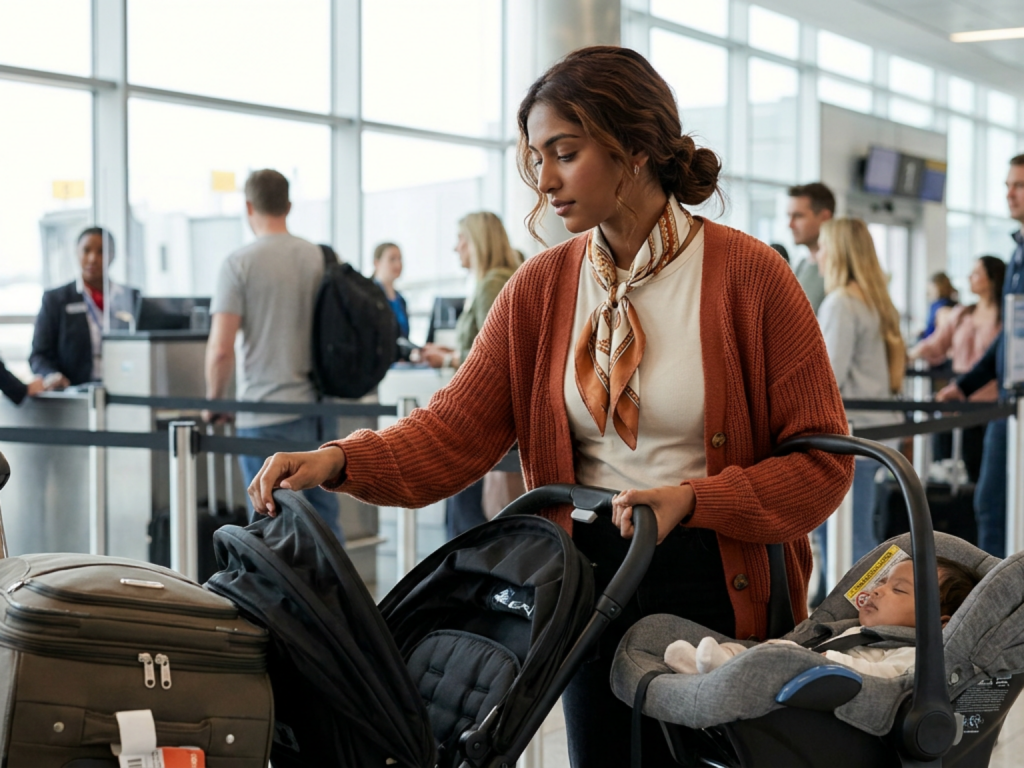
Traveling through an airport with a stroller can make a long travel day much more manageable, especially when you are carrying a baby, luggage, and all the logistics that come with family travel. The good news is that major airlines generally have clear stroller policies, and many allow families to use the stroller right up to the gate before checking it for free.
Still, the details matter. Whether your stroller can be folded, where it will be handed over, and how to keep your baby comfortable and safe during the process can vary by carrier and stroller type. A little preparation can reduce stress and help you move through security, boarding, and arrival with fewer surprises.
Highlights
Most major airlines let you check a stroller free of charge, but the exact process can differ by carrier and stroller type.
Many families use the stroller all the way to the gate and then hand it over as a gate-check item.
Collapsible and non-collapsible strollers may be handled differently, so it helps to confirm the airline’s policy before you travel.
Planning for boarding, connections, and baggage handling can reduce lifting, rushing, and toddler distress.
If your child has medical or developmental needs, ask the airline and your clinician early so the trip can be adapted safely.
Why stroller planning matters
An airport is a physically demanding environment: long walking distances, security screening, crowding, temperature shifts, and unpredictable delays can all make travel harder with an infant or toddler. A stroller can function as mobility support, a safe place to contain a child briefly, and a way to carry essentials without overloading your arms and back.
For many families, the biggest advantage is not convenience alone. A stroller can reduce caregiver strain, support pacing during a long travel day, and help keep a child regulated in a busy setting. That said, it only helps if you understand how the airport and airline will handle it.
How airline stroller policies usually work
Official airline guidance commonly allows one stroller per ticketed customer to be checked free of charge, and many airlines also allow one car seat or child restraint system free of charge. Some carriers let you check the stroller at the ticket counter, while others recommend taking it to the gate first.
United states that standard strollers, folding wagons, and car seats can be used to get to the gate and then checked for free. American Airlines notes that stroller handling may differ depending on whether the stroller is collapsible or non-collapsible. Southwest also confirms free stroller check for each ticketed customer traveling with a child. The practical takeaway is simple: free stroller check is common, but the exact handoff point is carrier-specific.
Choosing the best stroller strategy for the trip
Before you leave home, decide whether you want the stroller to function as a gate-to-gate mobility aid or whether it will be checked earlier. A lightweight, foldable stroller is often easier to manage in crowded terminals and at security because it is simpler to collapse, carry, and reopen.
If your stroller is bulky, non-collapsible, or difficult to fold quickly, it may be more cumbersome during screening and boarding. In that case, it is especially useful to review the airline’s policy in advance and consider whether a different travel stroller would better fit your needs. If your child uses a car seat or child restraint system, confirm whether it can also be checked free of charge and whether the airline has any packaging or tag requirements.
Before security: pack, label, and prepare
A calm start at home can make the airport much smoother. Remove loose items from the stroller basket, secure toys or blankets, and attach a luggage tag with your name, phone number, and flight information. If your stroller has detachable parts, keep them together so nothing is separated during handoff.
It is also wise to plan for the moments when the stroller will not be available: security screening, boarding, and baggage claim. Keep diapers, wipes, feeding supplies, medications, and any comfort items in a carry-on bag that stays with you. If your child has a medical condition or special equipment needs, confirm in advance what you must keep accessible during the flight and what should remain with you at all times.
At the airport and gate: what to expect
Most families use the stroller to move through the terminal, then fold and hand it over at the gate. Airlines may attach a gate-check tag before boarding, and the stroller is then taken to the aircraft hold. This usually means you can keep using it until just before you enter the jet bridge or boarding area.
Be prepared for variability. Some airports and airlines are highly organized; others can be busy or short-staffed, especially during peak travel times. If you are unsure where to leave the stroller, ask early rather than waiting until boarding has started. Clear communication reduces the risk of missed tags, accidental damage, or last-minute scrambling while holding a tired child.
Security screening and boarding considerations
Security screening can be one of the most stressful parts of airport travel with a stroller. Follow the instructions of the Transportation Security Administration or local airport security staff, and expect to collapse the stroller for inspection if requested. If you are traveling with liquids, formula, breast milk, medication, or medically necessary items, keep them organized so they can be screened without unnecessary delay.
Boarding with a stroller also requires planning. Many airlines offer family boarding or preboarding, which can help you settle your child before the cabin fills. If your child is medically fragile, has sensory sensitivities, or needs extra time for transfers, preboarding can reduce distress. Ask the airline in advance if you think priority boarding would make the trip safer or more manageable.
Arrival, connections, and stroller retrieval
When you land, stroller return timing can vary. In some airports, gate-checked strollers are returned right at the aircraft door; in others, they may appear on the jet bridge or at baggage claim. If you have a tight connection, ask the gate agent where and when the stroller will likely be returned so you can plan your transfer.
If the stroller does not arrive, is damaged, or is missing a part, report it immediately to the airline before leaving the airport. Having photos of the stroller before travel can help document its condition. For connecting flights, factor in extra time for restroom stops, feeding, and any unexpected delays in stroller retrieval. A rushed connection is much harder when you are carrying a child without your usual mobility support.
When to ask for extra help
Some families benefit from early coordination with both the airline and a healthcare professional. This is especially true if a child has respiratory disease, feeding difficulties, neuromuscular weakness, developmental disability, or other conditions that affect positioning, endurance, or comfort during long waits. In those situations, travel planning may need to include seating choices, preboarding, or specific equipment handling.
If you are unsure whether your child’s needs require special documentation or accommodations, ask the airline ahead of time and speak with your pediatrician or relevant specialist. They can help you think through practical risks, such as prolonged sitting, transfer difficulty, or the need for rapid access to medications or feeding supplies. Medical advice should be individualized rather than assumed from general travel tips.
A practical airport stroller checklist
- Confirm the airline’s stroller and car seat policy before travel.
- Choose whether the stroller will be used to the gate or checked earlier.
- Attach an identification tag with current contact information.
- Keep essential baby supplies in your carry-on bag.
- Ask about family boarding or preboarding if your child needs extra time.
- Inspect the stroller after arrival and report damage immediately.
When to pause and ask for help
- Do not assume every airline uses the same stroller rules.
- Do not leave medications, feeding supplies, or needed medical items in a checked stroller.
- Do not force a difficult folding mechanism in a rushed boarding line if you can ask for assistance.
- Do not travel without checking how your stroller will be returned at your destination.
- Seek medical advice if your child has a condition that may affect safe positioning or endurance during travel.
Tools & Assistance
- Airline special assistance desk
- Gate agent or customer service desk
- Transportation Security Administration guidance
- Your pediatrician or child’s specialist
- Airport lost-and-found or baggage service office
FAQ
Can I bring a stroller to the airport for free?
Often yes. Many major airlines allow one stroller per ticketed customer to be checked free of charge, but the exact rules depend on the carrier.
Should I check the stroller at the counter or at the gate?
It depends on the airline and stroller type. Some carriers allow gate check, while others may direct you to check it earlier.
What if my stroller is not foldable?
Non-collapsible strollers may have different handling rules and can be harder to manage in the terminal. Check the airline’s policy before you leave home.
Can I use the stroller after security?
Usually yes, you can use it through the terminal until you hand it over for gate check, but follow airport and airline instructions at the gate.
What should I do if the stroller is damaged?
Report it immediately to the airline before leaving the airport and document the condition with photos if possible.
Sources
- American Airlines — Traveling with children
- United Airlines — Flying with Kids & Family Boarding
- Southwest Airlines — Stroller & Child Items Policy
Disclaimer
This article is for general informational purposes only and does not replace medical advice. If your child has a health condition, mobility limitation, or special equipment needs, speak with a qualified healthcare professional and your airline before traveling.
















Please log in to leave a comment.