
Intro
Hygiene concerns in babies are common because infant skin is still immature, diapers create constant moisture and friction, and feeding, drooling, and frequent stooling expose skin to irritants many times a day. Most of these issues are not signs of poor care. They are usually the result of normal developmental vulnerability plus the practical demands of caring for a very small child.
This article reviews the hygiene-related problems parents and caregivers notice most often, including diaper-area irritation, cradle cap, baby acne, dryness, and the effects of over-washing or under-cleaning. It focuses on everyday prevention and on the kind of changes that should prompt a discussion with a healthcare professional.
Highlights
Baby skin has a weaker barrier than adult skin, so it reacts quickly to moisture, friction, stool, saliva, and harsh products.
Diaper rash is one of the most common hygiene-related problems in infancy and often reflects irritation rather than infection.
Not every scalp or facial rash means the skin is dirty; cradle cap and baby acne are common early-life findings.
Routine care works best when it is gentle, consistent, and not excessive, especially around cleansing and bathing.
Red flags such as fever, spreading redness, discharge, or poor feeding should be reviewed by a clinician.
Why hygiene problems are so common in infancy
Babies are not just small adults. Their skin barrier is thinner, more permeable, and more easily disrupted by water, friction, and chemicals. In the first months of life, that means minor irritants can produce visible redness, scaling, or tenderness much faster than they would in older children or adults.
Diapers add another layer of complexity. The diaper area is warm, moist, and repeatedly exposed to urine and stool, which contain enzymes and other irritants that can inflame the skin. Add wiping, movement, and prolonged contact with a wet diaper, and it becomes easy to see why diaper dermatitis is so common. Similar logic applies to the scalp, neck folds, and facial skin, where sweat, drool, milk, and skin oils can collect.
It helps to think of hygiene problems in babies as a balance issue: too little cleaning can leave irritants on the skin, while too much cleaning can strip the natural oils that protect the skin barrier. The goal is not perfection. It is steady, gentle care that matches the baby’s age, skin type, and daily messes.
Diaper-area irritation and diaper rash
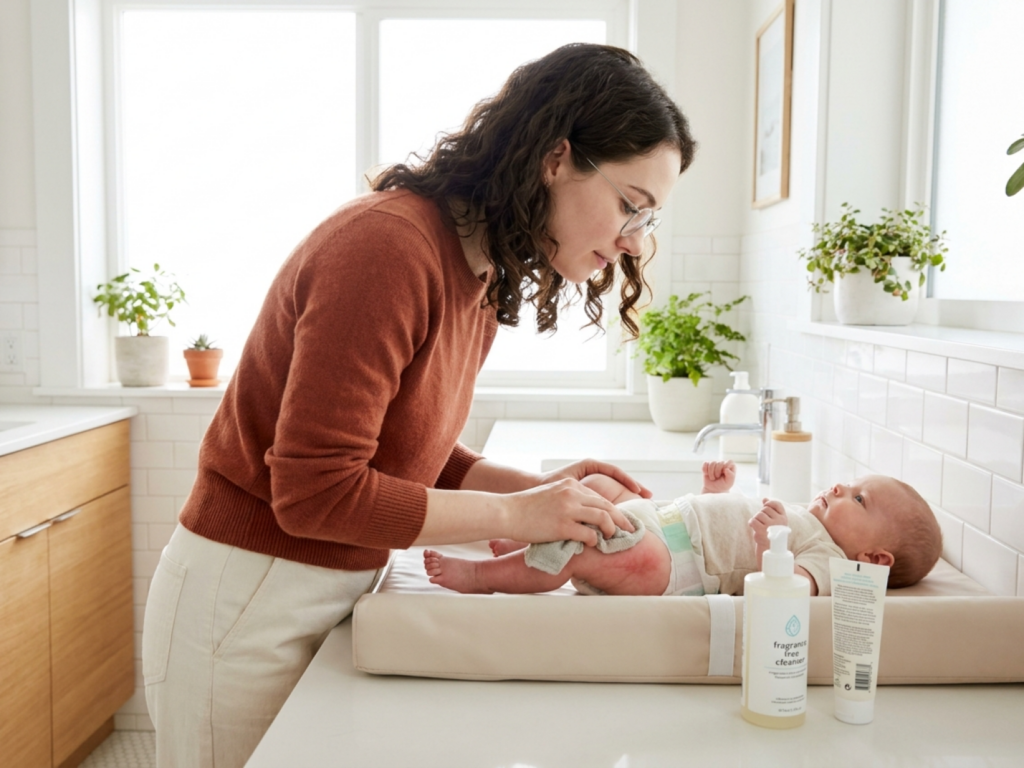
Diaper rash is one of the most frequent hygiene-related problems in infants. It often begins as patchy redness on the buttocks, groin, or upper thighs, especially where the diaper rubs or stays wet. In many babies, the trigger is simple irritant contact dermatitis: the skin is exposed to moisture, stool, urine, wipes, or detergent residue often enough that it becomes inflamed.
This is why frequent diaper changes matter. Clean, dry skin has less time to react to irritants. Gentle cleansing is also important. Many clinicians advise using lukewarm water or soft, fragrance-free wipes, then patting the skin dry rather than rubbing. If the skin folds are moist, they should be dried carefully so they do not stay occluded.
Barrier products are commonly used in practice because they protect the skin from further exposure, but the right product and method depend on the baby and the severity of the rash. If the rash looks sharply demarcated, has bumps outside the diaper line, or seems to worsen despite good hygiene, a clinician may want to consider other causes, including yeast or bacterial involvement. That is a reason to seek assessment, not to guess at the diagnosis at home.
Scalp and facial skin findings that are often mistaken for poor hygiene
Parents often worry when they see flakes, crusting, pimples, or rough patches on a baby’s scalp or face. In many cases, these findings are common and not evidence that the baby is unclean. Cradle cap, also called seborrheic dermatitis, can cause greasy scale on the scalp, eyebrows, or behind the ears. Baby acne can appear as small red or white bumps on the cheeks or forehead. Dry skin and mild eczema can also show up early in life.
These problems are addressed very differently from adult acne or severe skin disease. Scrubbing usually makes them worse. So can repeated use of fragranced cleansers, harsh soaps, or abrasive washcloths. A gentle routine is often enough: mild cleansing when needed, careful drying, and avoidance of products that sting or leave the skin tight.
One practical point is that not every baby rash needs active treatment. The article Common newborn and baby rashes is useful because it frames many of these findings as part of normal early infancy rather than a hygiene failure. Still, if the skin becomes swollen, painful, crusted with discharge, or associated with fever, that picture changes and needs medical review.
Bathing and cleansing without over-washing
Bathing practices in infancy vary by age and by how messy the day has been. Newborns do not usually need a full bath every day. Too much bathing can dry the skin, especially if the water is hot or the cleanser is strong. For many babies, a bath a few times per week is enough, with more frequent cleaning of the face, hands, neck folds, and nappy area as needed.
In practical terms, the best routine is usually simple. Use lukewarm water, keep baths brief, and choose fragrance-free products that are made for sensitive skin. Avoid bubble baths and heavily perfumed washes, since they can irritate the skin barrier. After bathing, pat the baby dry carefully, paying attention to skin folds under the neck, in the groin, and behind the knees.
There is also a middle ground between over-washing and under-cleaning. The topic of Diaper hygiene basics explained is relevant here because the diaper area often needs more frequent attention than the rest of the body. The principle is not to sterilize the baby’s skin. It is to remove irritants efficiently while preserving moisture and comfort.
Hands, nails, feeding items, and everyday contamination
Some hygiene problems are not skin conditions at all, but everyday contamination issues that can worsen skin irritation or infection risk. Babies touch their faces constantly, and if their hands or nails are dirty, microbes and irritants move easily from skin to mouth, eyes, and folds. Keeping nails short reduces scratching and helps prevent tiny breaks in the skin barrier.
Caregivers also need to think about their own hands and the surfaces that contact the baby. Handwashing before feeding, diapering, or applying skin products remains one of the simplest preventive measures. Towels, washcloths, bibs, bedding, and clothing should be changed when soiled, because damp fabric can hold irritants against the skin.
For bottle-fed babies or pumped milk, cleaning feeding equipment according to manufacturer guidance matters as part of overall infant care. This is not only about digestion and infection prevention; it also reduces the chance of residue buildup that can complicate oral and facial skin irritation. The issue described in Under-cleaning baby risks is most obvious when stool, spit-up, or milk residue is left on skin or fabrics for too long. Routine, thorough, gentle cleaning is the practical answer.
When hygiene problems need medical review
Most common hygiene-related problems in babies improve with better skin care, fewer irritants, and time. Still, some patterns should not be watched passively. Fever in a young infant, rapidly spreading redness, blistering, pus, a foul smell from the skin, or marked tenderness can signal infection or a more serious skin condition. If a baby is feeding poorly, unusually sleepy, or showing fewer wet diapers, that is another reason to seek prompt help.
Persistent diaper rash that does not improve with careful cleansing and frequent changes deserves review, especially if the rash extends beyond the diaper area or the skin is breaking down. A rash that looks like eczema, yeast infection, or bacterial infection may need a different approach from simple irritant care. The same is true for scalp crusting that becomes inflamed or facial rash that spreads quickly.
Medical review is especially important when caregivers feel unsure whether the problem is hygiene-related or illness-related. That uncertainty is normal. Babies change quickly, and skin findings can be subtle. A clinician can help separate benign irritation from findings that need treatment and can also review product choices if the baby seems unusually sensitive.
Seek medical advice promptly if you notice
- Fever in a baby under 3 months, or any fever with a skin rash.
- Redness that is rapidly spreading, hot, painful, swollen, or oozing.
- Blisters, pus, blood, or a strong odor from the skin or diaper area.
- Poor feeding, unusual sleepiness, or fewer wet diapers than expected.
- A rash or irritation that keeps worsening despite gentle care.
Tools & Assistance
- Pediatrician or family doctor
- Pharmacist for fragrance-free product guidance
- Public health nurse or infant care hotline
- Clean soft washcloths and a mild baby cleanser
FAQ
Is diaper rash usually a sign of poor hygiene?
Usually not. It most often reflects moisture, friction, and skin irritation from urine or stool, even when caregivers are doing a good job.
How often should a baby be bathed?
Many babies do not need a full bath every day. Gentle cleansing of the face, hands, and diaper area is often enough between baths.
Should I treat cradle cap as if it were dirt?
No. Cradle cap is common and is not caused by poor hygiene. Gentle cleansing is preferred over scrubbing.
When should I call a clinician about a rash?
Call if the rash is painful, spreading, associated with fever, has discharge, or does not improve with gentle care.
Sources
- NHS — Washing and bathing your baby
- MedlinePlus — Common Infant and Newborn Problems
- Mayo Clinic — Common skin conditions in babies
Disclaimer
This article is for general information only and is not a diagnosis or a substitute for medical care. For a baby who is unwell, has fever, worsening rash, or feeding concerns, contact a healthcare professional promptly.















Please log in to leave a comment.