
Intro
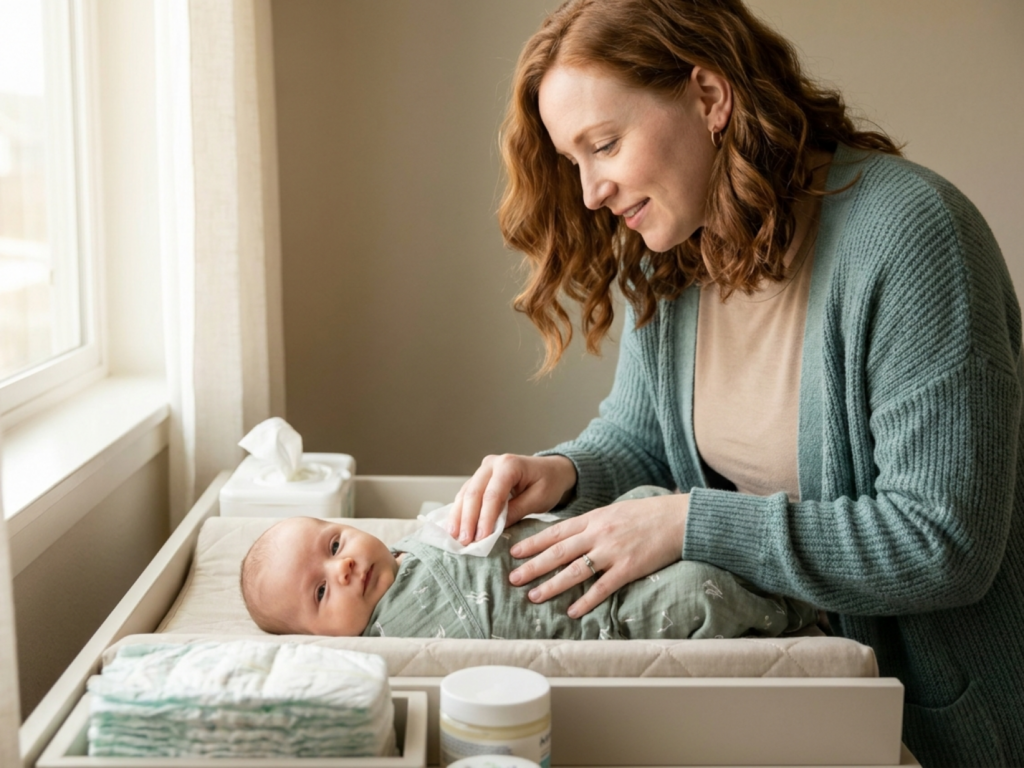
Diaper changes can feel repetitive, especially when sleep is fragmented or a baby is unsettled. Yet these brief care routines can also be dependable opportunities for connection, communication, and early learning. The goal is not to turn every change into a performance. It is to notice the baby in front of you and offer calm, responsive interaction when they are comfortable and receptive.
For infants and toddlers, learning is embedded in daily caregiving. A familiar voice, a pause for a response, a named body sensation, or a chance to lift a leg can support participation without extending the routine beyond what is practical or hygienic.
Highlights
Responsive diapering links routine care with infant well-being and active involvement. A calm caregiver who notices and answers the child's cues helps make the interaction feel predictable and secure.
Simple back-and-forth communication can support early language reciprocity before a child uses words. Narration is most useful when it leaves space for the baby to look, vocalize, move, or otherwise respond.
Play should never compete with safety, skin care, or the child's need for rest. A brief, quiet change is an appropriate response when a baby is hungry, ill, overstimulated, or distressed.
Why Diapering Can Be a Developmental Moment
Diapering is a repeated, face-to-face caregiving interaction. Unlike a special activity that may happen occasionally, it occurs often enough for a baby to learn a recognizable sequence: the caregiver approaches, uses familiar words and touch, completes care, and helps the child return to play or rest. Predictable hygiene care for babies can therefore contribute to a sense of safety and anticipation.
Research on caregiver-infant and toddler interactions during diapering has found that caregiver responsiveness and encouragement are associated with greater child involvement and well-being. Responsiveness means observing the child’s signals and adjusting accordingly. A gaze, relaxed limbs, a vocalization, turning away, crying, stiffening, or reaching can all communicate something relevant. The caregiver does not need to interpret every cue perfectly; the developmental value comes from consistently trying to notice and respond.
This is also an opportunity for co-regulation, the process by which a young child borrows calm from an attentive adult before being able to regulate arousal independently. A measured voice, unhurried handling, and a short explanation of what comes next can reduce unpredictability. For babies who dislike being placed on their backs, this relational steadiness may be more useful than adding stimulation.
Developmental play during a diaper change is best understood as shared attention rather than entertainment. It can be as simple as waiting after saying, “I am opening the diaper now,” and responding to a kick or sound. Such exchanges respect the infant as an active participant in care while keeping the change focused, clean, and safe.
Start With Comfort, Consent Cues, and Predictability
Before introducing songs, objects, or movement games, create a comfortable setup. Have supplies within arm’s reach, use a stable changing surface, and protect the baby from drafts where possible. Say what you are about to do in plain language: “I am going to pick you up,” “Your diaper feels wet,” or “I will wipe your skin gently.” Although an infant cannot give verbal consent, this narration acknowledges bodily autonomy and helps establish a respectful pattern around touch.
Watch the child’s state. A baby who makes eye contact, coos, kicks rhythmically, or reaches may be ready for a brief interaction. A child who turns away, yawns, arches, cries, or becomes rigid may need less input. In that moment, lower your voice, reduce visual stimulation, and complete essential care efficiently. Overstimulation signs in babies are not misbehavior; they are communication that the nervous system needs a quieter environment.
Repetition supports learning. Use a few consistent phrases for the sequence, such as “up, clean, dry, diaper, cuddle.” As comprehension develops, pause before the final word or action. A toddler may attempt a word, gesture toward the diaper, or lift their bottom. An older infant may respond with a smile or movement. These small pauses create turn-taking without demanding a particular performance.
- Announce handling before lifting or repositioning the child.
- Name neutral sensations, such as cool wipe, warm water, dry skin, or snug diaper.
- Pause briefly for a gaze, sound, gesture, or movement.
- Follow the child’s tolerance rather than trying to complete a planned game.
Predictability is especially valuable during periods of rapid developmental milestones, when sleep, mobility, and emotional responses may be changing at the same time.
Language and Social Play From Birth
Infants learn the rhythm of communication long before they understand full sentences. During a diaper change, use a warm, natural voice and describe the immediate experience. “You are kicking your feet,” “I hear your little sound,” and “Here is your clean diaper” connect language to what the child sees and feels. This kind of narration is more effective when it is responsive rather than continuous. Give the baby time to process and reply in their own way.
For a newborn, the play may simply be a familiar greeting, eye contact when the baby seeks it, and a slow response to a vocal sound. Newborns can become overwhelmed by prolonged direct gaze or animated speech, so brief, gentle exchanges are enough. If a newborn begins crying during diapering, prioritizing warmth, containment, and a calm pace is appropriate. Play can wait until the child is settled.
As an infant becomes more socially engaged, imitate a coo, pause for another sound, or make a simple reciprocal sound pattern. You might say “ba-ba” once, wait, and answer the baby’s vocalization. Avoid treating the interaction as a test. The point is not whether the baby copies you, but whether both of you experience a responsive exchange.
For toddlers, offer simple choices that you can genuinely honor: “Would you like the song first or the diaper first?” or “Do you want to hold the clean diaper or the cloth?” Naming body parts during care can build vocabulary and body awareness: “These are your toes,” “I am cleaning your bottom,” and “Your belly is covered.” Use anatomically accurate terms where appropriate and keep the tone matter-of-fact, which supports a healthy foundation for later body-safety conversations.
Motor Participation and Body Awareness
Diapering provides a contained opportunity to notice movement. A young infant may kick, bring hands toward the midline, or briefly turn toward a voice. You can describe these actions without directing them: “Your legs are moving,” or “Your hands found each other.” This helps connect a child’s action with a caregiver’s attentive response.
When a baby has adequate head and trunk control and is content, invite small participation. Ask, “Can you lift your bottom?” while you wait a moment before fastening the diaper. A mobile infant may push through their feet, reach for a cloth, or help pull a pant leg. A toddler can hand over a wipe, put a clean diaper in the bin if your routine permits, or help pull up clothing while standing with close support. These are practical cause-and-effect activities, not exercises that must be mastered on a timetable.
Keep expectations aligned with the child’s individual abilities. Premature infants may be assessed using corrected age for prematurity in early developmental discussions. Children also differ in temperament, muscle tone, sensory preferences, and interest in participation. Comparing a child’s diaper-change behavior with another child’s is rarely useful.
Avoid pulling on legs, forcing stretches, or positioning the child for a game when they resist. If you notice persistent movement asymmetry in babies, unusual stiffness or floppiness, apparent pain with routine handling, or a loss of previously established skills, bring those observations to the child’s pediatric clinician. A diaper change can offer useful observations, but it is not a setting for diagnosis.
- Invite rather than require a leg lift, reach, or handoff.
- Describe the child’s spontaneous movements.
- Allow extra time only when the child remains calm and secure.
- End participation attempts when frustration rises.
Sensory Play Without Compromising Skin Care
Diapering involves strong sensory input: temperature, touch, smell, light, position, and the feel of wipes or water. Naming these sensations can help a child organize the experience, but sensory play should remain minimal around the diaper area. Cleanliness, gentle handling, and skin protection take priority.
A soft song, a familiar rhyme, or a brief tactile experience with a clean cloth held in the child’s hand can be sufficient. If you use a small object to occupy an older infant, choose one that is large enough not to present a choking hazard, easy to clean, and reserved for supervised use. Never rely on an object to keep a child still on a changing surface, and never leave a child unattended for even a moment.
Some babies dislike cold wipes, bright overhead lights, or sudden exposure to air. Adjusting these environmental factors may reduce distress more effectively than increasing play. Use gentle, fragrance-free products when possible if the child has sensitive skin, and dry skin carefully according to your clinician’s recommendations. A barrier product may be part of an established diaper dermatitis prevention routine, but product selection and treatment needs can vary with the nature and severity of skin irritation.
Do not use scented toys, powders, essential oils, or novelty products near genital skin to make the routine more stimulating. These can irritate sensitive tissue or create unnecessary exposure risks. When a diaper rash appears painful, spreads, has blisters or open areas, is accompanied by fever, or does not improve as expected, seek guidance from a pediatric healthcare professional rather than treating it as a sensory issue.
Adapting the Routine for Real Life
Not every diaper change needs developmental play. The most responsive choice may be a quick, quiet change after a difficult night, during illness, before feeding, or when a caregiver is depleted. Children benefit from reliable care, not from constant enrichment. Even a short statement such as “I am here; I will get you clean and comfortable” preserves connection.
When more than one caregiver changes the child, a shared basic routine can help. It does not need to be scripted. Agreeing on a few predictable steps, using respectful language, and communicating relevant observations can make care feel consistent across home and child-care settings. This is particularly helpful for children who are adjusting to a new caregiver or group environment.
For children who strongly resist diaper changes, look for practical contributors first: timing, hunger, fatigue, a cold room, a distracting environment, constipation, skin discomfort, or a desire for autonomy. Offering a simple task, changing location when safe, or using a familiar song may help. Avoid escalating into power struggles. Calmly state the boundary, complete necessary hygiene, and reconnect afterward.
Persistent or intense distress deserves attention, especially if it appears linked to urination, stooling, touching the diaper area, or specific movement. So do concerning skin findings, changes in bowel habits, fever, vomiting, poor feeding, or a marked change from the child’s usual behavior. Documenting what you notice, including timing and associated symptoms, can make a conversation with the pediatrician more productive.
Across ordinary days, routine care developmental moments accumulate. The most meaningful play is usually brief, reciprocal, and fitted to the child’s current state: a pause, a smile, a named sensation, a chance to help, and the reliable experience of being cared for.
Safety and Clinical Caution
- Keep one hand on the child at all times on a changing table or other elevated surface; falls can occur in seconds.
- Do not use small, breakable, scented, or hard-to-clean objects as diaper-change distractions.
- Reduce stimulation and complete care promptly when a child appears distressed, exhausted, ill, or overwhelmed.
- Contact a pediatric healthcare professional for painful-looking diaper-area inflammation, blisters, open skin, fever, or persistent unexplained distress.
- Seek individualized advice for children with prematurity, motor concerns, sensory differences, chronic skin conditions, or complex medical needs.
Tools & Assistance
- Keep a reachable diapering station stocked before beginning the change.
- Use a short, repeatable care sequence with familiar words.
- Track recurrent distress, stool changes, skin findings, and possible triggers for a pediatric visit.
- Ask a pediatric clinician or early childhood professional for individualized developmental guidance when concerns persist.
FAQ
How long should developmental play during a diaper change last?
Usually only seconds to a few minutes. Follow the child's engagement and end the interaction when hygiene is complete or the child shows signs of stress.
Can diaper-change play help a baby learn language?
It can support early language reciprocity through responsive talking, pauses, imitation, and naming immediate actions and sensations. It does not need to be elaborate.
What should I do if my baby cries every time I change a diaper?
First reduce common discomforts such as cold air, hunger, fatigue, bright light, and rushed handling. If crying is intense, persistent, or paired with signs of pain or skin problems, discuss it with a pediatric healthcare professional.
Is it appropriate to encourage a toddler to help?
Yes, when the task is safe and optional. Simple actions such as handing over a clean diaper or lifting the bottom can support autonomy without making hygiene negotiable.
Sources
- Infant Mental Health Journal — Caregiver–infant and toddler interactions during diapering: Caregiver responsiveness and child well-being and involvement
- Child Care Technical Assistance Network / U.S. Administration for Children and Families — Infant/Toddler Resource Guide: Child Care Providers. Respectful and Responsive Relationships Are Key to Supporting Optimal Infant and Toddler Development
- NAEYC / Center for Early Literacy Learning — Enhancing the Diapering Routine: Caring, Communication, and Development
Disclaimer
This article is for general educational purposes and does not replace individualized medical advice, diagnosis, or treatment. Consult a qualified pediatric healthcare professional about symptoms or developmental concerns.

















Please log in to leave a comment.