
Intro
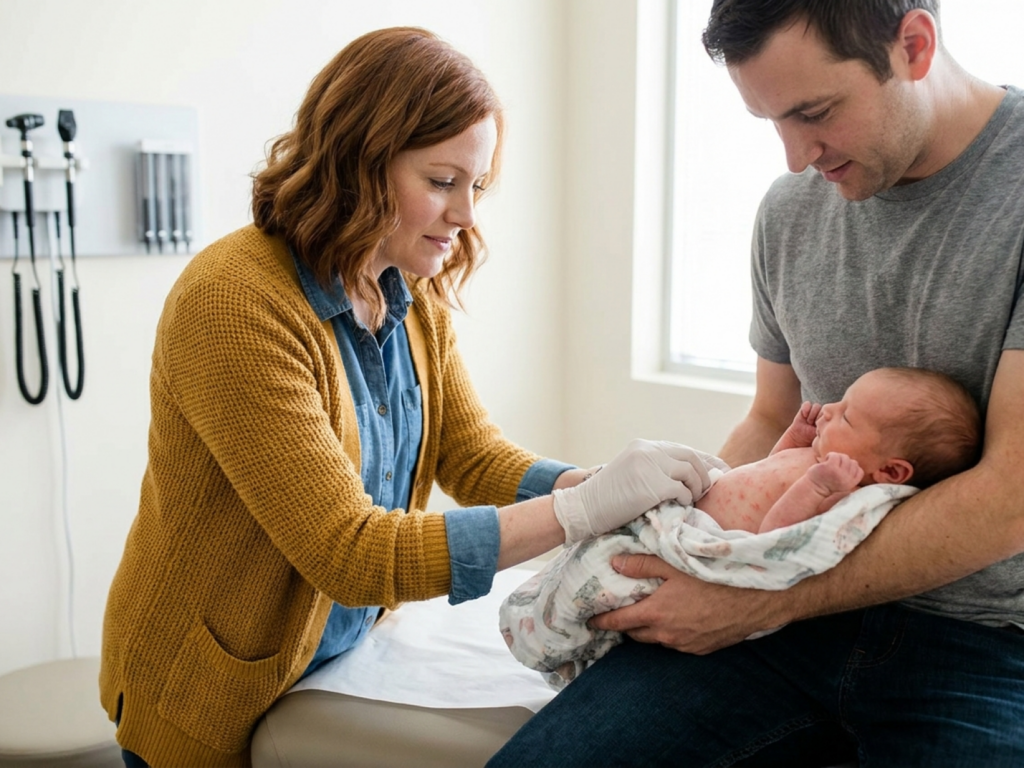
It is very common for newborns and young babies to develop skin findings that look alarming at first glance but are actually part of normal early life. In the first days and weeks, the skin is adapting to air, friction, temperature changes, sweat, diapers, and new products. Because infant skin is thin and its barrier is still maturing, even minor triggers can lead to redness, bumps, flaking, or patches of irritation.
Many of the common newborn skin conditions are benign and self-limited, but the pattern, timing, and the baby's overall well-being matter. A rash that appears in a well baby, stays localized, and fades over days to weeks is often very different from a rash with fever, blisters, poor feeding, or rapid spread. This article reviews the typical rashes clinicians see, what they usually look like, and when it is important to seek medical review rather than assume it is harmless.
Highlights
Most early infant rashes are related to skin maturation, heat, friction, or a transient newborn eruption rather than a dangerous illness.
Timing helps: some rashes appear in the first 24 to 72 hours of life, while others emerge later in the first month or after solids, new products, or diaper exposure.
Benign rashes often have a characteristic look, such as tiny white papules, blotchy red patches, or small pustules in a baby who otherwise seems well.
A rash should be assessed sooner if the baby has fever, seems unwell, has blisters, purple spots, eye involvement, or signs of infection.
Simple skin care can help, but persistent, severe, or recurrent rashes deserve guidance from a healthcare professional.
Why newborn skin rashes are so common
Newborn skin is not simply smaller adult skin. It has a thinner outer barrier, less mature sweat and oil gland function, and greater sensitivity to moisture, friction, and changes in temperature. That is why the first weeks often include temporary redness, peeling, small bumps, or scattered pustules. In many cases, the baby is entirely comfortable and thriving, which is an important clue that the rash is part of a normal adaptation rather than a systemic illness.
Clinically, the first job is to decide whether the eruption is localized or generalized, whether it is flat, bumpy, pustular, scaly, or blistering, and whether the baby looks well. The exact appearance and age at onset can be very informative. For example, a rash that begins in the first couple of days of life and waxes and wanes may fit a benign neonatal eruption, while a rash that follows moisture and friction in the diaper area points in a different direction. This pattern-based approach is why the phrase Common newborn skin conditions is useful: many early rashes are expected, but not all are identical.
The most common benign newborn rashes
Milia are tiny white or yellow-white papules, usually on the nose, cheeks, or chin. They are caused by trapped keratin in very small surface cysts and generally fade without treatment. Baby acne often appears a little later, commonly in the first weeks, as red papules or small pustules on the face. It can look more inflamed than milia, but it is usually temporary.
Erythema toxicum neonatorum is one of the best-known newborn eruptions. It tends to occur in the first days of life and may show blotchy red patches with tiny papules or pustules. The baby usually looks well. Another transient neonatal eruption is transient neonatal pustular melanosis, which may present with superficial pustules that leave small pigmented macules. Although the names sound intimidating, these conditions are often benign and self-limited when seen in an otherwise healthy newborn.
Heat rash, also called miliaria, happens when sweat ducts are blocked. It is more likely in warm rooms, under heavy clothing, or in skin folds. The appearance ranges from tiny clear bumps to red itchy papules. Because newborns cannot regulate temperature as efficiently as older children, keeping clothing and bedding simple can matter a great deal.
Diaper rash, cradle cap, and baby eczema
Newborn diaper dermatitis is extremely common because the diaper area is exposed to moisture, urine, stool, and occlusion. Irritant contact dermatitis is the usual pattern: red, irritated skin on convex surfaces with relative sparing of the folds. If a rash becomes bright red, extends into folds, or has satellite spots, a clinician may consider yeast involvement, but visual appearance alone is not enough for families to self-diagnose.
Careful diaper practices can reduce irritation, and persistent cases are often discussed in a separate guide such as Diaper rash causes and treatment. That kind of focused advice is useful because diaper rashes are not all the same. Some are driven by irritation, some by yeast, and some by skin sensitivity to wipes, fragrances, or occlusion. The management approach depends on the cause and the baby’s age, so medical review is helpful if the rash is not improving.
Cradle cap, or infant seborrheic dermatitis, usually affects the scalp but can involve eyebrows, behind the ears, and other oily areas. It often looks greasy or flaky rather than sharply red, and it is generally not painful. Atopic dermatitis is more likely to appear later in infancy than in the first days of life. It tends to be dry, itchy, and recurrent, and it may cluster on the cheeks or extensor surfaces in young babies. Because itch is a major feature, babies may rub, fuss, or sleep poorly.
How clinicians distinguish a harmless rash from something more serious
The most important question is not only what the rash looks like, but what else is happening with the baby. A healthy-appearing newborn with a transient rash is different from a baby who is sleepy, feeding poorly, febrile, or irritable. Fever in a young infant is treated seriously. So are rapid changes, spreading redness, swelling, blisters, or purple spots that do not blanch. Those features raise concern for infection, inflammation, or a vascular problem that needs prompt evaluation.
Rashes around the eyes, mouth, or mucous membranes also deserve caution, especially if there is swelling, drooling, or trouble breathing. A rash that starts after a new medication or follows a new exposure may suggest a drug eruption or allergic reaction, but that should not be assumed without review. Similarly, a rash accompanied by vomiting, dehydration, or marked lethargy is not the kind of situation to watch casually at home. If you are unsure, take photos and contact the baby’s clinician; timing and progression are often easier to assess with images than from memory alone.
Because newborn skin findings can overlap, clinicians rely on the baby’s age, history, distribution, and general condition. The phrase newborn rash with fever is especially important because fever changes the level of urgency even when the rash itself does not look dramatic.
Supportive care that is usually gentle and reasonable
For many mild rashes, the most helpful care is simple and low-irritation. Use lukewarm water, avoid overbathing, and choose soft fabrics that do not trap heat. If a rash seems related to sweat or occlusion, keeping the baby cool and changing damp clothing may help. In the diaper area, frequent changes, gentle cleansing, and allowing brief air exposure can reduce friction and moisture. Any product placed on infant skin should be used cautiously, especially if the rash is not yet explained.
A fragrance-free newborn skincare routine is often a reasonable default because fragrances, dyes, and heavy botanical additives can irritate immature skin. When cleansing is needed, simpler is usually better. Families sometimes try multiple creams, oils, or home remedies at once, but that can make it harder to tell what is helping and what is irritating the skin. If the skin is broken, crusted, bleeding, or looks infected, medical advice should come first rather than more experimentation.
It can also help to document the rash with dated photos in good light. A progression over 24 to 72 hours often tells more than a single snapshot. This is particularly true for eruptions such as erythema toxicum neonatorum, which can change in appearance quickly. Photographs can be very helpful at a pediatric visit, especially if the rash has improved by the time the baby is seen.
When to seek medical review
Contact a healthcare professional promptly if the baby has fever, seems unwell, is difficult to wake, feeds poorly, or has any breathing difficulty. A rash with blisters, purple or bruise-like spots, rapidly spreading redness, facial swelling, pus, or involvement of the eyes or mouth should also be assessed urgently. These features can point to infection or another condition that should not be managed by watchful waiting alone.
Medical review is also sensible when a rash is painful, very itchy, recurrent, or not improving as expected. The same is true if the diaper rash is extensive, the scalp rash is worsening, or a rash keeps returning after you have simplified products and clothing. Even a rash that turns out to be benign may need confirmation if it is atypical in appearance or timing.
In short, most newborn and baby rashes are minor, but the safe approach is to think in terms of the whole child. The baby’s age, general condition, feeding, fever status, and rash pattern all matter. When in doubt, it is appropriate to seek advice rather than wait for a diagnosis to become obvious.
Get urgent medical help if the rash comes with any of these
- Fever in a baby younger than 3 months
- Blisters, purple spots, or rash that does not blanch
- Breathing difficulty, facial swelling, or trouble feeding
- Rapid spread, marked redness, pus, or a very tender rash
- Lethargy, poor responsiveness, or signs of dehydration
Tools & Assistance
- Your baby's pediatrician or family doctor
- Same-day urgent care or emergency department for red-flag rashes
- A dated photo log of the rash in natural light
- A simple list of new products, medicines, and exposures
FAQ
Are most newborn rashes normal?
Many are. Tiny bumps, mild redness, and short-lived pustular eruptions are common in the first weeks, especially if the baby otherwise looks well.
Can I tell baby acne from a more serious rash at home?
Sometimes the pattern is suggestive, but home diagnosis is limited. If the rash is widespread, blistering, painful, or linked to fever or poor feeding, the baby should be reviewed.
Should I stop all skincare products when a rash appears?
Often it is reasonable to simplify to a gentle, fragrance-free routine, but do not keep adding products. If the rash is significant or persistent, ask a clinician.
When is diaper rash more than simple irritation?
If it is severe, not improving, involves the folds, or has unusual features such as satellite spots or broken skin, it should be assessed because the cause may be different.
Sources
- MedlinePlus — Rash - child under 2 years
- PubMed — Common Neonatal Rashes
- NHS — Rashes in babies and children
Disclaimer
This article is for general information only and is not a diagnosis or substitute for medical advice. If a baby has fever, seems unwell, or the rash is severe or unusual, contact a healthcare professional promptly.


















Please log in to leave a comment.