
Intro
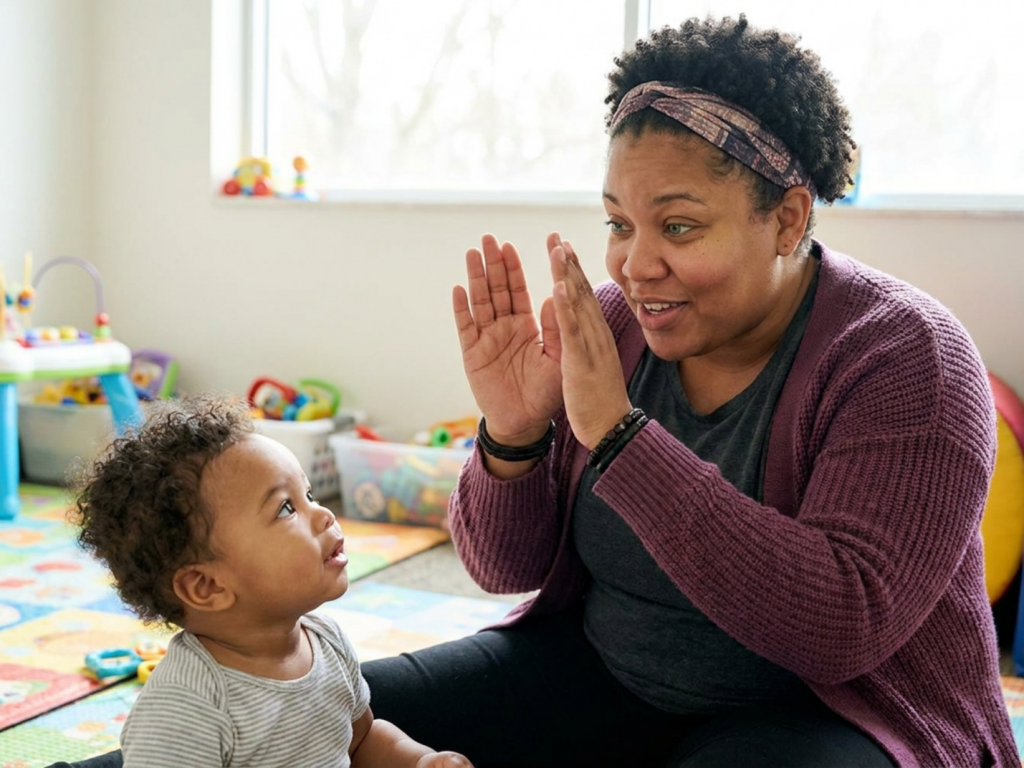
A baby who lights up before the chorus, kicks when a clapping game begins, or pauses expectantly before a caregiver says "peekaboo" is doing more than enjoying a cute routine. They are using memory, prediction, attention, motor planning, and social communication in a coordinated way.
Highlights
Anticipation is an early sign that a baby is learning patterns in sound, movement, and social routines.
Familiar songs and games can support attention, emotional regulation, turn-taking, and caregiver-baby connection.
Predictable routines should feel flexible and responsive, not forced; babies may need pauses, lower volume, or a simpler version.
Differences in response are common, but loss of skills, persistent distress, or lack of response to sound should be discussed with a healthcare professional.
What Anticipation Looks Like in Babies
Anticipation in infancy is the ability to expect what is likely to happen next. In familiar songs and games, it may appear as widening eyes before a favorite sound, stillness before a repeated phrase, kicking before a bounce, smiling before a silly ending, or turning toward the caregiver at the pause in a rhyme. These moments are small, but they reflect meaningful neurodevelopmental work: the baby is comparing current sensory input with stored experience.
Early anticipation is not the same as adult prediction. A young baby is not consciously analyzing rhythm or lyrics. Instead, repeated sensory patterns help the nervous system organize timing, attention, and emotional response. A lullaby sung in the same cadence, a hand-clap sequence, or a predictable “ready, set, go” game gives the baby a stable template. Over time, the baby may begin to prepare before the expected event occurs.
Caregivers often notice this first during routine care developmental moments: a diaper-change song, a bath-time rhyme, or a feeding cue. These are not formal lessons. They are ordinary interactions that become neurologically useful because they are repeated, emotionally warm, and responsive to the baby’s cues.
Why Familiar Songs Become Predictable
Music is especially powerful for anticipation because it contains repeated timing, pitch, contour, rhythm, and phrase structure. Neuroscience research on musical expectation describes the brain as constantly generating predictions about what sound should come next, then updating those predictions when the sound confirms or violates expectation. Reviews of music and the brain connect this predictive process with learning, action, and emotion.
Studies of sound-sequence anticipation show that listeners can form learned cue associations: one sound or phrase signals that another is coming. Research has also linked anticipation of sound sequences with activity in rostral prefrontal and premotor regions, areas involved in higher-order prediction and preparation for action. This evidence is not a direct diagnostic map for babies, but it helps explain why a familiar melody can feel bodily and emotionally engaging.
For an infant, the repeated opening notes of a song may become a cue for what follows. The caregiver’s face, posture, breathing, and rhythm add extra layers of predictability. This is one reason responsive singing with babies can feel so different from background music. The baby is not only hearing a tune; they are participating in a shared pattern.
Games Add Social Timing
Familiar games such as peekaboo, pat-a-cake, gentle bouncing songs, finger plays, and pause-and-surprise rhymes combine sensory prediction with social timing. A baby learns that the caregiver pauses, waits, smiles, and then completes the expected action. This structure supports serve-and-return interaction, in which the baby sends a signal and the caregiver responds in a matched, emotionally attuned way.
These games also offer cause-and-effect activities without needing complicated toys. A baby may learn that looking up, vocalizing, reaching, or wiggling can restart the game. That sense of participation matters. It can support infant social communication because the baby begins to experience communication as reciprocal: “I do something, my person notices, and something meaningful happens.”
Anticipatory pauses are especially useful. A caregiver might sing the first part of a line, pause before the final word, and watch. The baby may smile, move, vocalize, or simply hold attention. The goal is not performance. The pause gives the infant’s brain and body time to prepare, respond, and experience the satisfaction of a completed pattern.
Emotion, Regulation, and Attachment
Predictability can be soothing because it reduces uncertainty. A familiar song at bedtime, a repeated rhyme before a transition, or a consistent game after a diaper change can help some babies shift from one state to another. This does not mean songs are a medical treatment for crying, colic, sleep difficulties, or feeding distress. It means predictable sensory-social routines can be one supportive tool within responsive caregiving.
Musical expectation also has an emotional dimension. The pleasure of “knowing what comes next” may come from the balance between confirmation and gentle surprise. A caregiver might sing the same tune but vary facial expression, volume, or timing slightly. For many babies, this keeps the interaction engaging while preserving the safety of the familiar structure.
Caregiver singing and attachment are closely linked in everyday experience because the baby receives voice, eye contact, touch, rhythm, and emotional availability together. A medically literate way to frame this is co-regulation: the caregiver’s regulated nervous system helps organize the baby’s immature autonomic and behavioral state. The song is not magic by itself; the responsive relationship around the song is the therapeutic ingredient.
Developmental Differences Are Expected
Babies vary widely in how they show anticipation. One baby may squeal before the tickle; another may become very still and watch carefully. Some babies prefer voice-only songs, while others enjoy movement. Some need many repetitions before they show a clear response. Temperament, sleep pressure, hunger, illness, prematurity, hearing status, and sensory processing all influence what caregivers observe.
For preterm infants, corrected age for preterm babies may provide a more useful developmental frame than birth age when thinking about attention span, motor readiness, and interaction tolerance. A baby with medical complexity, reflux, respiratory vulnerability, neurologic differences, or feeding challenges may need shorter, gentler routines and more careful observation of stress cues.
Sound sensitivity in infants also deserves respect. A song that feels playful to an adult can be too loud, too close, too fast, or too stimulating for a baby. Signs of overload may include gaze aversion, finger splaying, hiccupping, yawning, arching, fussing, color change, or sudden disengagement. In these moments, lowering volume, slowing tempo, reducing movement, or stopping entirely is appropriate. Low-volume music for babies is usually a safer default than highly amplified sound.
How to Support Anticipation Safely
The most useful approach is simple, repetitive, and responsive. Choose a few familiar songs or games and use them during predictable parts of the day. Keep the baby’s body supported, avoid rough shaking or sudden jerking movements, and watch for cues that the baby wants more, less, or a pause. Music activities for infants work best when they fit the baby’s state rather than competing with it.
- Use a short repeated phrase, rhyme, or melody for transitions such as diaper changes or getting ready for sleep.
- Pause before the expected ending and give the baby time to look, move, vocalize, or settle.
- Match the intensity to the baby’s cues: softer, slower, and shorter when tired or overstimulated.
- Let the baby lead when possible by repeating a game after a smile, sound, reach, or attentive gaze.
- Stop if the baby shows distress, disengagement, breathing difficulty, color change, or unusual stiffness or limpness.
Concerns should be discussed with a pediatrician, audiologist, developmental specialist, or early intervention team if a baby does not respond to familiar voices, seems consistently unable to orient to sound, loses previously present social or motor responses, or has episodes that resemble seizures. Families do not need to interpret these signs alone; professional assessment can clarify whether hearing, neurologic, developmental, or medical factors are involved.
When to Be Cautious
- Seek medical advice if a baby loses previously present responses to songs, games, voices, or social interaction.
- Discuss hearing concerns promptly if a baby does not startle, orient, calm, or respond to familiar voices as expected.
- Stop games that involve rough bouncing, shaking, sudden neck movement, or any position that compromises breathing.
- Reduce or stop stimulation if the baby shows distress, color change, unusual stiffness, limpness, or breathing difficulty.
- Consult a healthcare professional if repetitive episodes look seizure-like or are associated with altered awareness.
Tools & Assistance
- Observe the baby’s cues during one familiar song and stop before fatigue or distress
- Use short anticipatory pauses in peekaboo, clapping games, or repeated rhymes
- Keep music low-volume and avoid headphones or loud amplified sound near the baby
- Ask a pediatrician about hearing, developmental, or neurologic concerns
- Contact early intervention services if communication or developmental concerns persist
FAQ
At what age do babies anticipate familiar songs or games?
There is wide variation. Some babies show early expectation through stilling, smiling, or increased attention in the first months, while clearer participation often grows as memory, motor control, and social communication mature.
Does anticipating a song mean my baby understands the words?
Not necessarily. The baby may be responding to rhythm, melody, timing, facial expression, movement, and repeated emotional context before understanding specific word meanings.
What if my baby does not enjoy songs or peekaboo?
Preference varies. Try softer voice, shorter routines, slower timing, fewer gestures, or a different time of day. Persistent lack of response to sound or social cues should be discussed with a healthcare professional.
Can familiar songs help with transitions?
They may help some babies because predictable cues can support co-regulation. They should be used gently and flexibly, not as a substitute for feeding, comfort, sleep support, or medical care when needed.
Is background music as useful as caregiver singing?
Background music may be pleasant, but caregiver singing adds responsiveness, facial expression, timing, touch, and social feedback, which are central to early relational learning.
Sources
- PubMed Central — Brain Activation during Anticipation of Sound Sequences
- PubMed — The role of expectation in music: from the score to emotions and the brain
- Nature Reviews Neuroscience — Music in the brain
Disclaimer
This article is for general educational purposes only and is not a diagnosis, treatment plan, or substitute for medical care. Consult a qualified healthcare professional for concerns about hearing, development, neurologic symptoms, or your baby’s health.















Please log in to leave a comment.