
Intro
Choosing where to give birth can feel both empowering and emotionally complex, especially when you are hoping for a natural birth with minimal intervention. A birth center and a planned home birth may both support physiologic labor, mobility, hydrotherapy, continuous support, and avoidance of routine epidural anesthesia, but they differ in environment, staffing models, equipment, transfer logistics, and local regulation.
This article compares these two out-of-hospital options through a medical and practical lens. It is intended to support informed conversations with midwives, obstetric clinicians, pediatric or neonatal teams, and emergency services—not to push any one setting as universally best.
Highlights
For carefully screened low-risk pregnancies, recent U.S. data suggest planned home births and planned birth center births can have comparable outcomes when attended by qualified professionals within an integrated system.
Neither setting is risk-free. Safety depends heavily on risk selection, skilled attendants, timely recognition of complications, and a clear pathway for transfer to hospital care.
A birth center may provide a more clinical safety net than home while still supporting natural birth, but it is not equivalent to a hospital operating room or neonatal intensive care unit.
Home birth offers maximal privacy and environmental control, yet emergency response depends on distance, transport time, and the local maternity care system.
Personal values matter, but medical eligibility should be reassessed continuously because pregnancy and labor risk status can change.
What natural birth means in these two settings
Natural birth usually means a vaginal birth that aims to preserve physiologic labor and avoid unnecessary intervention, particularly pharmacological pain relief such as epidural analgesia. In practice, the term is flexible. For one person, it may mean labor without pharmacological pain relief; for another, it may mean avoiding induction, continuous electronic monitoring, or routine intravenous fluids unless medically indicated. In both a birth center and a planned home birth, the central philosophy is typically to support the body’s own labor pattern while maintaining readiness to identify deviations from normal.
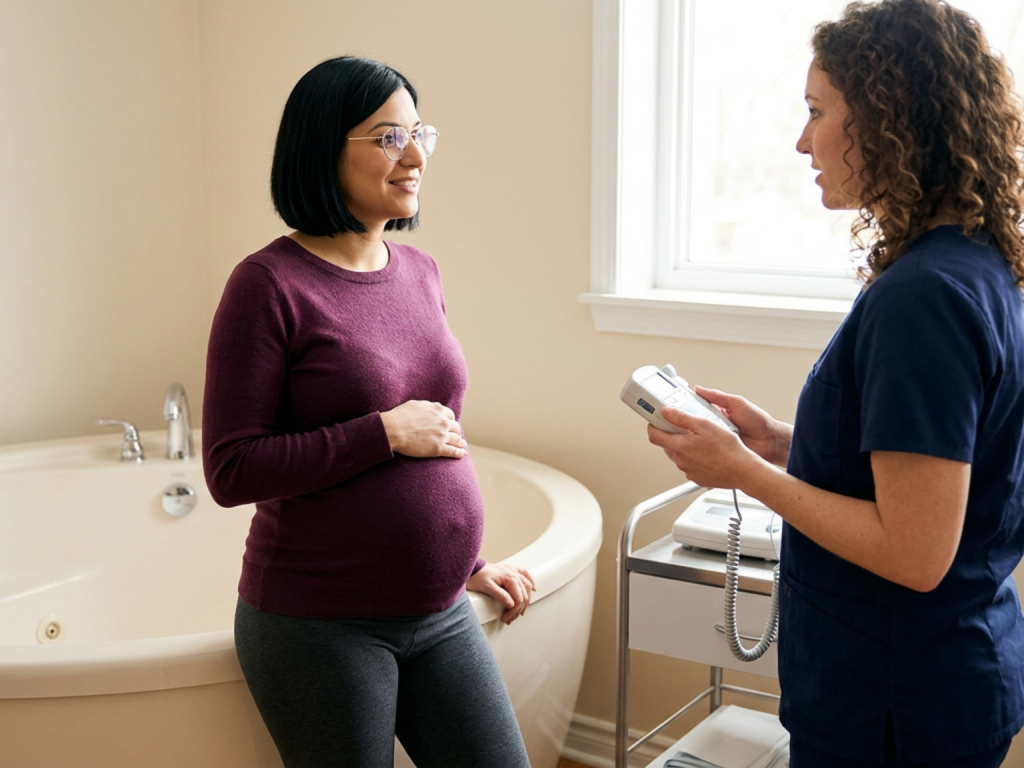
A birth center is a dedicated maternity facility, usually separate from an acute-care hospital, although some are adjacent to or affiliated with hospitals. It is designed for low-risk labor and commonly offers private rooms, tubs or showers, upright birth equipment, intermittent fetal auscultation, and family-centered care. A planned home birth occurs in the birthing person’s residence with a professional attendant, commonly a midwife, bringing portable supplies and emergency medications. Both settings can support unmedicated vaginal birth, mobility, hydration, nutrition in labor, and nonpharmacologic comfort measures.
The key distinction is not whether the birth is natural, but where the safety infrastructure sits. In a birth center, supplies, protocols, and staff workflows are already concentrated in one clinical location. At home, the environment is familiar and personally controlled, but equipment and personnel must be transported in, and escalation requires calling emergency medical services or transferring by private vehicle according to the plan.
Medical eligibility and risk selection
Out-of-hospital birth is generally considered only for carefully screened low-risk pregnancies. Low risk usually includes a singleton fetus, cephalic presentation near term, absence of major maternal medical disease, no significant fetal anomaly requiring immediate specialty care, and no active obstetric complication such as placenta previa, severe preeclampsia, or uncontrolled bleeding. Eligibility also depends on gestational age, local laws, clinician scope of practice, and distance to emergency obstetric services.
ACOG identifies fetal malpresentation and prior cesarean delivery as important contraindications for planned home birth, and many birth centers also exclude these circumstances. Vaginal birth after cesarean is medically nuanced because uterine rupture is rare but time-critical; some hospitals support it with surgical backup, while most freestanding out-of-hospital settings do not. Multiple gestation, breech presentation, significant hypertension, insulin-requiring diabetes, fetal growth restriction, post-term pregnancy beyond local protocol limits, and need for induction of labor may also make a hospital setting safer.
Risk status is not a label assigned once at the first prenatal visit. It should be revisited throughout pregnancy and labor. A person planning a home birth or birth center birth may appropriately transfer care before labor if anemia becomes severe, fetal position remains non-cephalic, membranes rupture for a prolonged period with infection concerns, or blood pressure rises. During labor, transfer may be recommended for abnormal fetal heart rate patterns, meconium with concerning signs, stalled progress, maternal exhaustion, request for epidural analgesia, fever, bleeding, or need for neonatal assessment.
Safety evidence: comparable does not mean identical
Research on birth setting is challenging because people who plan home birth, birth center birth, or hospital birth often differ in baseline risk, parity, access to care, and preferences. A large U.S. analysis published in PubMed Central reported that, among low-risk pregnancies, planned home births had outcomes comparable to planned birth center births, with no clinically meaningful differences in key maternal or neonatal outcomes such as NICU admission and perinatal death. The study also noted that its findings did not support a blanket assumption that birth centers are always preferable to home births for low-risk participants.
At the same time, ACOG’s guidance on planned home birth emphasizes that compared with hospital birth, planned home birth has been associated with fewer maternal interventions and fewer lacerations but also a more than twofold increased risk of perinatal death and a threefold increased risk of neonatal seizures in some analyses. These findings are not necessarily contradictory. They reflect differences in comparison groups, health system integration, emergency access, credentialing, and how outcomes are measured.
The National Academies report on birth settings stresses that no setting—hospital, birth center, or home—is risk-free. Hospitals offer immediate access to cesarean delivery, anesthesia, blood products, and advanced neonatal resuscitation, but they may also have higher rates of intervention for low-risk labor. Birth centers and home births may reduce exposure to interventions but require excellent screening and transfer systems. For a medically literate family, the most useful question is not simply “Which place is safest?” but “Which setting is safest for this pregnancy, with this attendant, under this local transfer system?”
Monitoring, pain support, and clinical capabilities
Both settings typically use intermittent fetal heart rate monitoring for low-risk labor rather than continuous electronic fetal monitoring, unless transfer or escalation is indicated. Intermittent auscultation can be appropriate in low-risk labor when performed according to protocol, but it requires disciplined timing, documentation, and clinical interpretation. Maternal vital signs, contraction pattern, fetal descent, cervical change when exams are accepted, hydration, urine output, and bleeding are also monitored.
Comfort care is often a major reason families consider out-of-hospital birth. Birth centers commonly provide tubs, showers, birth stools, mats, peanut balls, and space for movement. Home birth may offer the greatest freedom in lighting, positioning, food, music, and privacy. Techniques may include water immersion during labor, counterpressure, sterile water injections for back labor in some practices, breathing, massage, heat or cold therapy, and continuous doula or midwifery support. However, epidural anesthesia, operative vaginal delivery, and cesarean birth are not available in either a home setting or most freestanding birth centers.
Emergency capabilities vary. Qualified attendants may carry oxygen, suction, neonatal ventilation equipment, uterotonic medications for postpartum hemorrhage, intravenous supplies, and medications for certain urgent situations. Some birth centers may have additional equipment, more staff immediately present, and established transfer agreements. Neither setting can replace an operating room, blood bank, anesthesiology team, or NICU. This distinction matters most for rare but time-sensitive events such as placental abruption, cord prolapse, shoulder dystocia with neonatal depression, severe postpartum hemorrhage, or need for emergent cesarean delivery.
Transfer planning and system integration
A safe out-of-hospital plan should include transfer planning before labor begins. This means identifying the receiving hospital, estimating travel time at different times of day, clarifying who calls ahead, deciding whether emergency medical services or private transport will be used, and ensuring prenatal records can accompany the patient quickly. The plan should be discussed without shame. Transfer is not failure; it is a clinical tool.
Birth centers often have more formal relationships with hospitals, although the strength of those relationships varies widely. Some have written transfer agreements, shared electronic records, or established consultation pathways. Others may rely on general emergency department access. Home birth midwives may also have physician consultants and hospital relationships, but in some regions professional tensions or regulatory barriers make transfers slower or less collaborative. The National Academies report highlights that quality, access, and care system integration are central to improving safety across all birth settings.
When comparing a birth center and home birth, ask about actual transfer rates, reasons for transfer, average decision-to-arrival time, and how neonatal emergencies are handled. For first births, transfer for prolonged labor, pain relief, or exhaustion is more common than for subsequent births. For multiparous people with prior uncomplicated vaginal births, labor may progress faster, making proximity to emergency care especially relevant in a different way: there may be less time to relocate if risk changes suddenly.
Emotional, practical, and postpartum considerations
The emotional experience of birth setting matters. A birth center can feel like a middle ground: less institutional than a hospital, yet not dependent on preparing the home. It may be appealing for families who want natural birth with professional attendance during childbirth but prefer a dedicated clinical space. It may also reduce the burden of arranging supplies, cleaning, child or pet logistics, and household privacy.
Home birth can be deeply meaningful for those who feel safest in their own space. Familiar surroundings may lower catecholamine-driven stress responses, support oxytocin release, and help some people cope with contractions. It can also allow immediate postpartum bonding in one’s own bed, fewer disruptions, and a gentle transition for siblings when appropriate. Still, the home must be suitable for clinical work: clean space, access to water and electricity, adequate room for attendants, and a workable exit route for transfer.
Postpartum care also differs. Birth centers usually discharge within hours if parent and newborn are stable, with follow-up home visits or clinic checks depending on the practice. Home birth attendants remain for immediate postpartum monitoring and return for follow-up. In both settings, careful assessment is needed for postpartum hemorrhage, hypertensive symptoms, perineal trauma, urinary retention, breastfeeding difficulties, neonatal temperature instability, jaundice, feeding adequacy, and signs of infection. Newborn screening, vitamin K, erythromycin eye prophylaxis where recommended, hearing screening, and congenital heart disease screening should be planned in advance.
How to decide: questions for your care team
A thoughtful decision combines medical eligibility, local safety infrastructure, values, and contingency planning. It is reasonable to interview more than one clinician or practice. Ask about credentials, licensure, malpractice coverage, neonatal resuscitation certification, medication availability, consultation relationships, and how often they manage emergencies. If choosing a birth center, ask whether it is accredited and whether hospital transfer protocols are formalized. If choosing home birth, ask how many attendants come, what equipment they bring, and how they handle simultaneous emergencies involving parent and newborn.
It can help to compare options using concrete scenarios rather than general reassurance. What happens if fetal heart tones become persistently abnormal? What happens if the placenta does not deliver? What if there is heavy bleeding? What if the newborn needs positive-pressure ventilation for more than brief support? What if labor lasts long enough that the birthing person wants epidural analgesia? Clear answers should feel specific, calm, and medically grounded.
Finally, revisit the plan as pregnancy unfolds. A low-intervention birth plan is most protective when it includes permission to change course. The goal is not to prove that one setting was right at all costs; the goal is a respected, well-supported birth with appropriate safeguards for both parent and baby.
When out-of-hospital birth may be unsafe
- Seek urgent medical guidance for vaginal bleeding, severe headache, visual symptoms, chest pain, seizures, or decreased fetal movement.
- Planned home birth is generally not advised with fetal malpresentation, prior cesarean birth, or multiple gestation unless specialist guidance and local protocols clearly support care.
- Fever in labor, concerning fetal heart rate findings, or suspected placental abruption require immediate escalation.
- Heavy postpartum bleeding, faintness, or signs of shock are emergencies in any setting.
- A newborn with poor breathing, persistent cyanosis, low tone, or feeding difficulty needs urgent neonatal assessment.
Tools & Assistance
- Create a written transfer plan with your midwife or clinician before 36 weeks.
- Tour the birth center and ask to review emergency protocols.
- Discuss home birth eligibility with a licensed midwife and an obstetric clinician familiar with your history.
- Confirm newborn screening, vitamin K, and postpartum follow-up arrangements.
- Prepare a hospital bag even if planning an out-of-hospital birth.
FAQ
Is a birth center safer than home birth?
Not always. For carefully selected low-risk pregnancies, recent U.S. data show comparable outcomes, but safety depends on staffing, distance to hospital care, protocols, and individual risk factors.
Can I have an epidural in a birth center or at home?
No. Epidural analgesia requires hospital-level anesthesia services. If you want or need an epidural, transfer to a hospital is usually necessary.
Who is a good candidate for home birth or birth center birth?
Typically, a person with a low-risk, singleton, head-down pregnancy at term, without major maternal or fetal complications. Eligibility should be confirmed by qualified healthcare professionals.
Does transfer mean the birth plan failed?
No. Transfer is an important safety pathway. A strong birth plan includes clear criteria for when hospital care becomes the safest option.
What should I ask a midwife before planning home birth?
Ask about licensure, experience, emergency equipment, neonatal resuscitation training, transfer relationships, hospital distance, and outcomes for clients with pregnancies similar to yours.
Sources
- National Center for Biotechnology Information / PubMed Central — Planned Home Births in the United States Have Outcomes Comparable to Planned Birth Center Births for Low-Risk Pregnancies
- American College of Obstetricians and Gynecologists — Planned Home Birth
- National Academies of Sciences, Engineering, and Medicine — Birth Settings in America: Outcomes, Quality, Access, and Choice
Disclaimer
This article is for informational purposes only and does not replace individualized medical advice. Discuss birth setting, eligibility, and emergency planning with qualified healthcare professionals.
















Please log in to leave a comment.