
Intro
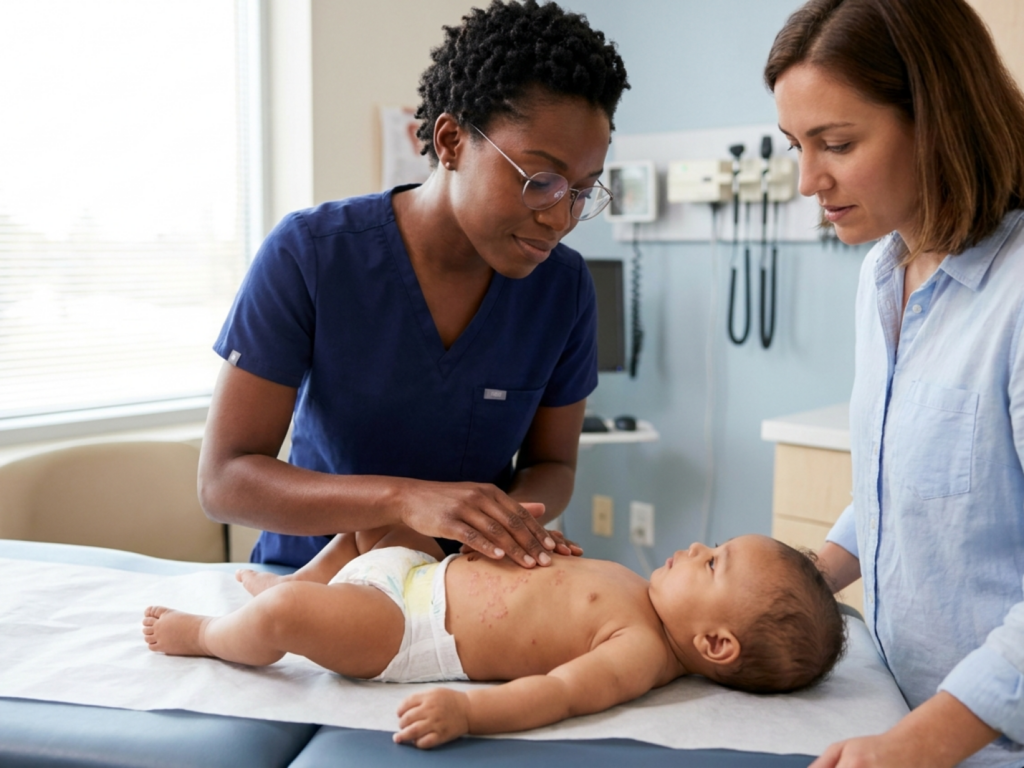
Baby skin rashes can look dramatic, appear quickly, and understandably make parents worry. The reassuring reality is that many newborn and infant rashes are benign, temporary changes related to immature skin barrier function, blocked pores, heat, friction, moisture, or normal adaptation after birth.
Highlights
Many newborn rashes are self-limited, but vesicles, pustules, fever, poor feeding, lethargy, or a rapidly spreading rash deserve prompt medical assessment.
The rash pattern matters: location, timing, texture, associated symptoms, and whether the baby seems well can help clinicians narrow the possibilities.
Gentle skin care, reducing moisture and friction, and avoiding irritants often support recovery, but medicated treatments should be guided by a healthcare professional.
Diaper rash, heat rash, eczema, cradle cap, hives, and common newborn eruptions can overlap visually, so caution is appropriate when the diagnosis is unclear.
Why baby skin rashes happen
Baby skin is not simply smaller adult skin. In early life, the stratum corneum, epidermal barrier, sweat glands, hair follicles, immune signaling, and skin microbiome are still adapting. This makes infant skin more reactive to heat, saliva, milk residue, urine, stool enzymes, detergents, friction, and prolonged moisture. A rash may therefore reflect irritation rather than infection, allergy, or a chronic disease.
Clinicians often begin by asking when the rash appeared, where it started, whether it blanches with pressure, and whether there are vesicles, pustules, scaling, crusting, swelling, or skin breakdown. They also look at the whole baby: feeding, temperature, breathing, alertness, urine output, and comfort. A baby who is otherwise well with a localized, mild rash is different from a newborn with fever, lethargy, poor feeding, or widespread blistering. Supportive observation can be appropriate for many benign eruptions, but diagnosis should not be made from appearance alone when warning signs are present.
Common newborn skin conditions
Several common newborn skin conditions appear in the first days or weeks and resolve without scarring. Erythema toxicum neonatorum often looks like blotchy red patches with small central bumps or pustule-like papules, usually on the trunk, face, and limbs. Despite its alarming name, it is generally benign in a well newborn. Transient neonatal pustular melanosis can leave tiny pustules or pigmented macules, often present at birth. Milia are small white keratin cysts, especially on the nose and cheeks, and usually disappear as pores mature.
Newborn acne, also called neonatal cephalic pustulosis in some contexts, may cause small papules and pustules on the cheeks, forehead, or scalp. Cradle cap, or infantile seborrheic dermatitis, produces greasy yellow scale on the scalp and sometimes the eyebrows or skin folds. Peeling skin is also common after birth, particularly in babies born after their due date. These findings are usually managed with reassurance and gentle care, but pustules or blisters in a newborn should still be assessed carefully if the baby seems unwell, the lesions are widespread, or infection is possible.
Irritation, diapers, saliva, and friction
Irritant contact dermatitis is one of the most common mechanisms behind baby rashes. In the diaper area, urine, stool, moisture, occlusion, and rubbing weaken the skin barrier. A typical irritant diaper rash often affects convex surfaces that touch the diaper, while skin folds may be relatively spared. Candida diaper dermatitis is more likely when a rash is beefy red, involves folds, or has satellite papules, but a clinician should confirm suspected yeast involvement before medicated treatment is used.
Outside the diaper area, drool rash can affect the cheeks, chin, neck folds, and upper chest. Milk, saliva, pacifier friction, teething moisture, and frequent wiping all contribute. Neck, thigh, and armpit folds can also become irritated because warm, damp skin rubs against itself. Practical care focuses on reducing triggers: change wet diapers promptly, use fragrance-free wipes or water when skin is very irritated, pat rather than scrub, allow brief diaper-free air time when safe, and use a simple barrier product if recommended. A gentle baby hygiene routine should protect the barrier rather than over-cleaning it.
Heat rash, eczema, hives, and infection patterns
Heat rash, or miliaria, occurs when sweat ducts become blocked. It often appears as tiny bumps or clear vesicles in warm, occluded areas such as the neck, chest, back, or skin folds. Cooling the environment, using breathable clothing, and avoiding overheating often help. Atopic dermatitis, commonly called eczema, tends to be itchy, recurrent, and dry or inflamed. In infants it may involve cheeks, scalp, trunk, and extensor surfaces, though patterns vary with age. Because scratching can break the barrier, eczema can become secondarily infected.
Hives are raised, transient wheals that may move around the body. Baby hives and facial swelling after food, medicine, insect sting, or other exposure can suggest an allergic reaction, especially if accompanied by vomiting, coughing, wheeze, hoarse cry, breathing difficulty, or unusual sleepiness. Viral rashes can be widespread and may occur with fever or respiratory or gastrointestinal symptoms. Bacterial or viral skin infections may cause spreading redness, warmth, pain, honey-colored crusting, pus, blisters, or tenderness. These patterns overlap, so persistent, painful, blistering, or systemic rashes need professional evaluation.
Red flags that need medical review
Parents are not expected to identify every rash. The more useful skill is knowing when a rash should not be watched at home. A newborn under three months with fever, poor feeding, marked sleepiness, weak cry, breathing difficulty, or a rapidly worsening rash should be assessed urgently. Vesicles, true blisters, extensive pustules, purple or non-blanching spots, skin peeling in sheets, swelling around the eyes or lips, or signs of dehydration are also concerning.
Same-day advice is sensible when a rash is painful, spreading quickly, associated with a hot swollen area, oozing pus, or not improving despite gentle skin measures. Diaper rash that bleeds, ulcerates, or persists may need a clinician to check for yeast, bacterial infection, psoriasis, nutritional issues, or another diagnosis. A rash after a new medicine, vaccine, food, or product should be discussed with a healthcare professional, especially if there is baby hives and facial swelling or any breathing symptom. Trusting your concern is appropriate; rashes can be benign, but babies can change quickly.
Gentle care while waiting for advice
For a well baby with a mild rash and no warning signs, conservative barrier care is usually the safest starting point. Use lukewarm water, short baths, and a mild fragrance-free cleanser only where needed. Pat skin dry, moisturize dry areas with a thick non-fragranced moisturizer if tolerated, and avoid perfumed lotions, essential oils, adult acne products, antiseptic washes, and topical antibiotics unless specifically advised. Infant skin barrier disruption can worsen when products are layered too aggressively.
Clothing and bedding should be soft, breathable, and washed with a simple detergent. Avoid overheating, because sweat and occlusion can amplify irritation. Keep nails short to reduce scratching injury. Take clear photos in natural light if the rash changes, because timing and evolution help clinicians. Note fever, feeding, stool changes, new foods, medicines, detergents, wipes, creams, or sick contacts. This information helps a healthcare professional distinguish benign newborn rashes from infection, allergy, eczema, and contact dermatitis without relying on guesswork.
Seek medical help urgently if
- A baby younger than three months has a fever or seems unusually sleepy, floppy, or difficult to wake.
- The rash includes blisters, widespread pustules, purple non-blanching spots, or rapidly spreading redness.
- There is breathing difficulty, repetitive vomiting, facial swelling, or hives after a possible allergen exposure.
- The skin is painful, hot, swollen, draining pus, bleeding, ulcerated, or peeling extensively.
- The baby is feeding poorly, has fewer wet diapers, or appears dehydrated or seriously unwell.
Tools & Assistance
- Take dated photos of the rash in natural light to show a pediatric clinician.
- Track fever, feeding, diaper output, new products, medicines, foods, and sick contacts.
- Use fragrance-free cleansing, gentle drying, breathable clothing, and barrier protection when appropriate.
- Contact a pediatrician, nurse advice line, urgent care, or emergency services based on severity.
FAQ
Are most newborn rashes dangerous?
No. Many newborn rashes and skin changes are benign and self-limited, but fever, blisters, extensive pustules, poor feeding, or a baby who seems unwell should prompt medical review.
Can I put adult rash cream on my baby?
Avoid adult acne creams, steroid creams, antiseptics, antifungals, or antibiotic ointments unless a healthcare professional recommends them for that specific baby and rash.
How can I tell eczema from a simple irritation rash?
Eczema is often recurrent, itchy, dry, and inflamed, while irritant rashes often match areas of moisture, rubbing, saliva, urine, stool, or product contact. A clinician can help distinguish them.
When should diaper rash be checked?
Seek advice if it is severe, bleeding, blistering, ulcerated, spreading beyond the diaper area, associated with fever, or not improving with gentle diaper care.
Sources
- PubMed — Newborn Skin: Part I. Common Rashes and Skin Changes
- MedlinePlus — Skin findings in newborns
- Mayo Clinic — Common baby rashes
Disclaimer
This article is for general medical information only and does not diagnose or treat any condition. Always consult a pediatrician or qualified healthcare professional about a baby’s rash, especially if warning signs are present.















Please log in to leave a comment.