
Intro
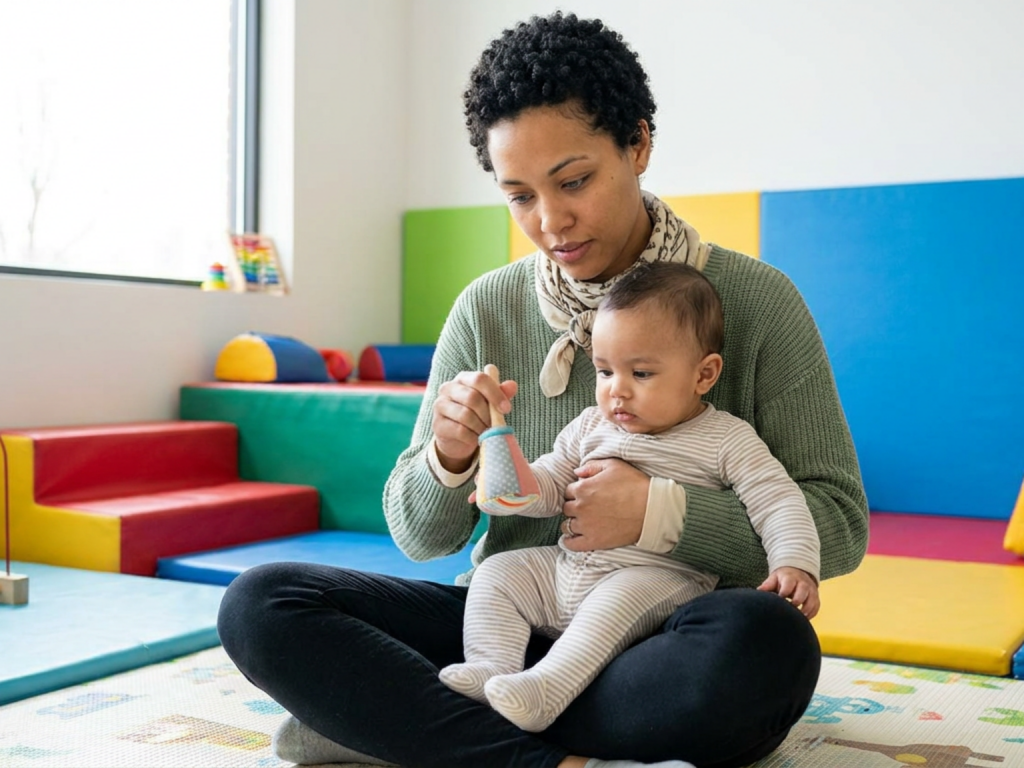
Sound and music can be a gentle, low-cost way to connect with a baby while supporting early communication, regulation, movement, and social development. For infants, music is not about performance or formal lessons; it is about warm, repeated, responsive interactions such as singing during diaper changes, rocking to a lullaby, or pausing when a baby coos back.
Highlights
Babies benefit most from responsive sound play, where the caregiver notices the baby’s cues and adjusts volume, rhythm, and pace.
Singing, body sounds, lullabies, and simple instruments can support early listening, turn-taking, motor planning, and attachment.
Music should stay safe and soothing: avoid loud volumes, small choking hazards, and overstimulation, especially when a baby is tired or unwell.
Sound play can be woven into routine care developmental moments rather than added as another demanding task.
Why music matters in infancy
A baby’s auditory system begins processing rhythm, pitch, tone, and familiar voices long before they can speak. In the first year, the brain is rapidly forming neural pathways that connect sensory input with movement, emotion, attention, and early communication. Music is especially useful because it combines predictable patterns with human connection: a repeated melody, a caregiver’s face, gentle touch, and pauses that invite the baby to respond.
Simple songs can support early language activities for babies because they exaggerate the features of speech. The slower tempo, repetition, rhyme, and melodic contour of singing make it easier for babies to notice syllables, changes in pitch, and the emotional meaning of a voice. A caregiver singing “up, up, up” while lifting a baby’s arms is pairing sound with movement and meaning. Over time, this kind of pairing supports receptive language, the ability to understand words before producing them.
Music also helps attachment. When a caregiver watches the baby’s face, adjusts the song to match the baby’s state, and pauses for coos or smiles, the interaction becomes a serve-and-return interaction. The baby learns that their sounds, gaze, and movements influence another person. This is not a music lesson; it is a relationship-building exchange that supports social-emotional regulation.
Start with the baby’s cues
The most effective sound and music activities are responsive. A newborn may tolerate only a few seconds of soft humming, while an older infant may enjoy several minutes of clapping games or a shaker. Watch for engagement cues such as relaxed limbs, bright eyes, turning toward the sound, cooing, smiling, or rhythmic kicking. Also watch for overstimulation signs in babies, including turning away, arching, finger splaying, hiccupping, yawning, fussing, frantic movements, or a sudden glazed expression.
Volume matters. Babies have delicate hearing, and loud toys or amplified music close to the ear can be harmful. Keep music at conversational volume, hold noisy toys away from the baby’s face, and avoid placing speakers near cribs, car seats, or strollers. If an adult needs to raise their voice over the music, it is too loud for infant play.
Timing also matters. Music can be alerting or calming depending on tempo, volume, and the baby’s state. A lively chant may be perfect after a nap, but too much before sleep. For low-stimulation sleep transitions, use a slower tempo, dimmer environment, and fewer competing sounds. If a baby was born preterm, consider corrected age for preterm infants when choosing expectations; the baby’s sensory tolerance and motor readiness may align more closely with corrected age than chronological age.
Gentle activities for newborns to three months
For very young babies, sound play should be brief, soft, and anchored in closeness. Newborns are still learning to organize sensory information, so the caregiver’s voice is often the best “instrument.” Try humming during feeding preparation, singing a simple lullaby while holding the baby upright after a feed, or using a calm sing-song voice during a diaper change. These moments turn routine care into safe newborn play activities without overstimulation.
Face-to-face interaction with newborns is especially valuable. Hold the baby where they can see your face, usually about 8 to 12 inches away, and sing slowly. Pause after a phrase. If the baby blinks, widens their eyes, moves their mouth, or makes a tiny sound, respond as if it matters, because it does. This supports early turn-taking, even before intentional conversation exists.
Body sounds are another simple option. Softly click your tongue, make gentle “mmm” sounds, or tap a slow rhythm on your own chest while the baby rests against you. Avoid startling noises and sudden changes. Some babies enjoy being rocked in time with a lullaby, but movement should be smooth and fully supported, with the head and neck protected. If a baby becomes tense, looks away, or cries, stop and provide quiet comfort.
Sound play for older babies
As babies gain head control, hand awareness, and social interest, music can become more interactive. Between about 4 and 12 months, many babies enjoy songs with predictable gestures: waving, clapping, tapping knees, opening and closing hands, or gently bouncing while held securely. These activities connect auditory processing with body awareness and motor planning.
Try a simple call-and-response pattern. Make a sound such as “ba-ba” or “mmm,” then pause. If the baby vocalizes, imitate the sound warmly. This validates the baby’s communication attempt and encourages experimentation with pitch, volume, and mouth movements. Babies do not need to pronounce words clearly for the exchange to be meaningful.
- Sing the same short song before bath time, feeding, or stroller walks to create predictable routines.
- Offer a soft shaker or sealed baby-safe rattle and model slow shaking, stopping, and starting.
- Dance while holding the baby close, using slow side-to-side movement and watching for comfort cues.
- Blow gentle raspberries on your own hand or in the air, then pause to see whether the baby responds.
- Use action songs during supervised tummy time while awake, placing yourself at the baby’s eye level.
Repetition is not boring to babies. It is neurologically useful. Familiar songs help babies anticipate what comes next, and anticipation supports attention, memory, and emotional security.
Using music for routines and transitions
Music can help babies understand the rhythm of the day. A consistent song before a nap, a playful chant before getting dressed, or a soft melody during cleanup gives auditory structure to events that babies cannot yet understand verbally. This is especially helpful during transitions, when a baby may feel surprised or dysregulated.
For example, a caregiver might sing the same two-line song before putting the baby into the high chair. Over time, the song becomes a cue: “food is coming.” Another song during diaper changes can make a necessary care task feel more predictable. These routine care developmental moments do not require extra toys or time; they simply add connection and pattern to activities already happening.
Music can also support co-regulation, the process by which an adult helps a baby settle through calm presence, voice, touch, and predictable rhythm. A slow lullaby, gentle rocking, and relaxed breathing can lower arousal for some babies. However, music is not a guaranteed treatment for crying. Persistent crying, feeding difficulty, fever, lethargy, respiratory distress, or a sudden change in behavior should be discussed with a healthcare professional promptly.
For families using recorded music, choose calm, simple tracks and keep them in the background rather than constant. Live caregiver singing, even off-key, is often more valuable than passive listening because it includes eye contact, timing, emotional warmth, and responsiveness.
Choosing safe instruments and sound toys
Baby-safe instruments can be enjoyable when chosen carefully. Look for items that are too large to fit fully in the mouth, have no detachable small parts, and are easy to clean. Soft rattles, fabric crinkle toys, securely sealed shakers, and large baby drums can provide sound variety without excessive complexity. Always follow age labeling and inspect toys regularly for cracks, loose seams, leaking beads, or broken parts.
Household objects can also create safe sound play when supervised. A wooden spoon tapped gently on an upside-down plastic bowl, crinkly paper held by the caregiver, or a scarf moved slowly while singing can be engaging. Avoid objects with sharp edges, button batteries, magnets, long cords, or small pieces. Button batteries and high-powered magnets are medical emergencies if swallowed.
Be cautious with electronic toys marketed as educational. Some are very loud, overstimulating, or designed for passive button-pressing rather than interaction. If you use them, check the volume near your own ear first, choose the lowest setting, and sit with the baby so the toy becomes part of a shared exchange. The developmental value is usually in the caregiver-baby interaction, not in the device itself.
When to seek professional guidance
Sound and music play should feel flexible and supportive, not like a milestone test. Babies vary widely in temperament, sensory preferences, motor readiness, and response to noise. Some babies are highly alert to sound; others need more time to orient. Still, certain patterns are worth discussing with a pediatrician, audiologist, or early intervention professional.
Ask for guidance if a baby does not startle to loud sounds in the newborn period, does not turn toward familiar voices when developmentally expected, loses previously present vocalizations, seems consistently distressed by ordinary household sounds, or has recurrent ear infections with concerns about hearing. Also seek help if caregivers notice developmental regression in babies, such as reduced eye contact, fewer sounds, or loss of social engagement.
Families with neonatal intensive care history, prematurity, congenital infections, craniofacial differences, certain genetic conditions, or medications associated with ototoxicity may already have a recommended hearing follow-up plan. Keep those appointments even if the baby appears to respond to sound at home, because mild or frequency-specific hearing differences can be difficult to detect without formal testing.
If music activities consistently upset a baby, simplify rather than push. Try silence, then a single soft voice, then short humming. The goal is not stimulation for its own sake; it is safe, attuned connection.
Safety notes
- Keep music and sound toys at a low, conversational volume.
- Avoid small parts, button batteries, magnets, long cords, and broken instruments.
- Stop sound play if the baby shows distress, fatigue, or overstimulation cues.
- Do not use music to delay urgent care for fever, breathing difficulty, lethargy, dehydration signs, or persistent inconsolable crying.
- Consult a pediatrician or audiologist for hearing concerns, regression, or unusual sound sensitivity.
Tools & Assistance
- Pediatrician visit for hearing, feeding, sleep, or developmental concerns
- Pediatric audiology evaluation if hearing responses seem inconsistent
- Early intervention referral for communication, motor, or sensory concerns
- Baby-safe rattles, soft shakers, fabric crinkle toys, and washable rhythm toys
- Caregiver voice notes or a simple song list for predictable daily routines
FAQ
Does my baby need special music for brain development?
No. Babies benefit most from warm, responsive interaction. A caregiver singing a simple repeated song is often more useful than a specialized playlist.
Is it okay if I cannot sing well?
Yes. Your baby responds to your familiar voice, rhythm, facial expression, and emotional tone, not musical perfection.
How long should music play last?
Follow the baby’s cues. A newborn may enjoy less than a minute, while an older baby may engage for several minutes if calm and interested.
Can music help with sleep?
Soft, predictable music may support a calming routine, but it should be low volume and not replace safe sleep practices or medical advice for sleep or crying concerns.
When should I worry about hearing?
Discuss concerns promptly if your baby does not startle to loud sounds, does not orient to voices as expected, has recurrent ear problems, or loses vocal or social skills.
Sources
- ZERO TO THREE — Beyond Twinkle, Twinkle: Using Music with Infants and Toddlers
- Raising Children Network — Sound and music play for babies
- Moms on Call — Music and Development: 6-15 Months
Disclaimer
This article is for general educational purposes and is not a diagnosis or treatment plan. For concerns about hearing, development, crying, sleep, or illness, consult a qualified healthcare professional.














Please log in to leave a comment.