
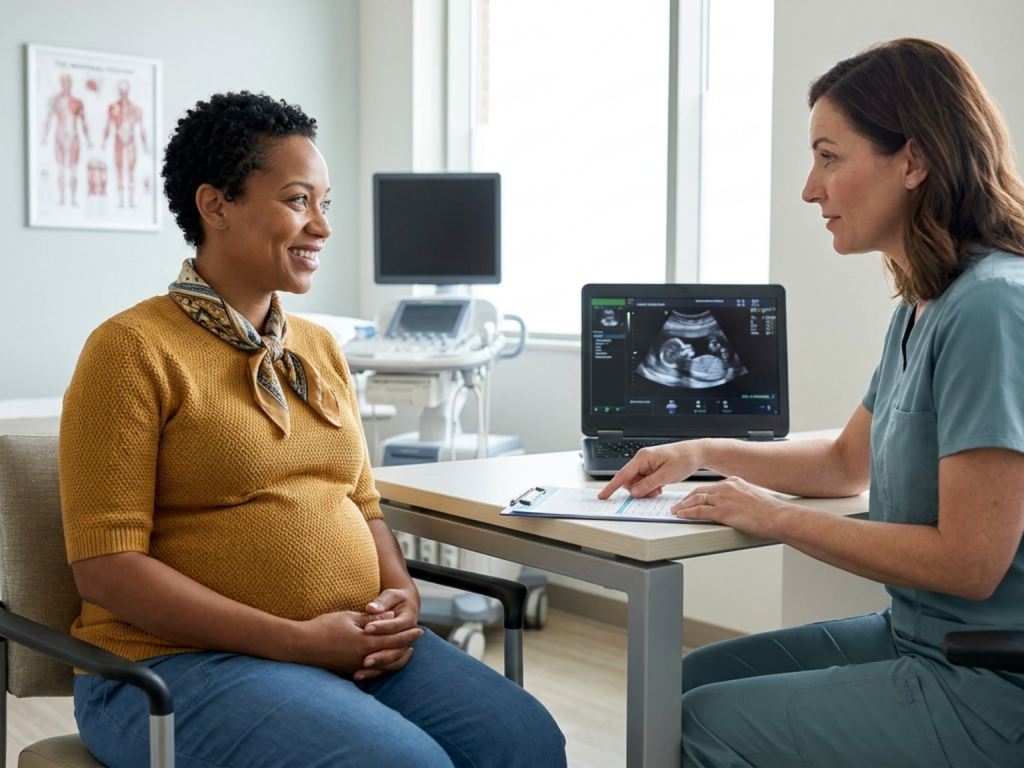
Intro
Being told that a pregnancy is “high risk” can feel unsettling, even when everything is currently stable. In practice, the label is a clinical shorthand: it means the chance of maternal, fetal, or obstetric complications is higher than average, so care should be more individualized and often more closely monitored.
There is not one single universal definition. Across studies and health systems, classification varies, and clinicians typically combine maternal history, current pregnancy findings, and fetal assessment to decide how much surveillance is appropriate. The goal is not to create alarm; it is to match care intensity to risk.
Highlights
“High risk” does not mean a bad outcome is inevitable; it means the probability of complications is higher than usual.
Classification is dynamic. A pregnancy can move into or out of a higher-risk category as new information appears.
Maternal conditions, obstetric history, pregnancy complications, and fetal findings all contribute to risk stratification.
A higher-risk label often leads to more frequent prenatal visits, targeted testing, and specialist input.
Clear communication helps: ask what specifically triggered the classification and what the care plan is designed to prevent.
Why there is no single universal definition
High-risk pregnancy is not a single diagnosis with one fixed definition. The literature shows substantial variation across studies and health systems, which is one reason the term can be frustrating for patients and clinicians alike. In general, it is a risk stratification concept rather than a disease category.
Most frameworks ask a practical question: compared with an uncomplicated pregnancy, is the chance of a complication clearly higher for the pregnant person, the fetus, or both? The answer may depend on medical history, current symptoms, ultrasound findings, laboratory results, or prior obstetric outcomes. Some systems emphasize maternal factors such as chronic disease; others give more weight to fetal or placental findings. The classification can therefore look different from one clinic to another, even when the overall clinical reasoning is similar.
This flexibility is useful, but it also means the label should always be interpreted in context. A pregnancy can be “high risk” for one specific reason, yet remain very manageable with the right monitoring and planning.
What clinicians look at when assigning risk
Risk classification usually begins at the first prenatal visit, when clinicians review past pregnancies, current medications, surgical history, family history, and baseline health. They also look for evidence of conditions that may affect placental function, blood pressure control, glucose metabolism, clotting risk, or fetal growth. A focused physical examination and initial lab work often help fill in the picture.
Importantly, the classification is not static. If new symptoms develop or a screening test shows an abnormality, the level of concern can change. For example, a pregnancy that began as routine may later need closer surveillance because of hypertension, bleeding, abnormal fetal growth, or premature contractions.
Many teams use a formal prenatal care risk assessment to decide how often visits should occur and whether specialist involvement is appropriate. The exact tool may differ by institution, but the goal is the same: identify which pregnancies need standard care and which need additional layers of observation.
Common maternal factors that raise risk
Maternal health is one of the most important pieces of the classification process. Preexisting conditions such as chronic hypertension, diabetes, kidney disease, autoimmune disease, heart disease, and some bleeding or clotting disorders can increase the chance of complications in pregnancy. Age can also matter; very young or older maternal age is often considered in the overall assessment, especially when combined with other risks.
Body mass index, prior substance use, and barriers to consistent prenatal care may also influence the risk profile. These factors do not define a person or predict an outcome by themselves, but they can affect how closely the pregnancy should be watched.
Good chronic condition management in pregnancy can lower risk, but it does not always remove the need for closer monitoring. A well-controlled condition still deserves respect because pregnancy changes blood volume, kidney workload, insulin sensitivity, and cardiovascular demands. In other words, “controlled” is reassuring, but it is not the same as “no risk.”
Pregnancy-related and fetal factors
Some pregnancies are classified as higher risk because of findings that arise during pregnancy itself rather than because of a preexisting condition. Multiple gestation is a classic example: twins or higher-order multiples place more strain on the uterus, placenta, and maternal physiology, so surveillance is usually intensified.
Placental disorders, preeclampsia, preterm labor, placenta previa, growth restriction, and abnormal fetal testing can all shift a pregnancy into a higher-risk category. Fetal structural anomalies, genetic concerns, or issues with amniotic fluid may also prompt more specialized evaluation. The point is not that any one finding guarantees harm, but that each finding changes the probability landscape.
Because these problems can emerge later, classification often evolves throughout pregnancy. A woman who has an uncomplicated first trimester may still require more frequent assessments in the third trimester if fetal growth slows or blood pressure begins to rise. That is why ongoing reassessment is central to high-risk care.
What extra monitoring and care may involve
When a pregnancy is classified as high risk, the care plan usually becomes more structured. Visits may be scheduled more often, blood pressure and laboratory trends may be reviewed more closely, and fetal growth may be tracked over time. Depending on the reason for the classification, clinicians may recommend serial growth ultrasounds, antenatal testing such as biophysical profiles, or other targeted studies.
Specialist input is common as well. Maternal-fetal medicine follow-up can be useful when there is a complex maternal condition, a significant fetal issue, or uncertainty about timing of delivery. A High-risk pregnancy monitoring plan may combine several components: symptom review, fetal surveillance, medication review, and discussion of when delivery would be safest. Not every patient needs every test; the plan should fit the specific risk profile.
In some cases, delivery planning becomes part of the monitoring strategy. If there is concern about placental function, worsening blood pressure, or fetal well-being, the team may discuss timing, location, and mode of birth well in advance so the plan is clear if the situation changes.
How to interpret the label without panic
A high-risk label can be emotionally heavy, but it is best understood as a call for precision, not panic. It does not automatically mean hospitalization, surgery, or a poor outcome. Many high-risk pregnancies end in healthy births, especially when concerns are identified early and care is coordinated well.
If you receive this classification, it is reasonable to ask a few focused questions: What is the specific reason for the label? What outcomes are you trying to prevent? Which signs should prompt a call or urgent evaluation? Which team members are responsible for follow-up? Clear answers reduce uncertainty and help you participate in shared decision-making.
It is also helpful to know the urgent warning signs in pregnancy that your clinicians want you to report immediately, such as heavy bleeding, severe headache, sudden swelling, painful contractions, decreased fetal movement, or severe abdominal pain. Your exact warning list will depend on the reason your pregnancy is being monitored more closely. When in doubt, contact your maternity team rather than trying to self-triage.
Finally, remember that classification can change. Improvement in blood pressure control, reassuring fetal growth, or resolution of a temporary problem may lower concern, while new findings may raise it. The label is a snapshot, not a life sentence.
When to seek urgent help
- Heavy vaginal bleeding or fluid leakage
- Severe headache, vision changes, or sudden swelling
- Markedly reduced fetal movement
- Persistent abdominal pain or regular contractions before term
- Shortness of breath, chest pain, or fainting
Tools & Assistance
- Obstetrician, midwife, or maternal-fetal medicine specialist for individualized risk review
- Written prenatal record with test results, medications, and prior pregnancy history
- Symptom log for blood pressure readings, fetal movement, bleeding, or contractions
- Emergency contact plan for after-hours maternity concerns
- Hospital or clinic patient education materials for your specific condition
FAQ
Does high-risk pregnancy mean something is definitely wrong?
No. It means the probability of complications is higher, so care is adjusted accordingly. Many high-risk pregnancies progress well.
Can a pregnancy become high risk later on?
Yes. Risk is reassessed throughout pregnancy, so new maternal, placental, or fetal findings can change the classification.
Is a chronic illness always enough to make a pregnancy high risk?
Not always by itself, but chronic conditions often increase surveillance needs. The full clinical picture matters, including severity and control.
Why do different clinicians sometimes use the term differently?
There is no single universal definition. Different studies and health systems emphasize different maternal, fetal, and obstetric factors.
Sources
- PubMed Central (PMC) — Defining high-risk pregnancy: Protocol for a systematic scoping review
- Mayo Clinic — High-Risk Pregnancy: Know what to expect
- NICHD — What are some factors that make a pregnancy high risk?
Disclaimer
This article is for general information only and does not replace care from a qualified clinician. If you have concerns about your pregnancy or urgent symptoms, contact your obstetric team or seek emergency care.


















Please log in to leave a comment.