
Intro
Pregnancy can make ordinary decisions feel higher-stakes, and that can be emotionally exhausting. A helpful way to think about safety is to separate behaviors into those that are generally protective, those that are clearly risky, and those that need individual review because context matters.
This is not about judging anyone’s choices. It is about understanding mechanism, timing, dose, and alternatives so you can work with your prenatal team from a place of clarity rather than fear.
Highlights
Safe and unsafe behaviors in pregnancy are best understood as context-dependent, not as moral labels.
Folate, prenatal care, and infection prevention are foundational protective behaviors.
Alcohol, nicotine, recreational drugs, and unreviewed medicines are common higher-risk exposures.
When evidence is unclear, the safest next step is a timely review with a clinician or pharmacist.
A practical framework for safe, unsafe, and uncertain behaviors
It helps to think about behavior in pregnancy as a spectrum rather than a simple yes-or-no test. In occupational safety research, actions are often described as safe or unsafe, intentional or unintentional; that framing translates well here because pregnancy involves both deliberate choices and exposures that happen without anyone meaning harm. A behavior may be relatively safe in one dose or context and risky in another. Timing matters, especially in the first trimester when organogenesis is rapid, but later gestation also has its own vulnerabilities.
For a medically literate reader, the most useful question is not “Is this always forbidden?” but “What is the mechanism of risk, and is there a safer alternative?” For example, a medication can be therapeutic when reviewed by a clinician and unsafe when taken without that review. Likewise, a workplace exposure may be acceptable with ventilation and personal protective equipment, but risky if repeated and unprotected. This is the logic behind a practical pregnancy safety conversation: classify the behavior, estimate the dose and frequency, and consider gestational stage and baseline risk.
Behaviors that usually support pregnancy health
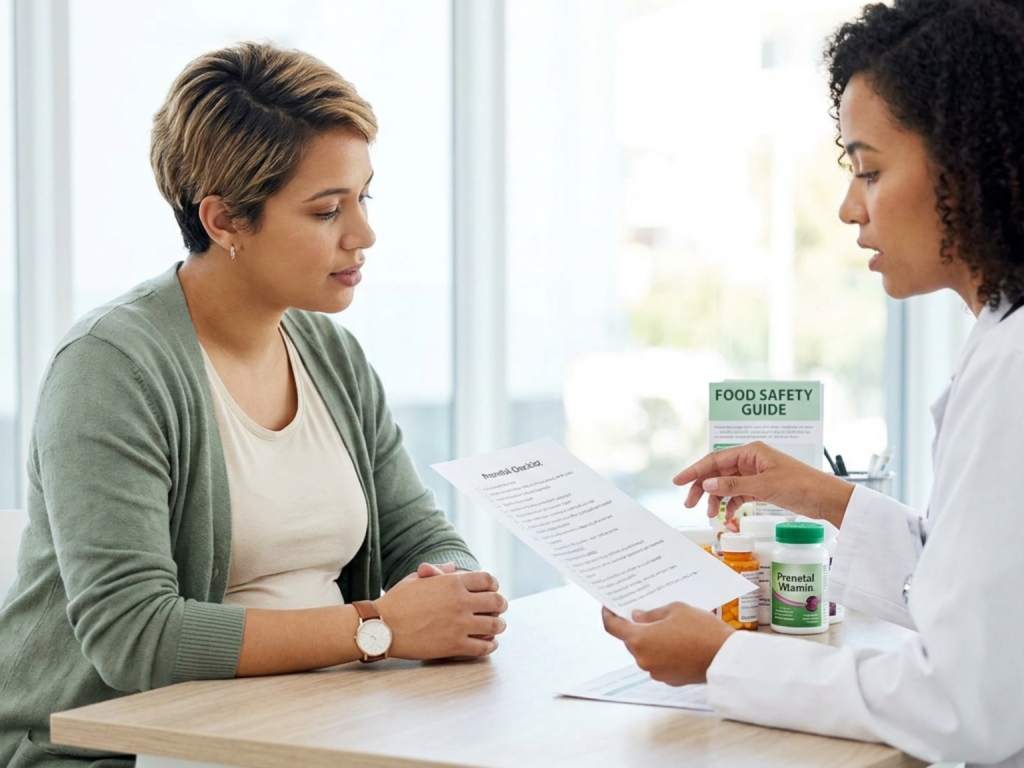
Behaviors that usually support pregnancy are the ones that reduce preventable risk and preserve maternal health. Prenatal care matters because it can identify anemia, hypertension, diabetes, infection, fetal growth issues, and nutritional gaps early enough to intervene. Daily folic acid, often through a prenatal vitamin, is a classic protective step because adequate folate before conception and early in pregnancy lowers the risk of neural tube defects. Good sleep, hydration, and regular meals are not glamorous, but they help stabilize blood pressure, nausea, and energy.
Food hygiene is another major protective domain. Thorough handwashing, cooking meat and eggs fully, washing produce, and avoiding unpasteurized dairy reduce the chance of infection. If you want a broader orientation to early pregnancy safety basics, this is where the advice becomes especially practical: protect yourself from infection, avoid overheating, and bring any chronic condition under stable medical control. In many cases, safe behavior means maintaining normal life with a few targeted adjustments rather than withdrawing from everything enjoyable or active.
- Keep prenatal appointments and recommended lab monitoring.
- Take folic acid or a prenatal vitamin as advised.
- Use food-handling habits that lower infection risk.
- Manage chronic conditions with your care team rather than improvising changes.
Behaviors that are often unsafe or higher risk
Unsafe or higher-risk behaviors are typically those with known fetal toxicity, infection risk, or a high chance of destabilizing maternal physiology. Alcohol is a clear example: there is no established safe threshold in pregnancy, so avoidance is generally recommended. Tobacco smoking, vaping nicotine, and secondhand smoke exposure raise the risk of placental complications, fetal growth restriction, and preterm birth. Recreational drug use is also concerning because exposure effects can be direct, indirect, or compounded by adulterants and polysubstance use.
Some risks are less obvious. The phrase foodborne infection risks in pregnancy captures why raw or undercooked foods, unpasteurized products, and contaminated leftovers matter more than they would otherwise. Heat stress from hot tubs or prolonged overheating can be problematic because maternal hyperthermia is not benign. workplace chemical exposure in pregnancy may also be unsafe if solvents, heavy metals, pesticides, anesthetic gases, or other toxicants are not properly controlled. A behavior becomes riskier when it is repeated, high-dose, poorly ventilated, or combined with other stressors. That is why “it was only once” is not always reassuring when the exposure is biologically potent.
- Avoid alcohol, nicotine, and recreational drugs.
- Do not assume an exposure is harmless because it was brief.
- Use appropriate protective equipment if your job involves chemicals.
- Be cautious with hot tubs, saunas, and overheating during exertion.
Medicines and supplements need individualized review
Medication decisions deserve special caution because the same product can be helpful, neutral, or harmful depending on the drug, dose, route, and gestational timing. The NHS guidance is clear that pregnancy is not a time for casual self-medication. A pregnancy medication safety review is the right mental model: prescribed medicines, over-the-counter products, decongestants, sleep aids, anti-inflammatories, and even “natural” remedies all deserve a case-by-case check. Do not start, stop, or switch a chronic medication without professional advice, because uncontrolled disease can itself be more dangerous than the medicine.
Supplements are a common blind spot. “Natural” does not mean biologically inert, and herbal products may contain pharmacologically active compounds, contaminants, or variable concentrations. A simple rule is to review any new product before using it, especially if it affects coagulation, blood pressure, glucose, sedation, or hormone signaling. The goal is not medication fear; it is rational risk-benefit assessment. In some cases the safest choice is to continue a well-studied treatment. In others, the safest choice is to pause a nonessential product until a clinician confirms it fits your pregnancy.
How to make day-to-day decisions when guidance is unclear
When you are unsure whether a behavior is safe, use a structured set of questions. What is the exposure or action, what is the dose, how often does it happen, and at what gestational age? Is the issue a single event or a pattern? Is there a safer substitute, such as a different medicine, a better-cooked food, a shorter work shift, or a modified exercise plan? Answers to those questions often determine whether the behavior is clearly safe, clearly unsafe, or simply not enough information yet.
This is where a calm, nonjudgmental conversation with a prenatal clinician, pharmacist, or midwife helps. If you are worried about a specific product, bring the exact name, strength, and timing. If the concern is an exposure at work or at home, note the chemical, ventilation, PPE use, and duration. For recurring situations, such as shift work or heavy lifting, a practical adjustment can sometimes reduce risk without forcing unnecessary restrictions. Thinking this way also helps people avoid the all-or-nothing trap: not every imperfect choice is dangerous, but not every common practice is automatically safe either.
For a more complete overview, many readers find complete pregnancy safety and restrictions useful because it turns isolated questions into a broader framework.
When to seek urgent medical advice
Some situations need prompt medical advice rather than routine self-review. Seek urgent assessment if a potentially harmful exposure is followed by vaginal bleeding, severe abdominal pain, fluid leakage, fainting, chest pain, shortness of breath, or marked decreased fetal movement later in pregnancy. Fever, persistent vomiting, dehydration, and symptoms of intoxication also deserve attention because maternal illness can escalate quickly. The same is true after a large medication error or a significant chemical exposure.
The main principle is reassurance with vigilance: many everyday actions are safe, some require modification, and a smaller group should be avoided because the evidence of harm is strong. When in doubt, do not rely on internet labels like “natural,” “just once,” or “everyone says it is fine.” Use the actual exposure, timing, and your own medical context to decide what comes next.
Seek prompt medical advice if you have any of these
- Vaginal bleeding, fluid leakage, or severe abdominal pain
- Chest pain, shortness of breath, fainting, or confusion
- Persistent vomiting, dehydration, fever, or signs of intoxication
- A large medicine error or a significant chemical exposure
- Markedly reduced fetal movement later in pregnancy
Tools & Assistance
- Prenatal care team or midwife appointment
- Pharmacist medication review before starting a new drug
- Workplace occupational health service for exposure questions
- CDC birth defects prevention resources
- NHS pregnancy medicines guidance
FAQ
Is a behavior safe if it only happens once?
Not necessarily. The risk depends on the substance, dose, timing, and how biologically potent the exposure is.
Can I use over-the-counter medicines in pregnancy?
Sometimes, but not by default. Ask a clinician or pharmacist before taking any OTC medicine, especially in the first trimester.
Are herbal supplements safer because they are natural?
No. Herbs can have active compounds and contaminants, so they also need professional review.
What if I already had an exposure?
Stay calm, note the product or event, and contact your prenatal team for individualized advice.
Sources
- Centers for Disease Control and Prevention — Reducing the Risk of Birth Defects
- NHS — Pregnancy and breastfeeding: can I use drugs?
- PubMed — Working safely at some times and unsafely at others: A typology and within-person process model of safety-related work behaviors
Disclaimer
This article is for educational purposes only and does not replace individualized medical care. If you are pregnant or may be pregnant, consult your obstetric clinician, midwife, or pharmacist before changing medicines, supplements, or exposures.
















Please log in to leave a comment.