
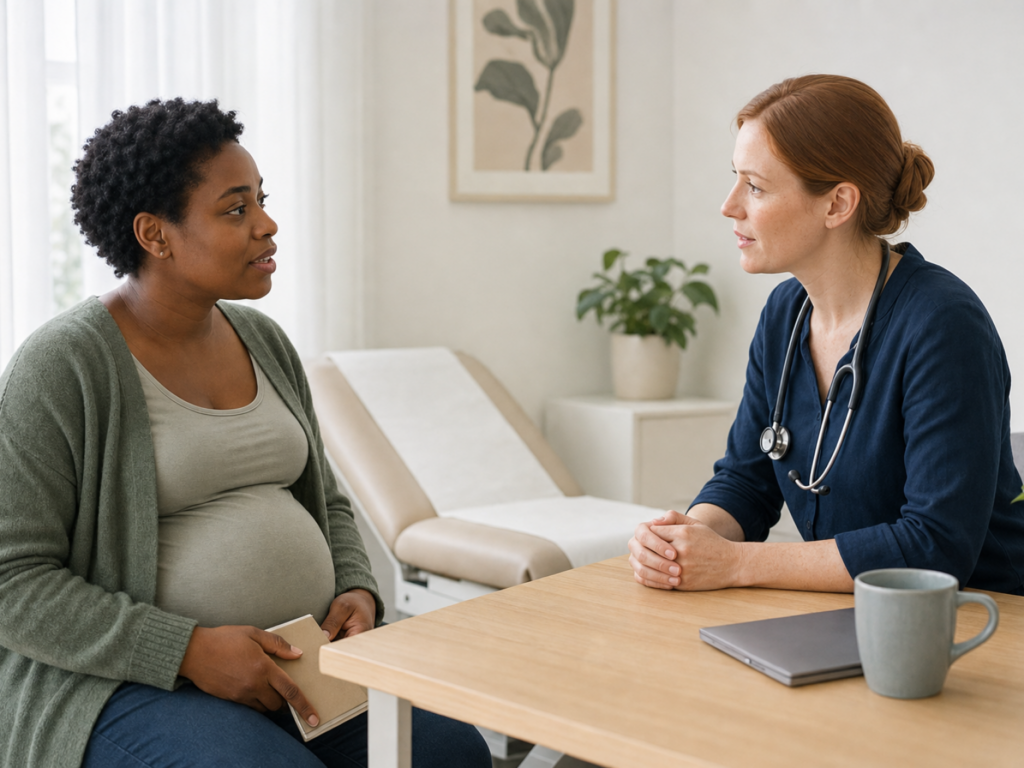
Intro
Cramping in early pregnancy is one of the most common and emotionally loaded sensations people notice after a positive pregnancy test, or even before a missed period. A mild uterine cramp can feel like a period is about to start: dull, low in the pelvis, intermittent, and sometimes accompanied by bloating or lower back heaviness. For many pregnancies, this type of discomfort is part of normal early adaptation.
At the same time, cramps can understandably raise concern because pelvic pain may also occur with miscarriage, ectopic pregnancy, urinary infection, gastrointestinal problems, or other conditions that need assessment. The goal is not to diagnose cramps at home, but to understand what mild cramping can mean, which symptoms are more reassuring, and which warning signs should prompt urgent medical advice.
Highlights
Mild, period-like cramping can be common in the first trimester as hormones shift and the uterus begins to grow.
Brief, low-intensity cramps without heavy bleeding, fever, faintness, or severe one-sided pain are often less concerning, but context matters.
Severe pain, worsening cramps, heavy bleeding, shoulder-tip pain, dizziness, fever, urinary symptoms, or unusual discharge should be discussed promptly with a healthcare professional.
Cramping may come from the uterus, cervix, bowel, bladder, pelvic ligaments, or rarely from complications such as ectopic pregnancy or early pregnancy loss.
Tracking timing, location, intensity, bleeding, and associated symptoms can help your clinician decide whether testing, examination, ultrasound, or observation is appropriate.
Why cramping happens in early pregnancy
Early pregnancy is a period of rapid physiologic change. Rising progesterone supports the uterine lining and relaxes smooth muscle, while increased blood flow and tissue remodeling affect the uterus, cervix, bowel, and pelvic structures. Even before the uterus becomes visibly enlarged, it is biologically active: the endometrium is maintaining the implanted pregnancy, the cervix may become more vascular, and the uterus begins gradual growth.
This can produce mild, intermittent uterine cramps or a pulling sensation in the lower abdomen. Many people compare it to premenstrual cramping, though it may feel lighter, more fleeting, or less rhythmic than a typical period. Some notice a central low pelvic ache; others feel twinges on one side that change with position, digestion, or activity.
Hormonal changes can also slow bowel motility, increasing gas, bloating, and constipation. These gastrointestinal sensations may be difficult to distinguish from uterine cramps because the bowel and uterus share nearby pelvic space and overlapping nerve pathways. In other words, not every cramp felt in early pregnancy is necessarily coming from the uterus.
What mild uterine cramps often feel like
Common early pregnancy cramps are usually mild, short-lived, and not progressively worsening. They may come and go over minutes or hours, feel like a dull ache or light tightening, and improve with rest, hydration, passing gas, or changing position. They are often described as low pelvic pressure, light pulling, or period-like discomfort.
Features that are generally more reassuring include:
- Mild intensity that does not stop you from walking, speaking, or resting comfortably
- Intermittent cramps rather than constant, escalating pain
- No heavy bleeding or passage of large clots
- No fever, chills, fainting, shoulder-tip pain, or severe dizziness
- No persistent one-sided pelvic pain
Reassuring does not mean guaranteed to be normal. If you have a history of ectopic pregnancy, tubal surgery, recurrent pregnancy loss, fertility treatment, pelvic infection, or significant medical conditions, your threshold for contacting a clinician should be lower. Early pregnancy assessment is individualized, and symptoms should be interpreted alongside gestational age, pregnancy test timing, bleeding pattern, and risk factors.
Implantation, uterine growth, and cervical sensitivity
Some people report brief cramping around the time implantation may occur, typically in the days before or around an expected period. Implantation is the process by which the early embryo embeds into the uterine lining. If cramping occurs at this stage, it is usually mild and may be accompanied by very light spotting. However, implantation cannot be confirmed by symptoms alone, and similar sensations can occur before a period.
As pregnancy progresses through the first trimester, the uterus starts to enlarge. The change is small at first, but uterine muscle fibers, connective tissue, and supporting ligaments are already adapting. Mild stretching or pulling can occur, especially with movement, coughing, standing quickly, or after a busy day.
The cervix also becomes more vascular and sensitive. After sex, pelvic examination, or cervical irritation, some people notice mild cramping or light spotting. Light spotting after intercourse can happen in pregnancy, but bleeding that is heavy, persistent, painful, or accompanied by other concerning symptoms should be assessed.
Common non-uterine causes of early pregnancy cramps
Early pregnancy can amplify ordinary abdominal discomfort. Progesterone slows intestinal movement, which can cause trapped gas, bloating, and constipation. These may create sharp, shifting, or crampy pains that improve after bowel movement or passing gas. Nausea and changes in eating patterns can also alter digestion, making abdominal sensations more noticeable.
Physical activity may contribute as well. A walk, workout, lifting, or long day on your feet can lead to pelvic muscle fatigue or ligament discomfort. Sex and orgasm may cause temporary uterine tightening because orgasm involves pelvic muscle contraction and uterine activity; brief mild cramping afterward is often not dangerous, but pain with heavy bleeding or ongoing contractions should be discussed with a clinician.
The bladder and urinary tract are another important consideration. Burning with urination, urinary frequency beyond your usual pregnancy pattern, lower abdominal pain, fever, back pain near the ribs, or foul-smelling urine may suggest a urinary tract infection. UTIs in pregnancy require medical evaluation because untreated infection can become more serious.
When cramps may signal a problem
Some patterns of cramping deserve urgent attention. Early pregnancy loss can cause cramping and bleeding, although symptoms vary. Miscarriage pain may feel like increasing period cramps, pelvic pressure, or contractions, often with bleeding that becomes heavier. ACOG notes that early pregnancy loss is common, and evaluation may involve history, examination, ultrasound, and sometimes blood tests, depending on the situation.
Ectopic pregnancy, in which a pregnancy implants outside the uterus most often in a fallopian tube, is a medical emergency if it ruptures or causes internal bleeding. Warning signs can include severe or persistent one-sided pelvic pain, shoulder-tip pain, fainting, dizziness, weakness, or significant bleeding. Any suspicion of ectopic pregnancy should be treated as urgent.
Other causes of concerning pelvic pain in early pregnancy can include ovarian cyst complications, appendicitis, kidney infection, pelvic infection, or gastrointestinal illness. Fever, vomiting that prevents fluid intake, severe abdominal tenderness, unusual vaginal discharge, or pain that continues to intensify should not be dismissed as normal pregnancy cramping.
Bleeding with cramps: what context matters
Light spotting and mild cramping can occur in early pregnancy, but bleeding changes the triage picture. Clinicians usually want to know how much bleeding there is, whether it is pink, brown, or bright red, whether clots or tissue are present, and whether pain is one-sided, worsening, or associated with faintness.
Heavy bleeding, especially soaking pads, passing large clots, or bleeding with severe cramps, should prompt immediate medical contact. Even if bleeding is light, it is worth informing your maternity unit, obstetric clinician, midwife, or primary care professional, particularly if you have not yet had an ultrasound confirming that the pregnancy is inside the uterus.
It is also important to avoid self-diagnosing based on the color of blood. Brown spotting may represent older blood and can be less alarming, but it is not a guarantee that everything is fine. Bright red bleeding can occur for several reasons, from cervical irritation to pregnancy loss. The combination of symptoms, timing, risk factors, and clinical evaluation matters more than any single sign.
How healthcare professionals evaluate first-trimester cramping
Evaluation depends on gestational age, severity, bleeding, risk factors, and clinical stability. A clinician may ask about the first day of your last menstrual period, cycle regularity, pregnancy test dates, fertility treatments, prior ectopic pregnancy or miscarriage, pain location, bleeding amount, medications, and associated symptoms such as fever or urinary discomfort.
Possible assessments may include vital signs, abdominal or pelvic examination, urine testing, blood tests such as quantitative hCG, and ultrasound. In very early pregnancy, an ultrasound may not yet show all expected structures, so repeat hCG or follow-up imaging may be needed. This does not always mean something is wrong; it may simply be too early to interpret definitively.
The aim of medical assessment is to identify urgent conditions, confirm pregnancy location when possible, evaluate bleeding and pain, and guide safe follow-up. If you are advised to monitor symptoms, ask exactly what changes should trigger urgent care and whom to contact after hours.
Supportive self-care for mild cramps
If cramps are mild and you have no red flags, supportive measures may help while you wait for routine advice or your next appointment. Resting, drinking fluids, eating small balanced meals, and addressing constipation can reduce some pelvic and abdominal discomfort. Gentle movement, stretching, or a warm shower may ease muscle tension. Avoid applying high heat to the abdomen for prolonged periods, and avoid any medication unless your healthcare professional has confirmed it is appropriate in pregnancy.
Tracking symptoms can be useful. Note the time cramps start, where they are located, how strong they feel on a 0 to 10 scale, whether they come in waves or remain constant, whether bleeding is present, and what improves or worsens them. This information can make a phone call with a clinician more productive.
Emotional care matters too. Early pregnancy can feel uncertain because symptoms fluctuate and many people have not yet had confirmatory imaging. Anxiety about cramping is not an overreaction; it is a normal response to ambiguity. You deserve clear guidance, timely care when needed, and compassionate support regardless of the outcome.
Seek urgent medical advice if you have
- Severe, persistent, or worsening pelvic or abdominal pain
- One-sided pelvic pain, shoulder-tip pain, fainting, weakness, or marked dizziness
- Heavy bleeding, soaking pads, passing large clots, or bleeding with strong cramps
- Fever, chills, unusual vaginal discharge, or feeling acutely unwell
- Burning urination, flank pain, or urinary symptoms with fever
- Any cramping that worries you, especially with a history of ectopic pregnancy, miscarriage, or fertility treatment
Tools & Assistance
- Call your obstetrician, midwife, maternity assessment unit, or primary care clinician for individualized advice.
- Use a symptom log noting pain location, intensity, duration, bleeding amount, and associated symptoms.
- Seek emergency care for severe pain, faintness, shoulder-tip pain, or heavy bleeding.
- Ask whether blood tests, urine testing, ultrasound, or follow-up monitoring are appropriate for your gestational age.
- If you are unsure where to go after hours, contact your local urgent care line or emergency medical service.
FAQ
Are mild period-like cramps normal in early pregnancy?
They can be common, especially when mild, intermittent, and not accompanied by heavy bleeding or severe pain. Hormonal changes, uterine growth, digestion, and pelvic blood flow can all contribute. Contact a healthcare professional if cramps worsen or you are concerned.
Can implantation cause cramping?
Some people notice mild cramping or light spotting around the time implantation may occur, but symptoms cannot confirm implantation. Similar cramps can happen before a period or from gastrointestinal causes.
How can I tell cramps from miscarriage?
You usually cannot tell with certainty from symptoms alone. Increasing cramps with bleeding, clots, or tissue may be concerning for early pregnancy loss, but clinical evaluation is needed. Seek prompt advice for heavy bleeding, severe pain, or worsening symptoms.
Is one-sided cramping always dangerous?
Not always; gas, ovulation-related cysts, ligament strain, or bowel discomfort can feel one-sided. However, severe or persistent one-sided pain in early pregnancy needs urgent assessment because ectopic pregnancy must be ruled out.
Should I stop exercising if I have mild cramps?
Do not assume you must stop all activity, but pause and rest if cramps appear during exertion. If pain persists, worsens, or is accompanied by bleeding, dizziness, or fluid leakage, contact your healthcare professional before continuing exercise.
Sources
- American College of Obstetricians and Gynecologists (ACOG) — Early Pregnancy Loss: Evaluation and Management
- Health Service Executive (HSE) — Stomach pain and cramps in pregnancy: first trimester (weeks 0 to 12)
- Atlanta Women’s Obstetrics & Gynecology — Cramping During Pregnancy: Should I Be Worried?
Disclaimer
This article is for general educational purposes only and does not diagnose, treat, or replace medical care. If you are pregnant and have pain, bleeding, or concerning symptoms, contact a qualified healthcare professional or emergency service.














Please log in to leave a comment.