
Intro
Solo play, often called solitary or independent play, is a normal and valuable part of childhood. It does not mean a child is lonely, antisocial, or being neglected. When supported with safety, warmth, and age-appropriate materials, time spent playing alone can help children practice attention, problem-solving, emotional regulation, creativity, and self-directed learning.
Parents and caregivers often feel pressure to entertain, teach, or intervene constantly. Yet children also need protected moments to explore at their own pace. This article explains how solo play supports focus development, what it can look like at different ages, and when a family may want professional guidance.
Highlights
Solo play can strengthen attention by giving children time to choose a goal, persist, make adjustments, and finish an activity without constant adult direction.
Independent play supports executive function skills, including working memory, impulse control, cognitive flexibility, and self-regulation.
Solitary play is not the opposite of social development. Children benefit from a balanced rhythm of connected caregiving, peer interaction, movement, rest, and time alone.
Open-ended toys, predictable routines, and safe spaces help children enter deeper, more creative play states.
Concerns such as developmental regression, persistent social withdrawal, or major attention problems should be discussed with a pediatrician or qualified developmental professional.
What solo play means for children
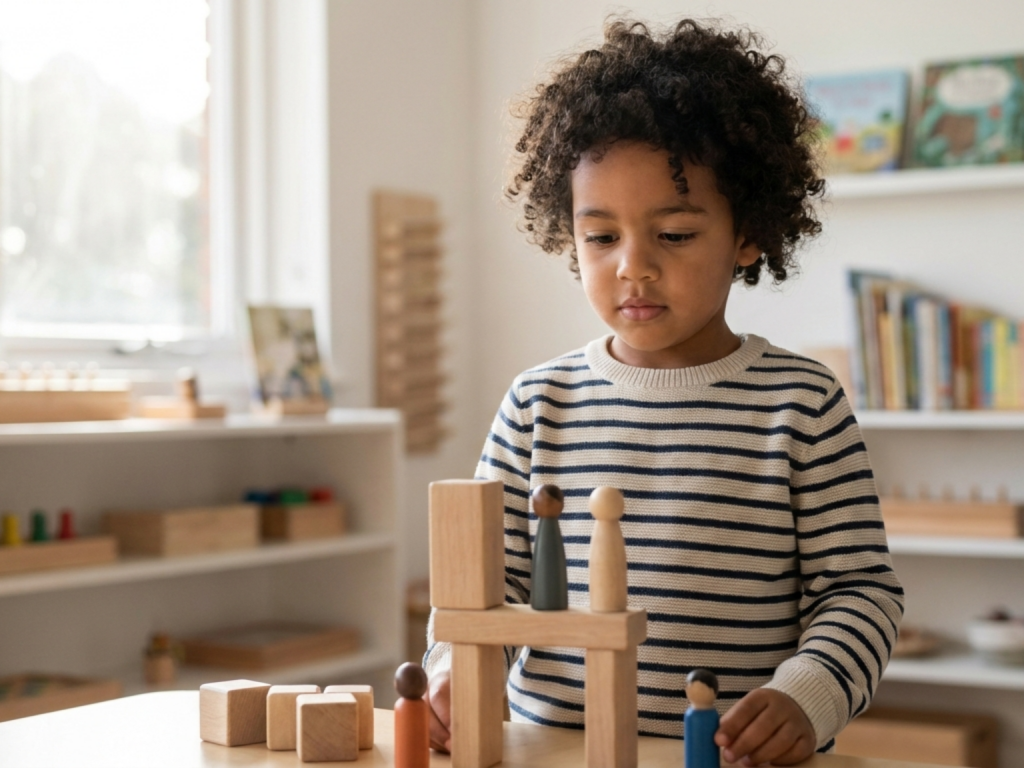
Solo play is a child’s self-directed activity without active participation from an adult or peer. A toddler stacking cups, a preschooler creating a pretend restaurant, or a school-age child building a complex block structure are all examples. The adult may be nearby for safety and emotional security, but the child is leading the activity.
In developmental terms, solitary play is one of several play patterns children use. It may appear in infancy and toddlerhood, continue through preschool, and remain useful in school-age years. It can coexist with parallel play, cooperative play, rough-and-tumble play, and structured learning. A child who enjoys solo play may also love friends, siblings, and caregivers; the key is not isolation but flexible access to different kinds of play.
Solo play gives the nervous system a chance to organize around one internally chosen task. Instead of responding to continuous instructions, screens, questions, or peer demands, the child can notice materials, test ideas, repeat actions, and adjust behavior. This kind of repetition is not wasted time. It is how children study cause and effect, sensory feedback, spatial relationships, and their own preferences.
For medically literate readers, it may be helpful to think of solo play as a natural practice ground for executive function. Executive functions are higher-order cognitive processes supported by developing frontostriatal and frontoparietal networks, including attention control, inhibitory control, working memory, planning, and cognitive flexibility. These systems mature gradually across childhood and adolescence, and they are strengthened through repeated, emotionally tolerable practice.
How solo play supports focus and attention
Focus is not a single skill. It includes orienting to a task, sustaining attention, resisting competing stimuli, shifting attention when needed, and returning after distraction. During independent play, a child repeatedly practices this sequence in a low-stakes setting. A tower falls, a puzzle piece does not fit, or a pretend story changes direction. The child must decide what to do next.
When adults intervene too quickly, children may miss opportunities to tolerate mild frustration and persist. Supportive waiting allows the child to experience an important cycle: choose a goal, encounter a problem, try a strategy, monitor the result, and continue or change course. Over time, this builds task persistence and self-efficacy.
Research-informed guidance on solitary play describes how toddlers who play independently learn to focus on goals, work through problems, and complete tasks. These behaviors are foundational for self-regulation, the capacity to manage attention, emotion, and behavior in a way that fits the situation. In practical terms, this may later support classroom participation, homework routines, hobbies, chores, and independent learning skills in children.
Solo play also reduces the demand for constant social monitoring. Group play is valuable, but it requires interpreting other children’s intentions, negotiating roles, and managing conflict. Independent play lets the child concentrate on materials and ideas with fewer interpersonal distractions. For some children, especially those who become easily overstimulated, this quieter cognitive load can make deeper concentration more accessible.
Creativity, imagination, and problem-solving
One of the most powerful benefits of solo play is creative authorship. When children play alone, they are free to invent rules, modify objects, and follow unusual ideas. A cardboard box can become a clinic, a rocket, a cave, or a grocery store. This flexibility supports symbolic thinking, divergent thinking, narrative skills, and creative problem-solving.
Open-ended materials are especially useful because they do not dictate a single correct outcome. Blocks, cups, fabric scraps, dolls, animal figures, art supplies, safe household containers, and nature items can all invite exploration. The child can make decisions about sequence, structure, roles, and purpose. That autonomy helps develop preferences and interests, which are important for motivation.
Cause-and-effect learning is also embedded in solitary play. A baby drops a spoon and notices sound and gravity. A toddler pushes toy cars down ramps and observes speed. A preschooler mixes colors and sees a new shade appear. These experiments are early scientific reasoning: hypothesis, action, observation, and revision.
Adults can support this without taking over. Instead of correcting the play, a caregiver might say, “You are trying a different way,” or “That tower stayed up longer.” Such language labels the process rather than controlling it. It reinforces persistence, observation, and flexible thinking while preserving the child’s ownership of the activity.
Emotional regulation and independence
Solo play can help children learn what their bodies and minds feel like when they are calm, curious, frustrated, bored, proud, or absorbed. These internal states are part of interoception and emotional awareness. A child who has safe opportunities to manage small challenges may become better able to pause, try again, or seek help appropriately.
Independence does not mean leaving a child unsupported. Secure attachment and independent exploration work together. Many children play best when a trusted adult is predictably nearby, responsive, and emotionally available, even if not directly involved. This “secure base” allows the child to move between connection and exploration.
For toddlers and preschoolers, independent play may begin in very short intervals. A few minutes of looking at board books, sorting objects, or pretending with figures may be developmentally appropriate. School-age children may sustain longer projects such as crafts, construction, reading, journaling, or solo strategy games. Duration should be guided by temperament, developmental level, sleep, hunger, sensory needs, and safety.
Self-regulation grows when the challenge is moderate. If the task is too easy, the child may disengage; if it is too difficult, distress may overwhelm learning. Caregivers can adjust by offering fewer materials, simplifying the setup, or staying physically closer. The goal is not to force separation but to create a calm space where the child can experience manageable autonomy.
Brain development and executive function
Play is biologically meaningful for brain development. It integrates sensory processing, motor planning, language, memory, social cognition, and emotional regulation. Unstructured play, including solo play, gives children repeated chances to practice executive function in real time.
Executive function includes several related capacities. Working memory allows a child to hold a goal in mind, such as “I am building a bridge.” Inhibitory control helps the child resist knocking it down too soon or grabbing every material at once. Cognitive flexibility helps the child adapt when the bridge collapses or when a new idea emerges. These abilities are closely related to child focus and concentration skills.
Some play activities place specific demands on attention. A child completing a simple maze must track a path. A child playing a solo memory game must hold and update information. A child sorting objects by color and then by size practices mental shifting. Even classic active games such as “Simon says” or “freeze dance,” when adapted for one child or played with a caregiver briefly before independent practice, can support impulse control and attention monitoring.
Movement also matters. Children often focus better after proprioceptive and vestibular input, such as crawling through a tunnel, carrying safe heavy objects, climbing appropriate playground equipment, or dancing. For many children, the route to quiet concentration runs through active body play first.
Practical ways to encourage healthy solo play
Families do not need expensive toys or a perfect playroom. The most effective environment is safe, predictable, and not overloaded. Too many choices can fragment attention, while a small selection of appealing materials can invite deeper engagement.
- Create a safe play zone: Remove choking hazards, unstable furniture, cords, sharp objects, unsafe batteries, and breakable items. Supervision should match the child’s age and risk level.
- Use open-ended materials: Blocks, nesting cups, pretend figures, crayons, paper, puzzles, magnetic tiles, and sensory bins with age-safe contents can support creativity.
- Start small: Begin with a short, realistic interval. For some children, two to five minutes is a meaningful start.
- Preview and return: Say, “I will sit here while you build,” or “I will wash these dishes and then come see what you made.” Predictability reduces anxiety.
- Avoid constant correction: Unless safety or harm is involved, let the child’s plan unfold. Unusual solutions are often the point of play.
- Rotate toys: Keeping some materials out of sight and reintroducing them later can renew curiosity and reduce clutter.
Caregivers can also use gentle narration after the play rather than during every moment. “You worked on that for a long time,” or “You found another way when it fell,” helps children notice their own attention and persistence. This supports metacognition, the ability to think about one’s own thinking.
Balancing solo play with connection and social growth
Healthy solo play is part of a balanced developmental diet. Children also need affectionate caregiving, language-rich interaction, shared reading, outdoor movement, peer experiences, and rest. Solo play should not replace responsive care or needed support, especially in very young children.
Some caregivers worry that encouraging independent play will make a child less social. In most cases, the opposite can be true. A child who has practiced regulating attention and emotion alone may enter group play with more patience and flexibility. Independent play can also help children discover interests they later share with others, such as building, drawing, pretending, music, or collecting.
Balance depends on the child. A highly social child may need help tolerating short periods without entertainment. A more introverted or sensory-sensitive child may need protected quiet time after school or group activities. Neither pattern is inherently problematic. The question is whether the child can move flexibly among connection, exploration, rest, and participation in daily life.
For children with known neurodevelopmental differences, anxiety, sensory processing challenges, language delays, or motor difficulties, independent play may need thoughtful adaptation. Occupational therapists, speech-language pathologists, psychologists, developmental-behavioral pediatricians, and educators can help families match activities to the child’s strengths and needs without turning play into pressure.
When solo play may signal a concern
Solo play itself is not a diagnosis and should not be interpreted in isolation. Many children naturally enjoy time alone. However, caregivers should seek guidance if solitary behavior is accompanied by broader developmental or functional concerns.
Examples include loss of previously acquired language or social skills, persistent lack of response to name, very limited shared enjoyment, extreme distress with ordinary transitions, repetitive behaviors that interfere with daily activities, major sleep or feeding disruption, or persistent concentration problems in children that affect safety, learning, or family functioning. Concerns about hearing, vision, seizures, trauma, anxiety, or developmental delay should also be discussed with a healthcare professional.
It is also important to distinguish healthy independent play from excessive screen use. Digital media can hold attention through rapid reward cycles, but this is not the same as self-directed focus. Many children benefit from more hands-on, sensory-rich play and from adult-supported boundaries around screens.
If a caregiver feels worried, the best next step is usually observation plus consultation, not blame. Note what the child enjoys, how long they engage, how they communicate needs, how they recover from frustration, and how they interact in different settings. Sharing concrete observations with a pediatrician or developmental specialist can support appropriate developmental surveillance and screening.
When to seek professional guidance
- Consult a pediatrician if a child loses previously acquired speech, motor, play, or social skills.
- Ask for evaluation if attention difficulties interfere with safety, learning, sleep, or daily routines.
- Seek help if solo play is accompanied by persistent social withdrawal, intense distress, or lack of shared enjoyment.
- Discuss concerns about hearing, vision, seizures, trauma, anxiety, or developmental delay with a qualified clinician.
- Do not use solo play patterns alone to diagnose autism, ADHD, anxiety, or any other condition.
Tools & Assistance
- A safe, uncluttered play area with age-appropriate supervision
- Open-ended toys such as blocks, pretend figures, art materials, puzzles, and household containers
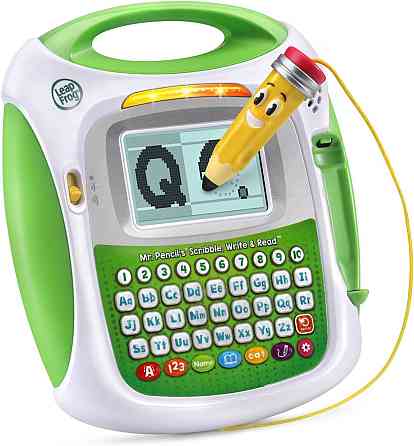
- A simple timer or visual routine chart for gradually building independent play time
- Observation notes to share with a pediatrician, educator, or developmental specialist if concerns arise
- Consultation with occupational therapy, speech-language pathology, psychology, or developmental pediatrics when indicated
FAQ
Is solo play normal for toddlers and preschoolers?
Yes. Solitary play is a normal developmental pattern and can support independence, creativity, motor exploration, and focus when balanced with responsive caregiving and social interaction.
How long should a child be able to play alone?
There is no single correct duration. Age, temperament, sleep, hunger, sensory needs, and developmental level all matter. Start with short, successful intervals and build gradually.
Should parents join in or stay out of solo play?
Both can be appropriate. Stay close enough for safety and emotional security, but avoid unnecessary interruption. Join when invited, when safety requires it, or when the child needs support.
Can solo play improve school readiness?
It may help. Independent play can strengthen executive function, persistence, working memory, and self-regulation, all of which support school readiness in early childhood.
When is too much solo play a concern?
Concern increases if the child rarely seeks connection, loses skills, shows major communication difficulties, or has attention or behavior challenges that impair daily life. A pediatrician can guide next steps.
Sources
- Healthline — What Is Solitary Play? Definition, Age, Games, Examples, and More
- Brightwheel — The Value of Solitary Play in Early Childhood
- Harvard Graduate School of Education — Play Helps Children Build Better Brains. Here Are Some Ways to Get Kids Playing
Disclaimer
This article is for informational purposes only and does not provide diagnosis or treatment. Consult a pediatrician or qualified healthcare professional for concerns about a child’s development, behavior, or attention.















Please log in to leave a comment.