
Intro
Labor pain is produced by several interacting processes: uterine contractions, cervical effacement and dilation, stretching of the lower uterine segment and vagina, pelvic pressure, and inflammation-related biochemical signaling. Hormones do not act as a single “pain switch.” Instead, they help initiate and coordinate labor while also changing how the nervous system processes intense sensory input.
Understanding these mechanisms can make labor feel less mysterious, but it cannot predict exactly how any individual will experience birth. Pain is shaped by physiology, prior experiences, anxiety, sleep, support, fetal position, the pace of labor, and available pain-relief options. A maternity clinician can explain what is appropriate for a particular pregnancy and labor.
Highlights
Oxytocin and prostaglandins promote coordinated contractions and cervical change, which generate much of the visceral pain of early and active labor.
Estrogen, progesterone, and placental CRH help prepare the uterus and cervix for labor by increasing contractility and oxytocin responsiveness.
Beta-endorphins may reduce pain perception and support an altered, inward-focused state, although they do not eliminate pain.
Catecholamines released during stress can intensify pain perception and sometimes disrupt contraction patterns, especially when fear and exhaustion are substantial.
Labor pain is both mechanical and neurochemical
The pain of labor begins largely as visceral pain. During early and active labor, contracting myometrium temporarily reduces local blood flow and stretches the lower uterine segment and cervix. Nociceptive signals travel through sympathetic pathways, primarily entering the spinal cord at approximately T10 to L1. As the cervix dilates and the fetus descends, the intensity and location of discomfort can change.
Later, pressure and stretching of the pelvic floor, vagina, perineum, and surrounding tissues add somatic pain. These signals are carried mainly through the pudendal nerve and sacral spinal segments, which helps explain why pushing may produce burning, sharp stretching, or rectal pressure in addition to contraction pain. Hormones influence this experience by altering contraction strength, tissue inflammation, central pain processing, and emotional arousal.
Consequently, labor pain is not simply a measure of tissue damage. The brain integrates signals from the uterus and pelvis with expectations, attention, fear, safety, fatigue, and interpersonal support. This is part of the psychological experiences of physiological childbirth, not evidence that the pain is imaginary or merely emotional.
The endocrine transition that prepares the uterus
Human parturition involves a functional shift away from progesterone-dominant pregnancy physiology toward greater estrogenic activity. In humans, circulating progesterone does not necessarily fall dramatically at labor onset; instead, progesterone action appears to become less dominant at the level of uterine tissues. Estrogen increases the expression of contraction-associated proteins, including oxytocin receptors and gap junctions between myometrial cells. These changes allow the uterus to contract more powerfully and synchronously.
Placental corticotropin-releasing hormone, or CRH, also rises during late pregnancy and labor. CRH interacts with the fetal and maternal hypothalamic-pituitary-adrenal systems and contributes to the timing and coordination of parturition. Its activity is associated with increased prostaglandin production, cervical ripening, and changes in myometrial responsiveness. The precise sequence varies, and labor is not controlled by one hormone or one universal clock.
As the cervix softens and effaces, mechanical stretch further promotes local biochemical signaling. This creates a positive-feedback environment: cervical and uterine stimulation supports oxytocin release, while oxytocin and prostaglandins strengthen contractions and facilitate additional cervical change.
Oxytocin: contraction, feedback, and pain modulation
Oxytocin is synthesized in the hypothalamus and released from the posterior pituitary. During labor, cervical stretch and pressure from the presenting part stimulate pulsatile oxytocin release. Oxytocin binds to increasingly abundant receptors on myometrial cells, activating intracellular pathways that increase calcium availability and contraction. The resulting contractions promote further cervical stretch, reinforcing the Ferguson reflex.
Oxytocin is therefore directly related to one major source of labor pain: the force and frequency of uterine contractions. Stronger or more frequent contractions can produce more intense ischemic and stretch-related nociceptive input. However, oxytocin also participates in social bonding and may interact with endogenous opioid and other central pathways involved in coping. These potentially calming or affiliative effects do not cancel the physical stimulus, and their clinical importance differs among individuals.
Oxytocin release is influenced by context. Touch, reassurance, privacy, and a sense of safety may support physiologic neuroendocrine regulation, whereas fear, pain, and acute stress can alter autonomic balance. This does not mean a laboring person is responsible for labor progress. It means that respectful, calm care is biologically relevant as well as emotionally supportive. When oxytocin is administered clinically to induce or augment labor, contraction patterns and pain may change, so monitoring and individualized analgesia discussions are important.
Prostaglandins and the inflammatory biology of cervical change
Prostaglandins are lipid mediators produced locally in reproductive tissues, including the decidua, fetal membranes, cervix, and myometrium. Their concentrations and activity increase near and during labor. Prostaglandin E2 is particularly associated with cervical ripening: it promotes collagen remodeling, increased tissue hydration, and changes in cervical compliance. Prostaglandin F2 alpha has more prominent uterotonic effects, although several prostaglandins contribute to overlapping functions.
These mediators help coordinate cervical remodeling and uterine contractions, but they can also sensitize peripheral nociceptors. Nociceptor sensitization means that nerve endings respond more readily to mechanical stretch or inflammatory signals. Prostaglandins therefore contribute to pain both indirectly, by promoting stronger contractions and tissue change, and directly, by lowering the threshold for pain signaling.
The inflammatory component of labor is physiological and tightly regulated. It should not be interpreted as an infection or a sign that something is wrong. Clinicians may use prostaglandin medications in selected induction protocols, but the medication, dose, route, and monitoring depend on the clinical situation. Questions about induction methods are best addressed with the obstetric or midwifery team rather than generalized online guidance.
Endorphins: the body’s endogenous analgesic response
Beta-endorphin is an endogenous opioid peptide released during stress, pain, and strenuous physiologic activity. Levels rise during pregnancy and can increase substantially during labor. By binding to opioid receptors in the central and peripheral nervous systems, endorphins can inhibit nociceptive transmission and modify the emotional distress associated with pain.
Endorphins may help explain why some people enter an inward-focused, dreamlike, or altered state during intense labor. They may support adaptive detachment and help the brain tolerate repetitive, demanding sensations. Their effects are variable, however. Endorphins do not make labor painless, and high pain intensity, sleep deprivation, fear, or complications may overwhelm available coping capacity.
Some interventions may influence this balance indirectly. Rhythmic breathing, movement, warm water when clinically suitable, massage, counterpressure, and continuous emotional support can reduce threat appraisal and help a person work with contractions. These approaches are not tests of courage and should not be used to imply that medication is unnecessary. An individual may combine physiologic coping strategies with neuraxial or systemic analgesia according to preference and medical advice.
Catecholamines, cortisol, and the stress-pain feedback loop
Fear, uncertainty, severe pain, and perceived lack of safety activate the sympathetic nervous system and the hypothalamic-pituitary-adrenal axis. Catecholamines, principally epinephrine and norepinephrine, rise along with other stress mediators. These hormones increase vigilance, heart rate, and muscle readiness. They can also amplify pain through heightened attention, muscle tension, and central sensitization, in which repeated nociceptive input increases responsiveness within the nervous system.
Stress hormones may affect labor mechanics as well. High catecholamine levels can interfere with coordinated uterine activity in some circumstances, particularly when fear is acute or the person is exhausted. Reduced contraction efficiency may be followed by more prolonged labor, increasing fatigue and distress. This relationship is not deterministic: stress responses can be appropriate, and labor progress depends on many factors, including cervical readiness, fetal position, parity, and clinical interventions.
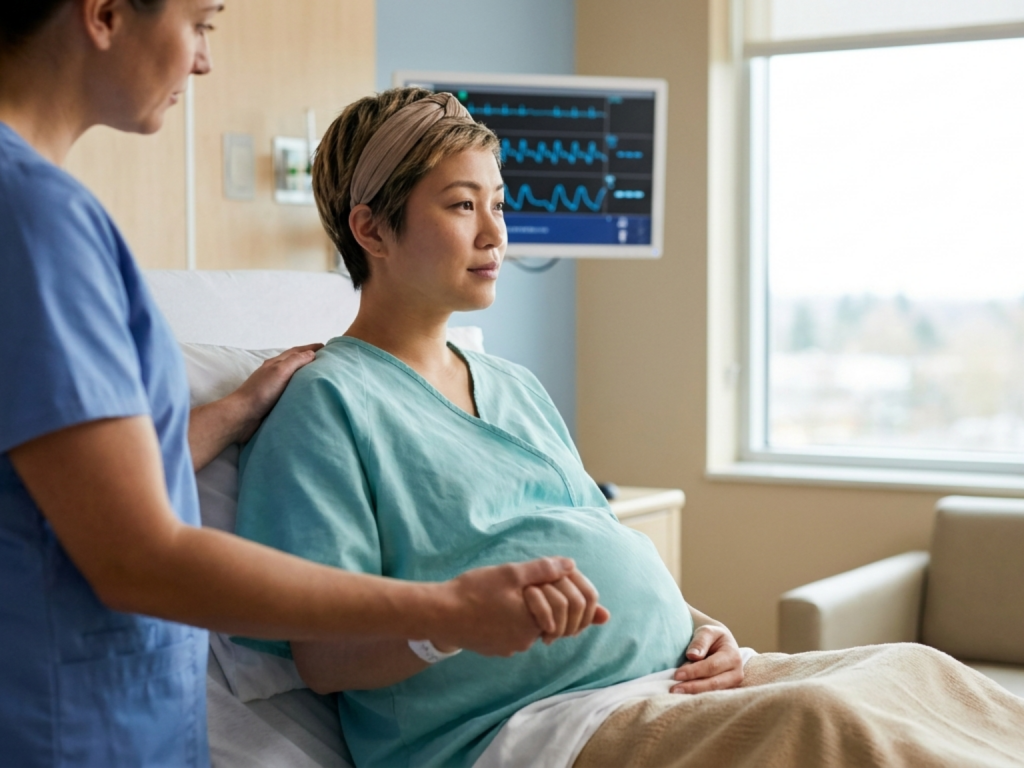
Supportive care can help interrupt the fear-tension-pain cycle. Clear explanations, consent before examinations, privacy, a calm environment, continuous companionship, and grounding cues during contractions can reduce perceived threat. A person who experiences panic, loss of control during contractions, or overwhelming pain deserves compassionate assessment and practical help, not criticism.
Hormones across the labor timeline and what support can do
Pain perception across labor timeline is dynamic. Early labor often involves intermittent cramping and backache as contractions become organized. Active labor generally brings longer, stronger, and closer contractions, while transition may combine high contraction intensity with pelvic or rectal pressure, nausea, shaking, and emotional strain. During pushing, somatic stretching becomes more prominent, although the balance between visceral and somatic pain differs with fetal position, descent, tissue elasticity, and the use of analgesia.
Hormonal effects also vary with the environment and the pace of labor. Oxytocin pulses, prostaglandin activity, endorphin release, and catecholamine responses continually interact rather than appearing in isolated stages. This is why two people with similar cervical dilation may report very different pain levels. It is also why one person’s experience may change rapidly within the same labor.
Practical support should address both physiology and agency. Clinicians can assess fetal and maternal well-being, explain progress, offer position changes and comfort measures, and discuss pharmacologic options such as neuraxial analgesia when appropriate. Communication matters: pain relief is not a failure of natural physiology, and choosing unmedicated coping is not an obligation. The goal is safe, informed, respectful care tailored to the laboring person’s needs and preferences.
When to seek prompt clinical assessment
- Contact the maternity unit for heavy bleeding, persistent severe abdominal pain between contractions, or markedly reduced fetal movement.
- Seek urgent advice if your waters break with fever, foul-smelling fluid, or a change in fluid color that concerns your clinician.
- Tell the care team about severe headache, visual changes, chest pain, shortness of breath, or symptoms suggestive of hypertensive disease.
- Ask for help if pain suddenly changes, feels unmanageable, or is accompanied by fainting, weakness, or unusual neurologic symptoms.
- Do not delay emergency care while trying breathing, movement, or other self-management techniques.
Tools & Assistance
- Discuss expected hormonal and pain changes with an obstetrician, midwife, or maternity anesthesiologist.
- Create a flexible birth preferences document that includes comfort measures, consent preferences, and analgesia options.
- Practice breathing exercises during labor and positions that may reduce back or pelvic pressure.
- Arrange continuous support from a partner, trained birth professional, or trusted companion where available.
- Ask the birth facility how it monitors induced or augmented labor and how pain relief can be adjusted.
FAQ
Does more oxytocin always mean more labor pain?
Not necessarily. Oxytocin strengthens and coordinates contractions, which can increase contraction-related pain, but pain also depends on cervical change, fetal position, duration, stress, fatigue, and individual nervous-system processing.
Can endorphins make labor painless?
Endorphins can inhibit pain signaling and support coping, but they do not reliably remove pain. Their effects vary, and additional comfort measures or medical analgesia may still be appropriate.
Can fear stop labor?
Acute stress and catecholamines can affect contraction coordination in some situations, but labor progress is multifactorial. A pause or slow progress is not the laboring person’s fault and requires clinical assessment rather than blame.
Do induction medications change hormonal pain mechanisms?
They can. Oxytocin or prostaglandin medications may alter contraction strength, frequency, or cervical change. The maternity team should explain expected effects, monitoring, and available analgesia.
Is labor pain the same for everyone?
No. Hormonal physiology interacts with anatomy, fetal position, prior experiences, sleep, anxiety, support, cultural expectations, and analgesia. Different pain reports are all valid.
Sources
- PubMed Central (NIH) — The Pain of Labour
- PubMed — Endocrinology of human parturition
- PubMed Central (NIH) — Hormonal Physiology of Childbearing
Disclaimer
This article is for general educational purposes and does not diagnose, treat, or replace individualized medical advice. Discuss labor symptoms, induction, and pain-relief choices with your obstetric or midwifery team, and seek urgent care for concerning symptoms.


















Please log in to leave a comment.