
Intro
Unmedicated birth is possible for many people, but it is not a test of strength, purity, or “doing birth the right way.” It means giving birth without pharmacologic analgesia or anesthesia, such as an epidural, spinal, opioid medication, or nitrous oxide where available. A person may still receive monitoring, intravenous fluids, antibiotics, oxytocin, assisted delivery, or urgent surgical care if clinically needed.
Highlights
Unmedicated birth can be safe and achievable for many low-risk pregnancies, especially with preparation, continuous support, and access to escalation if complications arise.
Potential benefits include mobility, intact sensation for pushing, avoidance of medication-related side effects, and a strong sense of participation for some birthing people.
Potential risks include severe pain, exhaustion, physiologic stress, limited options if urgent intervention becomes necessary, and the possibility that pain relief may be requested or recommended later.
The safest plan is flexible: preferences matter, but maternal and fetal wellbeing should guide decisions in real time.
What unmedicated birth means
Unmedicated birth generally refers to labor and vaginal delivery without pharmacologic pain relief. It does not mean “unassisted” birth, and it should not mean refusal of all medical care. In a hospital, birth center, or home-birth model with qualified clinicians, an unmedicated plan can still include fetal heart rate assessment, maternal vital signs, cervical exams when indicated, group B streptococcus antibiotics, treatment for hemorrhage, neonatal resuscitation, or transfer to a higher level of care.
Labor pain is produced by uterine contractions, cervical dilation, pelvic pressure, tissue stretching, and sometimes fetal position such as occiput posterior, which may contribute to back labor. Pain intensity varies widely. Some people describe unmedicated labor as manageable with rhythmic support; others experience it as overwhelming even with excellent preparation. Both experiences are real and medically valid.
Medicated and unmedicated birth are best understood as options along a continuum. Epidural analgesia, systemic opioids, inhaled nitrous oxide in some settings, local anesthetic for repair, and anesthesia for cesarean birth are tools. Choosing not to use them initially does not remove the option to use them later, although timing, staffing, platelet count, anticoagulant use, fetal status, and urgency can affect what is available.
Is unmedicated birth possible for most people
Yes, unmedicated birth is possible for many people, especially in spontaneous labor at term with a singleton fetus in cephalic presentation and no major maternal or fetal complications. Possibility, however, is not the same as predictability. Labor length, fetal position, induction requirements, sleep deprivation, anxiety, prior trauma, and unexpected complications can all change how tolerable or safe an unmedicated plan feels.
People planning unmedicated birth often benefit from discussing candidacy with an obstetric clinician or midwife before labor. Factors that may require more individualized planning include hypertensive disorders, insulin-treated diabetes, significant cardiac or pulmonary disease, placenta previa, suspected fetal growth restriction, prior uterine surgery, multiple gestation, breech presentation, coagulation disorders, and planned induction for medical indications. These factors do not always rule out physiologic labor, but they may change the recommended birth setting and monitoring level.
Induction can still end in an unmedicated vaginal birth, but it may be harder for some people. Oxytocin augmentation may produce frequent, intense contractions; cervical ripening can take many hours; and continuous fetal monitoring may reduce freedom of movement depending on equipment and local policy. Similarly, a prolonged second stage can increase fatigue and may lead to discussion of operative vaginal birth or cesarean delivery. A realistic plan includes preferences plus thresholds for reassessment.
Potential benefits of unmedicated birth
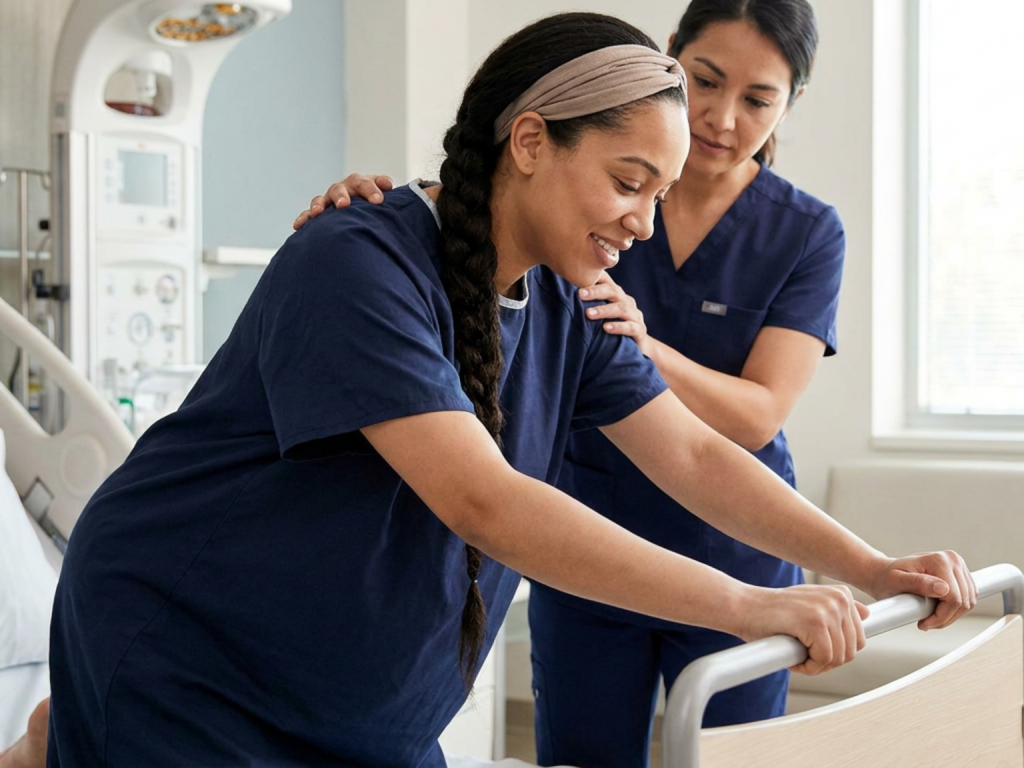
One major benefit is mobility. Without dense neuraxial analgesia, many people can walk, shower, use upright positions, lean over a bed, sit on a birth ball, or change positions frequently. Movement may improve comfort and can help some fetuses rotate and descend, although it does not guarantee faster labor. Intact motor function also means a person may feel more able to participate actively in position changes and pushing.
Another potential benefit is avoiding medication-related side effects. Epidural analgesia is highly effective, but it can be associated with maternal hypotension, itching depending on medications used, fever, urinary catheterization, motor block, and a need for closer monitoring. Systemic opioids can cause sedation, nausea, and neonatal respiratory depression if birth occurs soon after dosing. Avoiding these medications avoids those specific drug effects, though it does not eliminate ordinary birth risks.
Some people also value the sensory feedback of unmedicated pushing. Feeling pressure and contraction peaks may help them coordinate bearing down. Others experience intense pressure as distressing, particularly if labor is rapid or perineal stretching is severe. For people who desire a high degree of bodily awareness, unmedicated birth can feel empowering and coherent with their values.
Early postpartum mobility may also be simpler when no neuraxial block is present. A person may be able to stand, void, shower, and begin immediate postpartum recovery sooner, assuming bleeding, blood pressure, dizziness, and perineal pain are stable. Skin-to-skin contact after birth and breastfeeding initiation are possible after both medicated and unmedicated births, but some families appreciate avoiding sedation or leg weakness during the first hours.
Risks and tradeoffs to consider
The most obvious tradeoff is pain. Severe labor pain can contribute to hyperventilation, panic, catecholamine release, muscle tension, and exhaustion. While labor pain is not the same as injury pain, it can still be traumatic if a person feels unsupported, trapped, or unheard. A plan that treats pain as “not allowed” may be psychologically unsafe. Requesting analgesia is not failure; it is an appropriate use of available care.
Exhaustion is another important risk. Long latent labor, night labor, induction, dehydration, vomiting, or inadequate rest can leave a person depleted by active labor or pushing. Fatigue may reduce coping capacity and make operative intervention more likely in some scenarios, although causation is complex. If labor becomes prolonged or fetal status becomes concerning, the team may recommend oxytocin, amniotomy, assisted vaginal birth, cesarean birth, or anesthesia.
There are also practical limits. Epidural placement takes time, requires an anesthesia professional, and may not be possible immediately if birth is imminent. In an emergency cesarean, someone without an epidural may need spinal anesthesia if time allows, or general anesthesia if urgent delivery is necessary and neuraxial placement is not feasible. This is one reason medically complex pregnancies are often advised to deliver in settings with rapid anesthesia and surgical capability.
Unmedicated birth does not reduce all obstetric risks. Postpartum hemorrhage, shoulder dystocia, severe perineal tears, infection, fetal heart rate abnormality, hypertensive crisis, and neonatal transition problems can occur regardless of pain medication choice. Conversely, medicated birth is not automatically unsafe or less meaningful. The central question is not which option is morally superior, but which balance of comfort, mobility, monitoring, and clinical readiness fits the person and pregnancy.
Non-drug strategies that can make it more achievable
Non-pharmacological pain management works best when practiced before labor and supported during labor. Techniques do not erase pain in the way an effective epidural may, but they can reduce suffering by improving rhythm, confidence, and perceived control. Many people combine several methods and change them as labor evolves.
- Breathing exercises during labor: slow breathing, patterned breathing, vocalization, and coached exhalation can reduce panic and help prevent breath-holding before pushing is appropriate.
- Positioning: upright leaning, side-lying, hands-and-knees, lunges, pelvic rocking during contractions, and birthing ball positioning may reduce pressure and help with fetal rotation.
- Touch and pressure: sacral counterpressure during contractions and counterpressure for back labor can be particularly helpful when pain is concentrated in the lower back.
- Hydrotherapy: warm showers or tubs, where permitted and clinically appropriate, may reduce muscle tension and improve coping.
- Environment: dim lighting, fewer interruptions, calm voices, and clear consent before exams can lower stress responses.
- Continuous support: a trained partner, nurse, midwife, or doula can provide reassurance, position suggestions, hydration reminders, and advocacy.
Preparation should include a “coping map” rather than a rigid script. For example: what helps during early labor, what helps during transition, what words feel encouraging, what interventions feel frightening, and when the person wants the team to proactively discuss pain relief. Mind-body labor coping is not only about relaxation; it is about staying oriented through intense physiologic sensations.
Comparing unmedicated birth with epidural and other analgesia
Epidural analgesia is the most effective commonly used labor pain relief method in many hospitals. It places local anesthetic, often with an opioid, near the spinal nerves through a catheter. It can markedly reduce contraction pain while allowing the person to remain awake. Depending on dosing, it may preserve some pressure sensation and movement, or it may cause heavier leg weakness.
The benefits of an epidural include strong analgesia, the ability to rest during long labor, and an existing catheter that can often be used for anesthesia if cesarean delivery becomes necessary. Potential disadvantages include hypotension requiring treatment, more equipment, urinary catheterization, limited mobility, longer second stage in some studies, and rare complications such as severe headache after dural puncture, infection, bleeding, or nerve injury.
Systemic opioids are easier to administer but usually provide partial pain relief rather than dense analgesia. They may help a person rest, but can cause nausea, dizziness, sedation, and neonatal respiratory effects depending on dose and timing. Nitrous oxide, where offered, is self-administered during contractions and wears off quickly; it often reduces anxiety more than pain intensity. Local anesthetic may be used for episiotomy, laceration repair, or certain procedures even after an otherwise unmedicated birth.
A flexible birth plan can state: “I prefer to begin without medication; please offer non-drug support first; if I ask for an epidural, discuss timing and options without judgment.” This protects autonomy in both directions: the right to decline routine analgesia and the right to receive appropriate pain relief if desired.
Building a safe and flexible plan
A safer unmedicated birth plan begins with setting, staffing, and contingency planning. Ask what monitoring is recommended for your pregnancy, whether wireless monitoring or intermittent auscultation is available, how hydrotherapy is used, and how quickly anesthesia or transfer can be arranged if needed. If planning birth outside a hospital, discuss emergency transport, hemorrhage medications, neonatal resuscitation equipment, and clear criteria for transfer.
It is also wise to define medical pivot points. Examples include persistent abnormal fetal heart rate patterns, maternal fever, severe hypertension, heavy bleeding, stalled dilation with exhaustion, prolonged second stage, or a request from the birthing person to change course. These situations do not always mandate the same intervention, but they do require reassessment with qualified clinicians.
Emotionally, unmedicated birth planning should include permission to adapt. Some people give birth without medication and feel grateful. Some plan unmedicated birth, choose an epidural, and feel equally satisfied because they were respected. Others experience disappointment, especially if interventions were urgent or communication was poor. Debriefing after birth can help integrate the experience and identify whether additional mental health support is needed.
The most supportive message is this: unmedicated birth is possible, and it can be meaningful, but safety is not measured by avoiding medication at all costs. The goal is a healthy parent, a healthy baby when possible, and a birth experience in which informed consent, dignity, and timely medical care remain central.
Seek urgent medical care in labor if
- You have heavy vaginal bleeding, severe abdominal pain between contractions, or signs of shock.
- You notice decreased or absent fetal movement before labor or concerning fetal heart rate information during labor.
- You develop severe headache, visual changes, chest pain, shortness of breath, or severe hypertension.
- You have fever, foul-smelling fluid, or symptoms suggesting infection.
- You feel unsafe, overwhelmed, or unable to continue without reassessment and support.
Tools & Assistance
- Discuss a flexible birth plan with an obstetrician or midwife before labor.
- Ask your birth setting about anesthesia availability, monitoring options, and emergency transfer protocols.
- Take a childbirth class that teaches non-drug coping skills and medicated pain relief options.
- Consider continuous labor support from a trained doula, nurse, midwife, or prepared support person.
- Prepare a postpartum debrief plan if the birth experience feels distressing or unexpected.
FAQ
Can I plan an unmedicated birth but still get an epidural later?
Often yes, depending on labor timing, anesthesia availability, clinical urgency, and medical factors such as bleeding risk or anticoagulant use. Discuss local procedures with your care team.
Is unmedicated birth safer for the baby?
Not automatically. Avoiding certain medications avoids their specific effects, but fetal wellbeing depends on many factors, including placental function, labor progress, fetal position, infection, and timely response to complications.
Does an epidural always lead to a cesarean birth?
No. Epidurals are widely used in vaginal births. They may influence mobility and pushing dynamics, but cesarean risk depends on many maternal, fetal, and labor-related factors.
What if I feel disappointed after changing my plan?
That reaction is common and deserves compassion. Needing pain relief or intervention does not mean you failed. A postpartum debrief with your clinician, midwife, or mental health professional may help.
Sources
- MedlinePlus — Childbirth: MedlinePlus Medical Encyclopedia
- NHS — Pain relief during labour: unmedicated and medicated approaches
- Merck Manual Professional Edition — Analgesia and Anesthesia for the Labor and Delivery Process
Disclaimer
This article is for informational purposes only and is not a substitute for individualized medical advice. Always consult your obstetrician, midwife, anesthesiologist, or other qualified healthcare professional about birth planning and pain relief.

















Please log in to leave a comment.