
Intro
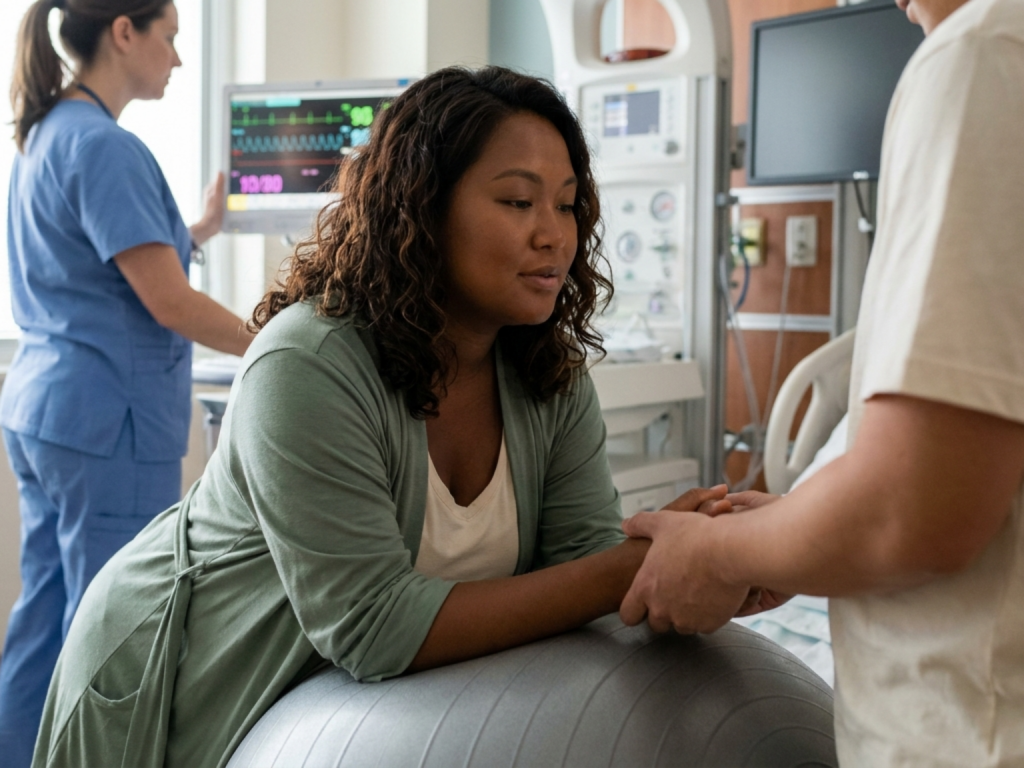
Labor pain is dynamic, not static. It changes as uterine contractions intensify, the cervix effaces and dilates, pelvic tissues stretch, and the fetus descends through the birth canal. Many people describe this progression as waves of cramping, pressure, back pain, burning, or overwhelming pelvic fullness, but the meaning and intensity of those sensations vary widely.
Understanding pain perception across the labor timeline can make the experience feel less mysterious. It can also support more precise conversations with obstetricians, midwives, anesthesiologists, doulas, and nurses about coping strategies, analgesia, positioning, and when symptoms should be reassessed.
Highlights
Early labor pain is often predominantly visceral, arising from uterine contractions and cervical effacement and dilation.
As labor advances, pain often shifts toward somatic sensations from pelvic floor, vaginal, perineal, and rectal pressure.
The transition phase can feel disproportionately intense because contractions are strong, close together, and accompanied by rapid cervical change.
Pain perception is influenced by parity, fetal position, fatigue, anxiety, support, prior trauma, analgesia, and even time of day.
Severe, unusual, or sudden pain should always be discussed promptly with the clinical team because not all pain in labor is physiologic.
Labor pain is biologic and personal
Labor pain has a recognizable physiologic basis, but it is never experienced in a purely mechanical way. Nociceptors in the uterus, cervix, pelvic ligaments, vagina, perineum, and pelvic floor transmit signals through spinal pathways, while the brain interprets those signals through the lens of fatigue, fear, expectation, hormones, memory, culture, support, and perceived safety. This is why two people with similar cervical dilation can report very different pain intensity.
A useful starting point is to separate the labor timeline from the pain experience. The Complete timeline of labor stages usually includes the first stage, second stage, third stage, and immediate postpartum recovery, but pain perception does not always follow neat clock time. A person may spend hours in early labor with manageable sensations, then perceive a rapid escalation over minutes; another may have a long active phase but feel steadier because coping strategies, fetal position, or analgesia are working well.
Medical teams often assess pain alongside contraction frequency, cervical change, fetal status, maternal vital signs, bleeding, membrane status, and coping capacity. Pain intensity alone does not diagnose progress, but a change in pain quality can be clinically meaningful. For example, increasing rectal pressure may suggest fetal descent, while constant focal pain between contractions deserves prompt evaluation.
Early first stage pain
In early first stage labor, pain is commonly visceral. The uterus contracts rhythmically, the cervix softens, effaces, and begins to dilate, and discomfort is often felt as deep menstrual-like cramping, low abdominal pressure, low back ache, or pain radiating toward the hips or thighs. Because visceral pain is less precisely localized than skin or muscle pain, people may describe it as diffuse, internal, or hard to point to with one finger.
Contractions in this phase may be irregular at first, with longer rest intervals. Many people can still speak, move, hydrate, shower, or rest between waves. Others find early labor demanding, especially if contractions are frequent, sleep has been limited, membranes have ruptured, or back labor is present. Prior births may also shape perception. Some multiparous people recognize the pattern and feel more confident; others experience faster escalation and less time to adapt.
The goal in early labor is usually not to eliminate sensation but to preserve stamina and safety. Hydration, bladder emptying, position changes, warmth, breathing, massage, and calm observation can be helpful, but choices should fit the clinical situation. Anyone with decreased fetal movement, heavy bleeding, fever, severe headache, concerning blood pressure symptoms, or pain that does not ease between contractions should contact their maternity care team urgently.
Active first stage escalation
During active first stage labor, contractions usually become stronger, longer, and more regular. Cervical dilation progresses more substantially, uterine muscle workload increases, and the pain pattern often becomes harder to ignore. Many people move from conversational coping to focused coping: breathing through each contraction, changing positions deliberately, vocalizing, requesting counterpressure, or asking for pharmacologic options.
This is where labor pain management preferences become practical rather than theoretical. A birth plan may mention water immersion, movement, sterile water injections for selected back pain, nitrous oxide, systemic opioids, or epidural analgesia, but the best option depends on maternal status, fetal monitoring, hospital resources, cervical progress, contraindications, and personal priorities. Pain relief is not a moral decision. It is a clinical and personal tool that should remain flexible.
Pain perception in active labor can also be affected by circadian timing. Research on chronobiology of labor pain perception found lower reported pain scores in the morning and daytime compared with evening or night. This does not mean night labor is unsafe or that pain is imagined. It suggests that neuroendocrine rhythms, fatigue, environmental quiet, support availability, and sleep deprivation may shape how intense labor feels. In practical terms, nighttime labor often benefits from extra attention to rest, reassurance, hydration, and clear communication.
Transition phase intensity
The late first stage, often called transition, is commonly described as one of the most intense parts of labor. Cervical dilation approaches completion, contractions may come close together, and recovery time between waves can feel brief. Mayo Clinic materials note that the last part of active labor can be particularly intense and painful, which matches many clinical descriptions and patient reports.
Transition phase labor pain may include nausea, shaking, hot or cold sensations, irritability, fear, pressure, vocalization, or a strong desire for the process to be over. These responses can be physiologic rather than signs of poor coping. The sympathetic nervous system is activated, uterine work is high, and the fetus may be descending enough to add pelvic and rectal pressure while the cervix is still completing dilation.
A key clinical distinction is whether the urge to push is coordinated with full dilation and the care team’s assessment. Pushing against an incompletely dilated cervix may increase swelling or fatigue in some circumstances, although management depends on the individual situation. Support at this point is often most useful when it is specific: reminding the laboring person that each contraction ends, helping with position changes, offering cool cloths or fluids if allowed, and communicating clearly about progress without overpromising exact timing.
Second stage pushing pain
The second stage begins when the cervix is fully dilated and continues until the baby is born. Pain often shifts from predominantly visceral contraction pain toward more somatic pain. Somatic pain is usually sharper, more localized, and related to stretching or compression of the vagina, pelvic floor, perineum, bladder, rectum, and surrounding tissues. This is why second-stage sensations are often described as intense pressure, rectal fullness, burning, splitting, or an involuntary need to bear down.
Fetal descent during pushing can make pain feel more purposeful for some people because the pressure aligns with an action: pushing, breathing the baby down, or changing position to assist descent. For others, the pressure is frightening or overwhelming. Both responses are valid. Continuous coaching, consent-based exams, and clear explanations can reduce fear and improve a sense of control.
The labor timeline with epidural may feel different in this phase. Epidural analgesia can reduce contraction pain and perineal pain, but pressure may remain, especially as the fetal head descends. Some people push effectively with strong pressure cues; others need guided pushing because sensory feedback is reduced. Without neuraxial analgesia, the crowning phase can be sharply painful but often brief. Perineal support, warm compresses, controlled birth of the head, and clinician guidance may be used depending on local practice and the clinical situation.
Third stage and early recovery
After the baby is born, the third stage involves separation and delivery of the placenta. Pain usually decreases substantially compared with transition or crowning, but contractions continue because the uterus must contract to reduce bleeding and expel the placenta. Sensations may include cramping, pressure, or discomfort during fundal massage, inspection, repair of tears, or management of bleeding.
Placental delivery after birth is often short, but it still deserves explanation and consent whenever possible. Some people are surprised that pain does not stop instantly after birth. Others are focused on the newborn and barely notice uterine cramping until later. If laceration repair is needed, local anesthesia, existing epidural dosing, or other analgesic approaches may be discussed by the care team.
In the hours after birth, afterpains can occur as the uterus contracts down. They may be stronger with subsequent births or during breastfeeding or chestfeeding because oxytocin release promotes uterine contraction. Severe abdominal pain, heavy bleeding, dizziness, fever, foul-smelling discharge, chest pain, shortness of breath, or severe headache should be escalated immediately. Postpartum pain is common, but it should never be dismissed when it is severe, worsening, focal, or associated with systemic symptoms.
What changes perception
Where labor pain is felt and why it happens depends on more than dilation. Fetal position can increase back or hip pain, especially when the occiput is posterior or descent places asymmetric pressure on pelvic structures. Membrane rupture can make contractions feel more intense for some people because the cushioning effect of the amniotic sac changes. Induction or augmentation with oxytocin may also alter contraction pattern and perceived intensity, requiring individualized monitoring and pain support.
Psychological and social factors matter because pain perception is processed centrally. Fear can amplify pain through muscle tension, hypervigilance, and catecholamine release; supportive care can reduce perceived threat. A calm environment, respectful communication, trauma-informed consent, and the presence of a trusted support person can change the meaning of pain even when the nociceptive input remains strong.
Clinicians should also be alert to pain that does not fit expected labor physiology. Constant severe pain, pain between contractions, shoulder or chest pain, neurologic symptoms, fever, abnormal bleeding, signs of uterine rupture in a scarred uterus, or sudden maternal instability require urgent assessment. The supportive message is not that labor pain must be endured silently. It is that pain should be interpreted in context, treated when desired or needed, and taken seriously when it changes in a concerning way.
When to seek urgent help
- Call your maternity care team or emergency services for heavy bleeding, fainting, chest pain, shortness of breath, or seizures.
- Report constant severe abdominal pain, especially pain that does not ease between contractions.
- Seek urgent assessment for fever, foul-smelling fluid, severe headache, vision changes, or right upper abdominal pain.
- Contact the care team promptly for decreased fetal movement, cord prolapse concerns, or green or bloody fluid after membrane rupture.
- After birth, urgent symptoms include soaking pads rapidly, worsening severe pain, fever, dizziness, or difficulty breathing.
Tools & Assistance
- Discuss pain relief options with an obstetrician, midwife, or anesthesiologist before labor if possible.
- Use a flexible birth plan to document preferred coping strategies and consent priorities.
- Ask the care team to explain pain changes in relation to cervical dilation, fetal descent, and maternal status.
- Request reassessment if pain becomes constant, focal, unusual, or frightening.
- Consider doula, childbirth education, or hospital-based labor support resources when available.
FAQ
Does dilation predict how much pain I will feel?
Not reliably. Dilation is one marker of progress, but pain perception also depends on contraction pattern, fetal position, fatigue, support, anxiety, prior births, and analgesia.
Why does labor pain often move from cramps to pressure?
Early labor pain is often visceral from uterine contractions and cervical change. Later pain becomes more somatic as the baby descends and pelvic floor, vaginal, rectal, and perineal tissues stretch.
Is transition always the most painful stage?
It is commonly very intense because contractions are strong and close together, but some people find crowning, back labor, or prolonged early labor more difficult. Experiences vary.
Can an epidural remove all labor sensations?
An epidural can substantially reduce pain, but many people still feel pressure, touch, or stretching, especially during fetal descent and pushing. The exact effect varies by dose and individual response.
When is labor pain not normal?
Pain that is constant, sudden, severe between contractions, associated with heavy bleeding, fever, fainting, chest pain, shortness of breath, or decreased fetal movement needs prompt clinical assessment.
Sources
- PubMed Central (NIH) — The Pain of Labour
- PubMed — Chronobiology of labour pain perception: an observational study
- Mayo Clinic — Stages of labor and birth: Baby, it's time!
Disclaimer
This article is for general medical education and is not a diagnosis or treatment plan. Always consult your obstetrician, midwife, anesthesiologist, or emergency services for personal symptoms or urgent concerns.
















Please log in to leave a comment.