
Intro
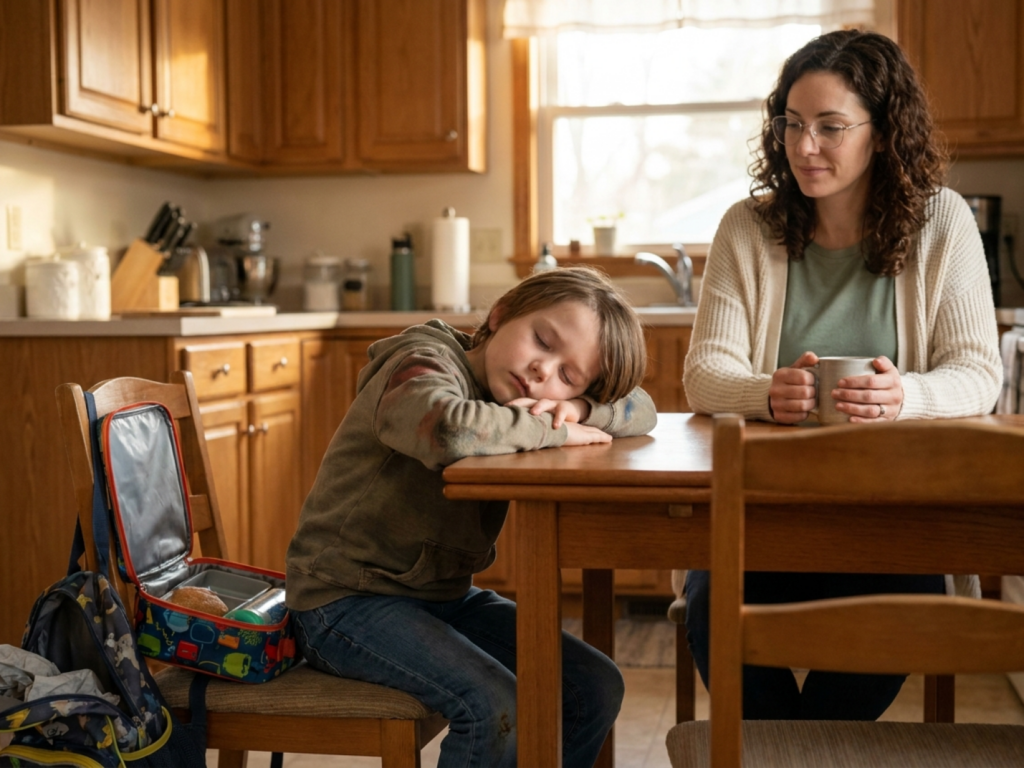
Some children seem to hold themselves together all day at school, then unravel the moment they get home. That pattern is often called after-school restraint collapse. The phrase is widely used by parents and caregivers, especially in discussions of autistic children, but it is not a formal medical diagnosis and it is not a standardized research term.
What it usually describes is a delayed release of stress: a child has spent hours managing demands, sensory input, social expectations, and self-control, and then their capacity for regulation drops. The result can look like crying, irritability, shutdown, aggression, exhaustion, or an urgent need to withdraw. A careful explanation matters because the goal is not to label a child, but to understand what may be driving the behavior and how to reduce strain.
Highlights
After-school restraint collapse describes a post-school drop in regulation, not a diagnosis. It is a useful shorthand for a stress response that becomes visible after a child leaves the school setting.
The pattern may reflect masking, sensory overload, executive fatigue, hunger, thirst, or accumulated emotional load. Different children show different combinations of these pressures.
What looks like defiance at home may actually be a nervous system that has run out of reserve. Home is often the first place where the child feels safe enough to stop holding everything in.
Support works best when it focuses on prevention, recovery time, and reducing unnecessary demands rather than punishment. The aim is to lower total load across the day.
Persistent or severe symptoms still deserve professional assessment. A clinician can help distinguish stress-related collapse from anxiety, ADHD, sleep problems, mood disorders, or other concerns.
What the term means
After-school restraint collapse is a descriptive phrase for a child who appears to manage school demands during the day and then falls apart afterward. The key idea is restraint: the child has been using self-control, social monitoring, and emotional suppression to get through the day. That effort can be especially visible in children who mask distress, fit in socially by imitation, or work hard to avoid drawing attention.
The term is used most often in conversations about autistic children, but the underlying pattern is not unique to autism. Any child who is overtaxed by the school day may show a delayed release once the demands stop. Because the phrase is not a formal diagnosis, it should be treated as a clue about context, not as a conclusion about etiology.
In clinical language, this pattern overlaps with concepts such as emotional dysregulation, allostatic load, fatigue, and sensory overload. Those terms do not mean the same thing, but they all point to a system that has been working hard to maintain equilibrium and can no longer do so once the external structure disappears.
Why school can drain a child so thoroughly
School is not just academics. It is a continuous stream of social, sensory, cognitive, and behavioral demands. Children are expected to sit still, transition on cue, interpret tone and facial expression, tolerate noise and crowds, follow rules, and keep working even when they are tired or frustrated. For a child with limited regulatory reserve, that is a long day of sustained effort.
Masking can intensify the load. A child may hide discomfort, copy peers, force eye contact, suppress stimming, or quietly endure confusion because they want to appear fine. That effort is often invisible to adults, which is why the child can seem unexpectedly distressed later. The crash is not random; it is often the first moment when the child is no longer spending energy on appearing regulated.
Sensory load also matters. Noise, fluorescent light, unpredictable touch, crowded hallways, strong smells, and constant movement can keep the autonomic nervous system in a heightened state. Add academic pressure, social uncertainty, or conflict with peers, and the day can become physiologically expensive. In that setting, school stress physiology in children is not abstract; it is lived as muscle tension, irritability, headache, stomach upset, or a need to shut down.
This is why child school challenges and broader school environment impact children are relevant to the discussion. The more the environment exceeds the child’s current coping capacity, the more likely it is that the release will happen at home.
How it may look at home
The presentation varies. Some children melt down immediately after the school day ends. Others hold it together until they are asked a simple question, offered a snack, or told to start homework. A child may cry, yell, slam doors, throw objects, refuse to talk, collapse on the couch, or become unusually silly and disinhibited. Some children do not externalize at all; they become quiet, withdrawn, or unable to make decisions.
Physical signs matter too. Watch for limp posture, heavy fatigue, appetite changes, headache, stomachache, rubbing the eyes, increased need for sensory input, or a long period of recovery before the child can engage again. These signs suggest that the problem is not simply attitude. They often reflect depletion of self-regulatory capacity and a need for decompression.
It is easy to misread the home version of this state as intentional behavior because the child often seems to have enough energy for the preferred activity they request right after school. That does not mean the distress is fake. It usually means the child can still mobilize for something rewarding while struggling to meet the next demand. The distinction is important when planning care.
What to do in the moment
When the collapse starts, the most useful response is usually less input, not more explanation. Reduce questions, lower noise, and allow time before asking for conversation, homework, or cleanup. Many children need a transition period that is predictable and quiet: a snack, water, movement, a change of clothes, screen-free downtime, or a calm preferred activity.
The goal is to help the nervous system come down, not to win an argument in the first five minutes after school. If the child is distressed, keep language simple and concrete. Short phrases such as “You are safe,” “We will talk later,” or “First snack, then rest” are often more effective than lengthy processing. Some children also benefit from sensory supports such as dimmer light, reduced noise, a weighted item if they already tolerate one, or a private space.
Consistency matters. A predictable arrival routine can reduce anticipatory stress, especially if the child knows they will not be interrogated the minute they walk in the door. If sibling conflict or homework reliably triggers escalation, those demands may need to be delayed or broken into much smaller steps. The child is not learning regulation through overwhelm; they are more likely to learn it through repeated experiences of restoration.
How families and schools can reduce the load
Prevention works better than recovery alone. Families can look for patterns around the worst days: noisy specials, substitute teachers, skipped lunch, social conflict, tests, changes in routine, or too many after-school commitments. Once the pattern is visible, the response can be practical rather than moralizing. Fewer consecutive demands, more structured decompression, and earlier bedtime can all help.
At school, it may be useful to discuss accommodations that reduce cumulative strain. Examples include movement breaks for classroom regulation, access to a quiet space, preferential seating away from noise, advance warning before transitions, or clearer instructions with fewer verbal steps. For some children, the issue is not the size of one demand but the accumulation of many small ones across the day.
Communication with teachers and counselors should focus on function: what happens before the collapse, what the child needs to recover, and which parts of the day are most costly. That framing is more useful than debating whether the child is being difficult. It also acknowledges that teacher-student relationships and classroom climate can affect regulation, especially for children who are already working hard to appear composed.
If concerns are ongoing, a pediatrician, developmental specialist, psychologist, or occupational therapist can help clarify whether the pattern reflects stress, anxiety, sleep disruption, sensory processing difficulties, ADHD, autism-related masking, or another issue. Child school challenges often overlap, so a single explanation is rarely enough.
When to seek professional help
Seek assessment if the behavior is severe, persistent, worsening, or interfering with sleep, eating, learning, family life, or safety. Professional input is especially important if the child has self-injury, frequent aggression, marked withdrawal, panic-like episodes, significant weight change, or prolonged sadness or fear. A child who is collapsing every day may need more than schedule adjustments.
It is also worth getting help when the pattern seems out of proportion to the child’s age or developmental level, or when the family cannot identify clear triggers. A clinician can screen for anxiety disorders, depression, trauma-related symptoms, sleep disorders, ADHD, and neurodevelopmental differences. That evaluation does not have to start from the assumption that the child is choosing the behavior.
At the same time, avoid over-pathologizing a single difficult hour after school. Many children simply need a dependable recovery routine and a more realistic load. The most balanced approach is to take the distress seriously while staying open to multiple causes and multiple solutions.
When this needs more attention
- Seek urgent help if the child talks about self-harm, cannot be kept safe, or becomes violent in a way that puts people or property at risk.
- Do not assume the pattern is only behavioral if there is sleep loss, appetite change, repeated headaches, stomach pain, or school refusal.
- A new or abrupt change in after-school behavior can reflect bullying, a medical problem, medication effects, or another stressor that deserves assessment.
- If the child is collapsing most days for weeks, ask a healthcare professional rather than trying to solve it with discipline alone.
Tools & Assistance
- Pediatrician or family doctor for medical screening
- School counselor or special education team for support planning
- Child psychologist or developmental pediatrician for broader assessment
- Occupational therapist for sensory and regulation strategies
- Simple daily log of triggers, timing, sleep, food, and recovery time
FAQ
Is after-school restraint collapse a diagnosis?
No. It is a descriptive phrase, not a formal medical diagnosis or research-defined disorder.
Does it only happen in autistic children?
No. It is discussed often in autism because masking and sensory strain can be involved, but any child under enough pressure may show a similar pattern.
Is this the same as a meltdown?
Not exactly. A meltdown is a behavioral or emotional crisis; after-school restraint collapse describes the broader pattern that may lead to one.
What is the most helpful first step?
Lower the immediate demands, offer food, water, and quiet recovery time, then look for repeated triggers across the school day.
When should I ask for professional help?
Ask sooner if the pattern is frequent, severe, unsafe, or linked to sleep, appetite, mood, or school refusal problems.
Sources
- BBC Bitesize — What is after-school restraint collapse and how to manage it
- VizyPlan — After-School Restraint Collapse in Autistic Children
- Undivided — What Is After-School Restraint Collapse?
Disclaimer
This article is for general educational purposes and is not medical advice. If a child has severe, persistent, or unsafe symptoms, seek evaluation from a qualified healthcare professional.


















Please log in to leave a comment.