
Intro
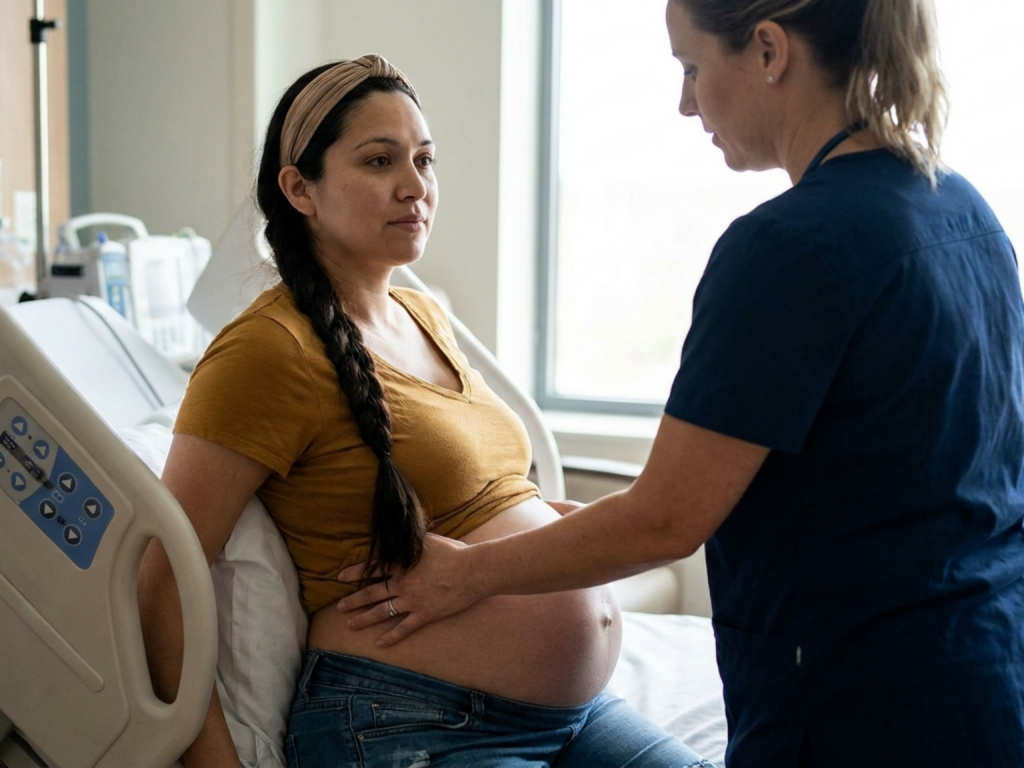
Labor positions are not a cosmetic choice. They can change how contractions are perceived, how the fetus descends, how the pelvis is used, and how easy it is to monitor maternal and fetal status. For some people, being upright feels more effective and less exhausting. For others, lying down is the position that best preserves stamina, allows rest, or fits the clinical situation.
The practical question is not whether one position is always superior. It is which posture best matches the stage of labor, analgesia status, fetal position, maternal blood pressure, and the birthing person’s own tolerance. Evidence suggests the answer can differ meaningfully between unmedicated labor and labor with an epidural.
Highlights
Upright labor positions can use gravity and pelvic mobility to support fetal descent, especially in unmedicated second stage labor.
Lying down is not inherently wrong; it may be the best option when rest, monitoring, blood pressure support, or epidural management matter more.
The evidence is strongest for women without epidurals, where upright positions may shorten second stage labor and reduce assisted birth.
With epidural analgesia, the difference between upright and recumbent positions appears much smaller and may be clinically modest.
Position choice should stay flexible, because the best posture can change as labor progresses.
How position affects labor physiology
During labor, posture influences more than comfort. Upright positions such as standing, walking, kneeling, squatting, or sitting can change the angle of the pelvis, reduce pressure from the gravid uterus on major vessels, and sometimes help the fetus descend through the birth canal. In contrast, lying flat or semi-recumbent may reduce muscular effort and make monitoring or procedures easier, but it can also limit pelvic freedom and may feel more restrictive during strong contractions.
For medically literate readers, the key distinction is that labor is a dynamic mechanical and neurohormonal process. Gravity is one variable, but it is not the only one. Uterine contractility, fetal presentation, cervical dilation, maternal blood pressure, analgesia, and soft tissue resistance all interact. A position that improves one element may worsen another. That is why the clinically useful question is not upright versus lying down in the abstract, but which posture best supports the physiology of this labor right now.
What the evidence shows without an epidural
The clearest evidence for upright labor positions comes from women who are not receiving epidural analgesia. Systematic reviews, including Cochrane evidence, suggest that upright positions during the second stage of labor may shorten the second stage, reduce assisted vaginal birth, and lower the likelihood of episiotomy. An overview of systematic reviews reports similar patterns: fewer instrumental births and shorter labor when women without epidurals remain upright or mobile during pushing.
That said, the data are not one-sided. Upright positions may increase estimated blood loss and second-degree perineal trauma in some studies. The certainty of the evidence is often low or very low, so the findings should be read as probabilities rather than guarantees. A person who feels more effective on hands-and-knees, kneeling, sitting, or squatting may indeed labor better that way, but the research does not support treating any posture as universally optimal for every unmedicated birth.
In practice, many teams use the evidence to encourage mobility and freedom of movement during labor while still allowing a return to a resting position when needed. That balance respects both the likely physiologic advantages of upright positions and the reality that endurance matters.
What changes when an epidural is used
Labor with epidural analgesia is a different clinical situation. Sensory blockade, reduced lower-body motor control, and the need to protect maternal safety can limit how much movement is feasible. The Cochrane review on maternal position in the second stage of labor for women with epidural anesthesia found little or no difference between upright and recumbent positions for operative birth overall. In other words, position choice appears less likely to change major outcomes in this subgroup.
This does not mean posture is irrelevant. It means the margin of benefit is smaller and more variable. A semi-sitting position with epidural analgesia may help some patients feel more engaged in pushing, while side-lying or other recumbent positions may better support blood pressure, reduce fatigue, or allow safer management if the block is dense. The overview of systematic reviews also notes that evidence in women with epidurals does not show definite benefits or harms from being upright, which is a useful caution against overselling one approach.
For patients with epidurals, the practical goal is usually individualized positioning rather than rigid adherence to one posture. The best choice may be the one that balances comfort, hemodynamics, fetal status, and the nursing or obstetric team’s need to monitor labor closely.
Comfort, stamina, and maternal safety
Comfort is not a soft endpoint. It affects muscle tone, fatigue, breathing pattern, coping, and the ability to push effectively. An upright posture can help one person feel anchored and active, while another experiences it as exhausting or destabilizing. Likewise, lying down may feel restful and reduce the effort of maintaining balance, especially late in labor or after a long first stage. The better position is often the one the laboring person can sustain without tension or panic.
Safety considerations also matter. Certain medical situations make lying down temporarily more practical, such as hypotension after neuraxial analgesia, significant dizziness, continuous fetal monitoring needs, or the need for a procedure. Upright positions are not automatically safer just because they are more physiologic in theory. Likewise, lying flat on the back is not always ideal, especially if it worsens vena cava compression or maternal symptoms. Clinicians often prefer side-lying, semi-recumbent, or supported upright variations rather than strict supine positioning.
In a well-run labor setting, the question should be whether the current posture helps the person labor efficiently and safely, not whether it satisfies a rule. Flexible position changes are usually a sign of good care, not inconsistency.
Choosing a position through labor
Position should be reassessed as labor advances. Early labor may allow walking, standing, swaying, or leaning forward, especially when contractions are still intermittent. As contractions intensify, some people prefer kneeling, hands-and-knees, side-lying, or a supported sitting posture. During second stage labor positioning, the main goal is often to find the arrangement that best supports descent and pushing while preserving energy.
A useful approach is to think in terms of tradeoffs. If descent seems slow and the person is unmedicated, an upright posture may provide mechanical advantages. If fatigue is becoming the dominant issue, a resting or side-lying position may be more productive than trying to remain upright. If an epidural is in place, position changes may still be useful, but the expected effect size is smaller, so comfort and safety can take priority. When fetal heart rate patterns, maternal blood pressure, or clinician access are concerns, the team may advise a different posture for a period of time.
This is why the most realistic labor plan is usually a range of acceptable positions rather than a single preferred pose. The aim is not ideological purity. It is effective, responsive care.
What to discuss with the birth team
Before labor, it helps to talk through how position changes will work in the setting you expect. If you hope to avoid an epidural, ask how mobility will be supported, how monitoring can be done without confining you unnecessarily, and which upright positions are easiest in your unit. If you anticipate epidural analgesia, ask how staff handle repositioning, whether side-lying or supported sitting is routinely used, and what signs would prompt a switch to a recumbent posture.
It is also worth clarifying whether there are any obstetric factors that could narrow the safe range of positions, such as placenta issues, blood pressure concerns, or fetal growth problems. The broad evidence base is useful, but individual labor care must still account for the actual clinical picture. A position that is reasonable in an uncomplicated labor may not be the best choice in a labor with maternal instability, nonreassuring fetal tracing, or limited tolerance for movement.
The overall lesson is straightforward: upright positions often have real benefits, especially without epidural analgesia, but lying down remains an appropriate and sometimes necessary part of good intrapartum care.
When to be cautious
- Sudden dizziness, shortness of breath, chest pain, or severe weakness during labor needs immediate clinical attention.
- A position that worsens fetal heart rate concerns or maternal blood pressure may need to be changed promptly.
- After epidural analgesia, reduced leg strength or numbness can make unsupported upright positions unsafe.
- Heavy bleeding, suspected placental problems, or urgent obstetric interventions can override preferred positioning.
- Persistent pain or panic in one posture is a reason to reassess, not to push through it.
Tools & Assistance
- Midwife or obstetrician review of labor positioning options
- Hospital labor and delivery nursing team for real-time position changes
- Anesthesia team input after epidural placement
- Birth plan discussion before labor starts
FAQ
Is upright labor always better than lying down?
No. Upright positions often help in unmedicated labor, but the best choice depends on stage of labor, fatigue, fetal status, and whether an epidural is being used.
Does lying down slow labor?
Not necessarily. Lying down may be less efficient for some people, but it can also conserve energy, improve monitoring, or support safety in the right clinical setting.
What if I have an epidural and cannot stand?
That is common. Side-lying, semi-recumbent, and supported sitting positions are often used instead, with the team helping balance comfort and safety.
Can I change positions during labor?
Usually yes, and many people benefit from changing positions as contractions, fatigue, and fetal descent evolve. The labor team can help judge what is safest at each point.
Sources
- Cochrane — Women's position for giving birth without epidural anaesthesia
- PubMed / BMJ Open — Benefits and risks of upright positions during the second stage of labour: an overview of systematic reviews
- Cochrane — Maternal position in the second stage of labour for women with epidural anaesthesia
Disclaimer
This article is for educational purposes only and does not replace individualized medical advice. Labor position decisions should be made with your midwife, obstetrician, or anesthesia team based on your clinical situation.

















Please log in to leave a comment.