
Intro
After birth, comfort is not a luxury. It supports mobility, sleep, feeding, bonding, and recovery, and it can reduce the burden of normal postpartum soreness. The most useful approach is usually practical and layered: manage pain, protect healing tissue, preserve rest, and make help easy to access.
Comfort also includes emotional steadiness. The World Health Organization emphasizes respectful, responsive postnatal care, which means listening to what the mother feels, explaining what is normal, and adjusting support as recovery changes day by day.
Highlights
Comfort after birth is both physical and emotional. Pain control, rest, and reassurance all matter.
Small measures such as ice packs, perineal hygiene, and supportive clothing can make a large difference in recovery.
The best plan is individualized. Vaginal birth and cesarean recovery have different comfort needs.
Family support should reduce effort, not add noise, pressure, or decision-making load.
Any worsening pain, heavy bleeding, fever, or severe mood change needs medical review.
Start with the basics of recovery
The first goal is to make the mother feel safe enough to rest. In the early postpartum period, that usually means quiet, easy access to water and food, a reachable call bell or phone, and support with standing, toileting, feeding, and holding the baby. These are simple steps, but they preserve energy when the body is recovering from labor, tissue stretching, blood loss, sleep deprivation, and the hormonal shift after delivery.
Comfort is also shaped by expectation. Many mothers worry that every ache means something is wrong, when in fact soreness, cramping, fatigue, and emotional fragility are common early on. Clear explanations from the obstetric team or midwife can reduce fear and help the mother use the right measures at the right time. That is the clinical value of a good postpartum support plan: it turns vague concern into concrete help.
Rest should be protected, not treated as optional. Short, frequent naps, fewer visitors, and help with meals or household tasks often matter more than a long list of products. The aim is to lower the number of demands on the recovering body so the mother can focus on healing, feeding, and observing her own symptoms.
Relieve perineal or incision discomfort
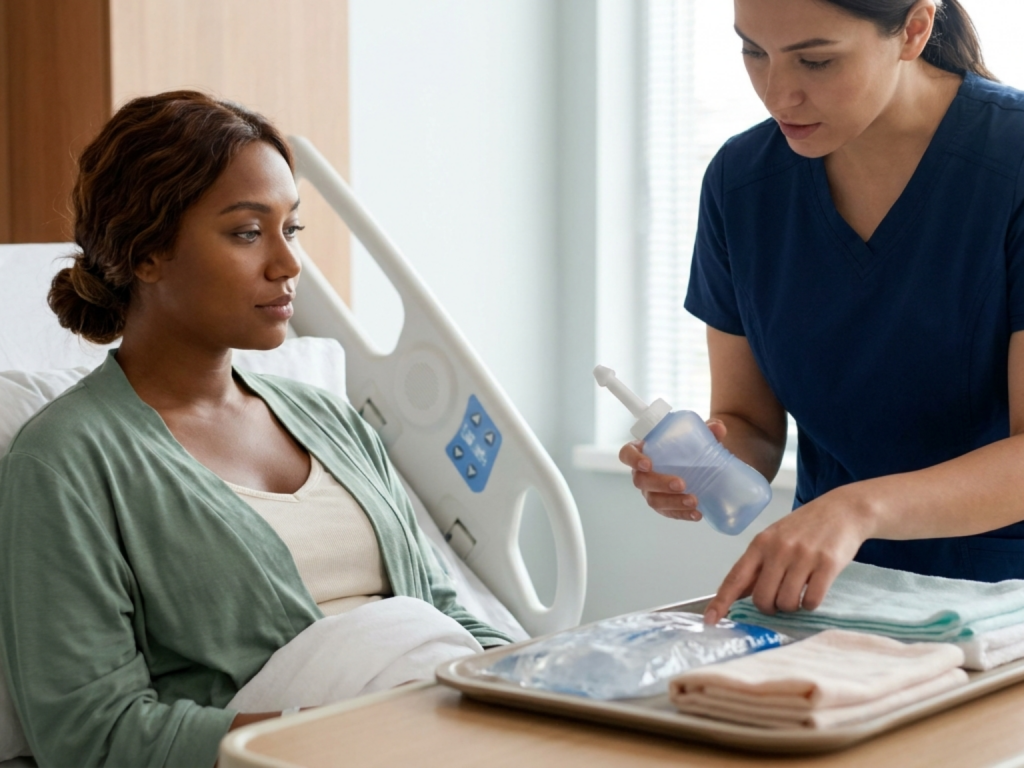
After a vaginal birth, soreness around the perineum is common, especially if there was a tear, episiotomy, or swelling from pushing. Cooling measures are often used early, and a peri bottle for rinsing after urination can make hygiene more tolerable than wiping. Many people also find brief sitz baths soothing once their clinician says they are appropriate. Pain medicine should be used exactly as recommended by the care team, because the safest option depends on the delivery, other medications, and breastfeeding plans.
After cesarean delivery, the focus shifts to protecting the incision. Getting out of bed slowly, supporting the abdomen when coughing or laughing, and wearing clothing after cesarean delivery that does not rub the wound can reduce strain. Loose waistbands, soft fabrics, and careful positioning in bed often help more than trying to push through discomfort. If the incision is becoming more painful rather than less painful, that should be checked.
Many families use warm and cold comfort measures, but timing matters. Cold is usually more useful early when swelling is present, while warmth may be more helpful later for muscle tension if the clinician agrees. The point is not to self-prescribe a ritual, but to match the measure to the type of discomfort and the stage of recovery.
Support bladder, bowel, and movement
Toileting discomfort is one of the most underrated sources of postpartum distress. Urinating can sting after vaginal birth, and constipation is common after both vaginal and cesarean delivery because of dehydration, iron supplements, opioids, reduced movement, and fear of straining. Plenty of fluids, fiber, and gentle walking can help bowel function return, but the safest medication choices are the ones approved by the mother’s clinician. If a stool softener is recommended, it can reduce straining and make bathroom trips less stressful.
Movement should be gradual. Short walks around the room or house help circulation and reduce stiffness, but overexertion can increase pain and exhaustion. A recovering mother does not need to prove strength by doing too much too soon. She needs predictable help getting up, sitting down, changing position, and carrying the baby only when it feels manageable.
Practical postpartum recovery assistance often includes the unglamorous work: bringing water, refilling pads, helping with snacks, and making sure the mother can use the bathroom without rushing. Those small tasks can lower physical stress enough that healing becomes more comfortable and less exhausting.
Keep breasts and feeding comfortable
Breast and chest discomfort can begin quickly after birth, especially when milk production increases and the breasts become fuller or more tender. A well-fitting support bra, frequent feeding or pumping as advised, and careful positioning can help. If engorgement develops, cold packs may ease swelling. Some mothers also benefit from warm compresses before feeding to encourage milk flow, but the choice depends on the pattern of discomfort and the feeding plan.
If breastfeeding is painful, latch problems should be assessed early. Nipple pain is not something to simply tolerate. It may reflect positioning issues, shallow latch, or a baby who needs further feeding evaluation. Getting help from a lactation professional can prevent a small problem from becoming a larger one.
Comfort in this area also includes protecting the mother from surprise. Let her know what is normal: fullness, mild tenderness, and adjustment discomfort can occur. Let her know what is not normal: spreading redness, fever, or severe localized pain can signal a problem that needs medical review. Clear guidance reduces anxiety and helps the mother stay calm while her body adapts.
Protect sleep, privacy, and emotional steadiness
Physical comfort is harder to achieve when the mother is constantly interrupted. Visitors, noise, repeated questions, and pressure to entertain can raise stress and make pain feel worse. A calm room, dimmer light when resting, and a simple visitor plan often help more than elaborate comfort items. The key is to lower demands so the mother can feed, sleep, shower, and recover without having to negotiate every detail.
A postpartum support plan should be specific. Who brings meals? Who handles older children? Who answers the door? Who checks medication timing? Who can stay long enough to help the mother rest? The more clearly those roles are defined, the less energy the mother spends coordinating care. That is not a luxury; it is part of postpartum recovery assistance.
Emotional comfort matters as much as physical comfort. Some mothers feel tearful, overwhelmed, or unusually sensitive in the first days after birth. Brief mood shifts can be normal, but persistent sadness, panic, or a sense of disconnection should be discussed with a healthcare professional. Respectful care means taking those feelings seriously instead of brushing them off.
Know when discomfort needs medical attention
Not all postpartum discomfort can be managed at home. Heavy bleeding, a sudden increase in pain, foul-smelling discharge, fever, severe headache, chest pain, shortness of breath, or one-sided leg swelling needs prompt medical attention. Worsening redness, drainage, or opening at a cesarean incision also deserves review. These are not signs to watch casually.
The same caution applies to mood and thinking. If the mother cannot sleep even when the baby sleeps, feels panicked or hopeless, or has thoughts of harming herself or the baby, she needs immediate support from a clinician or emergency service. Emotional safety is part of postpartum care, not separate from it.
Good comfort care is therefore a balance: use supportive measures early, observe the body closely, and escalate when recovery does not follow the expected path. The goal is not to force comfort. The goal is to remove avoidable strain while making sure complications are caught early.
Seek medical help promptly if any of these occur
- Bleeding that soaks pads quickly or suddenly increases.
- Fever, foul discharge, or worsening wound redness or drainage.
- Severe headache, chest pain, shortness of breath, or one-sided leg swelling.
- Pain that is getting worse instead of gradually improving.
- Persistent sadness, panic, confusion, or thoughts of self-harm.
Tools & Assistance
- Peri bottle, unscented pads, and a clean supply of underwear
- Ice packs or cold compresses for early swelling relief
- Supportive pillow, loose clothing, and a safe place to rest
- Stool softener only if recommended by the clinician
- Direct contact number for the obstetric team, midwife, or postpartum nurse
FAQ
What is the fastest safe way to ease soreness after vaginal birth?
Cooling measures, gentle hygiene, and pain medicine approved by the care team are common first steps. A clinician can advise whether sitz baths or other options are appropriate.
How can cesarean discomfort be reduced at home?
Slow position changes, incision protection, loose clothing, and help with lifting and household tasks can reduce strain. Any increasing incision pain should be reviewed.
Is constipation normal after birth?
Yes, it is common. Fluids, fiber, gentle walking, and clinician-approved medications can help, especially if straining is painful.
When should breastfeeding discomfort be checked?
If latch pain is persistent, or if there is redness, fever, or severe localized breast pain, the mother should seek clinical evaluation.
What kind of family help is most useful?
Practical help is usually best: meals, laundry, water, diaper supplies, transport, and time for the mother to sleep without interruption.
Sources
- Mayo Clinic — Postpartum care: What to expect after a vaginal birth
- MedlinePlus — Postpartum Care
- World Health Organization — WHO recommendations on maternal and newborn care for a positive postnatal experience
Disclaimer
This article is for education only and does not replace individualized medical advice. After birth, comfort measures and medicines should be reviewed with the mother’s healthcare professional.












Please log in to leave a comment.