
Intro
Choosing clothing and comfort items for labor is less about creating a perfect outfit and more about preserving mobility, privacy, warmth, and a sense of control during a rapidly changing clinical experience. Labor may involve walking, hydrotherapy, frequent examinations, monitoring, intravenous access, neuraxial analgesia, or an unplanned operative birth, so flexible and easily removable layers are usually more useful than specialized garments.
Your hospital, midwifery unit, birth center, or home-birth team may have specific policies and equipment. Ask what is supplied, what can be worn during monitoring or water immersion, and what clothing is appropriate if an epidural, cesarean birth, or neonatal assessment becomes necessary.
Highlights
Prioritize loose, breathable, washable clothing that allows movement and straightforward access for clinical care.
Pack more than one option because labor can involve sweating, fluid exposure, temperature changes, and unexpected procedures.
Comfort items such as pillows, eye masks, warm or cold packs, music, and a fan can support coping alongside positioning and breathing strategies.
Hospital-provided gowns, mesh underwear, blankets, and non-skid socks may be practical; personal alternatives can be added if permitted.
Comfort and clinical practicality should guide your choices
Labor is physically demanding and often unpredictable. Clothing that feels comfortable at home may be impractical once fetal monitoring, blood pressure measurement, intravenous access, cervical examinations, or analgesia are part of care. The most useful garments are generally soft, loose, breathable, and easy to open or remove without requiring you to stand or bend repeatedly.
Think in layers rather than one complete outfit. A lightweight top, robe, and socks can be adjusted as your temperature changes. Choose fabrics that tolerate washing and do not cause distress if exposed to amniotic fluid, blood, massage oil, perspiration, or skin antiseptic. Avoid anything precious or difficult to launder. A front-opening shirt or nursing bra may facilitate skin-to-skin contact and breastfeeding after birth, although some people prefer not to wear a bra during labor.
Many facilities provide a gown, but wearing your own clothing may help you feel more private or emotionally grounded if local policy permits it. A hospital gown can be especially convenient when clinicians need rapid access to the abdomen, back, or perineum. Ask whether personal clothing is allowed during water immersion, continuous monitoring, or procedures.
What to wear during early and active labor
For early labor, when you may still be moving between home and the birth setting, a loose dress, oversized shirt, soft lounge pants, or an open-front nightgown can work well. Select a length that does not interfere with walking or create a tripping hazard. If you plan to use a birthing pool or shower, pack a swimsuit top, nursing bra, or another garment that you are comfortable getting wet, but confirm the facility’s rules first.
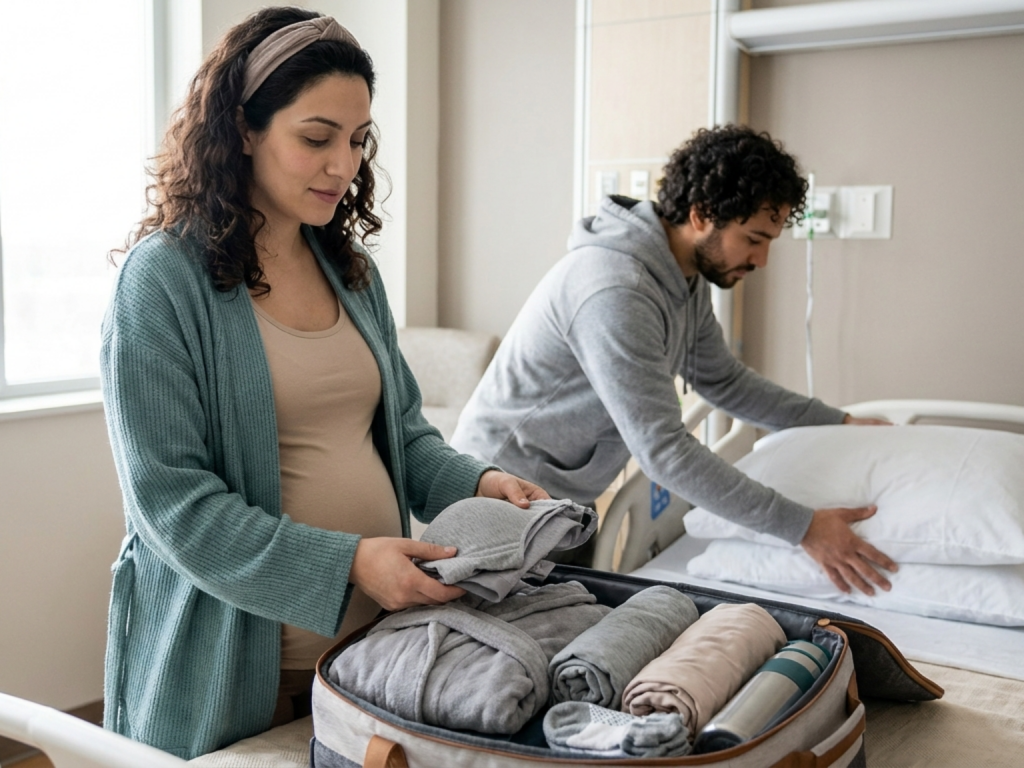
A practical labor bag may include a nightgown, bathrobe, slippers, bra or nursing bra, underwear, and loose clothing for going home. These basic items are consistent with standard hospital packing guidance. Bring at least one backup outfit because labor duration and fluid exposure are difficult to predict.
During active labor, the priority is access and freedom of movement. Some people prefer a gown or bra only; others feel more secure in a long T-shirt or loose nightdress. If you expect frequent position changes, avoid tight waistbands, restrictive shapewear, underwired bras, and garments with complicated fasteners. If you have an epidural or another intervention that limits mobility, clothing that opens at the back or front may be easier for staff to manage.
Underwear preferences vary. Disposable or hospital-provided mesh underwear can be useful after membrane rupture and immediately after birth. If you bring your own, choose large, soft, breathable pairs that you will not mind discarding. Avoid tampons and other vaginally inserted products during labor unless specifically directed by your clinician.
Footwear, warmth, and temperature regulation
Footwear should be stable, washable, and easy to put on. Non-skid socks or slippers can reduce slipping on smooth hospital floors, particularly when you are tired, experiencing contractions, or receiving medication that affects balance. Avoid loose slippers without heel support if you will be walking extensively. A pair of inexpensive shower sandals may be useful for communal bathing areas, subject to facility guidance.
Temperature regulation is a recurring issue in labor. Some people feel intensely warm during contractions, while others become chilled between them or after receiving neuraxial analgesia. Pack a lightweight robe, warm socks, and a soft layer that can be removed quickly. Ask staff before using an electric heating pad or other powered heat source; reduced sensation, especially after analgesia, can increase the risk of unrecognized thermal injury.
A small personal fan may feel helpful during contractions, and an eye mask can make rest easier between assessments. Warm blankets, cold packs, and warm compresses are commonly used comfort measures in hospital settings. Their use should be coordinated with staff, particularly if there is reduced sensation, altered skin integrity, fever, or continuous monitoring equipment.
Comfort items for coping with contractions
Clothing is only one part of a labor comfort plan. Items that support movement, positioning, massage, breathing, and sensory regulation may be more valuable than additional outfits. Pack only what can be used safely and cleaned easily; a crowded room can make movement and clinical care more difficult.
- Pillows: An extra pillow can support side-lying, forward-leaning, kneeling, or seated positions. Use a clean pillowcase and check whether the facility supplies pillows.
- Warm and cold items: Warm compresses or blankets may relax tense muscles, while an ice pack or cool cloth can reduce the sensation of overheating. Follow staff instructions about skin protection and duration.
- Hydration and lip care: A refillable bottle with a straw and unscented lip balm may be convenient, although eating and drinking instructions depend on your clinical situation and local policy.
- Music and sound: A phone, small speaker, or headphones can support relaxation if they do not interfere with communication, monitoring, or urgent instructions. Keep chargers accessible.
- Privacy and sensory control: An eye mask, familiar scent-free lotion, or a small personal item can reduce unwanted stimulation. Strong fragrances may aggravate nausea or respiratory sensitivity, so unscented products are often preferable.
- Movement aids: Birth balls or peanut balls may support upright or side-lying positions when clinically appropriate. Use only equipment approved by the facility and ask for assistance if balance, strength, or sensation is impaired.
Comfort strategies work best when they remain adaptable. A tool that feels helpful during early labor may become irritating during transition, and preferences can change after analgesia or birth.
Items for support, privacy, and emotional comfort
Labor can be intensely private even in a busy clinical environment. A soft robe, familiar blanket, or personal pillowcase may make the room feel less institutional while preserving access for examinations. Photographs, prayer beads, a small card, or another meaningful object can provide grounding and help a support person remember your preferences during a demanding moment.
Consider preparing a short birth preferences document that describes clothing preferences, use of water, music, touch, massage, and privacy. This is not a guarantee that every preference will be possible, but it gives the team a starting point for shared decision-making. Keep it concise and discuss it with your clinician before labor if possible.
Support people also need practical items: comfortable layers, non-skid footwear, snacks if permitted, a phone charger, and water. Their role may include adjusting pillows, offering a cool cloth, helping with clothing changes, and communicating preferences. They should ask before applying heat, cold, massage, or essential oils, and they should follow staff instructions around equipment and sterile procedures.
Packing for postpartum recovery and discharge
After birth, bleeding, perineal swelling, abdominal tenderness, urinary catheterization, incision care, and breast or chest sensitivity may affect what feels comfortable. Pack high-waisted, loose trousers or a soft dress that does not press on the perineum or a cesarean incision. A front-opening shirt or nursing-friendly top can make feeding and skin-to-skin contact easier, but ordinary loose clothing is also entirely reasonable.
Large cotton underwear or disposable mesh underwear may be more comfortable than ordinary briefs during the early postpartum period. If you use pads, choose the products recommended or supplied by your facility. Bring a supportive but nonrestrictive bra if desired; breast size and comfort can change quickly after birth, so avoid buying a large quantity of one size in advance.
For discharge, choose clothing appropriate to the weather and easy to put on while sitting. Slip-on shoes may be preferable if your feet are swollen or you are fatigued. Pack a separate outfit for the newborn and confirm requirements for an approved infant car seat. A hospital bag checklist for baby can help organize newborn supplies without overpacking.
Adapt clothing and comfort plans to changing medical needs
A planned vaginal birth may become a birth requiring induction, continuous fetal monitoring, operative assistance, epidural analgesia, or cesarean delivery. This possibility does not make personal preferences irrelevant; it means the most useful items are those that can adapt. For example, a robe and loose discharge clothing remain useful even if a hospital gown is needed during the procedure.
Some equipment requires direct access to the abdomen, back, arm, or chest. Clothing may need to be removed for sterile preparation, placement of monitoring devices, intravenous lines, regional anesthesia, or surgery. Jewelry, contact lenses, and certain personal products may need to be removed if an operation or urgent anesthesia becomes necessary. Follow the instructions of the obstetric, anesthesia, and nursing teams.
Tell staff if a garment is causing pressure, overheating, itching, or difficulty with movement. Also mention reduced sensation, dizziness, weakness, shortness of breath, or skin discomfort rather than trying to manage these symptoms only with comfort items. The safest plan is one that combines your preferences with ongoing maternal and fetal assessment.
Safety reminders
- Ask the maternity unit which clothing, heating devices, birth balls, and personal electrical items are permitted.
- Do not use heat directly on numb skin or over an area with impaired sensation; ask staff to check temperature and placement.
- Use non-skid footwear and request assistance when walking after medication, epidural analgesia, blood loss, or prolonged labor.
- Keep cords, bags, and loose garments away from pathways, monitoring equipment, oxygen tubing, and sterile fields.
- Tell the clinical team promptly about severe pain, heavy bleeding, faintness, breathing difficulty, fever, or any sudden change in your condition.
Tools & Assistance
- A two-bag packing system: one small labor bag and one separate postpartum or discharge bag.
- A concise birth preferences document covering clothing, privacy, movement, water, touch, and sensory comfort.
- A phone checklist confirming hospital policy, maternity triage contact details, transport arrangements, and permitted comfort equipment.
- A washable pillowcase, labeled charger, refillable bottle, and unscented personal-care items.
- A support-person plan assigning practical tasks such as offering fluids, adjusting pillows, and locating staff.
FAQ
Should I bring my own labor gown?
You may, if your facility permits personal clothing, but a hospital gown is often easiest for monitoring, examinations, intravenous access, and procedures. Pack a loose alternative rather than relying on one garment.
Can I wear a bra during labor?
Many people wear a soft bra or nursing bra, while others prefer no bra. Avoid underwire if it is uncomfortable or interferes with monitoring, and ask about requirements for water immersion or surgery.
Are heating pads safe during contractions?
Warm compresses may be useful, but electric heating pads require caution and facility approval. Reduced sensation after analgesia can make burns harder to detect, so ask staff to guide placement and temperature.
What is the most useful comfort item to pack?
There is no universal answer. A pillow, cool cloth, robe, music, fan, or birth ball may help different people at different stages. Choose a small adaptable set and discuss equipment with your care team.
What should I wear home after birth?
Choose loose, soft, weather-appropriate clothing that does not press on the perineum or a cesarean incision. Slip-on shoes and high-waisted underwear are often practical, but individual comfort and clinical recovery should guide the choice.
Sources
- MedlinePlus — What to bring to your labor and delivery
- Woman's Hospital — Comfort Measures During Labor
- National Partnership for Women & Families — Comfort Measures for Labor Pain Relief
Disclaimer
This article provides general educational information and is not a substitute for individualized medical advice. Follow the instructions of your obstetric, midwifery, nursing, and anesthesia teams, and contact your maternity service for questions about your specific labor plan.














Please log in to leave a comment.