
Intro
Many pregnant people are told to worry about the litter box, and that advice can sound frightening if you love your cat. The reassuring nuance is that cat ownership itself does not equal toxoplasmosis exposure. Infection usually happens when a person accidentally ingests Toxoplasma gondii oocysts from contaminated material, rather than from simply being near a cat.
This article explains how cat litter can become a risk, why the timing of exposure matters, what other infection routes matter just as much, and how to lower risk in a practical, non-alarmist way. If you are pregnant and think you may have had an exposure, a clinician can help you interpret the situation in context.
Highlights
Cat litter is one possible exposure source, but it is not the only one and not the most common one in many settings.
The parasite becomes infectious only after cat feces have sat long enough for oocysts to sporulate, which takes at least 24 hours.
Pregnancy matters because a new infection can cross the placenta and potentially affect the fetus, even when the pregnant person feels well.
Simple hygiene steps such as gloves, handwashing, and frequent litter removal can materially reduce risk.
Food safety and garden hygiene are part of toxoplasmosis prevention in pregnancy, not just pet care.
What toxoplasmosis is and why cat litter gets so much attention
Toxoplasmosis is an infection caused by the protozoan parasite Toxoplasma gondii. In people, it is often mild or even asymptomatic, which can make exposure easy to miss. The organism matters more in pregnancy because a primary infection can sometimes be transmitted to the fetus, creating concern for congenital infection.
Cat litter comes up so often because cats are the definitive host: they can shed oocysts in their feces. Those oocysts do not become immediately infectious. Cornell notes that they must sporulate, a process that takes at least 24 hours, before they can pose the classic fecal-oral risk. That detail is important because it means daily litter removal changes the risk profile substantially.
Another useful reality check is that cat ownership by itself is not the same thing as toxoplasmosis exposure. The common hazard is accidental ingestion of contaminated material through the hands, mouth, food, or surfaces. In the United States, undercooked meat is often a more common source of infection than cat feces, so the litter box should be seen as one piece of a broader prevention picture rather than the only issue.
How infection actually happens
For most people, infection occurs when parasite stages reach the mouth. That can happen directly after cleaning a litter box, indirectly after touching contaminated soil or a surface, or through handling food that has been contaminated and then not washed properly. The CDC lists cleaning a cat’s litter box, contact with cat feces, contaminated soil, and unwashed produce among the main exposure routes.
That pathway explains why hand hygiene is so central. A person may not notice any contamination at the moment of exposure, and the parasite does not need dramatic contact to spread. Touching the litter box, then touching the face, eating, or preparing food without washing hands can be enough to create risk.
It is also why context matters. A clean litter box that is removed daily has less opportunity to build up infectious oocysts than a box that is left untouched for days. Likewise, gloves help, but only if they are paired with careful handwashing after glove removal. Prevention works best when each step interrupts the hand-to-mouth route.
Why pregnancy changes the stakes
Pregnancy does not automatically mean a higher chance of acquiring toxoplasmosis, but it does change the consequences if infection occurs. The main concern is transplacental transmission after a new maternal infection. That is why obstetric clinicians take exposure history seriously even when the pregnant person feels entirely well.
Symptoms, when they occur, are often nonspecific: mild fever, fatigue, lymph node enlargement, or a flu-like illness. Many people have no obvious symptoms at all. Because of that, you cannot reliably judge risk by how you feel after an exposure. A careful history, and sometimes blood testing, is what helps clinicians distinguish past immunity, recent infection, and situations that need follow-up.
Timing also matters. In general, the fetal implications of infection can vary by gestational age, and management is individualized. That is one reason clinicians may discuss toxoplasmosis alongside TORCH infections in pregnancy when reviewing prenatal infection risks. The goal is not to frighten you; it is to catch the uncommon but important cases early enough to offer appropriate follow-up.
Practical cat litter safety while pregnant
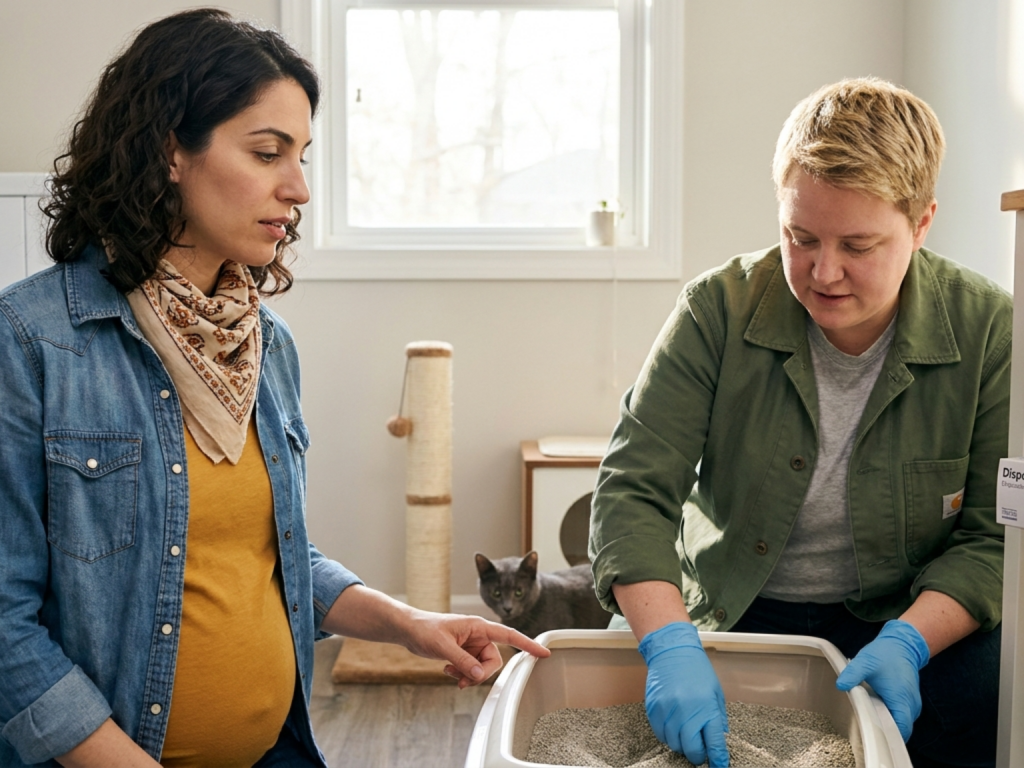
For many families, cat litter safety while pregnant is less about giving up a pet and more about changing who does the cleanup and how it is done. If another adult can take over litter duties, that is often the simplest risk-reduction step. If you must do it yourself, the safest approach is to remove waste daily, use disposable gloves, and wash your hands thoroughly afterward.
Daily cleaning matters because oocysts require time to become infectious. A litter box that is scooped frequently gives the parasite less time to sporulate. That is one reason Cornell emphasizes frequent litter removal, gloves, and handwashing as sensible precautions. It is also wise to avoid eating, drinking, or preparing food near the litter area and to keep the box away from kitchen surfaces whenever possible.
- Use gloves for scooping and disposal.
- Wash hands with soap and water after glove removal.
- Clean the box every day so feces do not sit long enough to sporulate.
- Do not touch your face, food, or phone while cleaning.
- If possible, ask a partner, roommate, or household helper to handle the task.
These steps are not about perfection. They are about lowering the chance that contaminated material reaches your mouth.
Other exposure sources and broader toxoplasmosis prevention in pregnancy
Although cat litter gets the most attention, toxoplasmosis prevention in pregnancy also includes food and environmental hygiene. The CDC and Mayo Clinic both highlight contaminated soil and unwashed produce as relevant sources. Gardening without gloves, handling soil with bare hands, or eating unwashed fruits and vegetables can all create opportunities for exposure if contamination is present.
Food safety deserves equal emphasis. Undercooked meat is a major route of infection, so safe cooking temperatures, kitchen separation of raw and ready-to-eat foods, and careful utensil washing are important. If you handle raw meat, treat the cutting board, knives, and countertop as potential contamination sources until they have been cleaned appropriately.
In practical terms, prevention works best as a bundle: reduce exposure from litter, soil, food, and hand-to-mouth transfer at the same time. That mindset can be calming, because it shifts the focus from one scary object in the house to a set of manageable habits. For many people, this is more effective than trying to eliminate every cat-related interaction.
When to contact a clinician and what evaluation may look like
If you are pregnant and think you had a meaningful exposure, contact your obstetric clinician or midwife rather than trying to interpret the risk alone. This is especially important if you cleaned a litter box that had not been changed recently, handled cat feces, or had another higher-risk exposure such as gardening without gloves or eating potentially contaminated food.
Clinicians may consider your exposure timing, symptoms, and test results if testing is appropriate. In some situations, pregnancy serology interpretation can help distinguish a past infection from a possible recent one, and further evaluation may be recommended. The details vary by history, local practice, and gestational age, so it is best handled case by case rather than by self-testing assumptions.
Seek prompt advice if you develop a flu-like illness, swollen lymph nodes, or if you are told you may have had a recent exposure and you are unsure what to do next. The purpose of evaluation is not to label you as infected based on cat contact alone. It is to sort out actual risk and, if needed, connect you with the right pregnancy-specific follow-up.
When to be cautious
- Do not assume a healthy-appearing cat means zero risk; fecal exposure is the issue, not the pet’s appearance.
- Do not leave a litter box uncleaned for days during pregnancy if you can avoid it.
- Do not rely on symptoms alone to rule toxoplasmosis in or out.
- Do not prepare food immediately after litter box cleanup without washing your hands.
- Do not delay contacting your prenatal clinician if you think a high-risk exposure occurred.
Tools & Assistance
- Ask your obstetric clinician whether your exposure history warrants toxoplasmosis serology or follow-up.
- Set up a household plan so another adult handles litter box cleaning during pregnancy when possible.
- Use disposable gloves and soap-and-water handwashing after any cat litter or soil contact.
- Review kitchen and gardening hygiene so prevention covers food, soil, and pet-related exposures together.
FAQ
Can I keep my cat if I am pregnant?
Yes, many pregnant people keep their cats safely. The main issue is managing litter hygiene and avoiding accidental ingestion of contaminated material.
Is touching my cat dangerous?
Simple petting or living with a cat is not the main route of toxoplasmosis. The higher-risk exposures involve cat feces, contaminated surfaces, soil, or food.
How soon does cat feces become risky?
Cat feces become a classic toxoplasmosis risk after oocysts sporulate, which takes at least 24 hours. That is why frequent litter cleaning lowers risk.
What should I do if I cleaned the litter box before I knew I was pregnant?
Do not panic. Contact your prenatal clinician for individualized guidance, especially if the litter had not been changed recently or if you have symptoms.
Sources
- Mayo Clinic — Toxoplasmosis - Symptoms and causes
- Centers for Disease Control and Prevention — Toxoplasmosis - Epidemiology & Risk Factors
- Cornell University College of Veterinary Medicine — Toxoplasmosis in Cats
Disclaimer
This article is for educational purposes only and does not replace individualized medical advice, diagnosis, or treatment. If you are pregnant and concerned about an exposure, contact your obstetric clinician promptly.


















Please log in to leave a comment.