
Intro
The first day after birth is a time of intense adjustment for both the newborn and the birthing parent. Breathing, temperature regulation, circulation, feeding, uterine contraction, bleeding control, pain management, and emotional bonding are all unfolding at once.
Delivery method can shape how smoothly these first 24 hours feel, but it does not define whether bonding or feeding will succeed. Vaginal birth, assisted vaginal birth, planned cesarean, and unplanned cesarean each create different clinical priorities. With supportive care, individualized monitoring, and clear communication, families can often protect closeness, comfort, and early feeding even when recovery is more complex.
Highlights
Vaginal birth often allows earlier uninterrupted contact, mobility, and feeding support, but recovery can still involve significant pain, bleeding, swelling, or perineal trauma.
Cesarean birth adds surgical and anesthesia recovery needs, which may delay skin-to-skin contact, rooming-in, and the first breastfeed after birth unless proactive support is in place.
The baby’s first-day monitoring may differ by delivery method, especially after cesarean birth, operative vaginal birth, prolonged labor, maternal fever, or fetal distress.
Early breastfeeding is strongly influenced by first-hour contact, positioning help, pain control, and whether parent and baby can remain together safely.
A flexible birth plan can include preferences for skin-to-skin, rooming-in, newborn procedures, and feeding help while still allowing urgent medical care when needed.
Why delivery method matters in the first 24 hours
The first hours after birth combine physiologic transition with practical care. The baby shifts from placental oxygenation to lung breathing, maintains blood glucose and temperature, and begins feeding. The birthing parent begins uterine involution, passes lochia, experiences major endocrine changes, and recovers from labor, surgery, anesthesia, or both. Delivery method affects which of these needs becomes most clinically prominent.
After an uncomplicated vaginal birth, the parent is often awake, able to hold the baby immediately, and may be mobile within a few hours. After cesarean birth, the priorities also include operating-room recovery, anesthesia monitoring, incision care, thromboembolism prevention, and more intensive pain control. Assisted vaginal birth may sit between these patterns: no abdominal surgery, but sometimes more perineal swelling, pelvic floor pain, neonatal scalp bruising, or closer observation after forceps or vacuum use.
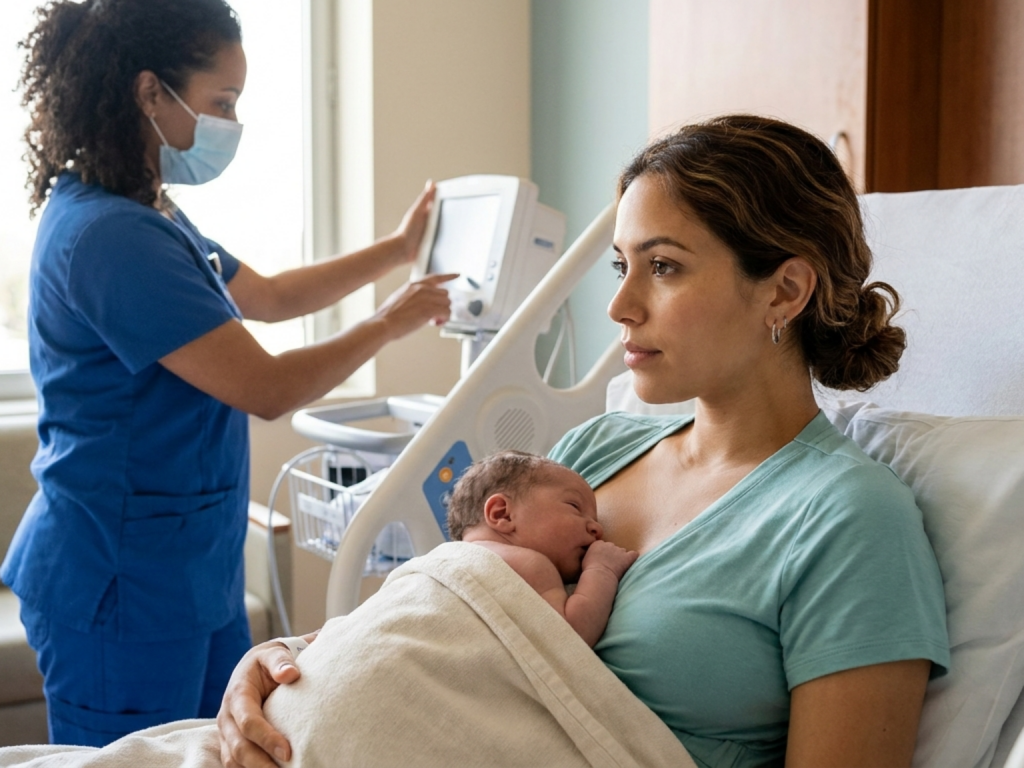
These differences matter because early closeness is not just sentimental. Skin-to-skin contact after birth supports thermoregulation, physiologic stability, colonization with parental microbiota, and feeding cues. Rooming-in helps parents learn normal newborn behavior and feeding patterns. When medical needs interrupt these practices, the goal is not to assign blame but to restore contact as soon as safely possible.
Vaginal birth: earlier contact, faster mobility, still real recovery
For many families, vaginal birth makes the first hours after birth more continuous. If the baby is vigorous and the parent is stable, the newborn can often be placed directly on the chest, dried, assessed, and kept warm while the placenta is delivered and perineal repair is completed. Routine newborn procedures may be delayed briefly or performed at the bedside, depending on hospital policy and clinical status.
Earlier mobility is another common advantage. The parent may be able to eat, drink, shower, and walk sooner, which can make diapering, feeding, and responding to the baby less logistically difficult. Uterine massage, assessment of bleeding, fundal checks, and vital signs remain important, especially in the first several hours when postpartum hemorrhage risk is highest.
Vaginal birth is not automatically easy. Perineal tears, episiotomy, hemorrhoids, pelvic pressure, urinary retention, and fatigue after prolonged labor can make sitting or positioning for feeds painful. Some parents feel shaky, overwhelmed, or emotionally raw even after a medically straightforward birth. Assisted vaginal birth may add bruising, laceration repair, or neonatal observation for scalp swelling and jaundice risk.
Supportive measures are individualized by the care team, but families can ask for positioning help, ice or heat options if appropriate, assistance getting to the bathroom, and lactation support early rather than waiting until feeding becomes stressful.
Cesarean birth: surgical recovery changes the rhythm
Cesarean birth can be planned, urgent, or emergent, and the first 24-hour experience varies widely. A scheduled cesarean with regional anesthesia may allow the parent to be awake and meet the baby quickly. An emergency cesarean, general anesthesia, heavy bleeding, infection concern, or neonatal distress may require temporary newborn separation and more intensive monitoring.
Recovery after cesarean birth includes the usual postpartum changes plus postoperative care. Nurses and clinicians monitor blood pressure, pulse, oxygenation, uterine tone, lochia, urine output, incision status, nausea, itching, and return of sensation and leg movement after neuraxial anesthesia. The parent may have an IV line, urinary catheter for part of the day, sequential compression devices, and scheduled pain assessment. Early ambulation is encouraged when safe, but standing for the first time can feel surprisingly difficult.
These realities can delay the first breastfeed after birth, especially if the baby is in a warmer, the parent is nauseated, or positioning around the incision is painful. However, cesarean birth does not prevent successful breastfeeding. Side-lying, football hold, pillows to protect the incision, hand expression, and a support person helping with transfers can make early feeds more manageable.
Some parents grieve a delivery that did not unfold as hoped, while others feel relieved, proud, frightened, or simply exhausted. Emotional processing is part of recovery. A compassionate debrief with the obstetric team can help clarify what happened and what to expect next.
Skin-to-skin, rooming-in, and early feeding
Research consistently shows that delivery method influences breastfeeding initiation, particularly within the first hour. Vaginal deliveries tend to facilitate earlier skin-to-skin contact, earlier co-placement of parent and infant, and more immediate feeding opportunities. Cesarean birth is associated with more barriers to breastfeeding-supportive practices, often because surgical recovery and operating-room workflows interrupt the normal sequence of contact and feeding cues.
The biologic reasons are practical and hormonal. Newborns often have a quiet-alert period soon after birth, when rooting and latch attempts may be strongest. The birthing parent experiences rapid shifts in oxytocin and prolactin signaling, while close contact can support milk ejection reflexes and confidence. Pain, separation, nausea, sedation, and delayed positioning assistance can interfere with this cycle.
Helpful first-day strategies may include:
- Requesting uninterrupted skin-to-skin when both parent and baby are clinically stable.
- Asking whether assessments can be done on the parent’s chest or at the bedside.
- Calling for feeding help early, especially after cesarean or assisted birth.
- Using hand expression if the baby is sleepy, separated, or not latching effectively.
- Keeping expectations realistic: colostrum volumes are small, and frequent attempts are normal.
If formula, donor milk, expressed colostrum, or supplementation is medically recommended, parents can ask why, how long it may be needed, and how to protect future feeding goals. Feeding support should be nonjudgmental and centered on infant safety and parental wellbeing.
Newborn monitoring after different birth pathways
Most babies have similar immediate assessments regardless of delivery method: breathing effort, heart rate, color, tone, temperature, weight, physical examination, vitamin K, eye prophylaxis where used, and feeding assessment. But delivery circumstances can change the intensity or location of monitoring.
After an uncomplicated vaginal birth, a stable newborn may remain skin-to-skin while clinicians observe tone, respirations, and temperature. After cesarean birth, some babies have more transient tachypnea, especially without labor, because lung fluid clearance may be slower. They may spend time under a warmer or require closer respiratory assessment. After prolonged rupture of membranes, maternal fever, suspected infection, meconium, fetal distress, vacuum or forceps delivery, or abnormal blood glucose risk factors, the baby may need additional checks.
Blood glucose monitoring in newborns may be recommended for babies who are late preterm, small or large for gestational age, exposed to maternal diabetes, symptomatic, or otherwise at risk. This is not caused by delivery method alone, but cesarean timing, feeding delay, or separation can make early feeding more complicated, which may influence glucose management.
Parents can ask which observations are routine, which are specific to the birth circumstances, and whether monitoring can occur in-room. When separation is needed, it is reasonable to ask when the baby can return, whether another caregiver can accompany the baby, and how feeding or colostrum expression will be handled.
Pain, bleeding, mobility, and parental care
The parent’s ability to hold, feed, and respond to the baby depends partly on comfort and safe mobility. After vaginal birth, pain may center on uterine cramping, perineal tissue, hemorrhoids, and muscle fatigue. After cesarean birth, pain includes uterine cramping plus abdominal incision pain, gas discomfort, shoulder referred pain in some cases, and difficulty changing position.
Postpartum bleeding and lochia are monitored after every delivery method. Heavy bleeding, large clots, dizziness, faintness, a boggy uterus, or rapidly worsening pain require prompt clinical evaluation. Cesarean birth can involve lower visible vaginal bleeding than vaginal birth, but internal or surgical bleeding is still a concern and is monitored through vital signs, uterine tone, urine output, and clinical appearance.
Anesthesia also shapes the first day. Epidural or spinal medication may temporarily affect leg strength, bladder sensation, itching, nausea, or blood pressure. General anesthesia can delay awareness and early contact. After any major birth event, parents should ask for help before walking the first time.
Good pain control is not a luxury; it supports breathing deeply, moving safely, bonding, and feeding. Decisions about medications, especially while breastfeeding or chestfeeding, should be made with the clinical team. Parents should not feel they must endure severe pain to be a good parent.
Emotional bonding when the first day is not ideal
Many parents imagine a calm first hour with immediate holding and feeding. When delivery involves surgery, emergency decisions, neonatal resuscitation, hemorrhage, or separation, the first 24 hours can feel disorienting. It is common to replay events, feel disconnected, cry unexpectedly, or need time before the experience feels real.
Bonding is a relationship, not a single moment. If early skin-to-skin was delayed, it can still be deeply beneficial later. If feeding was difficult on day one, skilled support can still help. If the baby needed observation, parents can often participate through touch, voice, diaper changes, temperature checks, expressed colostrum, or simply being present.
A short written note of questions can help during rounds: What happened during the delivery? What monitoring is still needed? What are the feeding goals for the next shift? What symptoms should we report immediately? Clear answers can reduce fear and help parents regain a sense of agency.
Partners and support people also matter. They can help track feeding times, ask for lactation assistance, support safe transfers, hold the baby when the birthing parent rests, and advocate for rooming-in preferences while respecting medical recommendations.
Planning ahead without trying to control everything
A flexible birth preferences document can prepare families for multiple delivery methods. It can state priorities such as delayed cord clamping when appropriate, skin-to-skin in the operating room if feasible, bedside newborn assessments, early lactation support, partner presence during necessary newborn care, and minimizing separation when safe.
For planned cesarean birth, families can ask in advance about clear drapes, immediate skin-to-skin, who holds the baby during closure, recovery-room feeding support, nausea prevention, and postoperative pain plans. For vaginal birth, it may help to ask how assisted delivery, significant tearing, or postpartum hemorrhage would change the first hour.
The most useful plan is one that combines preferences with contingency questions. Medical teams should explain when a preferred practice is not possible and when it can be resumed. Parents should feel empowered to ask for clarification without feeling they are obstructing care.
Ultimately, the first 24 hours are about safety, recovery, and connection. Delivery method influences the route, pace, and obstacles, but attentive clinical support can protect the essentials: a monitored parent, a stable newborn, early feeding opportunities, and compassionate care for the family’s emotional experience.
Seek urgent medical help for these signs
- Heavy bleeding that soaks pads quickly, large clots, fainting, or severe dizziness.
- Chest pain, shortness of breath, seizure, severe headache, vision changes, or one-sided swelling.
- Fever, worsening abdominal or incision pain, foul-smelling discharge, or redness spreading around an incision.
- A newborn with blue color, persistent grunting, poor tone, repeated low temperature, or difficulty waking to feed.
- Thoughts of self-harm, harming the baby, or feeling unable to stay safe.
Tools & Assistance
- Ask your nurse or midwife for a first-day feeding and recovery plan before each shift change.
- Request lactation support early, especially after cesarean, assisted birth, or delayed skin-to-skin.
- Use a simple feeding, diaper, pain, and bleeding log for the first 24 hours.
- Ask which newborn assessments can be done at the bedside and which require temporary separation.
- Request a delivery debrief if the birth involved urgent decisions, surgery, or unexpected complications.
FAQ
Does cesarean birth mean breastfeeding will not work?
No. Cesarean birth can delay first contact or make positioning harder, but many parents breastfeed successfully with pain control, positioning help, skin-to-skin, and early lactation support.
Is separation from the baby always necessary after cesarean birth?
Not always. Many stable parents and babies can have operating-room or recovery-room contact, but separation may be needed for anesthesia recovery, bleeding, infection concern, or newborn respiratory support.
Are babies born by cesarean monitored differently?
Sometimes. Some babies, especially after cesarean without labor, need closer respiratory observation. Monitoring also depends on gestational age, maternal conditions, fetal distress, infection risk, and feeding status.
Can I ask for newborn procedures to happen in the room?
Yes, when the baby is stable and hospital policy allows it. Ask which assessments are routine, which are urgent, and whether they can be done during skin-to-skin or at the bedside.
What if I feel emotionally upset about how the delivery happened?
That reaction is common, especially after an urgent or unexpected birth. Ask for a clinical debrief, tell your care team how you are feeling, and seek urgent help if you feel unsafe or have thoughts of self-harm.
Sources
- Springer Public Health — Effect of Delivery Method on Breastfeeding Status in Primiparous Mothers Within the First 24 Hours
- National Center for Biotechnology Information — The Impact of Mode of Delivery and Postpartum Conditions on Breastfeeding Practices and Duration
- PubMed — The influence of mode of delivery on neonatal and maternal short and long-term outcomes
Disclaimer
This article is for general educational purposes and is not a substitute for individualized medical advice. Always follow the guidance of your obstetric, midwifery, pediatric, and nursing care teams.

















Please log in to leave a comment.