
Intro
For babies, hygiene is less about neatness and more about skin integrity, infection prevention, and predictable care. A good routine protects fragile skin barriers, supports comfort, and makes daily tasks easier to repeat when you are tired, busy, or managing a child who cannot yet cooperate.
The goal is not a rigid schedule. In infancy, the best hygiene plan usually follows feeding, sleep, diaper changes, and cue-based care. A simple, repeatable pattern helps families notice what is normal, what is irritating, and when to ask a healthcare professional for guidance.
Highlights
A baby hygiene routine works best when it is simple, repeatable, and tied to everyday cues such as feeding and diaper changes.
Hand hygiene is one of the most important infection-prevention steps in home care, especially before contact with the baby and after diapering.
Skin care should protect the epidermal barrier, not strip it, so gentle cleansing and thorough drying matter more than frequent washing.
Oral care begins early with gum and tooth cleaning as soon as teeth appear, even if only a small amount is needed at first.
A routine should adapt to age, skin sensitivity, and feeding patterns rather than forcing a fixed adult-style timetable.
Start with the easiest habit to repeat
When families try to improve hygiene all at once, the routine often falls apart. It is more effective to anchor one or two habits to moments that already happen every day. For most households, that means washing hands before handling the baby, after diaper changes, after toilet use, and after coughing or sneezing. These are the moments when contamination is most likely to move from surfaces to skin, bottles, or the baby’s face.
Keep the routine visible and low-friction. Soap and water should be easy to reach in the places where care happens most, and alcohol-based hand rub can be useful when hands are not visibly dirty and a sink is not close by. The World Health Organization recommends clear technique and consistent access rather than complicated rules. For a baby, consistency matters more than perfection. A caregiver who can repeat the same short sequence will usually do better than one who tries to follow a long checklist and abandons it after a few days.
It also helps to think in cues instead of clocks. In infancy, hygiene often follows feeding, diapering, bath time, and bedtime settling. That style of care fits naturally with a feeding-led routine and protects the baby from unnecessary disruption.
Protect the skin barrier first
Baby skin is thinner and more reactive than adult skin, so the main hygiene rule is to clean enough without over-cleansing. Daily washing is not always necessary for every body area. What matters most is removing urine, stool, milk residue, sweat, and other irritants before they sit on the skin long enough to cause friction or inflammation. Use lukewarm water and mild products when needed, and avoid strong fragrances or aggressive scrubbing.
After washing, dry skin gently, especially in folds such as the neck, groin, and behind the knees. Moisture trapped in these areas can trigger irritation, maceration, or fungal overgrowth. If the baby has sensitive skin, aim for a routine that is short, calm, and repeatable. Patting dry is better than rubbing, and changing damp clothing promptly can prevent a lot of discomfort.
If a product seems to sting, dry the skin, or leave a persistent rash, stop and review it with a clinician. The point of hygiene is to preserve the skin barrier, not to chase a sense of sterility. A well-built routine should leave the baby comfortable, not red and stripped.
Make diaper care part of hygiene, not an afterthought
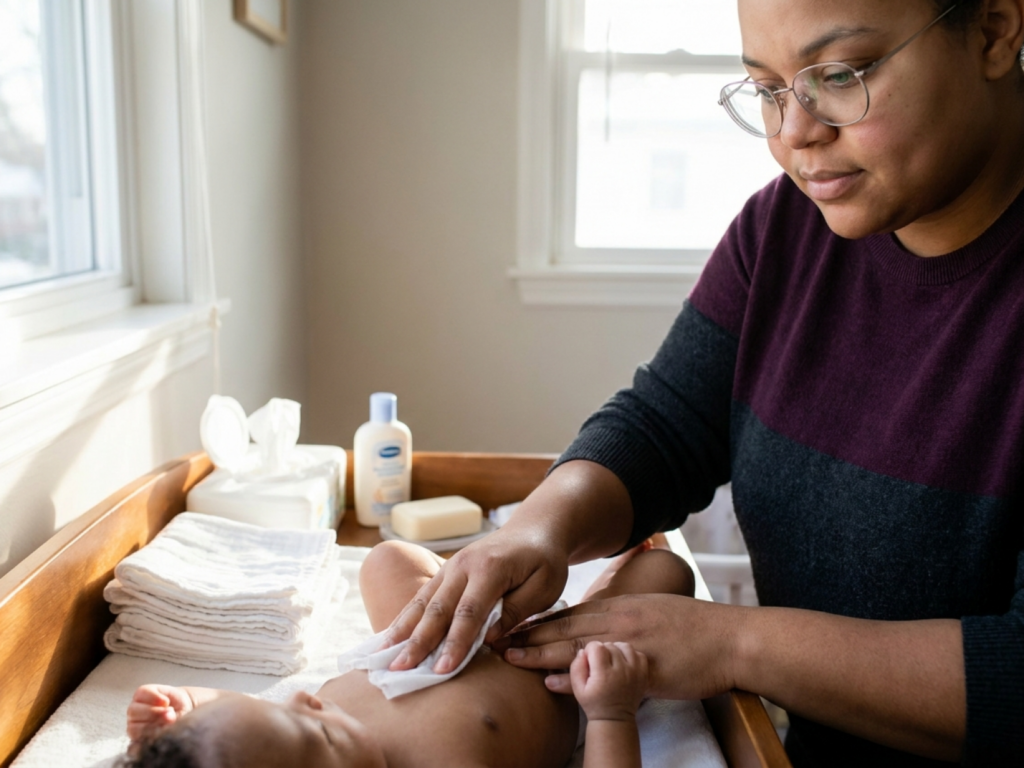
Diaper care is often the highest-frequency hygiene task in the first year of life, which makes it central to the routine. Every change is a chance to clean gently, inspect the skin, and prevent diaper dermatitis. Wipe away stool and urine without harsh rubbing, then dry the area thoroughly before applying a fresh diaper. If the skin is becoming irritated, a barrier ointment may help reduce contact with moisture and irritants, but persistent rash deserves medical review rather than endless experimentation.
A useful mindset is to treat the diaper area as a sensitive interface rather than a dirty zone. Frequent cleaning with rough wipes or overuse of products can worsen irritation. Instead, clean just enough to remove residue, then protect the skin. The article on diaper hygiene basics explains the practical details of gentle diaper-area cleansing, thorough drying of newborn skin folds, and early diaper-dermatitis prevention. That structure fits neatly into a wider hygiene routine because it links the task to skin protection rather than to appearance.
For families, diaper changes also create a dependable moment to check for unusual redness, broken skin, swelling, or pain with cleaning. Those signs are worth raising with a healthcare professional.
Add oral care early and keep it simple
Oral hygiene begins before a child can spit, and that surprises many caregivers. Before teeth erupt, gently cleaning the gums with a soft, clean cloth can remove milk residue and help the baby tolerate mouth care. Once teeth appear, brushing should start twice daily with a soft-bristled infant toothbrush. The NHS advises brushing for about two minutes, using age-appropriate toothpaste as directed by dental professionals or local guidance.
As the baby grows, floss or dental tape may become useful once teeth touch each other, because contact points can trap plaque and food particles that a brush cannot fully reach. The aim is preventive care: build the habit early so oral hygiene becomes a normal part of the bedtime and morning routine rather than a fight later in childhood.
Keep the process calm and brief. A baby does not need a perfect technique to benefit from consistent oral care. What matters is doing it regularly, using gentle pressure, and getting professional dental advice if you are unsure about toothpaste amount, teething discomfort, or any white spots, bleeding gums, or tooth changes that do not look normal.
Use bath time and face care as maintenance, not correction
Bathing can be part of a hygiene routine, but it is not the only measure of cleanliness. Many babies do well with short, gentle baths rather than frequent long ones, especially if the skin is dry or reactive. Think of bathing as maintenance for the areas that collect residue and sweat, plus a chance to inspect the body calmly under good light. Too much bathing, hot water, or fragranced soap can disrupt the skin barrier and make irritation more likely.
Face care usually needs only light attention: wipe milk from the cheeks, clean around the mouth, and gently clear the neck folds where moisture collects. For babies who spit up often, this small step can prevent chafing and odor without turning care into a major event. The same principle applies to hands and nails. Clean hands matter, but they do not need constant washing beyond what daily exposure requires. Trim nails carefully when they become long enough to scratch.
A helpful family rule is that hygiene should leave the baby looking and feeling settled. If a care step consistently leads to crying, redness, or dryness, the routine should be simplified and discussed with a clinician rather than intensified.
Make the routine realistic for caregivers
A hygiene routine only works if tired adults can actually follow it. That means using a predictable sequence, keeping supplies in the places they are needed, and reducing choices. If every diaper change requires hunting for cream, wipes, towels, and clean clothes, the routine becomes harder than the task itself. Small adjustments such as a stocked changing area, a bath setup with everything within reach, and a simple oral-care kit can lower friction substantially.
It also helps to match hygiene to the rest of infant care. A baby’s day is organized more by responsive care than by the clock, so the routine should flex around hunger, sleep, and mood. That is one reason predictable hygiene care for babies works better when it is attached to existing moments rather than separated into a separate project. For some families, especially during growth spurts or disrupted sleep, a lighter version of the routine is enough for a few days.
Finally, remember that hygiene is one piece of a broader caregiving pattern. If a baby has eczema, recurrent diaper rash, oral thrush, frequent infections, or unusual skin changes, the routine may need to be individualized by a pediatrician, nurse, or dentist. A good routine is teachable, sustainable, and medically sensible.
When to seek medical advice
- Persistent diaper rash, open skin, swelling, or pain during cleaning should be reviewed.
- Fever, lethargy, poor feeding, or signs of infection need prompt medical attention.
- Oral bleeding, white patches that do not wipe away, or tooth discoloration deserve dental or pediatric review.
- Dry, cracked, or very inflamed skin may mean the routine or products need to change.
- If you are unsure about any hygiene product or technique, ask a healthcare professional.
Tools & Assistance
- Pediatrician or family doctor for skin, rash, and infection concerns
- Public health or community nursing advice for infant care routines
- Pediatric dentist for early oral-care questions
- WHO hand hygiene guidance for technique and timing
- NHS oral hygiene guidance for brushing and flossing basics
FAQ
How often should I wash my baby?
There is no single rule for every baby. Focus on cleaning soiled areas promptly and use gentle baths only as needed for skin comfort and family routine.
Do I need soap every time I clean my baby’s skin?
Not always. Water may be enough for some areas, while mild soap is useful when residue or stool is present. Avoid harsh or fragranced products.
When should oral care begin?
Mouth cleaning can start before teeth appear with a soft cloth, and brushing should begin as soon as the first tooth erupts.
What is the most important hygiene step for infection prevention?
Hand hygiene is one of the most important steps, especially before handling the baby and after diaper changes, coughing, sneezing, or toilet use.
What if my baby gets irritated by wipes or soaps?
Stop the product and speak with a healthcare professional. A baby with sensitive skin may need a simpler routine and different products.
Sources
- World Health Organization — Guidelines on hand hygiene in community settings
- NHS — How to keep your teeth clean
- Alder Hey Children's NHS Foundation Trust — Personal Hygiene Five Steps to Function Booklet
Disclaimer
This article is for general information only and is not a substitute for personalized medical advice, diagnosis, or treatment. For concerns about a baby’s skin, oral health, or infection risk, consult a qualified healthcare professional.














Please log in to leave a comment.