
Intro
Between ages 3 and 5, children often seem to change almost weekly. A preschooler may move from short sentences to elaborate stories, from parallel play to real friendships, and from wobbly climbing to confident hopping, skipping, and drawing. These changes are exciting, but they can also raise questions for families: Is this behavior typical? Should my child be doing more? When is it time to ask for help?
Developmental milestones are useful signposts, not rigid deadlines. Children grow through a combination of neurodevelopmental maturation, temperament, practice, health, sleep, nutrition, relationships, and opportunity. This article reviews common preschool milestones and learning patterns from 3 to 5 years, with a medically cautious approach and encouragement to consult pediatric, developmental, speech-language, occupational therapy, or early childhood professionals when concerns arise.
Highlights
Preschool milestones cover multiple domains, including gross motor, fine motor, language, cognition, social-emotional development, and adaptive self-care.
Typical development is variable; a child may be advanced in one area and still need support in another.
Play, conversation, movement, routines, and responsive caregiving are central learning tools from ages 3 to 5.
Persistent loss of skills, very limited communication, marked motor difficulties, or major social withdrawal should prompt professional evaluation.
Understanding preschool milestones without comparing children harshly
Preschool development is a period of rapid neurologic, motor, linguistic, and social growth. The brain is refining networks involved in executive function, language processing, motor planning, emotional regulation, and social cognition. At the same time, children are building confidence through repeated practice: climbing stairs, asking questions, pretending to be a doctor or shopkeeper, drawing shapes, negotiating with peers, and learning household routines.
Milestones are best understood as population-based expectations. They describe skills many children can do around a certain age, but they do not define a child’s worth or future potential. A 3-year-old who speaks clearly may still struggle with transitions. A 4-year-old who climbs beautifully may avoid drawing. A 5-year-old may count well but still need emotional support when frustrated. Development is integrated, uneven, and influenced by context.
Clinicians often look at patterns rather than isolated skills. They consider whether the child is gaining abilities over time, using skills functionally, engaging socially, and adapting across settings. They also ask about hearing, vision, sleep, nutrition, chronic illness, family stress, bilingual language exposure, and access to play or preschool experiences. If you are worried, it is reasonable to raise the concern early; asking for guidance is not overreacting.
Gross motor development from ages 3 to 5
Gross motor development refers to large-muscle skills such as running, jumping, balancing, climbing, pedaling, and coordinating the trunk and limbs. Around age 3, many children can run more steadily, climb well, walk up and down stairs with alternating feet with support or supervision, and pedal a tricycle. They may jump with both feet, throw a ball forward, and begin to catch a larger ball using their arms and body.
By age 4, coordination usually becomes more confident. Many children can hop on one foot for several seconds, stand briefly on one foot, kick and throw with improved direction, and navigate playground equipment with greater planning. They may enjoy chasing games, dancing, obstacle courses, and make-believe movement. By age 5, many preschoolers can skip, hop more consistently, swing, climb with better judgment, and participate in simple group games with rules.
Safety still matters because impulse control and risk assessment remain immature. Preschoolers may have enough strength to climb high but not enough judgment to predict falls. Supportive adults can provide helmets for wheeled toys, supervise water and playground play, anchor furniture, and teach simple safety rules repeatedly. If a child frequently falls, seems unusually weak or stiff, avoids movement, cannot use stairs compared with peers, or loses previously acquired motor skills, discuss this with a pediatric clinician.
Fine motor skills, drawing, and self-care learning
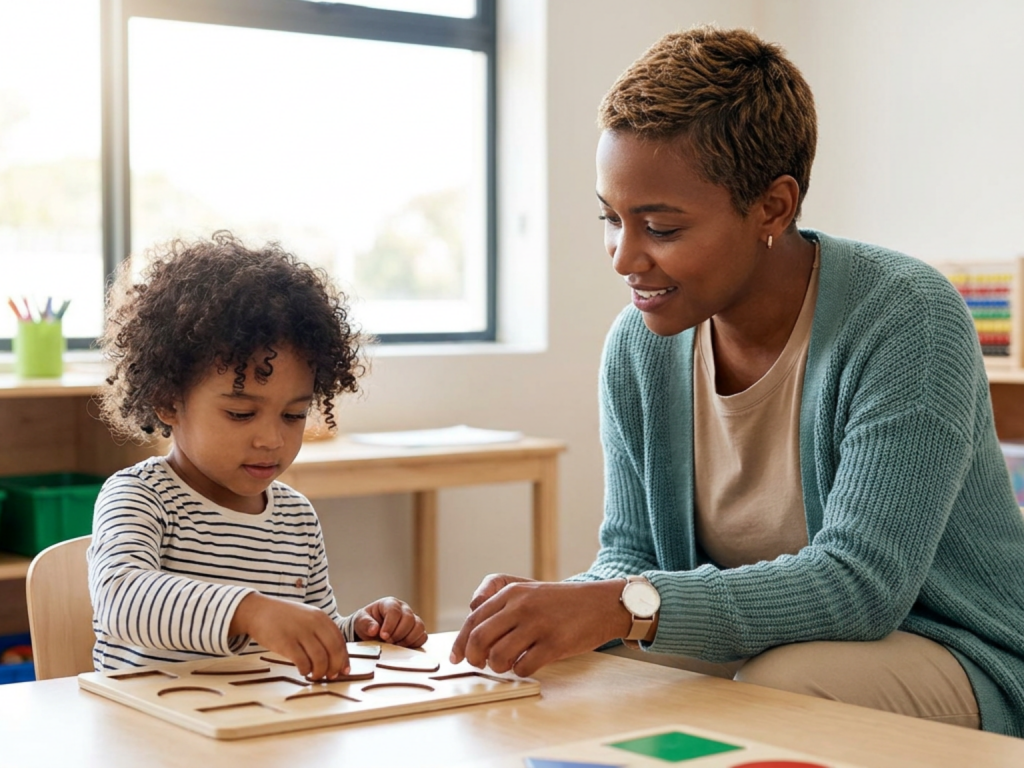
Fine motor skills involve the small muscles of the hands and fingers, hand-eye coordination, and motor planning. These abilities support drawing, feeding, dressing, toileting, early writing, block building, puzzles, and tool use. At age 3, many children can stack blocks, turn book pages one at a time, copy a circle, use a spoon or fork with improving control, and help dress or undress. Their drawings may look simple, but they represent important advances in visual-motor integration.
At age 4, many children can copy a cross, draw a person with a few body parts, use child-safe scissors with supervision, and manage larger buttons or zippers with help. They often become more interested in construction toys, play dough, beads, and art materials. At age 5, many children can copy a triangle, print some letters or numbers, draw a person with more detail, and complete more self-care steps such as dressing, handwashing, and toileting routines with less assistance.
Families can support fine motor learning through everyday tasks rather than formal worksheets. Pouring water in the bath, sorting socks, tearing lettuce, kneading dough, opening containers, painting with brushes, and building with blocks all strengthen coordination. If a child strongly avoids using one hand, has persistent tremor, cannot manipulate simple objects, has major feeding or dressing difficulty, or becomes extremely distressed by textures or grooming, a pediatric evaluation and possibly occupational therapy assessment may be helpful.
Language and communication milestones
Language development between ages 3 and 5 is often dramatic. Around age 3, many children use sentences of several words, name familiar objects, follow two- or three-step directions, and are understood by familiar adults most of the time. They ask many questions, use pronouns, identify body parts, and begin telling simple stories about recent events. Speech sound errors can still be typical, but communication should generally be functional and expanding.
By age 4, many children speak in longer sentences, use plurals and past tense more consistently, tell stories with a beginning and sequence, and engage in back-and-forth conversation. They may understand concepts such as same and different, count a few objects, name colors, and enjoy rhymes or silly words. By age 5, many children can speak clearly enough for unfamiliar listeners, use future tense, describe experiences, answer why and how questions, and understand time concepts such as yesterday, today, and tomorrow, although these may still be developing.
Bilingual and multilingual children may distribute vocabulary across languages, mix languages naturally, or have different strengths in each language. This is not inherently a disorder. What matters is whether communication is progressing across the child’s languages and whether the child can interact, understand, and express needs. Consider discussing concerns if a preschooler rarely uses phrases, cannot follow simple directions, is very hard to understand for age, does not respond to sounds or name, has frequent ear infections with hearing concerns, or shows regression in language.
Cognitive growth, early numeracy, and problem-solving
Preschool cognitive development includes attention, memory, symbolic thinking, categorization, problem-solving, early numeracy, and beginning literacy awareness. Three-year-olds often engage in pretend play, complete simple puzzles, match shapes or colors, and understand basic counting routines even if one-to-one correspondence is still inconsistent. They may know their name, age, and some familiar categories, such as animals or foods.
By age 4, children often ask more complex questions and begin to understand cause and effect. They may count several objects, identify colors and shapes, sort items by category, remember parts of a story, and participate in simple board or matching games. By age 5, many children can count to 10 or higher, count 10 or more objects with increasing accuracy, recognize some letters, understand more about time, follow classroom routines, and solve simple practical problems, such as deciding what is needed for a pretend picnic.
It is important not to reduce preschool learning to academic performance. Executive function is just as important: waiting briefly, shifting from one activity to another, remembering a two-step instruction, and persisting through a challenging puzzle. These skills are built through warm structure, predictable routines, sleep, movement, and adult coaching. Reading aloud, narrating daily tasks, singing, cooking together, comparing sizes, and asking open-ended questions all support cognition without creating unnecessary pressure.
Social-emotional development and play
Social-emotional development includes attachment, empathy, emotional regulation, cooperation, self-concept, and peer interaction. At age 3, children are often moving from parallel play toward more interactive play. They may take turns briefly, imitate adults and peers, show affection, and engage in imaginative scenarios. Tantrums can still occur because emotional language and impulse control are developing.
At age 4, many children prefer playing with other children over playing alone, invent roles in pretend games, show more concern for a crying friend, and negotiate with peers, though not always successfully. They may test limits and show strong preferences. At age 5, children often become more cooperative, enjoy rules-based games, want to please friends and adults, distinguish fantasy from reality more consistently, and show pride in accomplishments.
Supportive adults help by naming emotions, setting clear boundaries, and modeling repair after conflict. For example, “You were angry when the block tower fell. It is okay to be angry; it is not okay to hit. Let’s try again or take a break.” Persistent aggression, extreme withdrawal, lack of interest in people, inability to engage in any pretend play, intense repetitive behaviors that interfere with daily life, or severe distress with ordinary changes may warrant professional guidance. These signs do not automatically indicate a diagnosis, but they deserve thoughtful assessment.
Supporting preschool learning at home and in early education settings
Preschoolers learn best through responsive relationships and active exploration. A rich learning environment does not require expensive materials. Children benefit from conversation, books, music, outdoor play, art supplies, safe household tasks, and unhurried time to repeat skills. The adult role is to provide structure, encouragement, safety, and language, not to turn every moment into a test.
- Read daily when possible: pause to ask what might happen next, name emotions in pictures, and let the child retell parts of the story.
- Use everyday math: count apples, compare big and small cups, sort laundry by color, or talk about first, next, and last.
- Encourage movement: playground time, dancing, hopping games, and ball play strengthen balance and coordination.
- Build self-care routines: handwashing, dressing practice, toileting steps, and cleanup support independence and executive function.
- Protect sleep and connection: overtired preschoolers often look “behavioral” when their nervous system is simply overloaded.
If your child attends preschool, communication between caregivers and teachers is valuable. Ask what your child enjoys, where they struggle, how they interact with peers, and whether concerns appear across settings. If concerns persist, the pediatrician can help decide whether screening, hearing or vision testing, speech-language evaluation, occupational therapy, physical therapy, behavioral support, or early childhood special education assessment is appropriate.
When to seek professional advice
- Any loss of previously acquired language, motor, social, or self-care skills should be discussed promptly with a healthcare professional.
- Seek evaluation if your child is very difficult to understand for age, rarely uses phrases, or does not respond reliably to sounds or name.
- Frequent falls, marked weakness, unusual stiffness, or inability to use age-expected movement skills may need medical review.
- Extreme social withdrawal, no pretend play, persistent aggression, or severe distress with daily routines deserves supportive assessment.
- If your intuition says something is not right, bring specific examples to your pediatrician rather than waiting for the next routine visit.
Tools & Assistance
- Keep a brief milestone notebook with dates, examples, and concerns to discuss at well-child visits.
- Ask the pediatrician about standardized developmental screening and hearing or vision checks if communication or learning concerns appear.
- Request a speech-language, occupational therapy, or physical therapy evaluation when functional skills are delayed or difficult.
- Use your local early childhood or school district evaluation pathway if developmental concerns affect preschool participation.
- Share observations between home and preschool so patterns across settings are easier to understand.
FAQ
Should my 3-year-old be able to count to 10?
Some 3-year-olds can recite numbers, but accurate counting of objects usually develops gradually. Look for progress in number words, sorting, matching, and interest in simple counting games.
Is it normal for a 4-year-old to have tantrums?
Yes, tantrums can still occur at age 4, especially with fatigue, hunger, transitions, or frustration. Very frequent, severe, injurious, or persistent episodes should be discussed with a pediatric professional.
How clear should preschool speech be?
By ages 3 to 4, familiar adults should usually understand much of the child’s speech, and clarity should improve over time. By age 5, speech is often understandable to unfamiliar listeners, though some sound errors may remain.
Does bilingualism cause language delay?
Bilingualism itself does not cause a language disorder. Bilingual children may mix languages or have vocabulary divided across languages, but overall communication should continue to progress.
What is the best way to prepare a preschooler for kindergarten?
Focus on self-care, routines, listening, turn-taking, emotional language, book enjoyment, movement, and curiosity. Early academics can be helpful, but social-emotional readiness and communication are equally important.
Sources
- MedlinePlus Medical Encyclopedia — Preschooler development
- American Academy of Pediatrics, HealthyChildren.org — Developmental Milestones: 3 to 4 Year Olds
- Illinois Cares for Kids — Milestones by Year
Disclaimer
This article is for general educational purposes and is not a diagnosis or treatment plan. Consult your child’s pediatrician or another qualified healthcare professional for individualized concerns.

















Please log in to leave a comment.