
Intro
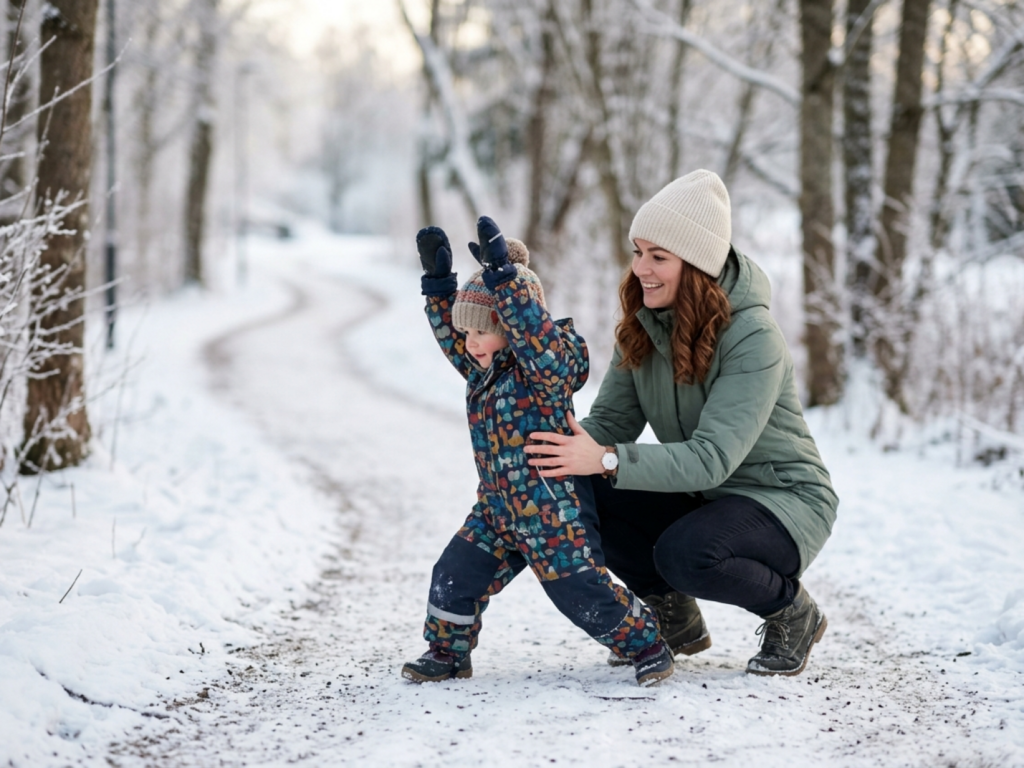
Winter dressing can feel like a daily negotiation: you want your child protected from cold, wind, and moisture, but you also want them to run, climb, crouch, and play without feeling trapped. The best winter clothing for children is not simply the thickest option; it is a flexible system that manages heat, sweat, and weather while preserving normal movement.
This article takes a practical, medically informed approach to warmth and mobility. It explains how layering, fit, fabric, and safety choices can reduce cold stress while helping children stay active and comfortable outdoors.
Highlights
Layering usually works better than one very bulky garment because it can be adjusted as a child’s activity level and temperature change.
Moisture management matters: sweat trapped against the skin can contribute to chilling once activity slows.
Outerwear should be roomy enough for layers and movement, but not so oversized that it creates tripping, snagging, or poor thermal protection.
Hands, feet, head, and neck often need special attention because discomfort there can end outdoor play quickly.
Children with medical conditions, sensory sensitivities, or skin disease may need individualized clothing advice from a healthcare professional.
Warmth and mobility are not opposing goals
It is understandable to reach for the puffiest coat when temperatures drop. Children lose heat when the environment overwhelms their ability to produce and conserve warmth, and they may not always recognize early cold stress. However, excessive bulk can create a different problem: restricted shoulder movement, stiff hips and knees, poor balance, and frustration that leads children to remove clothing altogether.
The goal is a clothing system that supports thermoregulation. Thermoregulation is the body’s process of maintaining a safe internal temperature through heat production, blood vessel changes, sweating, and behavioral choices such as seeking shelter. Children are often highly active outdoors, so they may generate substantial metabolic heat while running or sledding, then cool quickly when they stop.
A good winter outfit therefore needs three properties: insulation to trap warm air, moisture control to move sweat away from the skin, and weather protection against wind, rain, and snow. When these functions are separated into layers, caregivers can add, remove, or vent clothing without forcing a child into a single heavy garment that limits play.
Use a three-layer system that can adapt
Most cold-weather dressing starts with three functional layers: a base layer, an insulating layer, and an outer shell. This approach is widely used because it is flexible. A child walking calmly to school may need more insulation than a child sprinting around a playground; the same child may need different clothing at the beginning and end of outdoor time.
- Base layer: This sits next to the skin. Its job is to wick moisture away, reducing the cooling effect of sweat. Breathable base layers for children are especially useful during active play because damp cotton against the skin can become cold once movement slows.
- Insulating layer: This traps warm air. Fleece, wool, and synthetic insulated garments can provide warmth with less stiffness than a single overfilled coat.
- Outer layer: This protects against wind and precipitation. A water-resistant or waterproof shell, depending on conditions, helps keep insulation dry so it can continue working.
For many families, the most practical strategy is not perfection but adjustability. A zippered fleece under a weather-resistant jacket, for example, is often easier to manage than a single heavy parka. If the child becomes sweaty, the insulating layer can be removed or the jacket vented. If wind increases, the shell becomes more important. This is the same principle behind many guides to clothing for children: comfort improves when garments match both weather and activity.
Choose fabrics that manage moisture and reduce bulk
Fabric choice strongly affects both warmth and freedom of movement. Cotton is comfortable indoors, but it absorbs and holds moisture. In cold outdoor settings, a sweaty cotton shirt or socks can increase heat loss and discomfort. For active winter play, wool or synthetic materials are usually more functional as base layers because they move moisture away from the skin and dry more quickly.
Insulating fabrics should be warm without feeling rigid. Fleece is popular because it is light, compressible, and easy for children to move in. Wool can be warm even when slightly damp, though some children find it itchy unless it is soft merino or worn over another layer. Synthetic puffy jackets or vests can add warmth while allowing arm movement, especially when paired with a flexible shell.
The outer layer needs to match the weather. For dry cold, wind resistance may matter most. For wet snow, slush, or rain, water resistance becomes more important. Breathability is also valuable because a completely non-breathable outer layer may trap sweat and make an active child damp from the inside. For children who run warm, breathable outerwear and venting options can prevent the cycle of overheating, sweating, and then chilling.
Children with eczema-prone skin, contact dermatitis, or sensory sensitivities may react to seams, tags, scratchy fibers, detergents, or tight elastic. If a child consistently complains of burning, itching, or pain in winter clothing, it is worth taking the complaint seriously and discussing persistent skin symptoms with a clinician.
Fit should allow full range of motion
A child’s winter clothing should be roomy enough for layers and movement, but not so large that it interferes with safety. A practical fit check can be done before leaving home. Ask the child to reach overhead, hug themselves, squat, sit, climb one step, and run in place. Watch whether the coat rides up, the snow pants pull at the crotch, the cuffs expose skin, or the boots prevent ankle motion.
Jackets should allow shoulder flexion and rotation without compressing the insulating layers flat. If insulation is squeezed too tightly, it traps less warm air and becomes less effective. Snow pants or bibs should permit hip and knee bending. Bib-style snow pants can help keep the torso warm and reduce gaps at the waist, but they should not make toileting so difficult that the child avoids drinking or becomes distressed.
Cuffs, hems, and closures matter. Adjustable wrist closures help keep snow out while allowing mittens to overlap. A slightly longer back hem can reduce exposure when a child bends forward. Zippers should be usable with cold fingers or gloves when possible, because independence matters for school and childcare settings.
For toddlers, avoid long scarves, dangling cords, or oversized garments that may catch on playground equipment. Adjustable garments can be helpful for growth, but they should be checked regularly so extra length does not create a tripping hazard.
Protect extremities without reducing dexterity
Hands, feet, ears, cheeks, and the neck often determine whether a child feels warm enough to continue playing. These areas are exposed, have a high surface-area-to-volume ratio in younger children, or are prone to becoming wet. Cold fingers can also reduce dexterity, making it harder for a child to zip a coat, hold equipment, or signal discomfort.
Mittens are usually warmer than gloves because fingers share heat. Gloves may be useful for tasks requiring dexterity, but mittens are often better for younger children or very cold conditions. Waterproof or water-resistant mittens are important for snow play, and having a dry backup pair can prevent the common problem of wet hands ending outdoor time early.
Socks should insulate without crowding the boot. Thick socks in tight boots can compress toes and reduce circulation, making feet colder rather than warmer. Wool or synthetic socks are often better than cotton for snow and slush. Boots should have enough room for toes to wiggle, a sole with traction, and a height appropriate for expected snow depth.
Hats, balaclavas, neck gaiters, and helmet-compatible liners can add warmth with minimal effect on movement. For active children, choose options that stay in place without blocking vision or breathing. If a neck warmer becomes wet from breath or saliva, replacing it with a dry one can make a significant difference in comfort.
Adjust clothing to age, activity, and setting
Infants, toddlers, preschoolers, and school-age children have different needs. Infants are less able to communicate cold or adjust their clothing, and they may be relatively still in a stroller or carrier. Caregivers often need to check the torso, back of the neck, and overall behavior rather than relying only on hand temperature, since hands may feel cool even when core temperature is adequate. Bulky clothing should not be used under car seat harnesses because it can compress in a crash and reduce harness effectiveness; families should follow car seat manufacturer instructions and seek certified car seat guidance if unsure.
Toddlers need clothing that supports independence and frequent transitions. Simple closures, flexible knees, and easy-on boots reduce conflict and make outdoor play more likely. Preschool and school-age children may benefit from being taught the purpose of each layer so they can report, “My base layer is wet,” or “I need my shell because it is windy.”
Activity level changes the clothing plan. A child standing at a bus stop needs more insulation than a child playing tag. For weather-adapted outdoor games, layers that can be opened, removed, or replaced are more useful than heavy clothing that works only when the child is still. Packable layers also help schools and caregivers respond to changing weather during the day.
For organized sports, skiing, skating, or long hikes, consider the specific movement pattern. A child may need more hip mobility for skating, more waterproofing for snow forts, or more breathable layers for uphill walking. The clothing should support the activity rather than forcing the child to move awkwardly around it.
Watch for overheating, chilling, and skin problems
Cold-weather safety is not only about avoiding underdressing. Overheating can lead to sweating, and sweat can later contribute to chilling when activity decreases. A child who is flushed, unusually irritable, sweaty at the scalp or back, or repeatedly trying to remove clothing may be too warm. Opening vents, removing an insulating layer, or slowing activity may help, depending on the setting.
Signs that a child may be too cold include persistent shivering, clumsiness, unusual fatigue, pale or very cold skin, numbness, pain, or behavior that seems confused or unusually quiet. These signs deserve prompt warming and adult attention. Severe symptoms, altered mental status, or concern for frostbite or hypothermia should be treated as urgent and assessed by medical professionals.
Wet clothing should be changed as soon as practical. Even high-quality insulation performs poorly when soaked, and wet socks or mittens can rapidly make outdoor time uncomfortable. Schools, childcare centers, and winter outings are easier when spare socks, mittens, and a base layer are available.
Skin also needs monitoring. Tight elastics, damp fabric, friction, and cold air can aggravate irritation. Children with eczema, Raynaud phenomenon, diabetes, reduced sensation, circulation disorders, or complex medical needs may require individualized winter plans. Families should ask their pediatrician, dermatologist, or relevant specialist for guidance when clothing choices intersect with a medical condition.
Build a practical winter clothing checklist
A useful checklist keeps decisions calm on rushed mornings. Start with the forecast: temperature, wind chill, precipitation, and expected duration outside. Then consider the child’s activity level, access to shelter, and whether clothing may get wet.
- Choose a moisture-wicking base layer for cold active days.
- Add a fleece, wool, or synthetic insulating layer that does not restrict the shoulders or hips.
- Use a windproof or water-resistant outer layer, with waterproof gear for wet snow or rain.
- Check that the child can squat, reach, sit, and climb safely.
- Pack dry mittens and socks when snow play or childcare transitions are likely.
- Label removable layers so children are more likely to come home with them.
Budget matters, and families should not feel pressured to buy every technical item new. Prioritize the layers closest to moisture and safety: dry socks, functional mittens, a protective outer layer, and boots that fit. Secondhand outerwear can work well if zippers, seams, waterproofing, and drawcord safety are checked. The best winter outfit is the one a child can actually wear, move in, and tolerate for the day’s conditions.
When to take extra caution
- Seek urgent medical help if a child has confusion, extreme drowsiness, severe shivering that stops, or concern for hypothermia.
- Get medical advice promptly for numb, waxy, hard, blistered, or very painful skin after cold exposure.
- Do not place bulky coats or snowsuits under a car seat harness unless the car seat manufacturer specifically permits it.
- Change wet socks, mittens, and base layers as soon as possible to reduce chilling.
- Consult a healthcare professional for children with circulation problems, reduced sensation, eczema, Raynaud phenomenon, diabetes, or complex medical needs.
Tools & Assistance
- Create a home winter layering checklist by temperature and activity level.
- Keep a spare dry kit with socks, mittens, and a base layer in a school bag or car.
- Ask a pediatrician or dermatologist about clothing if cold exposure worsens skin or circulation symptoms.
- Use a certified child passenger safety technician for car seat harness questions in winter.
- Practice a movement check before outdoor play: reach, squat, sit, and climb.
FAQ
Is one thick coat warmer than several layers?
Not always. Several layers often work better because they trap warm air and can be adjusted when a child becomes active, sweaty, or too warm.
Should children wear cotton in winter?
Cotton may be comfortable indoors, but it holds moisture. For active cold-weather play, wool or synthetic base layers usually manage sweat better.
How can I tell if winter clothing is limiting movement?
Ask the child to reach overhead, squat, sit, and run in place. Clothing that pulls, rides up, blocks bending, or changes balance is likely too restrictive.
Are mittens or gloves better for children?
Mittens are usually warmer because fingers share heat. Gloves can help with dexterity, but waterproof mittens are often better for snow play.
What if my child refuses winter clothing?
Check for sensory discomfort, overheating, tight areas, scratchy fabrics, or difficult closures. If refusal is persistent or linked with skin pain, itching, or anxiety, consider professional guidance.
Sources
- Appalachian Mountain Club — Kids' Clothing Checklist for Cold, Wet, and Wintry Days Outdoors
- REI Co-op — Tips for Dressing Your Kids in Winter
- KinderCare — Baby, It's Cold Outside! 9 Winter Dressing Tips for Children
Disclaimer
This article is for general educational information and does not replace medical advice. Consult a qualified healthcare professional for concerns about cold injury, skin disease, circulation, or a child’s individual health needs.












Please log in to leave a comment.