
Intro
An epidural birth story can be reassuring because it shows what labor pain relief may feel like in real time, not just in statistics or hospital handouts. For many parents, the most meaningful question is not simply whether an epidural works, but how it changes the emotional, physical, and clinical experience of giving birth.
Highlights
Epidural analgesia can transform overwhelming contraction pain into a more manageable labor experience while the birthing person remains awake and involved.
Research based on first-time mothers’ accounts describes epidurals as helping some women regain confidence, rest, communicate, and participate in birth.
Common fears, including automatic cesarean birth, chronic back pain, fetal distress, or autism risk, are not supported by the cited evidence when epidurals are appropriately used.
Every labor is individual; epidural decisions should be made with an obstetric and anesthesia team familiar with the patient’s medical history.
A real case framework: from fear to control
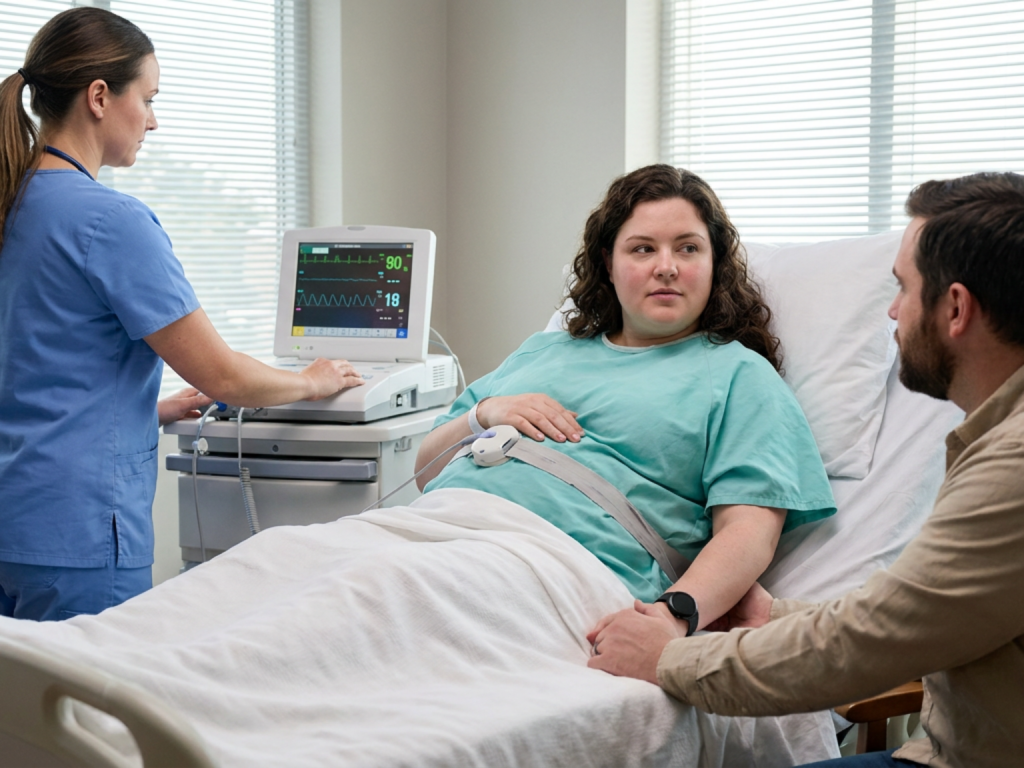
This epidural birth story is presented as an anonymized, case-style narrative informed by published reports from first-time mothers who received labor epidural analgesia. The mother in this story, whom we will call Maya, arrived at the hospital in active labor after many hours of contractions at home. She had written a birth preference document that said she hoped to try non-medical coping methods first, but she also wanted access to labor pain relief options if labor became too intense.
By the time Maya reached the labor unit, contractions were close together and difficult to breathe through. She described the pain as a wave that began in her lower abdomen, wrapped into her back, and left almost no recovery time. Her cervix was changing, fetal monitoring was reassuring, and her blood pressure and temperature were within expected limits. Still, she felt frightened because she was no longer able to rest between contractions or answer questions clearly.
Her midwife and obstetric nurse reassured her that changing the plan was not failure. They reviewed the available options, including continued position changes, hydrotherapy if available, systemic medications, and neuraxial analgesia. Maya asked for an epidural after discussing the expected benefits, possible side effects, and the need for maternal and fetal monitoring. For her, the decision was not about proving endurance; it was about becoming present again.
Before the epidural: assessment and consent
Before epidural placement, the anesthesia clinician reviewed Maya’s medical history, allergies, medications, platelet status, and any history of spinal surgery, bleeding disorders, or infection. This step matters because an epidural is a medical procedure, even when it is common and generally safe in obstetric practice. The team also explained that the goal was analgesia, meaning pain relief, not complete paralysis or loss of awareness.
Maya received intravenous access and fluids according to local practice. Her blood pressure was checked frequently because maternal blood pressure changes can occur after neuraxial medications. The fetal heart rate was monitored, not because epidurals are expected to harm the baby, but because labor itself is dynamic and because clinicians watch both parent and fetus during any intervention.
During consent, the anesthetist explained possible issues such as incomplete or patchy relief, itching, shivering, temporary leg heaviness, low blood pressure, fever during labor, difficulty urinating, and rare complications such as accidental dural puncture or neurologic injury. Maya also learned that the catheter could often be adjusted if relief was one-sided. This practical, calm explanation helped her feel respected rather than rushed.
For medically literate parents, this phase can be emotionally important. Understanding epidural as a medical procedure may reduce anxiety because the steps become predictable: assessment, positioning, sterile preparation, local anesthetic to numb the skin, catheter placement, test dosing if used, and ongoing monitoring.
Placement: what Maya felt in the room
Maya sat on the edge of the bed, supported by her nurse and partner, leaning forward to curve her lower back. The room became quiet and focused. During contractions, the nurse coached her to breathe and keep still; between contractions, the anesthetist identified landmarks in the lumbar spine. Maya felt cold antiseptic on her back, then a small burning sting from the local anesthetic.
She did not describe the epidural needle as the hardest part of labor. For her, the challenge was staying in position through contractions. After the epidural catheter was threaded and secured, she was helped back into bed. The medication did not work instantly. Over the next 10 to 20 minutes, the contraction peaks softened. The sharp, consuming pain became pressure and tightening. She could speak again.
This turning point echoes the experiences described by first-time mothers in qualitative research: epidural analgesia can change labor from an unbearable or frightening experience into one that feels manageable, sometimes even calm. Maya cried with relief, not because birth had become effortless, but because she no longer felt trapped inside the pain.
Her legs felt warm and heavy, but she could still move them with assistance. The team encouraged position changes after epidural analgesia, such as side-lying with a peanut ball and alternating sides, while maintaining safety because leg strength and balance can be reduced. The epidural pump continued to deliver medication, and in some units patient-controlled epidural analgesia allows the patient to press a button for additional doses within preset safety limits.
Labor after pain relief: rest, monitoring, and emotional recovery
Once comfortable, Maya slept for nearly an hour. This rest changed the atmosphere of the birth room. Her partner also relaxed, and the nurse was able to explain the next stages of labor without competing against intense pain. Maya later said that the epidural gave her back her decision-making capacity. She could ask about cervical checks, fetal heart rate patterns, oxytocin augmentation if needed, and what sensations might mean progress.
Clinically, the team continued routine labor assessment. Epidural analgesia may reduce pain dramatically, but it does not remove the need for careful obstetric judgment. If contractions space out, clinicians may discuss options. If fever, blood pressure changes, or concerning fetal heart rate patterns occur, the team evaluates the full clinical picture rather than assuming a single cause.
Maya’s labor continued steadily. She felt rectal pressure increase as the baby descended, even though contraction pain remained mild. Some people worry that an epidural automatically leads to cesarean birth. The cited medical guidance from UT Southwestern states that epidurals do not increase the risk of cesarean delivery. Decisions about cesarean birth depend on factors such as fetal status, labor progress, maternal condition, and obstetric history.
Another common fear is long-term harm. Current evidence cited by Stanford Medicine reports that epidural exposure during birth was not associated with a statistically significant increase in autism risk in a large study population. This kind of information can be deeply reassuring, but it should be interpreted with clinicians who can place population-level data into an individual context.
Pushing with an epidural: pressure without panic
When Maya reached full dilation, her nurse explained that the second stage could feel different with an epidural. Instead of severe pain, Maya felt pressure low in the pelvis and an urge that came and went. The team used contraction cueing and the fetal monitor to help her coordinate pushing. This is a common part of pushing with an epidural: the birthing person may need more verbal guidance, especially if the block is dense.
Maya tried side-lying and semi-reclined positions. Because she could not safely stand, staff supported her legs and helped her change positions in bed. Movement was not absent; it was adapted. The nurse watched for excessive numbness, and the anesthesia team remained available if the block needed adjustment. Maya said she appreciated feeling pressure because it made her feel involved rather than disconnected.
After a period of pushing, the baby’s head descended. Maya felt stretching and intense pressure at crowning, but not the same overwhelming contraction pain she had felt earlier. The obstetric clinician coached slow breathing to reduce sudden force. Her baby was born vaginally, placed skin-to-skin, and assessed by the newborn team. Maya remembered the moment vividly because she was alert, rested enough to focus, and not consumed by pain.
This outcome is not guaranteed for every person. Some epidural labors involve assisted vaginal birth, cesarean birth, fever evaluation, prolonged second stage, or patchy analgesia. A positive epidural story is not a promise; it is one example of how appropriate pain relief can support participation and emotional safety.
After birth: catheter removal, recovery, and meaning
After delivery and early bonding, the epidural infusion was stopped. The catheter was removed by trained staff, usually a simple process involving removal of the tape and gentle withdrawal of the flexible catheter. Maya’s leg heaviness gradually resolved over the next few hours. She was advised not to walk until staff confirmed adequate strength and sensation.
Her postpartum checks included bleeding, uterine tone, bladder function, blood pressure, pain level, and return of mobility. She had some localized back tenderness at the insertion site, similar to a bruise. The team explained that temporary soreness can happen, but chronic back pain is not considered caused by epidurals based on the cited medical guidance. New severe headache, weakness, numbness, fever, or worsening back pain would require prompt clinical assessment.
Emotionally, Maya described her epidural as the point where birth became something she could inhabit. Before it, she felt overwhelmed and afraid; after it, she felt able to rest, listen, push, and meet her baby with clarity. Her story aligns with published maternal accounts in which epidural analgesia had a positive impact by transforming challenging labor into a more controlled and sometimes enjoyable experience.
The most important lesson is not that everyone should choose an epidural. Some people prefer unmedicated birth, some cannot receive neuraxial analgesia for medical reasons, and some labors progress too quickly for placement. The lesson is that pain relief can be a valid, thoughtful, and empowering part of birth. A well-supported birth plan leaves room for changing needs, informed consent, and compassionate care.
When to seek urgent clinical help
- Contact clinicians promptly for severe headache after epidural, especially if worse when upright.
- Report new leg weakness, numbness, loss of bladder control, or severe back pain after birth.
- Tell the care team immediately about fever, chills, heavy bleeding, chest pain, or shortness of breath.
- Discuss bleeding disorders, anticoagulant medications, spinal surgery, or infection risk before epidural placement.
- Do not use any birth story as personal medical advice; individual risks require professional assessment.
Tools & Assistance
- Request an antenatal anesthesia consultation if you have spinal, neurologic, bleeding, or complex medical history.
- Bring a flexible birth preference document that includes both non-medical coping methods and epidural preferences.
- Ask your hospital about patient-controlled epidural analgesia, mobility policies, and monitoring routines.
- Prepare questions for your obstetric, midwifery, and anesthesia teams before labor begins.
- After birth, ask for a postpartum debrief if the epidural or delivery felt confusing or distressing.
FAQ
Does an epidural mean I will not feel anything during birth?
Not necessarily. Many people feel pressure, tightening, or stretching, especially during pushing, while sharp contraction pain is reduced.
Can I still have a vaginal birth with an epidural?
Yes. Epidural analgesia does not automatically lead to cesarean birth; delivery decisions depend on the overall clinical situation.
Is an epidural safe for the baby?
Epidurals are widely used in labor. The care team monitors maternal blood pressure and fetal heart rate, and large studies have addressed concerns such as autism risk without finding a significant association.
What if the epidural works only on one side?
Tell the nurse or anesthesia clinician. Position changes, medication adjustment, or catheter assessment may improve a patchy block.
Should I decide about an epidural before labor?
It is helpful to learn about benefits, limitations, and contraindications before labor, but many people make the final decision based on how labor unfolds.
Sources
- PubMed Central (National Institutes of Health) — Giving Birth With Epidural Analgesia: The Experience of First-Time Mothers
- Stanford Medicine — Epidural use at birth not linked to autism risk, study finds
- UT Southwestern Medical Center — 9 myths about epidurals – debunked
Disclaimer
This article is for general educational purposes only and does not replace medical advice. Always consult your obstetric, midwifery, and anesthesia teams about your individual risks and birth options.

















Please log in to leave a comment.