
Intro
The first minutes, hours, and days after birth can feel both extraordinary and overwhelming. Your body is beginning a major physiologic transition: the uterus contracts, bleeding is monitored, hormones shift rapidly, feeding may begin, and your baby is adapting to life outside the uterus.
Highlights
Right after delivery, your care team will focus on maternal stability, uterine tone, bleeding, pain control, and early bonding.
The postpartum period is commonly described as the first six to eight weeks, but recovery and emotional adjustment often continue beyond that.
Follow-up care matters: contact with a maternal care provider is recommended within the first three weeks postpartum, with a comprehensive visit no later than 12 weeks.
Heavy bleeding, fever, shortness of breath, severe headache, chest pain, or thoughts of self-harm require urgent medical attention.
The first minutes: birth is not quite over
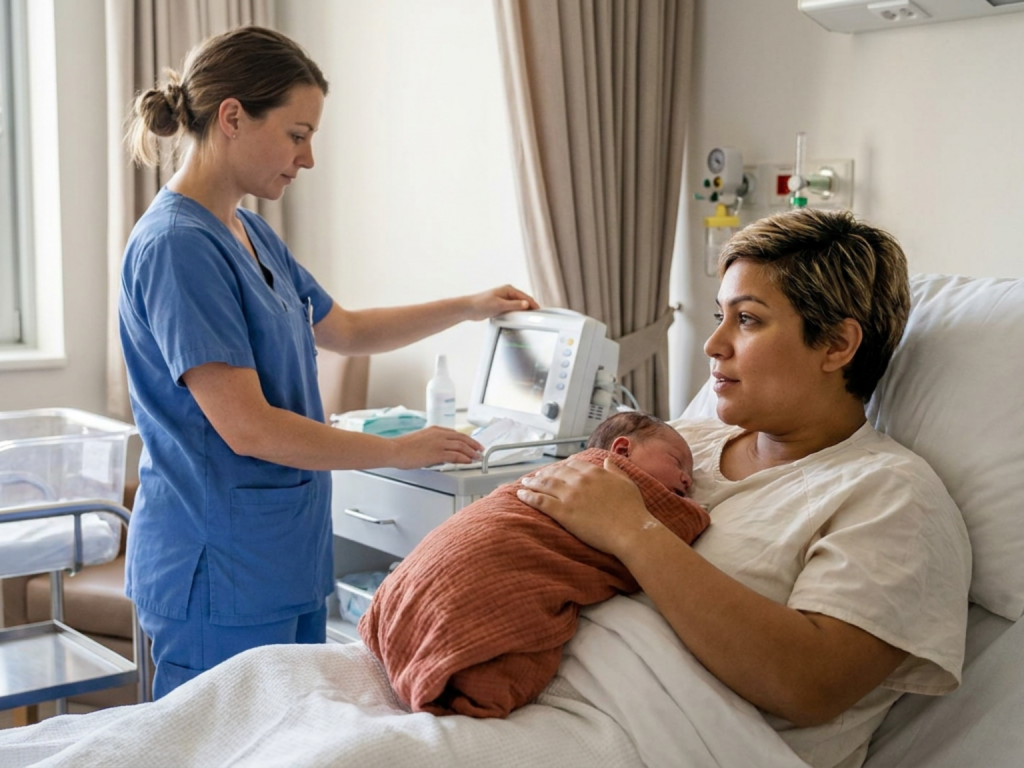
Immediately after your baby is born, the clinical focus widens from labor progress to recovery, safety, and transition. If you and your baby are stable, many teams encourage skin-to-skin contact after birth, because it helps temperature regulation, bonding, and early feeding cues. At the same time, clinicians continue active observation of your vital signs, bleeding, and comfort. This can feel busy: people may be talking, checking, drying the baby, adjusting monitors, or giving medications while you are trying to take in the moment.
For a vaginal birth, the placenta still needs to separate and be delivered. Placenta delivery after birth is usually watched closely because retained placental tissue or poor uterine contraction can increase postpartum hemorrhage risk. Your clinician may gently examine the placenta after it is delivered to see whether it appears complete. They may also massage the top of the uterus through the abdomen to assess uterine tone after delivery. This can be uncomfortable, but it is an important safety check.
If you had a cesarean birth, the baby may be brought to you in the operating room if both of you are stable, while the surgical team completes placental removal and closes the incision. You may feel pressure, pulling, shivering, nausea, or drowsiness depending on anesthesia and medications. These sensations are common, but tell your team if pain, breathing, dizziness, or anxiety feels unmanageable.
Bleeding, uterine contractions, and vital signs
Postpartum bleeding, called lochia, begins right away. In the first hours it is typically red and may include small clots, especially after lying still. Nurses or midwives often check your pad, press on the uterus, and ask about dizziness or weakness. The goal is to distinguish expected lochia from excessive bleeding. The uterus should gradually firm and contract down after the placenta is delivered; a soft or boggy uterus can bleed more heavily.
You may be offered or given a uterotonic medication, commonly oxytocin, to help the uterus contract. This is a preventive measure used in many settings to reduce hemorrhage risk. You might also feel strong cramping, sometimes called afterpains, especially while breastfeeding or after a subsequent birth. These cramps reflect uterine contraction and involution, but severe or escalating pain should be reported.
Blood pressure, pulse, temperature, oxygenation, urine output, and level of alertness may be checked repeatedly. This monitoring helps detect early complications such as hemorrhage, hypertensive disorders, infection, or anesthetic effects. If you had preeclampsia, gestational hypertension, significant bleeding, fever, operative delivery, or major medical conditions, monitoring may be more frequent or prolonged. It is appropriate to ask what is being checked and why; understanding the plan can make the early postpartum period feel less frightening.
Pain, perineal care, and cesarean recovery
Discomfort after delivery varies widely. After a vaginal birth, soreness may come from stretching, swelling, lacerations, episiotomy, hemorrhoids, or prolonged pushing. Cold packs, peri bottles, topical comfort measures, and appropriate pain medication may be recommended by your clinical team. If you have stitches, they usually dissolve, but increasing pain, foul-smelling discharge, fever, or wound separation should be evaluated.
Urinating for the first time can sting or feel difficult because of swelling, catheter use, anesthesia, or pelvic floor fatigue. Tell your nurse or clinician if you cannot urinate, feel intense bladder pressure, or have severe burning. Bowel movements may feel intimidating, especially with perineal stitches or hemorrhoids. Hydration, fiber-containing foods, gentle movement, and clinician-approved stool softening strategies may help, but individual guidance is best if you have surgical repair or significant tearing.
After a cesarean birth, recovery includes both postpartum physiology and abdominal surgery recovery. You may have an IV, urinary catheter, compression devices on your legs, and close anesthesia monitoring at first. Incisional pain, gas pain, shoulder discomfort, itching from neuraxial opioids, and nausea can occur. Early assisted movement is often encouraged when safe because it supports circulation and bowel function. Avoid lifting or activity beyond your discharge instructions, and call your care team for worsening incision redness, drainage, fever, severe pain, or new shortness of breath.
Your baby’s first assessments and feeding support
Your newborn is also being observed closely. In the first minutes, clinicians assess breathing, tone, color, heart rate, and response to stimulation. Some babies cry vigorously right away; others need drying, suctioning only if indicated, stimulation, oxygen, or more advanced support. A baby can look bluish in the hands and feet early on while central color remains reassuring, but the care team will assess whether transition is normal.
A newborn exam within 24 hours is commonly recommended, along with ongoing checks of temperature, feeding, urination, stooling, jaundice risk, and overall adaptation. Depending on local practice and your baby’s condition, preventive medications, screening tests, weight measurement, and vitamin K or eye prophylaxis discussions may occur. If anything is urgent, the team should explain what is happening and what choices are available when possible.
Feeding may begin soon after birth if you and the baby are stable. Early breastfeeding often starts with licking, nuzzling, rooting, and intermittent latch attempts rather than a full organized feed. Colostrum is produced in small volumes and is nutritionally dense. If you are formula feeding, pumping, combination feeding, or have a medical reason for additional support, ask for practical guidance before discharge. Feeding should not be a test of worth; it is a clinical and relational process that may require observation, troubleshooting, and compassion.
Emotional shifts, hormones, and mental health
The emotional landscape right after delivery can be intense and unpredictable. Some people feel euphoric, relieved, tearful, detached, frightened, or strangely quiet. None of these reactions automatically means something is wrong. Exhaustion, pain, blood loss, anesthesia, unplanned interventions, neonatal concerns, and the sheer magnitude of birth can all shape the first hours.
Hormonal changes after birth are dramatic. Estrogen and progesterone fall, lactation hormones rise, sleep becomes fragmented, and your nervous system may remain activated after labor. Many people experience transient mood lability or weepiness in the first several days, often called the baby blues. However, persistent sadness, panic, intrusive thoughts, inability to sleep even when the baby sleeps, hopelessness, or feeling unable to care for yourself or the baby deserves prompt professional support.
Postpartum mental health conditions are medical conditions, not personal failures. Depression, anxiety, obsessive-compulsive symptoms, post-traumatic stress symptoms, and rarely psychosis can emerge after delivery. Suicidal thoughts, thoughts of harming the baby, hallucinations, delusional beliefs, or behavior that feels out of control are emergencies. If you have a history of mood disorder, bipolar disorder, trauma, substance use disorder, or previous postpartum mental health complications, ask before discharge about a proactive monitoring plan and crisis contacts.
Before discharge and the first days at home
Before you leave the birth setting, your team should review bleeding expectations, pain control, wound or perineal care, feeding plans, medications, activity limits, contraception considerations, and postpartum warning signs after discharge. This conversation can be hard to absorb when you are tired, so it helps to have another adult listen, take notes, or ask questions. If instructions are unclear, ask for them to be repeated in plain language.
Postpartum care is not meant to be a single visit at six weeks. Current guidance emphasizes ongoing, individualized care. Contact with a maternal care provider is recommended within the first three weeks after birth, and a comprehensive postpartum visit should occur no later than 12 weeks. That visit should assess physical recovery, mood and emotional well-being, infant care and feeding, contraception, sleep, fatigue, chronic disease management, and social support. Some people need earlier review, such as those with hypertension, diabetes, cesarean birth, heavy bleeding, infection risk, significant perineal trauma, or mental health concerns.
At home, prioritize the basics: rest when possible, regular fluids and food, help with household tasks, safe infant sleep practices, and a low threshold for calling your care team. Recovery is usually measured in weeks, not days. You do not need to prove resilience by ignoring symptoms. If something feels significantly worse, different from what you were told to expect, or simply concerning, it is reasonable to seek medical advice.
Seek urgent care for these warning signs
- Heavy bleeding that soaks pads quickly, large clots, fainting, or feeling suddenly weak.
- Fever, chills, foul-smelling discharge, worsening abdominal pain, or worsening incision or perineal pain.
- Severe headache, vision changes, chest pain, shortness of breath, or new swelling with high blood pressure concerns.
- Calf pain or one-sided leg swelling, especially with redness or warmth.
- Thoughts of self-harm, thoughts of harming the baby, hallucinations, extreme agitation, or suicidal behavior.
Tools & Assistance
- Write down discharge instructions and emergency phone numbers before leaving the birth setting.
- Schedule postpartum follow-up before or soon after discharge, especially if you have blood pressure, bleeding, wound, or mood concerns.
- Use a simple daily log for bleeding, temperature if advised, pain level, feeding, urination, and mood.
- Ask for lactation, pelvic floor, mental health, social work, or home visiting support when needed.
- Call your maternity unit, midwife, obstetric clinician, or emergency services if warning signs occur.
FAQ
How long does the postpartum period last?
It is often described as the first six to eight weeks after birth, but physical recovery, lactation, pelvic floor healing, sleep disruption, and emotional adjustment may continue longer.
Is heavy bleeding normal right after delivery?
Some red bleeding and small clots can be expected, especially early. Bleeding that soaks pads rapidly, is increasing, includes large clots, or is accompanied by dizziness or weakness needs urgent evaluation.
When should I have postpartum follow-up?
Guidance recommends contact with a maternal care provider within the first three weeks postpartum and a comprehensive postpartum visit no later than 12 weeks after birth. Some conditions require earlier review.
What if I do not feel emotionally connected to my baby immediately?
Bonding can be immediate for some people and gradual for others. Fatigue, pain, stress, or a difficult birth can affect early feelings. Ask for support if detachment is distressing, persistent, or accompanied by depression, anxiety, or unsafe thoughts.
Can I walk soon after birth?
Often yes, when your care team confirms it is safe. Early assisted movement may support circulation and recovery, but timing depends on bleeding, anesthesia, dizziness, surgical recovery, and overall stability.
Sources
- American College of Obstetricians and Gynecologists (ACOG) — Optimizing Postpartum Care
- Cleveland Clinic — Postpartum: Stages, Symptoms & Recovery Time
- National Center for Biotechnology Information (NCBI) / NIH — Postnatal Care of the Mother and Newborn
Disclaimer
This article is for general medical information and does not replace individualized care. Contact your obstetric, midwifery, pediatric, or emergency care team for symptoms, concerns, diagnosis, or treatment decisions.


















Please log in to leave a comment.