
Intro
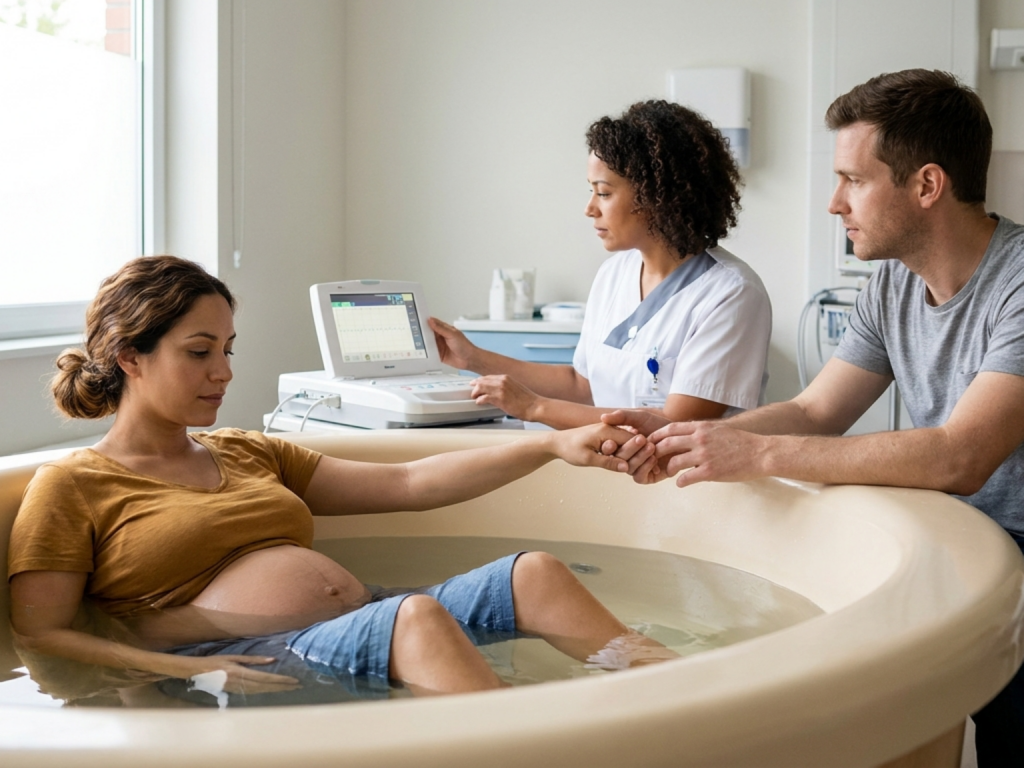
Water can be a powerful comfort measure in labor. For some people, immersion in a warm tub or birth pool reduces muscular guarding, supports mobility, and creates a sense of privacy during contractions. It is not a replacement for clinical monitoring or skilled maternity care, but it can be part of a thoughtful, physiologic pain-management plan.
Water therapy usually means using warm water during labor, especially before full dilation. Water birth means the baby is actually born under water before being brought immediately to the surface. The evidence and safety considerations are not identical, so it helps to understand the distinction before deciding what belongs in your birth plan.
Highlights
First-stage water immersion may reduce the need for epidural or spinal analgesia and may modestly shorten labor in healthy people with uncomplicated term pregnancies.
Evidence for giving birth in water is more limited than evidence for laboring in water, although recent guideline reviews support it as an option in appropriately selected settings.
Safety depends heavily on candidate selection, water temperature, infection-control procedures, fetal monitoring, emergency readiness, and skilled staff.
Water can be combined with non-pharmacological pain management strategies such as breathing, position changes, massage, and continuous support.
A flexible plan matters: leaving the pool for monitoring, pain relief, complications, or personal preference is not a failure.
What Water Therapy And Water Birth Mean
Water therapy in labor usually refers to immersion in warm water during the first stage of labor, when the cervix is dilating and contractions are becoming longer, stronger, and closer together. This may happen in a hospital tub, freestanding birth pool, birth center, or planned home birth setting. Some people also use showers, although the research base is stronger for immersion than for showering.
Water birth is more specific: the second stage of labor, including pushing and the actual birth, occurs in water. The newborn is then lifted promptly to the surface, avoiding prolonged submersion. This distinction matters because major professional organizations tend to view first-stage water immersion during labor as better supported by evidence than underwater delivery itself.
Warm water immersion during labor is best understood as a comfort and coping tool, not as a guarantee of an unmedicated birth. It can be used alone, combined with other labor coping techniques, or discontinued if clinical needs change.
How Warm Water May Ease Labor Pain
Labor pain is produced by several overlapping processes: uterine muscle contraction, cervical dilation, pelvic pressure, stretching of soft tissues, and sometimes back or hip pain from fetal position. Warm water does not remove these stimuli, but it may change how the nervous system receives and responds to them.
Immersion supports buoyancy, which reduces the apparent weight of the abdomen and may make position changes easier. This can help the pelvis move, reduce sustained muscle tension, and allow upright or forward-leaning postures that feel more tolerable. Warmth may also encourage peripheral vasodilation and relaxation of skeletal muscle, while the protected environment of a pool can reduce sensory overload.
Psychologically, the tub can create a boundary around the laboring person. Privacy, dim lighting, steady breathing, and fewer interruptions may reduce catecholamine release, the stress-hormone response that can intensify fear and tension. Many people pair water with slow breathing, focused breathing during labor, visualization, or partner support during labor pain. These methods are not analgesics in the pharmacologic sense, but they can reduce suffering by improving control, rhythm, and perceived safety during contractions.
Evidence For First-Stage Water Immersion
The strongest evidence is for using water during the first stage of labor. A Cochrane review of immersion in water during labor and birth found that first-stage immersion may reduce use of regional analgesia, such as epidural or spinal anesthesia. It did not find evidence of increased adverse effects for the mother or newborn in the trials reviewed, though study quality and practice settings varied.
ACOG similarly distinguishes laboring in water from giving birth in water. Its guidance states that immersion during the first stage may be offered to healthy women with uncomplicated pregnancies at term, and that it may shorten labor and reduce epidural or spinal analgesia use. This does not mean every laboring person should use water; it means that, in suitable candidates and with appropriate protocols, first-stage immersion is a reasonable option to discuss.
Benefits are usually modest and individual. Some people find the tub deeply calming; others feel too warm, confined, nauseated, or restless. The most clinically useful approach is flexible: try water when labor is established, reassess comfort and fetal status, and leave the pool when monitoring, procedures, rest, hydration, or medication would be better served outside the tub.
Evidence And Cautions For Water Birth
The evidence for the second stage and birth in water is more nuanced. ACOG has stated that evidence is insufficient to recommend underwater birth itself as clearly beneficial or safe compared with birth on land, and it emphasizes that facilities offering water birth need rigorous protocols. This caution reflects the fact that rare neonatal events are difficult to measure well in small or moderate-sized studies.
NICE reviewed evidence on water immersion during the second stage of labor and concluded that water birth may be considered as an option. Its evidence review reported possible reductions in perineal trauma and postpartum hemorrhage, and possible lower neonatal unit admissions, while also noting a potential risk of umbilical cord snapping. Cord snapping means the cord tears during or immediately after birth, often during lifting of the baby to the surface; staff technique and prompt recognition are important.
Other concerns sometimes discussed include infection, neonatal aspiration, difficulty responding quickly to shoulder dystocia or fetal compromise, and delays in estimating blood loss. These risks are not reasons for fear, but they are reasons for preparation. Water birth should occur only where trained clinicians can monitor labor, maintain clean equipment, control water temperature, help the birthing person exit quickly, and initiate emergency care without delay.
Who May Or May Not Be A Candidate
Candidate selection varies by hospital, birth center, and clinician. In general, first-stage immersion is most often considered for low-risk, term, singleton pregnancies with cephalic presentation, reassuring maternal vital signs, and reassuring fetal status. Local policies may specify gestational age, rupture-of-membranes criteria, body temperature limits, infectious-disease screening, mobility requirements, and monitoring options.
Clinicians may advise against water immersion or water birth when there is preterm labor, significant bleeding, fever, suspected infection, non-reassuring fetal heart rate, need for continuous monitoring that cannot be performed safely in water, heavy meconium, hypertensive disease requiring close surveillance, insulin-treated diabetes with complications, active herpes lesions, multiple pregnancy, breech presentation, or any condition that raises the likelihood of urgent intervention. These are examples, not a universal rulebook.
Analgesia choices also matter. Epidural analgesia, sedating medications, or impaired mobility generally make pool use unsafe because the person may not be able to change position or exit quickly. The safest plan is individualized with the maternity team before labor and reassessed during labor as the clinical picture evolves.
Planning Safe Use Of Water In Labor
A practical water plan starts before labor. Ask whether your chosen birth setting supports water therapy, water birth, or both. Clarify who manages the pool, how it is cleaned, how water temperature is checked, what fetal monitoring is available, and which circumstances require leaving the water. If planning birth outside a hospital, discuss transfer thresholds and emergency logistics in concrete terms.
During labor, water temperature should feel warm but not overheating; excessively hot water can contribute to maternal hyperthermia, dehydration, tachycardia, or fetal heart rate changes. Hydration, regular temperature checks, bladder emptying, and periodic assessment of contraction pattern and fetal well-being are important. Entry timing is also individualized: entering very early may feel pleasant but can sometimes slow momentum if contractions are not yet established.
Water works best when integrated with the rest of the birth plan. Breathing techniques for natural birth, breathing during pushing, sacral counterpressure during contractions outside the pool, upright positions, reassurance, and clear communication can all support coping. If you choose to leave the water for an exam, rest, medication, fetal assessment, or birth on land, that is an adaptive clinical decision. The goal is not to achieve a specific kind of birth, but to preserve safety, dignity, and effective pain support.
When To Seek Immediate Help
- Do not enter or remain in water if your care team identifies non-reassuring fetal heart rate patterns.
- Leave the pool promptly for heavy bleeding, fever, faintness, chest pain, severe shortness of breath, or sudden worsening pain.
- Avoid water birth unless trained staff and emergency equipment are immediately available.
- Tell your clinician about ruptured membranes, meconium-stained fluid, infection concerns, or any change in fetal movement.
- Do not use hot tubs or excessively hot water for labor pain relief.
Tools & Assistance
- Discuss water immersion eligibility at a prenatal visit with your obstetrician or midwife
- Ask your birth facility for its written water labor and water birth policy
- Create a flexible birth plan that includes reasons to leave the pool
- Practice breathing, position changes, and partner support before labor
- Confirm pool cleaning, temperature monitoring, fetal monitoring, and emergency procedures
FAQ
Is water birth the same as laboring in water?
No. Laboring in water usually means using a tub during cervical dilation. Water birth means the baby is delivered under water and then brought to the surface.
Can water therapy replace an epidural?
Water may reduce the desire for regional analgesia for some people, but it is not equivalent to an epidural. Pain-relief choices should remain flexible.
Is water birth safe for every pregnancy?
No. It is generally considered only in selected low-risk situations and depends on local protocols, fetal status, maternal health, and staff experience.
Can I use water if my membranes have ruptured?
Sometimes, but policies vary. Your clinician will consider infection risk, fluid appearance, fetal status, duration of membrane rupture, and your overall labor pattern.
What if I change my mind in labor?
Changing plans is normal. You can leave the tub for comfort, monitoring, medication, rest, or any clinical reason without having failed your birth plan.
Sources
- Cochrane Database of Systematic Reviews / PMC — Immersion in water during labour and birth
- American College of Obstetricians and Gynecologists — Committee Opinion No. 679 Summary: Immersion in Water During Labor and Delivery
- National Institute for Health and Care Excellence — NICE NG235 Evidence review Q: Effects and safety of water immersion during the second stage of labour
Disclaimer
This article is for general medical education only and does not diagnose, prescribe, or replace care from an obstetrician, midwife, or other qualified clinician. Discuss water therapy and water birth eligibility with your own maternity care team.
















Please log in to leave a comment.