
Intro
Pain relief in birth is rarely about one method alone. Many people cope best when physical comfort, emotional safety, movement, breathing, and clinical options are combined in a flexible plan. Massage can be one part of that plan: a hands-on, responsive way for a partner, doula, or support person to reduce muscle tension, provide reassurance, and help the birthing person feel less alone.
Highlights
Massage during labor is best understood as supportive comfort care, not a substitute for medical assessment or pain medication when needed.
Light, rhythmic strokes may calm the nervous system, while firmer pressure can help some people cope with back, hip, or sacral discomfort.
The most helpful partner support is consent-based, adaptable, and coordinated with the birthing person’s breathing, position, and clinical situation.
Massage should be modified or avoided when there are medical concerns, skin issues, reduced sensation, or instructions from the maternity care team.
Why touch can help in labor pain
Labor pain is a complex physiologic and emotional experience. Uterine contractions, cervical dilation, pelvic pressure, ligament stretch, fatigue, and fear can all amplify the way pain is perceived. Supportive touch does not remove the source of labor pain, but it may change how the nervous system processes it. Gentle massage can provide competing sensory input, support parasympathetic relaxation, reduce guarding in tense muscles, and help the birthing person maintain a sense of connection.
Massage is generally considered a complementary approach. That means it can sit alongside breathing, hydrotherapy, movement, medication, epidural analgesia, and continuous labor support. It should not be framed as a test of endurance or a replacement for medical pain relief. Some people love touch during contractions; others strongly dislike it, especially in transition or when overstimulated. The goal is not to perform a perfect technique. The goal is to listen closely and offer comfort that can be stopped, changed, or intensified at any moment.
Effleurage for rhythm and reassurance
Effleurage refers to long, gliding strokes, usually performed with the palm or fingertips. In early labor, a partner may use slow strokes across the upper back, shoulders, arms, or abdomen if abdominal touch feels welcome. The pressure is usually light to moderate, with a predictable rhythm that can match breathing. For some people, this steady contact becomes an anchor during labor contractions, especially when sensations feel wave-like and difficult to organize.
A practical approach is to begin between contractions, ask permission, and then continue only if the birthing person signals that it helps. On the abdomen, strokes should be light and broad rather than deep. On the back, the partner can move from the shoulders down toward the low back, then return with gentle contact. Oil or lotion may reduce friction, but avoid strong scents unless they were previously chosen, because nausea and smell sensitivity are common in labor.
Effleurage is especially useful when the birthing person needs calm, not intensity. It can pair well with slow exhalation, dim lighting, and minimal conversation. If the person becomes irritated by touch, the partner can switch to simply holding a hand, applying a cool cloth, or offering verbal reassurance.
Pressure techniques for back and pelvic pain
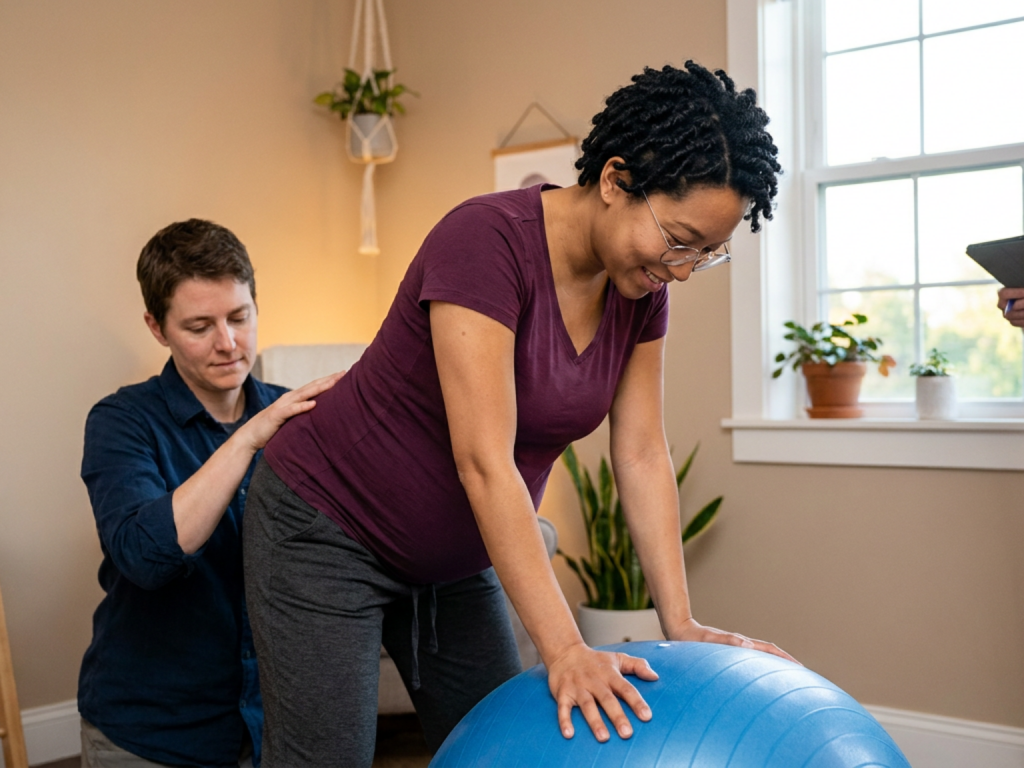
Firmer pressure may help when pain concentrates in the low back, sacrum, hips, or buttocks. This is often called counterpressure, and it is commonly used for back labor symptoms or pelvic pressure. The partner may press the heel of one hand, both hands, or a tennis ball against the sacrum during contractions, then release between them. Some people prefer steady pressure; others prefer small circles or pressure that increases as the contraction builds.
For sacral counterpressure during contractions, positioning matters. The birthing person may lean forward over a bed, birth ball, chair, or partner, or use hands-and-knees for back labor. The support person should keep their wrists neutral, use body weight rather than arm strength, and check in with short questions such as, “More, less, or same?” This avoids long conversations while still protecting consent.
Hip squeezes can also be helpful for some people. With the birthing person leaning forward, the partner places hands on the outer hips and applies inward pressure during the contraction. This may feel relieving when pelvic joints and surrounding muscles are under strain. However, pressure should never be forced, and it should stop if it causes sharp pain, numbness, dizziness, or emotional distress.
Petrissage, friction, vibration, and tapotement
Several classic massage techniques can be adapted for labor, but they should remain simple and responsive. Petrissage involves kneading or lifting soft tissue, often used on the shoulders, upper back, thighs, or calves. It may reduce muscular guarding between contractions, especially after long periods of standing, squatting, or changing positions in active labor. The partner should avoid deep calf pressure unless cleared by the care team, particularly if there is swelling, tenderness, or concern for blood clots.
Friction uses small, focused movements over a tight area, such as the muscles beside the spine or around the shoulder blades. It can feel helpful for localized tension, but it should be gentle in pregnancy and labor because tissues may be more sensitive. Vibration is a light shaking or trembling motion that can help some people release jaw, shoulder, or thigh tension. Tapotement, or rhythmic tapping, is less commonly useful in labor because it can be stimulating, but very gentle tapping over the upper back may comfort someone who likes more alerting touch.
The partner should watch nonverbal cues carefully. A clenched jaw, pulling away, breath holding, or silence after previously giving feedback may mean the technique is no longer helpful. Labor preferences can change quickly, and a technique that was soothing 20 minutes ago may suddenly feel intolerable.
Partner communication and consent
Effective partner support begins before labor. If possible, discuss preferences during pregnancy: areas that usually feel comforting, areas that should not be touched, preferred words of encouragement, and whether the birthing person likes silence or coaching under stress. A simple plan can reduce decision fatigue during labor, but it should remain flexible.
During labor, consent should be active and ongoing. Partners can use brief, practical prompts: “Should I keep going?” “Same pressure?” “Do you want hands off?” These questions respect autonomy without interrupting concentration. If the birthing person has an epidural or other analgesia, sensation may be reduced or uneven, so the partner should use lighter pressure and ask the nurse or midwife about safe movement and positioning.
Partner support is also emotional regulation. A calm voice, relaxed breathing, and steady presence can help reduce fear and muscle bracing. Partners can remind the birthing person to unclench the jaw, soften the shoulders, empty the bladder when appropriate, sip fluids if allowed, or try position changes when comfort decreases. The best support is not controlling; it is attentive, respectful, and ready to adapt.
Combining massage with positions and coping tools
Massage often works best when combined with posture and movement. Forward-leaning labor positions can make the back accessible for sacral pressure while giving the abdomen space. Side-lying can be useful when the birthing person is tired, has an epidural, or needs rest between contractions. Upright positions may help some people feel more in control, while a birth ball can support pelvic rocking during contractions.
The partner can coordinate touch with the contraction pattern. As a contraction begins, they may place hands on the chosen area and apply the agreed pressure. At the peak, they maintain consistency rather than changing technique abruptly. As the contraction fades, they slowly release pressure and offer water, a cool cloth, or quiet encouragement. This pattern can make intense sensations feel more predictable.
Massage also pairs well with heat or cold when approved by the care team. Warm compresses may relax tight muscles in the low back or shoulders, while cold packs can feel grounding during nausea, shaking, or overheating. Avoid placing heat over areas with reduced sensation, and never use extreme temperatures. In hospital or birth center settings, partners should ask staff before using oils, heat packs, or devices, because monitoring equipment, intravenous lines, or medical conditions may change what is safe.
Safety, boundaries, and when to stop
Massage is usually low risk when gentle and consent-based, but pregnancy and labor require extra caution. Avoid deep pressure over the abdomen, varicose veins, inflamed skin, bruises, wounds, rashes, or areas with numbness. Do not massage a painful, swollen, red, or warm calf; this needs medical evaluation. If the pregnancy is high risk, if there are placental concerns, preeclampsia, bleeding, ruptured membranes with infection concerns, preterm labor, or significant medical complications, ask the maternity team what touch and positioning are appropriate.
Stop massage immediately if the birthing person reports sharp pain, tingling, dizziness, shortness of breath, worsening headache, visual changes, chest pain, or a sudden change in fetal movement before arrival at the birth setting. During labor, also stop and alert staff if pain feels abnormal, bleeding increases, fever develops, or the person feels something is wrong. These signs are not massage problems; they are reasons for clinical assessment.
It is equally important to respect emotional boundaries. Some people have trauma histories, sensory sensitivities, or cultural preferences that affect touch. A partner should never take refusal personally. Hands-off support, advocacy, breathing reminders, and help communicating with clinicians can be just as valuable as massage.
Use extra caution
- Do not use massage to delay urgent assessment for bleeding, severe headache, chest pain, fever, or abnormal pain.
- Avoid deep pressure on the abdomen, painful swollen calves, varicose veins, wounds, or numb areas.
- Ask the maternity care team before massage if the pregnancy is high risk or monitoring, epidural analgesia, or IV lines are in place.
- Stop immediately if touch increases pain, panic, dizziness, tingling, or distress.
- Respect a clear “no” or nonverbal withdrawal every time.
Tools & Assistance
- Discuss massage preferences with a midwife, obstetric clinician, doula, or childbirth educator before labor.
- Practice sacral pressure, hip squeezes, and light back strokes during pregnancy with clear feedback.
- Pack unscented lotion, a washable massage ball, hair ties, and hot-cold packs if approved by the birth setting.
- Use short consent prompts during labor, such as “more, less, same, or stop?”
- Ask hospital or birth center staff how massage can fit with monitoring, epidural care, and safe positioning.
FAQ
Can massage replace an epidural or other pain medication?
No. Massage may support comfort and coping, but it does not replace medical pain relief. It can be used alongside medication when appropriate.
Is deep tissue massage safe during labor?
Deep pressure should be used cautiously and only in appropriate areas, such as firm sacral counterpressure if it feels good. Avoid deep abdominal pressure and any area that is swollen, painful, numb, or medically concerning.
What if I suddenly hate being touched during contractions?
That is common and valid. Your partner should stop immediately and switch to hands-off support, such as quiet reassurance, advocacy, cool cloths, or help with position changes.
Can massage help after an epidural?
Sometimes, but pressure and positioning need adjustment because sensation and mobility may be reduced. Ask the nurse, midwife, or clinician what is safe.
Which technique is best for back labor?
Many people prefer firm sacral counterpressure, hip squeezes, or forward-leaning positions. The best technique is the one that feels relieving and remains safe in your clinical situation.
Sources
- National Center for Complementary and Integrative Health — Massage Therapy: What You Need To Know
- American Massage Therapy Association — Beauty of Basic Massage Techniques
- WebMD — Massage Therapy Styles and Health Benefits
Disclaimer
This article is for general educational purposes only and is not a diagnosis or treatment plan. Always consult your obstetric clinician, midwife, or qualified healthcare professional about pain relief and safety in your pregnancy or labor.

















Please log in to leave a comment.