
Intro
Pregnancy can make everyday hygiene feel more complicated than it used to. Hormonal shifts, changes in vaginal pH, altered circulation, and a higher awareness of infection risk can all make you wonder what is safe, what is necessary, and what is simply overkill.
The reassuring answer is that most people do best with a calm, consistent routine: thorough handwashing, gentle skin and genital care, good oral hygiene, clean clothing, and attention to symptoms that may signal infection. The goal is not to sterilize your life; it is to reduce avoidable exposure while protecting the skin and mucosal barriers that normally keep you well.
Highlights
Gentle hygiene is usually better than aggressive cleansing in pregnancy. Overuse of antiseptics, douching, and heavily perfumed products can irritate tissues and disturb normal flora.
Handwashing remains one of the most effective infection-prevention measures, especially after the toilet, before food preparation, and after contact with raw meat, soil, or pets.
The vulva should be cleaned externally, not internally. Breathable underwear, dryness, and simple products are usually preferable to synthetic fabrics and antiseptic washes.
Oral care matters more than many people expect. Pregnancy can worsen gingival inflammation, so brushing, flossing, and dental review are important.
New symptoms such as burning urination, fever, foul-smelling discharge, or painful gums deserve medical assessment rather than self-treatment.
Why hygiene becomes more important in pregnancy
Pregnancy does not mean you need a special antiseptic routine, but it does mean that some ordinary habits become more consequential. Mucosal tissues may be more sensitive, the vaginal microbiome can shift, and hormonal changes may increase the likelihood of gingival swelling, vaginal discharge, or skin irritation. At the same time, the physiologic changes of pregnancy can make some infections more uncomfortable or more likely to progress, which is why prevention matters.
The NHS and the Office on Women’s Health both emphasize simple infection-reduction measures: hand hygiene, safe food handling, oral care, and awareness of sources of contamination. That advice is especially relevant when you are pregnant because many infections are preventable at the level of daily routine. The emphasis should be on clean, not harsh. Frequent washing, proper drying, and avoiding shared towels or unwashed hands are usually more helpful than using strong disinfectants on the body.
It is also worth remembering that normal bodily changes can look and feel like infection. Increased vaginal discharge, mild odor changes after exercise, or occasional skin dryness may be physiological. The key is noticing the difference between expected change and red flags such as itching, burning, pain, fever, or a persistent unusual odor.
Hand hygiene, food handling, and everyday infection control
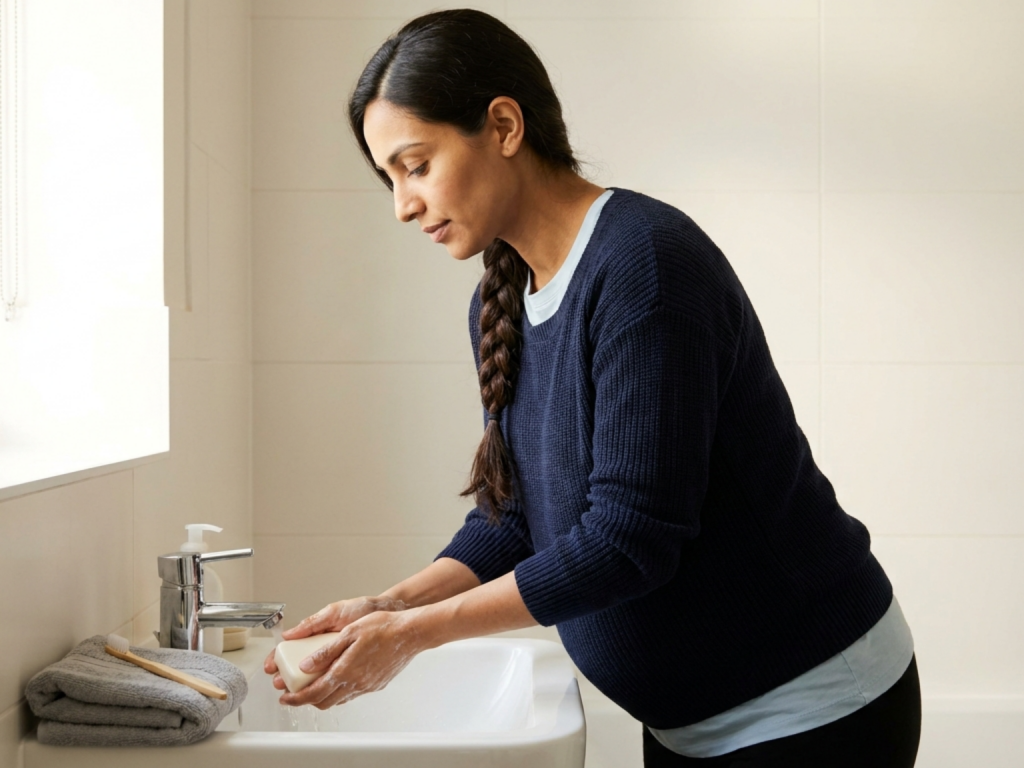
Handwashing is one of the simplest and most evidence-supported habits in pregnancy. Soap and running water remove transient organisms more reliably than quick rinses, and the habit matters at home as much as in public. Wash your hands before eating or preparing food, after using the toilet, after blowing your nose or coughing, after changing diapers, and after handling raw meat, eggs, or unwashed produce. If soap and water are not available, alcohol-based sanitizer is a practical backup until you can wash properly.
In pregnancy, hand hygiene also intersects with food and environment. Wash after touching soil or gardening tools, since soil can carry organisms that are not a concern for most healthy adults but are worth avoiding during pregnancy. If you care for pets, wash your hands after contact with fur, bowls, waste, litter, or raw pet food. The phrase handwashing after pet contact is not just a slogan; it is a useful routine when you are trying to lower exposure without changing your whole household.
At home, consider pregnancy-safe cleaning strategies that protect both the body and the environment: ventilate rooms, follow label instructions, avoid mixing chemicals, and choose milder or fragrance-free household products if your skin or nose has become more reactive. For personal hygiene, this same principle applies: use enough cleanser to remove soil, but not so much that you strip the skin barrier or irritate the vulva.
- Keep a hand soap at every sink you use frequently.
- Use a clean towel or disposable paper towel to dry hands.
- Replace kitchen sponges and cloths regularly, since damp textiles can harbor bacteria.
Bathing, skin care, and oral hygiene
Most pregnant people can bathe or shower normally. Daily bathing is not mandatory for everyone, but regular cleansing of sweat, oil, and vaginal discharge can improve comfort and reduce odor-related anxiety. Use lukewarm water rather than very hot water, especially if you are prone to dizziness or overheating. A gentle, unscented cleanser is usually enough for the body. If your skin is drier than usual, applying moisturizer after bathing can help preserve barrier function and reduce itching.
Pregnancy can also make skin care feel uncertain, particularly if you are dealing with acne, hyperpigmentation, itch, or sensitivity. A simple pregnancy-safe skin care routine usually means fewer products, less fragrance, and fewer active ingredients that might irritate already reactive skin. When in doubt, ask a clinician or pharmacist before adding new topical products, especially if you are tempted to use strong exfoliants or repeated antiseptic washes to feel cleaner.
Oral hygiene deserves equal attention. Pregnancy gingivitis is common because hormonal changes can increase gum vascularity and inflammatory response. Brush twice daily with fluoride toothpaste, floss gently, and consider a dental visit if you have not had one recently. If your gums bleed, that is not automatically dangerous, but persistent swelling, pain, or bad breath can signal periodontal disease that needs care. The Office on Women’s Health recommends maintaining dental hygiene during pregnancy because oral health and overall health are closely linked.
Genital and toilet hygiene: keep it external and gentle
For the vulva and perineal area, less is usually more. Clean the outside only, using warm water and, if needed, a mild unscented cleanser. There is no medical need to wash inside the vagina, and internal cleansing can disrupt the microbiome that helps protect against infection. Douching, antiseptic solutions, perfumed sprays, and strong wipes can all irritate tissue or alter normal flora. In the study of pregnant women in Itatiba, Brazil, practices such as antiseptic use and synthetic underwear were associated with less favorable genital hygiene patterns, reinforcing the value of simple, breathable care.
After toileting, wipe front to back to reduce the chance of moving bacteria toward the urethra. Pat the area dry rather than rubbing, because friction can worsen soreness. If you notice moisture, change underwear promptly rather than trying to mask the sensation with a scented product. Cotton or other breathable fabrics are often more comfortable than tight synthetic options because they reduce heat and trapped moisture. This does not mean synthetic fabrics are forbidden, but if you are prone to irritation, comfort and airflow matter.
It is also normal to have more vaginal discharge in pregnancy. Clear or white discharge without strong odor, itching, or pain is often physiologic. What should prompt review is a new fishy odor, green or yellow discharge, itching, burning, pelvic pain, or bleeding. If you suspect infection, avoid self-treating with antiseptic washes; ask for assessment so the cause can be identified correctly.
- Use plain water or a mild cleanser externally.
- Avoid douching and internal washes.
- Change out of sweaty clothes as soon as practical.
- Choose underwear that keeps the area dry and breathable.
Clothing, laundry, and moisture control
Clothing is part of hygiene because it influences heat, sweat, friction, and moisture retention. Pregnancy can increase perspiration and make skin folds or the groin area more prone to irritation. Clean, dry clothing is the goal; the exact style matters less than how the fabric performs against the skin. Many people find loose waistbands, breathable underwear, and layered clothing easier to tolerate as the abdomen grows and temperature regulation changes.
Laundry habits matter as well. Underwear, bras, and exercise clothes should be washed regularly and dried thoroughly. Damp garments can contribute to yeast overgrowth or skin maceration, especially if you stay in them for long periods after exercise or a hot day. If you have increased vaginal discharge, carrying a spare pair of underwear or a clean pantyliner can help, but avoid overuse of scented liners because fragrance is a common irritant.
Small moisture-control habits can make a large difference: shower or change soon after a workout, remove wet swimwear promptly, and let the groin area dry fully before dressing. If you develop recurrent irritation in skin folds, that is a good reason to ask a clinician for tailored advice rather than repeatedly changing soaps or powders on your own.
When hygiene symptoms need medical advice
One of the hardest parts of pregnancy is deciding which symptoms are ordinary and which deserve attention. A practical rule is that persistent pain, fever, foul odor, burning, or rapid change from your usual baseline should not be dismissed as a normal hygiene issue. These can reflect urinary, vaginal, skin, or oral infection, and pregnancy is not the time to wait and see if a symptom will clearly sort itself out.
Seek clinical advice if you develop pregnancy urinary tract infection symptoms such as burning with urination, urgency, frequency, lower abdominal pain, or blood in the urine. UTI symptoms can overlap with normal pressure sensations in pregnancy, so testing is often more useful than guessing. You should also ask about assessment if you have itching or thick discharge that may suggest yeast infection, especially if over-the-counter products are not clearly appropriate for you.
Dental symptoms deserve attention too. Severe gum swelling, tooth pain, pus, or difficulty eating should not be ignored. And if your skin care routine is leaving you with rashes, cracking, or intense dryness, a clinician or pharmacist can help you simplify safely. The general principle is reassuring: if a hygiene practice is causing pain or if symptoms suggest infection, get individualized advice rather than escalating cleansing on your own.
Get medical advice promptly if you notice:
- Burning urination, fever, flank pain, or blood in the urine
- Foul-smelling, green, yellow, or bloody vaginal discharge
- Persistent itching, vulvar swelling, or pain after washing
- Bleeding gums, severe tooth pain, facial swelling, or pus
- A rash, open skin, or worsening irritation from any product you are using
Tools & Assistance
- Ask your prenatal clinician or midwife what products they consider appropriate for your skin and genital hygiene routine.
- Book a dental check-up if you have not had one recently or if your gums are bleeding more than usual.
- Keep unscented soap, clean towels, and a spare pair of breathable underwear in easy reach.
- Use a pharmacist as a first stop for questions about over-the-counter washes, oral products, or irritation.
FAQ
Is it safe to wash the vulva every day in pregnancy?
Yes, gentle external washing is usually fine. Use water and, if needed, a mild unscented cleanser; avoid internal washing, douching, and strong antiseptics unless a clinician specifically recommends them.
Do I need special soap or disinfectant to stay clean?
Usually no. A simple soap-and-water routine is enough for most people, and harsh or perfumed products can cause irritation rather than improve hygiene.
Why are dental check-ups important while pregnant?
Pregnancy can increase gum inflammation and bleeding. Good oral hygiene and dental review help reduce discomfort and may lower the chance that oral disease progresses.
How can I reduce the risk of urinary or genital irritation?
Wash hands well, wipe front to back, keep the vulvar area dry, change out of sweaty clothing promptly, and wear breathable underwear. If symptoms persist, get assessed.
Should I avoid cleaning the house because of hygiene concerns?
Not usually, but use sensible precautions: ventilation, label instructions, and pregnancy-safe cleaning strategies. If a product irritates your skin or breathing, stop using it and seek advice.
Sources
- NHS — Keeping well in pregnancy
- Office on Women's Health — Staying healthy and safe
- PubMed Central — Genital hygiene behaviors and practices: A cross-sectional study among pregnant women in Itatiba, São Paulo, Brazil
Disclaimer
This article is for general information only and does not replace individualized medical advice. If you have pain, fever, bleeding, or any new or worsening symptom, contact your prenatal care professional promptly.

















Please log in to leave a comment.