
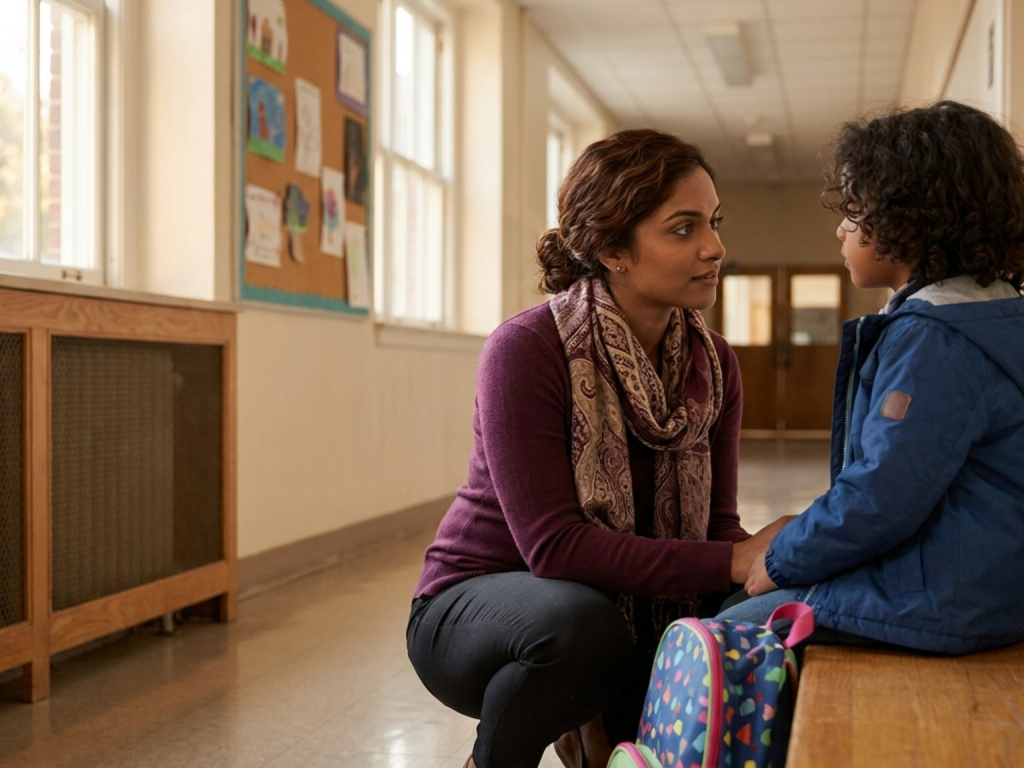
Intro
Stress in children can be easy to miss because it often looks different from adult stress. A child may not say, “I feel overwhelmed.” Instead, stress may appear as stomachaches, sleep disruption, irritability, clinginess, avoidance, anger, or a sudden loss of interest in activities they usually enjoy.
Highlights
Childhood stress can show up through emotional, behavioral, physical, cognitive, and social changes rather than direct verbal complaints.
Common signs include irritability, anger, difficulty sleeping, changes in appetite, withdrawal, headaches, stomachaches, worry, fear, and sadness.
A pattern, persistence, functional impairment, or sudden change from the child’s baseline is more concerning than one isolated symptom.
Supportive routines, calm connection, choices, physical activity, and breathing strategies may help, but persistent or severe symptoms deserve professional evaluation.
Why stress signs in children can be hard to recognize
Children experience stress through the same broad biological pathways as adults, including activation of the sympathetic nervous system and the hypothalamic-pituitary-adrenal axis. In plain terms, the body prepares for threat: heart rate may rise, muscles tense, breathing changes, and attention narrows toward perceived danger. The difference is that children have less language, less life experience, and less mature executive function to interpret and communicate what is happening internally.
For this reason, a stressed child may look oppositional, distracted, tired, needy, angry, or “not themselves.” Younger children may regress to earlier behaviors, such as wanting help with tasks they previously managed. School-age children may complain of recurrent abdominal pain, headaches, or nausea, especially before school or a feared activity. Adolescents may become irritable, isolated, perfectionistic, or unusually risk-taking.
It is helpful to think in terms of baseline. A single tantrum, restless night, or stomachache does not necessarily mean a child is under clinically significant stress. More informative clues include a clear change from the child’s usual pattern, symptoms that last for days to weeks, signs that occur across settings, or stress that interferes with sleep, eating, relationships, learning, or play.
Emotional signs: worry, sadness, fear, and irritability
Emotional changes are often the earliest stress signals. A child may seem more tearful, easily frustrated, fearful, or emotionally reactive than usual. Some children become clingy and seek repeated reassurance. Others become irritable, argumentative, or quick to anger. These reactions are not always intentional misbehavior; they may reflect a nervous system that is already overloaded.
Research in primary school children has found that many children report stress symptoms such as worry, fear, sadness, tachycardia, and chills. This matters because children may experience a cluster of internal sensations long before adults notice outward signs. A child who says “I don’t know” when asked what is wrong may genuinely lack the vocabulary to connect a racing heart, tense stomach, or intrusive worries with stress.
Common emotional signs include:
- Frequent crying, fussiness, or emotional outbursts that are unusual for the child.
- New or intensified fears, including fear of separation, illness, school, bedtime, or being alone.
- Excessive worry about performance, safety, family conflict, money, friendships, or world events.
- Sadness, low motivation, or loss of enjoyment in play, hobbies, sports, or social activities.
- Irritability, anger, or a “short fuse,” especially during transitions or after school.
Caregivers can respond by naming the feeling without judgment: “Your body seems really worried right now,” or “This transition feels hard today.” This kind of language helps children build emotional literacy and reduces the shame that can make stress harder to discuss.
Behavioral signs: withdrawal, defiance, regression, and avoidance
Stress frequently appears through behavior because behavior is a child’s most accessible communication tool. A previously cooperative child may begin refusing schoolwork, melting down at bedtime, avoiding activities, or resisting ordinary requests. In younger children, Defiance in preschool children may be a stress signal, particularly when it appears suddenly, occurs with sleep or appetite changes, or follows a major life event.
Withdrawal is another important sign. A stressed child may stop wanting to play with friends, avoid sports or clubs, spend more time alone, or lose interest in family routines. Some children become quiet and compliant in a way that seems “good” on the surface but represents emotional shutdown. Others externalize stress with yelling, aggression, impulsivity, or persistent noncompliance in childhood.
Regression can also occur. A toilet-trained child may have accidents. A child who slept independently may want to sleep with a caregiver again. A child may use baby talk, become unusually dependent, or need extra help with dressing, eating, or separating. Regression is not manipulation; it often reflects a temporary retreat to behaviors that once felt safer.
Avoidance deserves special attention. Avoiding school, homework, social events, medical appointments, or specific places may temporarily reduce distress, but it can reinforce anxiety over time. If avoidance becomes persistent, caregivers may need support from a pediatrician, school counselor, or mental health professional to understand whether stress, bullying, learning difficulties, trauma, anxiety, or another factor is contributing.
Physical signs: the body may speak before the child can
Stress is not “just emotional.” It has measurable physiological effects, and children commonly describe stress through body symptoms. Headaches, stomachaches, nausea, chest tightness, rapid heartbeat, chills, fatigue, muscle tension, and changes in appetite can all occur with stress. These symptoms are real to the child, even when no dangerous medical condition is found.
Because physical complaints can also reflect infections, gastrointestinal disorders, migraine, asthma, endocrine conditions, anemia, medication effects, or other medical issues, caregivers should avoid assuming that every symptom is stress. A pediatric evaluation is particularly important if symptoms are new, severe, recurrent, worsening, associated with weight loss or fever, waking the child at night, or limiting daily activities.
Stress-related physical symptoms often follow patterns. A child may have abdominal pain before school but feel better on weekends. Headaches may appear before tests or after conflict. Appetite may decrease during periods of uncertainty or increase as a self-soothing behavior. Some children become restless and hypervigilant; others look exhausted and low-energy.
Caregivers can help by taking the symptom seriously while also exploring context: “Your stomach hurts, and I believe you. Let’s rest for a moment and also think about what was happening right before it started.” This approach avoids dismissing the child while gently linking body sensations with emotions and events.
Sleep, appetite, and daily routine changes
Sleep is highly sensitive to stress. Children may have difficulty falling asleep, wake frequently, have nightmares, resist bedtime, or seek repeated reassurance at night. Some become overtired and more impulsive the next day, which can create a cycle of stress, poor sleep, and worsening emotional regulation.
Appetite may also change. Some children eat less because their sympathetic nervous system suppresses hunger. Others snack more often, seek sugary foods, or use eating as comfort. In young children, stress may appear as fussiness around meals, new picky eating, or complaints of nausea. Significant or persistent changes in weight, hydration, or eating patterns should be discussed with a healthcare professional.
Daily routines often reveal stress before direct conversation does. A child may struggle more with morning transitions, homework, bathing, bedtime, or separation at childcare. Visual routines for difficult transitions can reduce uncertainty for some children because predictability lowers cognitive load. Consistent wake times, meals, movement, and bedtime rituals may support nervous system regulation.
Routines should be firm but compassionate. A stressed child usually benefits from knowing what will happen next, having a small number of choices, and receiving calm follow-through for children rather than repeated lectures. For example, “You can put pajamas on before or after brushing teeth” gives a sense of agency while keeping the necessary routine intact.
School, attention, and social signs
Stress can affect attention, memory, processing speed, and motivation. A child may appear distracted, forgetful, careless, or oppositional when the underlying issue is cognitive overload. Stress can make it harder to encode new information, retrieve learned material, tolerate frustration, or persist with challenging tasks. This can be mistaken for laziness or lack of effort.
School-related signs include declining grades, incomplete assignments, test anxiety, frequent nurse visits, refusal to attend school, or increased conflict with teachers or peers. School-age behavior problems may intensify when children are stressed, especially if they are also dealing with learning disorders, bullying, sensory processing differences, family disruption, or social exclusion.
Socially, a stressed child may become more withdrawn, more controlling in play, more easily hurt by peer comments, or more likely to argue. Some children become perfectionistic and distressed by small mistakes. Others stop trying because tasks feel impossible. In either case, the behavior may be a coping attempt rather than a character flaw.
When school concerns emerge, caregivers can ask for observations rather than conclusions: What time of day is hardest? Which tasks trigger distress? Does the child do better with structure, movement breaks, smaller assignments, or reduced noise? If concerns persist, the family may consider developmental surveillance and screening, educational assessment, or mental health consultation, depending on the pattern.
Common stress triggers in childhood
Children can be stressed by events adults recognize as major, such as family illness, divorce, moving, financial strain, bereavement, community violence, or hospitalization. They can also be stressed by events adults may underestimate: a new classroom, a substitute teacher, a friendship rupture, a loud environment, a difficult sports practice, or overheard adult conflict.
Developmental stage matters. Toddlers and preschoolers often experience stress through separation, disrupted routines, sensory overload, and changes in caregiving. School-age children may worry about grades, rules, fairness, peer acceptance, and family safety. Older children may feel pressure from academics, social comparison, identity concerns, online interactions, and future expectations.
Temperament also influences expression. A cautious child may become avoidant and clingy. A highly active child may become impulsive or aggressive. A sensitive child may show stomachaches or sleep disturbance. A socially motivated child may become distressed by peer conflict. None of these patterns automatically indicates a psychiatric disorder, but they can point to areas where support is needed.
Caregivers do not need to eliminate every stressor. Some manageable stress, with supportive adults present, helps children build coping capacity. The goal is to reduce overwhelming, chronic, or unpredictable stress and increase the child’s sense of safety, competence, and connection.
How caregivers can respond supportively
The first step is observation. Track what changed, when it started, where it happens, and what seems to help. A simple log of sleep, appetite, school attendance, physical complaints, emotional outbursts, and major events can clarify patterns and support a more productive conversation with professionals.
Second, create predictable routines. Regular sleep, meals, physical activity, play, and screen boundaries provide a stabilizing scaffold. Family physical activities, such as walking, biking, dancing, or playing outside, can reduce physiological arousal and improve mood. Breathing exercises can also help: slow breathing with a longer exhale may signal safety to the nervous system.
Third, offer limited choices. Stress often includes a feeling of powerlessness. Choices such as “Do you want to start homework at the kitchen table or desk?” or “Would you like to talk now or after snack?” can restore agency without removing needed expectations.
Fourth, use connection before correction. A child in a stress response may not process reasoning well. Calm presence, a brief validating statement, and reduced verbal intensity often work better than long explanations. Once the child is regulated, caregivers can problem-solve: What was hard? What can we try next time? Who can help?
Finally, seek help when symptoms persist, intensify, or impair functioning. A pediatrician can assess medical contributors and guide referrals. A mental health clinician can evaluate anxiety, depression, trauma-related stress, adjustment difficulties, or family stressors. School counselors and teachers can help identify academic or peer triggers. Asking for help is not a sign of failure; it is a protective step.
When to seek urgent help
- Seek immediate help if a child talks about wanting to die, self-harm, or feeling unsafe.
- Contact a healthcare professional promptly for severe, worsening, or persistent physical symptoms.
- Ask for support if stress is causing school refusal, major sleep disruption, weight change, or social withdrawal.
- Take bullying, abuse concerns, trauma exposure, or sudden personality change seriously.
- If there is immediate danger, use local emergency services or a crisis line.
Tools & Assistance
- Symptom and routine log to track sleep, appetite, school patterns, and triggers
- Pediatrician visit for medical assessment and referral guidance
- School counselor or teacher meeting to review academic and peer stressors
- Child and adolescent mental health professional for persistent distress or impairment
- Family routines that include predictable sleep, movement, calm transitions, and shared downtime
FAQ
Can stress cause real stomachaches or headaches in children?
Yes. Stress can activate autonomic and muscle-tension pathways that contribute to pain or nausea. However, recurrent or severe symptoms should be medically evaluated.
Is irritability a sign of stress in children?
It can be. Children often express overwhelm as anger, defiance, or a short fuse, especially when they lack words for worry or fear.
How long should I watch symptoms before seeking help?
If symptoms are mild and linked to a clear temporary stressor, supportive routines may help. Seek professional advice sooner if symptoms are severe, persistent, worsening, or affecting daily functioning.
Should I let my child avoid stressful situations?
Temporary relief may be appropriate when a child is overwhelmed, but persistent avoidance can maintain anxiety. A professional can help plan gradual, safe coping steps.
Can young children understand stress?
They may not understand the word fully, but they can learn simple body-emotion language such as “worried body,” “tight tummy,” or “big feelings.”
Sources
- Mayo Clinic Health System — Stressed out kids? Signs and strategies
- PubMed Central, National Institutes of Health — Investigation of Stress Symptoms among Primary School Children
- Michigan State University Extension — Stress in young children
Disclaimer
This article is for informational purposes only and does not diagnose or treat any condition. Consult a qualified healthcare professional for concerns about a child’s physical or mental health.
















Please log in to leave a comment.