
Intro
A pediatrician appointment can feel like a lot to manage, especially in the newborn months when you may be tired, recovering, learning your baby’s cues, and trying to remember every question that occurred to you at 3 a.m. A little preparation can make the visit calmer and more clinically useful. The goal is not to pack perfectly; it is to bring the information and everyday supplies that help the pediatrician understand your baby’s health, growth, feeding, development, and family context.
Whether it is your baby’s first visit, a routine well-child check, a vaccine appointment, or a visit for a specific concern, think in three categories: documents, baby-care supplies, and observations. Pediatric visits are also a chance to raise your top concerns early, so they do not get lost in the pace of measuring weight, reviewing immunizations, and checking developmental milestones.
Highlights
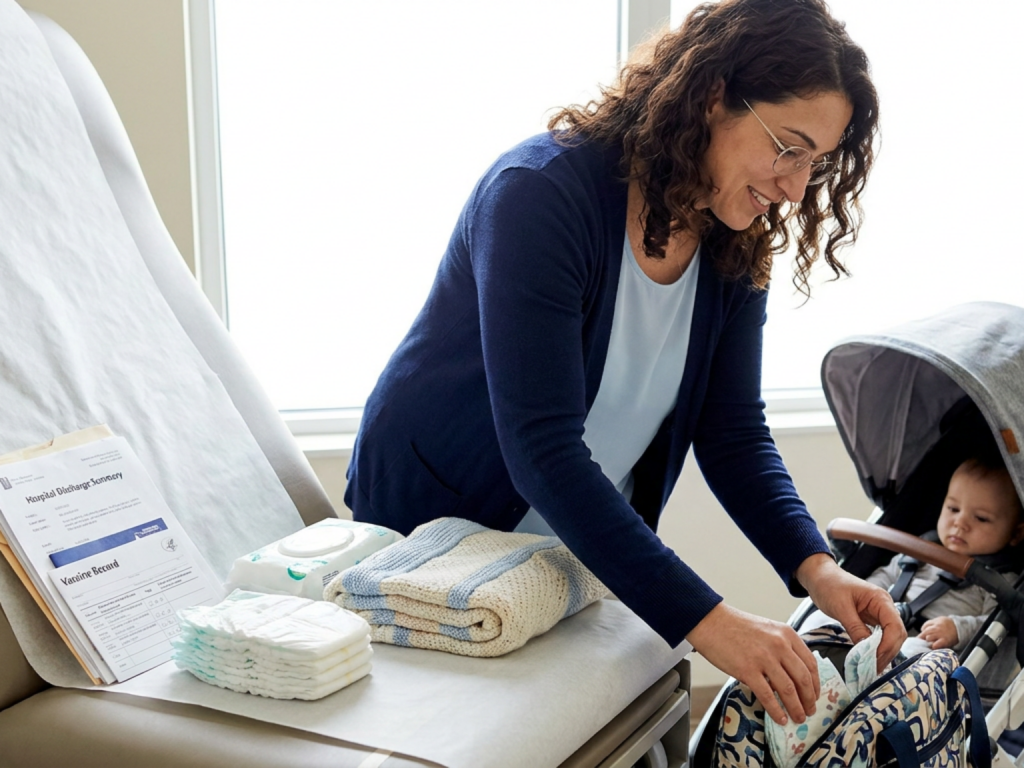
Bring identification, insurance information, medical records, vaccine records, and any newborn screening or hospital discharge paperwork that may not already be in the clinic’s system.
Write down your top three to five questions before the visit and mention them near the beginning of the appointment so the pediatrician can prioritize the discussion.
Pack practical baby supplies such as diapers, wipes, a change of clothes, feeding items, and a comfort object to make waiting, undressing, and feeding easier.
Track recent symptoms, feeding patterns, urine and stool output, sleep, medications, and caregiver observations; these details often guide next steps more than a single snapshot in the exam room.
For urgent symptoms such as breathing difficulty, dehydration, persistent vomiting, or fever in a very young infant, contact a pediatric clinician promptly rather than waiting for a routine appointment.
Start with the documents the clinic may need
Even if your pediatrician’s office uses an electronic health record, it is wise to bring a small set of documents, especially for a first appointment, a recent move, a hospital follow-up, or a visit with a new clinician. Administrative delays can shorten the time available for your questions, so having these items ready can reduce stress.
- Insurance card and photo identification: Bring the baby’s insurance card if available, along with a parent or guardian photo ID. If insurance is still being processed, bring any temporary documentation or confirmation numbers.
- Hospital discharge paperwork: For newborns, this may include birth weight, discharge weight, gestational age, bilirubin levels, feeding notes, hearing screen results, congenital heart disease screen results, and recommended follow-up.
- Newborn screening results: If you received results or a pending notice, bring it. Some results may be sent directly to the pediatrician, but it is helpful to have your copy.
- Immunization records: Bring vaccine records, including any hepatitis B vaccine given in the hospital and vaccines received at another clinic or public health site.
- Previous medical records: If your baby has seen another clinician, specialist, lactation consultant, emergency department, or urgent care, bring visit summaries, test results, medication lists, and follow-up recommendations.
- Custody, guardianship, or consent forms if relevant: If someone other than a legal guardian is bringing the baby, ask the clinic in advance what authorization is needed.
If you do not have a document, do not cancel the visit automatically. Call the office and ask what is essential, what can be faxed or uploaded later, and whether records can be requested directly.
Pack the everyday baby-care supplies
Pediatric appointments often involve waiting, undressing the baby for accurate measurements, feeding, and sometimes vaccines or lab work. A well-stocked diaper bag keeps the focus on your baby rather than on scrambling for basics.
- Diapers and wipes: Pack more than you think you will need. Babies have excellent timing, and weight checks sometimes require a clean diaper.
- Changing pad and disposal bags: These are useful if the exam room or restroom setup is limited.
- Change of clothes for the baby: Spit-up, stool leaks, or post-vaccine fussiness can make a backup outfit very helpful.
- Burp cloth or small blanket: This can help with feeding, warmth after undressing, and comfort during the exam.
- Feeding supplies: Bring bottles, formula, expressed breast milk in an appropriate cooler if needed, nipple shields, a nursing cover if you prefer one, or any special feeding equipment your baby uses.
- Pacifier or comfort object: A familiar item can help soothe your baby during measurements, examination, or vaccines.
- Extra shirt for the caregiver: Optional, but useful for young infants with reflux, spit-up, or diaper blowouts.
Try not to overpack to the point that finding items becomes difficult. A small pouch for medical papers and a separate pouch for diapering supplies can make the visit smoother.
Bring a concise health snapshot
Your observations are clinically valuable. Babies cannot describe pain, nausea, fatigue, dizziness, or respiratory discomfort, so clinicians rely heavily on patterns reported by caregivers. Before the visit, jot down a brief health snapshot rather than trying to remember everything while your baby is crying or being weighed.
- Feeding pattern: Note breastfeeding frequency, bottle volumes, formula preparation, latch concerns, feeding duration, coughing or choking during feeds, and any major changes in appetite.
- Hydration and output: Track approximate wet diapers, stool frequency, stool consistency, and any signs of dehydration such as markedly fewer wet diapers, very dry mouth, or unusual lethargy.
- Sleep and behavior: Mention changes in sleep duration, consolability, alertness, crying pattern, or excessive sleepiness.
- Temperature and symptoms: If your baby has been ill, record temperatures, how they were taken, symptom timing, vomiting, diarrhea, cough, congestion, rash, or breathing difficulty in infants.
- Medications and supplements: Bring a list of all medicines, vitamins, drops, ointments, and over-the-counter products, including dose and frequency. Do not start, stop, or change medication dosing without clinician guidance.
- Allergies or reactions: Note any suspected medication reactions, formula reactions, vaccine reactions, or skin changes after exposures.
If several caregivers look after the baby, ask them for observations before the appointment. A grandparent, babysitter, or co-parent may have noticed feeding fatigue, unusual stools, or developmental patterns that you have not seen. Sharing information from other caregivers can help the pediatrician see the full picture.
Prepare your top questions before the visit
It is common to arrive with many concerns and leave realizing one important question was never asked. Pediatric expert guidance encourages parents to bring their top three to five questions or concerns and raise them at the start of the appointment. This helps the clinician plan the visit and address what matters most to your family.
Useful questions might include feeding adequacy, weight gain, reflux-like symptoms, stool patterns, safe sleep, crying, skin rashes, vaccines, travel, daycare exposure, or developmental milestone concerns. For example, you might ask, “Is this feeding pattern typical for my baby’s age?” or “What changes would make you want us to call sooner?” If your concern is time-sensitive, say so early.
A good structure is: what you noticed, when it started, how often it happens, what makes it better or worse, and what worries you most. For example: “Over the past four days, she has taken smaller bottles, has fewer wet diapers, and seems sleepier than usual. I am worried about infant feeding and hydration concerns.” This gives the pediatrician a focused clinical starting point.
If you are wondering When to talk to pediatrician between scheduled visits, ask the office how to use the patient portal, nurse line, same-day appointments, and the after-hours pediatric triage line. Knowing the pathway in advance can reduce anxiety when symptoms appear at night or on a weekend.
What to bring for the first pediatrician appointment
The first newborn visit is often scheduled within days of hospital discharge, although timing depends on the baby’s clinical situation and the hospital’s instructions. This visit commonly focuses on weight, feeding, jaundice risk, hydration, stool and urine output, safety, family adjustment, and follow-up needs.
For this first visit, prioritize hospital discharge papers, newborn screening information if available, bilirubin or jaundice follow-up instructions, hearing and heart screening results, maternal pregnancy or delivery details that affect infant care, and any lactation or feeding plan. If your baby was born preterm, had a neonatal intensive care unit stay, required phototherapy, had low blood sugar, received antibiotics, or had a specialist referral, bring those summaries.
Also bring feeding supplies even if you expect the appointment to be brief. Newborns often need to feed during the visit, and the pediatrician may want to observe breastfeeding, bottle technique, latch, suck-swallow-breathe coordination, or signs of fatigue. If you are pumping, formula-feeding, combination-feeding, or using donor milk, bring enough detail to explain the plan without feeling judged. The purpose is to support your baby’s growth and your family’s wellbeing, not to grade your parenting.
What to bring for vaccines, sick visits, and follow-ups
For vaccine visits, bring your immunization record and be ready to discuss prior vaccine reactions, current illness symptoms, medications, and any history of immune problems if applicable. Your pediatrician can tell you whether a mild illness affects the vaccine plan; do not assume on your own that vaccines must be delayed or given if your baby is unwell.
For sick visits, bring a timeline. A clear timeline may include the first day of fever, maximum temperature, route of measurement, number of vomiting or diarrhea episodes, wet diaper count, breathing symptoms, exposures at daycare or home, and any treatments already used. If there is a rash, photos from earlier stages can be useful because rashes often change by the time you arrive.
For follow-up appointments, bring the previous plan and what happened afterward. Did symptoms improve, worsen, or change? Were medications tolerated? Were referrals scheduled? Were lab or imaging results received? If the visit involves pediatric developmental screening, bring daycare notes, therapy reports, videos of concerning movements or behaviors, and examples of communication, play, or motor skills. Short videos can be helpful, but ask the clinician before showing them and avoid recording in clinical areas without permission.
Use the appointment to discuss context, not just symptoms
Pediatric care is not only a physical exam. Your baby’s health is influenced by feeding support, sleep environment, family stress, caregiver mental health, housing, transportation, smoke exposure, childcare, and access to supplies. If something is making care harder, it is appropriate to tell the pediatrician. Many clinics can connect families with lactation support, social work, home visiting programs, early intervention, vaccine clinics, or community resources.
Bring notes about recent changes in your baby’s life: new daycare, travel, visitors with respiratory illness, a caregiver returning to work, a change in formula, a new medication, a family move, or changes in sleep location. These details can matter when interpreting feeding changes, infections, rashes, crying, or sleep disruption.
It is also acceptable to bring emotional concerns. If you feel overwhelmed, frightened by your baby’s symptoms, or unsure whether your instincts are reliable, say that plainly. Pediatricians are used to supporting families through uncertainty. You do not need to present your concern perfectly to deserve help.
Do not wait for a routine visit if these occur
- Fever in a young baby, especially under 3 months, should be discussed promptly with a pediatric clinician.
- Breathing difficulty in infants, bluish color, pauses in breathing, or severe chest retractions needs urgent medical guidance.
- Persistent vomiting or diarrhea with fewer wet diapers, dry mouth, or unusual sleepiness may indicate dehydration risk.
- Poor feeding, extreme lethargy, inconsolable crying, or a sudden change in responsiveness should not wait for a scheduled checkup.
- Any symptom that feels rapidly worsening or unsafe warrants calling the pediatric office, an after-hours line, or emergency services as appropriate.
Tools & Assistance
- Create a one-page visit note with feeding, diapers, sleep, symptoms, medications, and top questions.
- Keep a folder or phone album for discharge papers, vaccine records, newborn screening information, and specialist summaries.
- Use the clinic patient portal to upload records or ask what forms are needed before the appointment.
- Set a reminder to ask about after-hours contact options, nurse triage, and urgent same-day visit procedures.
- Bring short symptom videos or photos when relevant, while respecting clinic privacy rules.
FAQ
Should I bring my baby’s vaccine record if the clinic already has it?
Yes, if you have a copy. Electronic records are helpful but may be incomplete when vaccines were given in a hospital, public health clinic, another state, or another health system.
How many questions should I prepare for a pediatrician appointment?
Aim for your top three to five questions. You can bring a longer list, but naming the most important concerns at the start helps the clinician prioritize the visit.
What if I forget an important document?
Tell the office what is missing and ask whether it can be uploaded, faxed, or requested later. Do not withhold important health information just because you do not have the paperwork.
Can I feed my baby during the appointment?
Usually yes. Feeding during a pediatric visit is common, and it may even help the clinician assess feeding technique or soothe the baby. Bring the supplies your baby normally uses.
Should I bring another adult with me?
If possible and helpful, yes. Another adult can hold the baby, take notes, remember questions, or help with siblings. If that is not possible, a written checklist can provide similar support.
Sources
- Office of Disease Prevention and Health Promotion — Make the Most of Your Baby's Visit to the Doctor (Ages 0 to 11 Months)
- HealthyChildren.org / American Academy of Pediatrics — AAP Schedule of Well-Child Care Visits
- Norton Children's — Checklist: What to Bring to Your Baby's First Pediatrician Appointment
Disclaimer
This article is for informational purposes only and is not a substitute for medical advice, diagnosis, or treatment. Always consult your baby’s pediatrician or seek urgent care when symptoms are concerning or worsening.

















Please log in to leave a comment.