
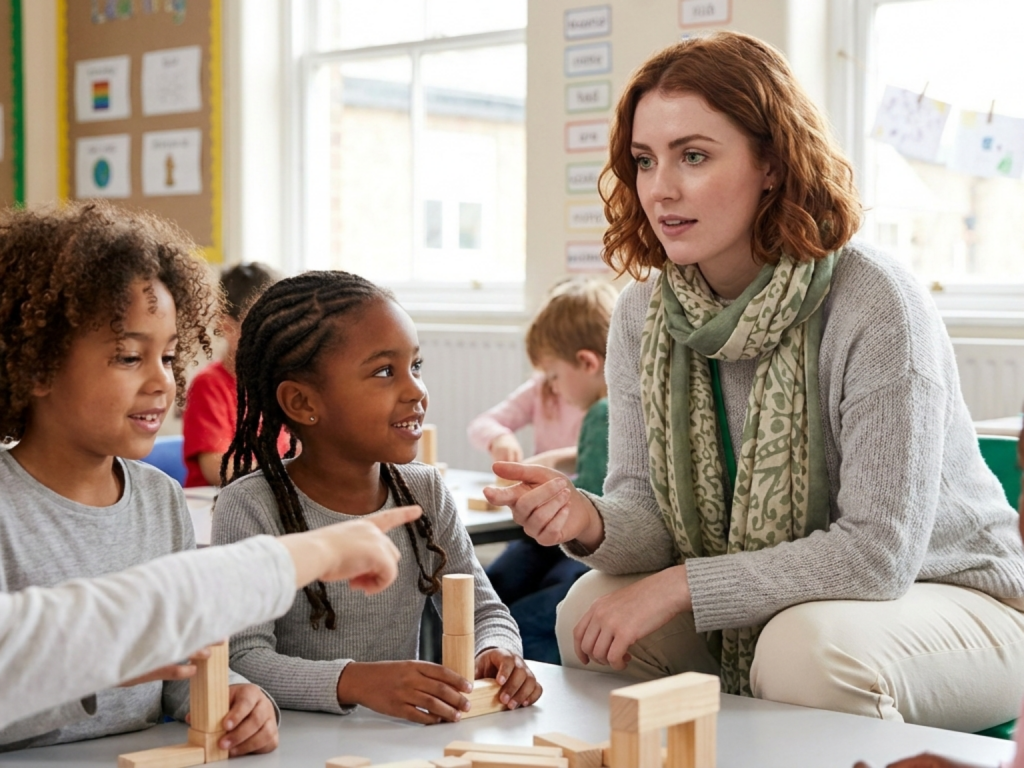
Intro
Friendship development in school-age children is a gradual, deeply human process. Children are learning how to join groups, share attention, manage disagreements, protect their self-esteem, and understand that other people have thoughts and feelings different from their own.
For families, friendship concerns can feel emotionally loaded: a child who is left out, repeatedly conflicts with peers, or says “nobody likes me” may stir worry and urgency. Most friendship struggles are not medical problems, but persistent social distress can overlap with anxiety, neurodevelopmental differences, bullying, sleep problems, learning difficulties, or family stress. Supportive observation and timely professional guidance can make a meaningful difference.
Highlights
Reciprocated friendships are especially important in middle childhood because they support peer belonging, self-worth, and school adjustment.
Friendship skills develop unevenly; a child may be academically capable yet still need help with perspective-taking, emotional regulation, and conflict repair.
Peer difficulties deserve attention when they are persistent, distressing, associated with bullying, or accompanied by mood, sleep, learning, or behavior changes.
Adults can help by coaching skills, creating safe opportunities for connection, and collaborating with teachers rather than trying to control every peer interaction.
How friendships change during school age
School age, broadly from about 6 to 12 years, is a period of rapid social-cognitive growth. Children move from mainly playing near or with whoever is available toward choosing friends based on shared interests, trust, humor, loyalty, and emotional safety. Early school-age friendships may form around proximity, toys, games, or classroom seating. By later middle childhood, children increasingly notice whether a friend keeps promises, takes their side, understands their feelings, and treats them fairly.
This development depends on perspective-taking, inhibitory control, language, memory, and emotion understanding. A child must hold several ideas at once: “I want to play this game,” “my friend wants something different,” and “we can negotiate without ending the friendship.” These skills are closely linked with emotional regulation in school-age children, because disappointment, jealousy, embarrassment, and anger are common in peer life.
Friendship also becomes more private and meaningful. Children may not tell adults every detail, yet still need adult scaffolding. A calm question such as “What happened before the argument?” often helps more than immediate advice. The goal is not to remove all social discomfort. Mild conflict can teach repair, flexibility, and empathy when children have enough support and safety.
Reciprocity, quality, and the need to belong
Research in middle childhood consistently distinguishes between simply naming peers and having a reciprocated friendship, where both children identify each other as friends. Reciprocated friendships appear particularly protective because they provide a reliable sense of being chosen. In one study of 314 children, friendship reciprocity was linked with peer identification and self-worth, and friendship quality fully mediated the relationship between reciprocity and peer identification. In practical terms, the quality of the relationship, not only the presence of a friend, mattered strongly.
High-quality friendship usually includes companionship, affection, help, validation, and manageable conflict. It is not the same as constant harmony. Two children may argue and still have a strong friendship if they can repair, apologize, and return to play without humiliation or fear. Conversely, a relationship that looks close may be stressful if it involves coercion, exclusion of others, threats to withdraw friendship, or repeated emotional control.
Belonging at school also influences learning. A child who feels socially unsafe may spend significant cognitive energy scanning for rejection rather than attending to instruction. This can intersect with School age learning 6 to 9 years, especially when academic tasks already require working memory, language, and sustained attention. Supporting friendships is therefore not separate from supporting education; it is part of the child’s developmental environment.
Behavior, temperament, and peer patterns
Friendship patterns are shaped by behavior and temperament, but behavior should be interpreted with care. Some children are exuberant, impulsive, and intensely social. Others are cautious, observant, or content with one close friend. Solitude is not automatically a problem; distress, avoidance driven by fear, or repeated rejection is more concerning than a quiet temperament.
Studies of young children show that friendship nominations, reciprocity, and homophily are linked with prosocial, aggressive, and solitary behaviors. Homophily means that children often befriend peers who are similar in behavior or interaction style. This can be positive when prosocial children reinforce kindness and cooperation. It can be difficult when impulsive or aggressive patterns escalate within a peer pair or group.
Adults can observe patterns without labeling the child. Useful questions include: Does the child know how to enter play? Can they tolerate losing? Do they dominate games? Do they misread teasing, sarcasm, or facial expressions? Are they frequently the target of exclusion? Do conflicts occur only with one peer, or across settings?
Perspective-taking is a common bottleneck at school entry. A child may genuinely not understand why grabbing a ball, changing rules mid-game, or announcing “you can’t play” damages trust. Brief, concrete coaching works best: name the behavior, name the likely feeling in the other child, and practice an alternative phrase. This approach also supports child emotional literacy without shaming the child.
Common friendship challenges families see
Many school-age friendship difficulties are developmentally common. Children may feel devastated after not being invited to a birthday party, argue over best-friend status, or struggle when classroom groups change. These moments are painful, but they can become opportunities to build resilience and social problem-solving.
Common challenges include:
- Entry problems: the child wants to join but interrupts, grabs materials, or hovers silently without knowing what to say.
- Conflict cycles: the same disagreement repeats because children cannot negotiate rules, turns, or leadership.
- Exclusion and relational aggression: peers use secrets, threats, rumors, or “you can’t be our friend” statements to control belonging.
- One-sided friendships: the child invests heavily in a peer who is inconsistent, dismissive, or controlling.
- Social fatigue: the child manages school interactions all day and then melts down at home.
Parents often feel tempted to fix the situation immediately. Sometimes adult intervention is necessary, especially with bullying or safety concerns. At other times, children benefit from coached autonomy: brainstorming options, rehearsing words, and deciding what to try tomorrow. A useful script is, “You do not have to stay where you are being treated unkindly, and you can still act in a way you feel proud of.”
How parents can support friendship skills
Parents support friendship most effectively through a mixture of warmth, structure, and practice. Begin by listening before teaching. A child who feels embarrassed or rejected may need co-regulation for children: a calm adult presence that helps the nervous system settle before problem-solving begins. Once the child is calmer, ask what they wanted, what the other child may have wanted, and what choices are available next time.
Skill-building can be woven into daily life. Board games teach turn-taking and losing. Shared chores teach cooperation. Reading stories together builds perspective-taking: “What do you think that character felt when nobody listened?” Role-play can help children practice joining a game, declining a dare, apologizing, or telling a peer to stop.
It is also helpful to create friendship opportunities that match the child’s capacity. Some children do best with short, structured playdates involving a planned activity. Others thrive in clubs, sports, music, robotics, art, or community groups where shared interests reduce the pressure of open-ended conversation. For children who are easily overwhelmed, one peer at a time may be more successful than a large group.
Parents can model healthy relationships by apologizing, respecting boundaries, and speaking kindly about others. Children notice how adults handle disagreement. They also need reassurance that friendship is not a popularity contest. One safe, reciprocal friend can be more protective than broad social visibility.
School collaboration and when to seek help
Teachers often see peer dynamics that parents cannot observe. If concerns persist, request a calm conversation with the teacher or school counselor. Ask for specific observations: who the child plays with, when conflict occurs, whether the child is included in group work, and whether there are signs of bullying. Schools can often support children through seating plans, buddy systems, social skills groups, supervised playground strategies, and clear anti-bullying procedures.
Medical and mental health consultation may be appropriate when friendship difficulties are persistent, intense, or associated with broader functional impairment. Consider speaking with a pediatrician, child psychologist, developmental-behavioral clinician, or school-based professional if social struggles occur alongside marked anxiety, low mood, irritability, sleep disruption, appetite change, school refusal, developmental regression, aggressive behavior, or concerns about attention, language, autism spectrum traits, trauma, or learning disorders. This is not about “diagnosing” a friendship problem; it is about understanding the child’s whole developmental and health context.
Basic health foundations matter. Restorative sleep in school-age children supports impulse control, frustration tolerance, and social learning. Hearing, vision, language, and learning difficulties can also affect peer interactions. A child who misses instructions, cannot follow fast-moving games, or feels academically exposed may appear oppositional or withdrawn when the underlying issue is different.
As children approach adolescence, peer relationships become more complex, private, and identity-related. Families who understand Social development teens are often better prepared for this transition. The school-age years are the foundation: a time to teach kindness, boundaries, repair, and the belief that every child deserves relationships that feel safe and mutual.
When friendship concerns need urgent attention
- Seek immediate help if a child talks about self-harm, not wanting to live, or feeling unsafe.
- Take bullying, threats, coercion, or physical aggression seriously and involve the school promptly.
- Consult a healthcare professional if peer distress is accompanied by persistent low mood, anxiety, sleep disruption, or school refusal.
- Do not assume a quiet child is fine if they seem isolated, fearful, or suddenly changed from their usual self.
- If there are concerns about abuse, exploitation, or online grooming, contact appropriate safeguarding services immediately.
Tools & Assistance
- Keep a brief pattern log of friendship concerns, including setting, peers involved, triggers, and recovery.
- Ask the teacher or school counselor for specific playground and classroom observations.
- Practice short scripts for joining play, setting boundaries, apologizing, and repairing conflict.
- Arrange structured, time-limited social opportunities around shared interests.
- Discuss persistent concerns with a pediatrician or qualified child mental health professional.
FAQ
How many friends should a school-age child have?
There is no required number. One reciprocal, supportive friendship can be very meaningful. Concern rises when a child is distressed, persistently excluded, bullied, or unable to maintain any comfortable peer contact.
Should parents intervene in every friendship conflict?
Not usually. Mild conflicts can build problem-solving skills. Intervene when there is bullying, safety risk, repeated humiliation, major power imbalance, or the child lacks the skills to cope.
Is it a problem if my child prefers playing alone?
Not necessarily. Some children enjoy solitude and still function well socially. It becomes more concerning if solitude reflects fear, sadness, rejection, developmental difficulties, or a sudden change.
Can friendship problems affect school performance?
Yes. Social stress can reduce attention, motivation, and confidence. Learning difficulties can also contribute to peer problems, so persistent concerns deserve a broad developmental view.
When should I seek professional advice?
Seek advice if friendship distress is persistent, worsening, linked with bullying, or accompanied by mood, anxiety, sleep, behavior, developmental, or learning concerns.
Sources
- National Center for Biotechnology Information / PubMed Central — Friendships in middle childhood: Links to peer and school outcomes
- Taylor & Francis Online — Friendships among young children: links with social behaviour
- British Psychological Society — Children's friendships
Disclaimer
This article is for general educational purposes and is not a diagnosis or treatment plan. Consult a qualified healthcare, mental health, or educational professional for concerns about a child’s wellbeing or safety.
















Please log in to leave a comment.