
Intro
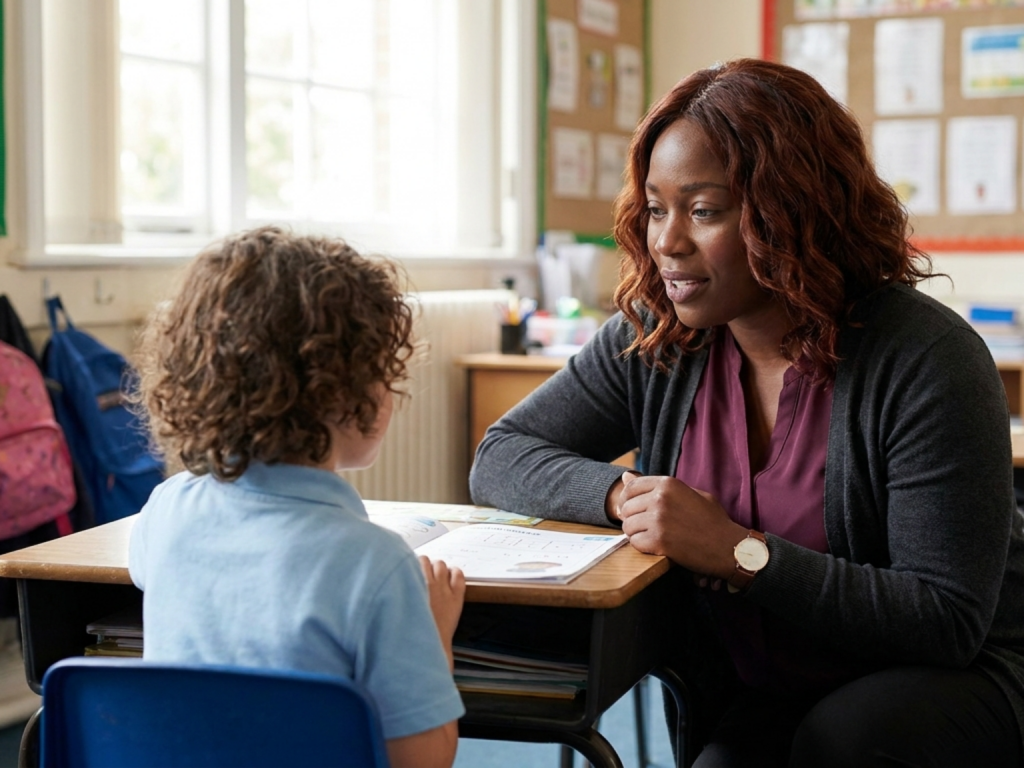
School adjustment is more than “settling in.” It refers to how a child manages the academic, social, emotional, and behavioral demands of school over time. A child can be bright and still struggle with adjustment if the classroom feels socially unsafe, the routine is unpredictable, or the developmental expectations are mismatched.
Because school demands change with age, adjustment also changes. A preschooler may need help separating from a caregiver and sharing materials; an adolescent may need supportive teachers, peer belonging, and enough resilience to manage complex academic pressure. Understanding these age-linked patterns can help families respond with empathy rather than blame.
Highlights
School adjustment includes academic progress, peer and teacher relationships, emotional wellbeing, behavior, and a child’s sense of belonging.
Age matters because each school stage asks for different developmental skills, from separation tolerance in early childhood to identity and autonomy in adolescence.
Young children often depend heavily on routines, peer relationships, cognitive readiness, and executive function skills such as inhibition and flexible attention.
For adolescents, teacher and peer support are especially important because they influence emotional engagement, resilience, and integration at school.
Persistent distress, loss of functioning, bullying, or safety concerns should prompt consultation with school staff and healthcare professionals.
What school adjustment means
School adjustment is a multidimensional developmental outcome. It includes expected academic functioning, interpersonal adaptation, classroom behavior, emotional engagement, self-esteem, and the absence of significant internalizing problems such as persistent depressive symptoms. In practice, it asks: Can the child participate, learn, relate, recover from stress, and feel that school is a place where they can function?
This matters because a child’s adjustment is not determined by one trait. Temperament, neurodevelopment, language, sleep, family stress, peer climate, teacher practices, and school structure all interact. A child who is socially confident may struggle academically after a curriculum jump. Another child may complete work well but feel chronically excluded or anxious.
School adjustment is also a process, not a single event. It is tested most strongly during school transitions in children: home to preschool or kindergarten, kindergarten to elementary school, elementary to secondary or middle school, and then into high school. Each transition changes the child’s ecological context, including adult expectations, peer groups, daily schedule, autonomy, and academic load.
Parents and clinicians should avoid framing adjustment as a moral issue. Difficulty adapting is not laziness or “bad attitude” by default. It is often a signal that the child’s current demands exceed their available coping skills, support, or developmental readiness.
Preschool and kindergarten: separation, routines, and early regulation
In the preschool and kindergarten years, school adjustment often centers on separation from caregivers, comfort with routines, communication, play, and basic self-regulation. Children are still developing inhibitory control, emotional labeling, flexible attention, and the ability to wait or shift from a preferred activity to a required one.
Research in young children has highlighted the role of peer relationships, cognitive ability, and executive function. In particular, “hot” executive function, the ability to regulate behavior in emotionally or motivationally charged situations, can add unique predictive value for school adjustment. This is different from simply knowing letters or numbers. A child may understand a classroom rule but find it very hard to follow that rule when excited, tired, embarrassed, or frustrated.
Typical early adjustment challenges may include crying at drop-off, clinging, toileting regressions, refusal to join group activities, difficulty sharing, or fatigue-related meltdowns after school. These can be developmentally common, especially in the first weeks. Many children improve when routines become predictable and adults respond calmly.
Helpful supports include consistent goodbye rituals, visual schedules, short teacher-caregiver communication, adequate sleep, and simple language about feelings. Caregivers can ask what the child’s day looks like rather than asking broad questions such as “Why are you upset?” Early school success is built through safety, repetition, and warm relationships, not pressure to perform adult-like self-control.
Early elementary school: learning habits and social confidence
In early elementary school, usually around ages 6 to 8, adjustment expands beyond joining the classroom. Children are expected to sit longer, follow multi-step directions, tolerate correction, develop literacy and numeracy skills, and manage more structured peer interaction. This is where how children learn by age becomes highly visible: cognitive growth, motor stamina, attention, and language comprehension all affect school participation.
Many children at this stage want to please adults and feel proud of competence. They may be sensitive to repeated failure or comparison. Academic struggles can quickly become emotional struggles if the child begins to believe, “I am bad at school.” Conversely, positive teacher feedback and achievable goals can strengthen self-efficacy.
Socially, early elementary children are learning friendship rules: taking turns, joining play, resolving conflict, and noticing others’ perspectives. Peer difficulties may appear as exclusion, bossiness, withdrawal, or frequent complaints of stomachaches before school. Somatic complaints can be a real expression of stress and should be taken seriously, especially if recurrent or impairing.
Caregivers can support adjustment by maintaining a predictable morning routine, reading with the child without turning every moment into a test, and staying curious about classroom dynamics. If learning concerns persist despite support, families can discuss vision, hearing, sleep, language, attention, and psychoeducational evaluation with appropriate professionals. The goal is not to label a child unnecessarily, but to identify supports early enough to prevent secondary shame.
Middle childhood: competence, peer comparison, and emotional regulation
From roughly ages 8 to 11, children become more aware of performance, fairness, group belonging, and peer comparison. School age emotional development includes improved perspective-taking, stronger rule understanding, and more nuanced emotions such as embarrassment, pride, guilt, and jealousy. These capacities can help adjustment, but they can also increase vulnerability to social stress.
Academic tasks now require more independent organization: remembering materials, planning projects, studying for assessments, and integrating information across subjects. Executive functions are still developing, so a child who forgets homework or loses papers may need scaffolding rather than criticism. Repeated negative feedback can create avoidance, irritability, or oppositional behavior that masks anxiety or low confidence.
Peer belonging is especially important. Children may worry about being “weird,” being left out, or not keeping up in sports, technology, or classroom status. Bullying, even when subtle, can rapidly disrupt attendance, sleep, appetite, mood, and concentration. Adults should avoid dismissing peer distress as “drama,” because social safety is a real component of school adjustment.
Support at this age often works best when it preserves dignity. Instead of taking over, caregivers can help the child build checklists, rehearse asking a teacher for help, and name feelings without over-pathologizing them. A weekly review of assignments, sleep, friendships, and extracurricular load can reveal whether the child is overextended or under-supported.
Preteens and the move to middle school
The transition into middle school or secondary school is a major developmental stress point. Students may move between classrooms, manage multiple teachers, handle lockers or digital platforms, and encounter a larger peer network. Even capable students can show preteen school adjustment stress when organizational demands suddenly outpace their skills.
Preteens are also entering puberty or approaching it. Hormonal changes, sleep phase shifts, body awareness, and heightened social sensitivity can influence mood and concentration. These changes do not mean every struggle is “just hormones,” but they do mean the body and brain are under increased developmental load.
At this stage, caregivers often need to balance monitoring with autonomy. Too little support may leave the child overwhelmed; too much control may trigger resistance or shame. Collaborative problem-solving is often more effective than lectures. For example, a caregiver might say, “Let’s look at which part of the morning is breaking down,” rather than, “You are always disorganized.”
Teachers can help by clarifying expectations, reducing unnecessary ambiguity, and identifying a trusted adult contact. For students with neurodevelopmental, medical, or mental health needs, planned transitions, written accommodations, and early communication can reduce avoidable distress. If school refusal, panic symptoms, marked withdrawal, or major functional decline emerges, families should seek timely guidance from healthcare and school professionals.
Adolescence: belonging, autonomy, and emotional engagement
Adolescents face a different adjustment task: integrating academic demands with identity development, peer relationships, autonomy, future planning, and emotional self-management. High school can bring increased workload, grading consequences, social hierarchy, extracurricular pressure, romantic relationships, and concerns about college, employment, or family responsibilities.
Research on adolescence emphasizes environmental support. Teacher support and peer support can predict school adjustment by influencing emotional engagement, resilience, positive affect, and integration problems. In simpler terms, adolescents are more likely to stay connected to school when they feel seen by adults, accepted by peers, and capable of recovering from setbacks.
Adolescent distress can look like irritability, procrastination, risk-taking, absenteeism, sleep disruption, academic decline, loss of interest, or conflict at home. It may not look like a younger child’s crying at drop-off. Because teenagers often protect their privacy, adults may need to notice patterns rather than rely only on direct disclosure.
Supportive responses respect autonomy while maintaining safety. Useful questions include, “Which class feels hardest to walk into?” “Who at school feels safe enough to ask for help?” and “Is this about workload, people, mood, or something else?” Adolescents benefit from adults who collaborate, validate, and set realistic limits. If there are concerns about depression, anxiety, self-harm, substance use, eating problems, trauma, or unsafe relationships, professional assessment is essential.
When adjustment concerns need extra attention
Some difficulty is expected during school transitions. However, intensity, duration, and functional impairment matter. A few difficult mornings after a holiday are different from weeks of refusal, panic, or major academic and social decline. Caregivers should track patterns: timing, triggers, physical symptoms, sleep, appetite, mood, peer events, and teacher observations.
Medical contributors should also be considered. Vision or hearing problems, chronic pain, asthma, migraines, gastrointestinal disorders, sleep disorders, medication effects, and developmental differences can all affect school functioning. Emotional and behavioral symptoms may be secondary to an unmet medical or learning need.
It can help to distinguish skill deficits from willful refusal. A child may “not listen” because auditory processing is difficult in a noisy classroom. A teenager may “not care” because depression has reduced motivation and concentration. A preteen may “act out” because peer humiliation has made the classroom feel threatening.
Practical next steps include meeting with the teacher, school counselor, pediatric clinician, or mental health professional; requesting appropriate educational evaluation when learning concerns persist; and creating a shared plan. A good plan is specific, measurable, and compassionate. It identifies what adults will change, what skills the child will practice, and how everyone will review progress without blame.
How caregivers can support adjustment at every age
Across ages, children adjust best when they experience school as predictable, relationally safe, and developmentally appropriate. Caregivers do not need to solve every problem immediately. Often, the most therapeutic first step is to listen accurately and reduce shame.
- Observe before concluding: Look for patterns in mornings, homework, peer contact, sleep, and after-school behavior.
- Use age-matched language: Younger children need concrete routines and feeling words; adolescents need privacy, respect, and collaborative planning.
- Protect sleep and recovery: Fatigue reduces attention, emotional regulation, and frustration tolerance at every age.
- Build one school connection: A trusted teacher, counselor, coach, or staff member can buffer stress.
- Address problems early: Academic, social, medical, and emotional concerns are easier to support before avoidance becomes entrenched.
School adjustment is not a race. Children often progress unevenly, especially during transitions or periods of family stress, illness, or developmental change. A supportive adult stance, “We will understand this together,” can reduce the child’s sense of isolation and open the door to effective help.
Seek help promptly if you notice
- Persistent school refusal, panic, or distress lasting more than a short transition period.
- Talk of self-harm, hopelessness, wanting to disappear, or feeling unsafe.
- Bullying, threats, assault, coercion, or sudden fear of specific people or places at school.
- Marked decline in sleep, appetite, hygiene, mood, grades, or social functioning.
- Frequent unexplained physical complaints that interfere with attendance or learning.
Tools & Assistance
- Schedule a structured meeting with the teacher or school counselor.
- Keep a brief log of attendance, sleep, symptoms, peer events, and homework stress.
- Ask a pediatrician or qualified clinician about medical, developmental, or mental health contributors.
- Request educational evaluation if learning or attention concerns persist.
- Create a written support plan with realistic goals and a review date.
FAQ
How long does school adjustment usually take?
Mild transition stress often improves within a few weeks, but the timeline varies by age, temperament, school fit, and life stress. Persistent impairment deserves professional support.
Is crying at school drop-off always a sign of a disorder?
No. Crying can be developmentally common in early childhood, especially during transitions. Concern rises when distress is intense, prolonged, worsening, or associated with major functional decline.
Can a child be academically successful but poorly adjusted?
Yes. Good grades do not rule out loneliness, anxiety, bullying, low self-esteem, or excessive stress. School adjustment includes emotional and interpersonal wellbeing.
What is the most important support for teenagers?
Adolescents often benefit strongly from supportive teachers and peers, along with autonomy-respecting adult guidance. Emotional engagement and belonging are central.
When should parents involve a healthcare professional?
Consult a clinician when distress is persistent, safety is a concern, physical symptoms interfere with school, or there are signs of anxiety, depression, trauma, neurodevelopmental difficulty, or learning problems.
Sources
- Cambridge University Press — Definition of School Adjustment (Chapter 4)
- Springer — School adjustment in adolescence explained by social support ...
- South African Journal of Education via SciELO — A study of school adjustment related variables of young children
Disclaimer
This article is for general educational purposes and does not diagnose or treat any condition. If you are concerned about a child’s school functioning, mental health, safety, or development, consult a qualified healthcare or school professional.
















Please log in to leave a comment.