
Intro
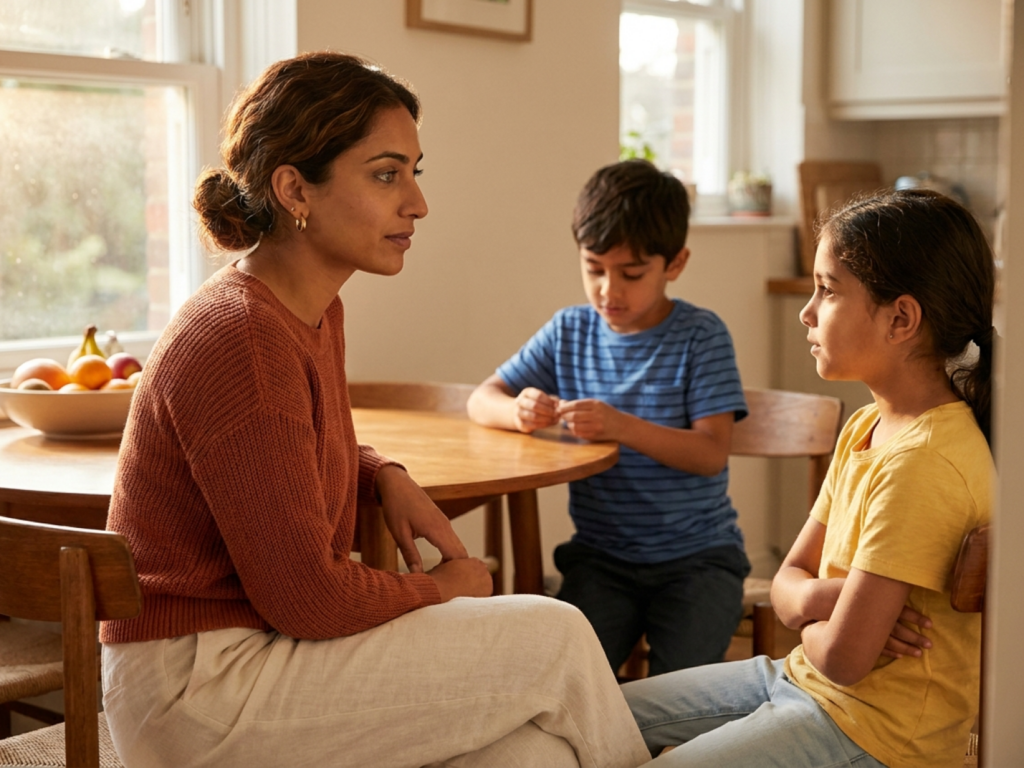
Children often hear apologizing as a social script: say sorry, get back to normal, move on. In real life, repair is more complicated. A child may understand that someone is sorry and still feel hurt, cautious, or unsure about trusting that person again.
Helping children accept an apology while keeping healthy boundaries means teaching two separate skills at the same time: noticing sincere repair and protecting their own safety, space, and feelings. That balance can support emotional regulation, consent, and healthy relationship habits without pressuring a child to forgive before they are ready.
Highlights
An apology and a boundary are not the same thing. A child can acknowledge remorse without reopening closeness right away.
Children are more responsive to genuine remorse than to forced words, especially when the same harm has happened before.
Healthy repair includes changed behavior, not only polite language.
Adults can validate hurt feelings, model calm responses, and still hold firm limits.
If a child seems fearful, withdrawn, or repeatedly harmed, outside professional support may be appropriate.
Why apology and boundaries are separate skills
One of the most helpful ideas to give children is that accepting an apology does not mean giving up their right to safety or comfort. A child can listen, notice the other person’s words, and still decide, ‘I need space right now.’ That is not rude; it is a normal boundary response.
Children benefit from understanding that repair has two parts: acknowledgement and change. Acknowledgement is the apology. Change is the behavior that follows. If a child is asked to act as though everything is fine before they feel ready, they may learn to ignore their own discomfort to keep the peace.
This distinction is especially important in body autonomy and consent. If someone has touched, crowded, grabbed, or otherwise crossed a line, the child does not owe immediate affection, a hug, or close contact simply because an apology was spoken. The child can be respectful and still protected.
How children judge whether an apology is real
Research suggests that children are not naive about apologies. They distinguish between willingly given remorse and forced expressions that are offered because an adult demanded them. They also respond differently when the same apology follows repeated harm, because repetition lowers trust.
What makes an apology feel credible to many children is not perfect language. It is ownership. The person names what they did, avoids excuses, shows they understand the impact, and makes a concrete plan to do differently next time. A short, sincere apology often lands better than a long speech full of explanations.
If the apology sounds coerced, children may sense that the speaker is trying to escape consequences rather than repair the relationship. In that case, a child may accept the words politely but still remain guarded. That guardedness is useful information, not misbehavior.
Adults can help by noticing the repair attempt without overstating it. Saying ‘I hear the apology’ is different from saying ‘Everything is fine now.’ Children learn from that difference.
What adults can say in the moment
When a child is upset, adults often feel pressure to end the tension quickly. But emotional safety usually improves when adults slow the moment down. Calm, brief language helps children stay regulated enough to think.
Helpful phrases include:
- ‘You do not have to forgive right now.’
- ‘You can hear the apology and still need space.’
- ‘It makes sense that you feel careful after what happened.’
- ‘Let’s decide what would help you feel safe.’
These responses validate the child’s internal state without making decisions for them. They also model that boundaries can be respectful. A child can say, ‘Thank you for apologizing, but I am not ready to play yet,’ or ‘Please stay over there for now.’ That kind of language is a form of calm consistent limit-setting, and children often learn it best when they hear adults use it themselves.
If a child is flooded by emotion, co-regulation may help more than discussion. A quieter space, a drink of water, a pause, or a brief return to routine can support recovery before any deeper conversation.
Teaching children to keep a boundary after accepting an apology
Accepting an apology can be a social courtesy without becoming an invitation for immediate closeness. A child might say ‘okay’ and still choose not to continue the game, sit next to the other child, or share a toy right away. That is a healthy distinction.
Older children may need help naming the kind of boundary they want. Some boundaries are physical, such as not wanting hugs or rough play. Some are emotional, such as not wanting to talk more about the conflict. Others are social, such as choosing different seating, different group work, or less contact for a while.
For younger children, body autonomy and consent should be made concrete. No one gets to demand a hug, a lap, a kiss, or instant closeness after a hurtful event. The child can be kind without surrendering control of their body.
Adults can reinforce this by reflecting the boundary instead of correcting it: ‘You heard the apology and you still want space. That is okay.’ Over time, children learn that repair and self-protection can coexist. That lesson supports safer friendships and more honest communication later on.
What to do when the same apology keeps repeating
Repeated harm changes the meaning of an apology. If someone hurts a child, apologizes, and then does the same thing again, the child is not required to reset trust automatically. In fact, repeated apologies without changed behavior can teach a child that words matter more than safety.
This is where boundaries become especially important. A child may need less contact, more adult supervision, a different seating arrangement, or a pause in shared activities. In conflict repair after friendship problems, the goal is not to force closeness. The goal is to make the relationship safe enough to continue, if it can continue at all.
Children also notice patterns. If an apology always appears only after an adult gets caught, or if it is followed by more teasing, grabbing, or exclusion, the child may understandably stop believing the words. That reaction is protective, not stubborn.
Adults should avoid pressuring the child to be ‘the bigger person’ when the pattern has not changed. Repair requires behavior change, accountability, and time. Without those, a boundary is often the healthiest response.
When extra support may be helpful
Some situations call for more than family coaching. If a child becomes persistently fearful, avoids school or peers, shows sleep disruption, regresses in behavior, or seems emotionally stuck after conflict, a pediatrician or qualified child mental health professional can help assess what is going on and what support is appropriate.
Extra support may also help when a child seems trapped in fear of disappointing adults. Those children may apologize too quickly, take responsibility for everyone’s feelings, or ignore their own discomfort to prevent anger. They may need reassurance that conflict does not make them bad and that repair after mistakes is possible without self-erasure.
If there is aggression, coercion, threats, sexual boundary crossing, or any concern about safety, seek professional guidance promptly. A child should not have to manage those situations alone, and caregivers should not rely only on apology to make a situation safe.
The overall message is simple: children can learn to recognize sincere remorse, but they do not have to surrender their boundaries to prove kindness. That balance is part of healthy development.
When to pause and get help
- Do not force a child to say 'I forgive you' before they are ready.
- Do not treat an apology as proof that unsafe behavior has ended.
- Do not require physical affection after a boundary has been crossed.
- Do not ignore repeated harm because the apology sounded polite.
- Seek professional support if fear, aggression, or withdrawal keeps coming back.
Tools & Assistance
- A simple family script for apology plus boundary-setting
- Pediatrician or family doctor for concerns about stress, sleep, or behavior changes
- School counselor or child therapist for conflict that keeps repeating
- Parenting support or family therapy for recurring repair problems
- A written household rule about personal space, consent, and respectful repair
FAQ
Can a child accept an apology without forgiving immediately?
Yes. A child can acknowledge the apology and still need time, distance, or stronger boundaries before trust returns.
What if the apology sounds forced?
Children often notice coercion. A forced apology may be polite to hear, but it does not automatically restore safety or trust.
Should adults insist that children hug or make up right away?
Usually not. Children learn more from respectful repair and clear limits than from pressured closeness.
When does an apology stop being enough?
When the same harm keeps happening, when behavior does not change, or when the child still feels unsafe.
Who should I ask for help if my child stays distressed?
Start with a pediatrician, school counselor, or qualified child mental health professional, especially if fear or withdrawal persists.
Sources
- ScienceDirect — Children avoid transgressors who give the same apology for a repeat offence
- Wayne State University Digital Commons — Say You’re Sorry: Children Distinguish Between Willingly Given and Coerced Expressions of Remorse
- McMaster University — How to teach kids to apologize: 6 healthy repair habits
Disclaimer
This article is for educational purposes only and does not replace individualized medical, developmental, or mental health advice. If a child has persistent distress, safety concerns, or repeated harmful behavior, consult a qualified healthcare or mental health professional.
















Please log in to leave a comment.