
Intro
Travel changes the places where you feed, change, wipe, bathe, and comfort your baby. A diaper change may happen in an airport restroom, bottle parts may need cleaning in a hotel sink, and a pacifier may land on a train seat. These moments can feel stressful, especially when you are trying to prevent infection while keeping your baby calm.
Cleaning baby during travel is not about achieving a sterile environment. It is about reducing avoidable exposure to pathogens, protecting the skin barrier, keeping feeding equipment safe, and knowing when a medical concern needs professional guidance.
Highlights
Good travel hygiene starts with clean hands, potable water, and a small, well-organized cleaning kit.
Baby skin is more vulnerable to irritant dermatitis, so gentle cleansing and prompt diaper changes matter more than aggressive scrubbing.
Feeding items, pacifiers, and bottle parts should be cleaned with safe water and handled with clean hands whenever possible.
Disinfecting high-touch surfaces can reduce exposure, but it should never replace direct hand hygiene after diaper changes, restroom use, or public transit.
Start with a realistic hygiene plan
Cleaning baby during travel works best when it is planned around predictable moments: feeding, diaper changes, spit-up, drool, sticky hands, and end-of-day bathing. Babies explore through touch and mouth contact, and their immune systems are still developing. This does not mean every surface must be disinfected. It means caregivers should focus on the highest-yield actions: hand hygiene, clean feeding equipment, safe water, and rapid removal of urine or stool from the skin.
A practical plan begins before leaving home. Pack supplies in small, reachable groups rather than one large bag. Keep diapering items together, feeding-cleaning items together, and emergency spare clothing in a separate waterproof pouch. This reduces the time a baby spends undressed on a public changing surface and limits cross-contamination between soiled and clean items.
Frequent handwashing remains the foundation. Use soap and running water when available, especially after diaper changes and before preparing formula or handling nipples, bottle parts, pacifiers, or food. When soap and water are not available, an alcohol-based hand sanitizer can be useful for adult hands, but let it dry fully before touching the baby or feeding items. Avoid applying alcohol sanitizer directly to a baby’s hands if the baby is likely to mouth them immediately, because ingestion and skin irritation are concerns.
Travel safety with baby planning should also include a written list of the baby’s usual skin products, allergy history, current medications, and clinician contact information. This is especially helpful if irritation, diarrhea, fever, or dehydration develops away from home.
Diaper changes in airports, cars, and public restrooms
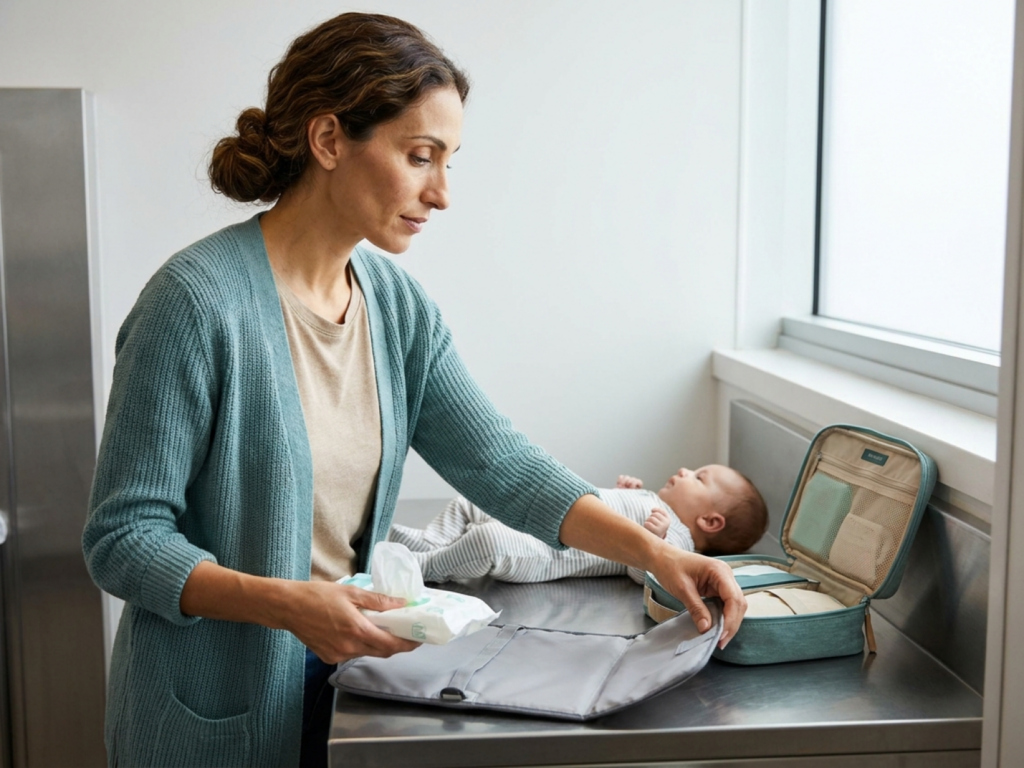
Diapering is one of the highest-risk cleaning tasks during travel because stool can carry gastrointestinal pathogens, and public changing stations vary widely in cleanliness. Prepare the surface first. Use a disposable changing liner or washable pad, place only essential items within reach, and keep clean diapers away from the soiled area. If the baby can roll, keep one hand on the baby at all times and avoid turning away to search through bags.
For urine-only diapers, gentle wipes or a soft cloth with clean water are usually sufficient. For stool, wipe from front to back, paying attention to skin folds where residue can remain. Excess rubbing can disrupt the stratum corneum, the outer skin barrier, and increase risk of irritant diaper dermatitis. Pat dry if the skin is damp before applying a barrier ointment, particularly before long stretches in a car seat or stroller where heat and friction can build.
- Place used wipes and diapers in a sealable bag if a trash bin is not immediately available.
- Clean your hands thoroughly after every diaper change, even if gloves were used.
- Disinfect or wash the changing pad after use if stool or urine contacted it.
- Change clothing promptly if stool leaks onto fabric, because prolonged contact can irritate skin.
In a car, avoid changing a baby on a seat near traffic or in an unsafe parking area. In an airplane lavatory, space is limited, so pre-load one diaper, a few wipes, a disposal bag, and barrier cream into a small pouch before leaving your seat. If diaper rash becomes severe, blistered, bleeding, or associated with fever, seek medical guidance rather than trying new medicated creams without advice.
Hands, faces, pacifiers, and dropped toys
Hands and mouths are central to infant exploration, so travel cleaning often means managing repeated contamination rather than preventing every exposure. Clean the baby’s hands before feeding, after crawling or playing on public floors, and after contact with visibly dirty surfaces. Use water and mild soap when feasible. If using wipes, choose fragrance-free options when possible, because perfumes and some preservatives can trigger irritant or allergic contact dermatitis in sensitive skin.
For the face, clean milk, formula, saliva, sunscreen, or food residue gently. Wiping around the mouth too often or too firmly can cause perioral irritation. A damp soft cloth followed by gentle drying is usually enough. Avoid using disinfectant wipes, antibacterial surface wipes, or household cleaners on a baby’s skin. These are designed for objects, not infant skin, and may cause chemical irritation.
Pacifiers and teething toys need special attention. If a pacifier falls onto a visibly dirty floor, public restroom surface, airplane tray, or sidewalk, replace it with a clean spare if available. If you must clean it while out, use potable water. Do not clean a pacifier by putting it in an adult’s mouth; saliva can transfer oral bacteria and viruses. For longer trips, pack multiple pacifiers in a clean container and keep used ones in a separate bag until they can be washed properly.
Soft toys are harder to clean during transit. Reserve one or two washable comfort items for the trip and rotate them if one becomes soiled. Hard plastic toys are easier to wipe, but after using disinfecting wipes on toys, follow the product instructions and allow the surface to dry; if the item will go into the baby’s mouth, rinse with safe water when appropriate.
Cleaning feeding equipment safely
Feeding equipment deserves careful handling because contaminated water, bottle nipples, pump parts, or formula-preparation surfaces can expose infants to gastrointestinal pathogens. Wash adult hands before preparing formula, expressed milk, or solids. Use potable water to clean bottles, nipples, caps, pacifiers, and utensils. If water safety is uncertain, use sealed bottled water or properly disinfected water according to public health guidance. This is particularly important for young infants, premature infants, or babies with medical complexity, who may have less physiologic reserve during illness.
When bottle-cleaning facilities are limited, separate clean and used items clearly. A rigid container or clean resealable bag can protect sterilized or washed bottle parts. A second bag should hold used items until they can be washed. Do not place clean nipples directly on airplane trays, restroom counters, hotel sinks, or stroller pockets that also hold shoes, diapers, or trash.
If you use powdered formula, remember that it is not sterile. Follow the preparation instructions from your clinician or local public health guidance, especially for infants at higher risk. During travel, pre-measured formula powder can reduce handling, but water safety and clean preparation technique still matter. Ready-to-feed formula may be useful for some families because it reduces mixing steps, although storage and cost may be limiting factors.
Breast pump parts also need clean handling. If washing is delayed, store used parts in a clean container according to manufacturer and clinician guidance, and wash thoroughly as soon as safe water and soap are available. If your baby develops vomiting, diarrhea, poor feeding, or fewer wet diapers during a trip, prioritize hydration assessment and contact a healthcare professional. Dehydration during infant travel can progress quickly, particularly in hot climates or after gastrointestinal illness.
Airplanes, hotels, and high-touch surfaces
Transit spaces contain many high-touch surfaces: armrests, tray tables, window shades, seat-belt buckles, hotel remote controls, light switches, elevator buttons, and rental car handles. Wiping selected surfaces can reduce grime and some microbial contamination, especially in the baby’s immediate reach zone. On an airplane, clean plastic surfaces around the seat before placing bottles, toys, or snacks down. Let disinfected surfaces dry according to the wipe label, because contact time affects performance and wet chemicals should not transfer to the baby’s skin or mouth.
Surface cleaning should be targeted. A caregiver’s hands often move between luggage, documents, phones, restroom doors, and the baby, so hand hygiene usually matters more than trying to disinfect every object. Clean your phone periodically, because it frequently enters the feeding and diapering zone. Keep a small trash bag available at your seat so used wipes and tissues do not spread through the diaper bag.
In hotels, inspect the room before settling the baby on the bed or floor. Remove visible choking hazards, wipe high-touch surfaces, and designate one clean area for feeding equipment. Hotel sinks can look clean while still being unsuitable as a place to set bottle nipples directly. Use a clean towel, drying rack, or container as a protected surface. If bathing the baby in a hotel tub, rinse the tub first, consider using a portable bath mat or basin if you brought one, and never leave the baby unattended near water.
Cleaning is only one part of travel health. Safe sleep during travel remains separate from hygiene: a clean bed is not automatically a safe sleep space. Use an appropriate sleep surface and follow safe sleep recommendations even when routines are disrupted.
Skin protection, bathing, and climate changes
Travel can stress infant skin. Long periods in diapers, heat, sweat, sunscreen, pool water, dry airplane air, and unfamiliar laundry detergents can all disrupt the skin barrier. Many babies do not need a full bath every day while traveling, but they do need prompt cleaning of stool, milk trapped in neck folds, spit-up on the chest, and sweat in skin creases. Gentle, brief cleansing is preferable to repeated scrubbing.
Use the baby’s usual mild cleanser and moisturizer if they tolerate them well. Introducing new scented products during a trip increases the chance of confusing irritation with allergy or infection. After swimming, rinse chlorine, salt, or lake water from the skin and dry folds carefully. Apply moisturizer if the skin is dry, and use a diaper barrier cream before long outings if the baby is prone to rash.
Hot climates create extra challenges. Sweat and occlusion in diapers can worsen irritant dermatitis and heat rash. Change diapers more often, allow short diaper-free time in a clean private setting when feasible, and dress the baby in breathable layers. Cold climates can also irritate cheeks and hands through wind exposure and frequent wiping. Use gentle cleansing and protect dry areas with clinician-approved moisturizers or barriers.
Seek professional advice if a rash is rapidly spreading, painful, associated with fever, producing pus, or not improving with basic irritant-reduction steps. Avoid using topical antibiotics, antifungals, corticosteroids, or medicated powders without guidance, especially in young infants. Adjusting care routines while traveling can help, but persistent or severe skin findings deserve clinical assessment.
When cleanliness problems become medical concerns
Most travel cleaning problems are manageable: a leaked diaper, a dirty pacifier, a sticky airplane tray, or a missed bath. The threshold changes when symptoms suggest systemic illness, dehydration, skin infection, or exposure to unsafe water. Babies have smaller fluid reserves and can deteriorate faster than older children, so caregivers should monitor behavior, feeding, urine output, tears, mucous membranes, and temperature.
Contact a healthcare professional urgently if a young infant has fever according to the age-specific guidance you were given by your clinician, appears unusually sleepy or difficult to wake, has persistent vomiting, has blood in stool, shows signs of dehydration, or has a rash with fever or a toxic appearance. If you are abroad or far from your usual clinician, know how to reach local urgent care or emergency services. Emergency situations during travel are easier to handle when you already have insurance information, medication lists, and the baby’s medical summary accessible.
Cleaning routines should become simpler, not more elaborate, when a baby is ill. Focus on hand hygiene, safe fluids or feeding as advised, clean diapers, and reducing spread to other family members. Wash hands after every diaper change, clean contaminated surfaces, and separate soiled clothing. For diarrhea, use careful diaper-area cleansing and barrier ointment to reduce skin breakdown. If vomiting contaminates clothing or bedding, bag it separately until it can be washed.
Finally, be kind to yourself. Travel with a baby involves imperfect environments. The goal is risk reduction, not perfection. A steady routine of clean hands, safe water, protected feeding items, gentle skin care, and timely medical advice is usually the most effective approach.
When to seek help
- Call a healthcare professional promptly for fever in a young infant or any fever with lethargy, poor feeding, or breathing difficulty.
- Seek urgent care for signs of dehydration, such as markedly fewer wet diapers, dry mouth, no tears, or unusual sleepiness.
- Do not use disinfectant wipes, alcohol sanitizer, or household cleaners directly on baby skin.
- Ask a clinician before using medicated rash creams, topical antibiotics, antifungals, or corticosteroids on an infant.
- Use only potable or properly disinfected water for formula preparation and cleaning feeding equipment.
Tools & Assistance
- Compact diaper-change pouch with wipes, disposable liners, barrier cream, and sealable bags
- Alcohol-based hand sanitizer for caregiver hands when soap and water are unavailable
- Fragrance-free baby wipes and a soft cloth for gentle skin cleaning
- Clean containers or resealable bags for separating washed and used feeding items
- Local pediatric urgent care or nurse advice line contact information
FAQ
Can I use antibacterial wipes on my baby’s hands?
Use products designed for infant skin, not surface disinfectant wipes. For baby hands, soap and water or gentle baby-safe wipes are usually preferable.
What should I do if a pacifier falls on the airport floor?
Use a clean spare if available. If you must clean it, rinse with potable water; avoid cleaning it in an adult’s mouth.
Do I need to bathe my baby every day while traveling?
Not always. Focus on cleaning stool, urine, milk, sweat, and skin folds promptly, and use gentle bathing when needed.
Are airplane tray tables safe for bottles and toys?
They are high-touch surfaces. Wipe plastic surfaces, let them dry, and avoid placing nipples or pacifiers directly on them.
When is diaper rash more than routine irritation?
Seek medical advice if the rash is severe, bleeding, blistering, spreading, producing pus, associated with fever, or not improving with basic care.
Sources
- Centers for Disease Control and Prevention — Traveling Safely with Infants and Children
- HealthyChildren.org / American Academy of Pediatrics — Tips for Safe & Stress-Free Family Travel
- Cleveland Clinic — Flying With a Baby: Your Questions Answered
Disclaimer
This article is for informational purposes only and does not replace medical care. Consult a qualified healthcare professional for concerns about your baby’s symptoms, medications, feeding safety, or travel-related illness.









Please log in to leave a comment.