
Intro
Travel can disrupt even a well-established baby sleep pattern. New surroundings, changing light exposure, unfamiliar sounds, and altered feeding times can all shift circadian cues and make naps and bedtime less predictable.
The goal is usually not perfect sleep, but enough continuity that your baby can rest safely and your family can adapt with less stress. With a few practical adjustments before departure and a flexible plan on the road, many babies can keep a reasonable sleep rhythm while traveling.
Highlights
Keep the parts of the routine that signal sleep: the same short bedtime ritual, familiar sleep items, and a consistent order of events.
Use light strategically. Daylight can help anchor the day, while a darkened sleep space can support naps and bedtime.
Expect some variability. Travel often changes nap length, bedtime timing, and night waking, especially during time-zone shifts.
Safe sleep still matters away from home. The sleep surface, position, and surroundings should remain as close to recommended practice as possible.
A calm caregiver matters too. Planning ahead reduces anxiety and helps you respond more flexibly when sleep is imperfect.
Why travel disrupts baby sleep
Travel can interfere with several biological and environmental cues that support sleep. Babies rely on repeated patterns to build sleep associations and, over time, to organize their circadian rhythm—the internal day-night timing system. When feeding times, nap opportunities, and bedtime rituals shift, that rhythm may temporarily become less stable.
Common travel-related disruptors include overstimulation, missed naps, new ambient noise, changes in temperature, and unfamiliar sleeping spaces. Jet lag can add another layer, because the body may still be aligned to the home time zone while the environment is not. The practical aim is to reduce the number of variables your baby has to process at once.
Protect the routine that signals sleep
A short, repeatable bedtime routine often matters more than the exact clock time. Many families do best when they keep a familiar sequence such as feeding, diaper change, pajamas, a book or song, and then placing the baby down drowsy but awake if that is already part of the home routine.
Try to preserve the same calming cues across locations. The details can be modest: the same sleep sack, the same lullaby, the same phrase, or the same dim-light period before sleep. If a full routine is unrealistic during transit, keep the highest-value elements and make them as consistent as possible. Familiarity helps reduce the “new place” effect, which can otherwise keep a baby alert longer than usual.
Build a portable sleep environment
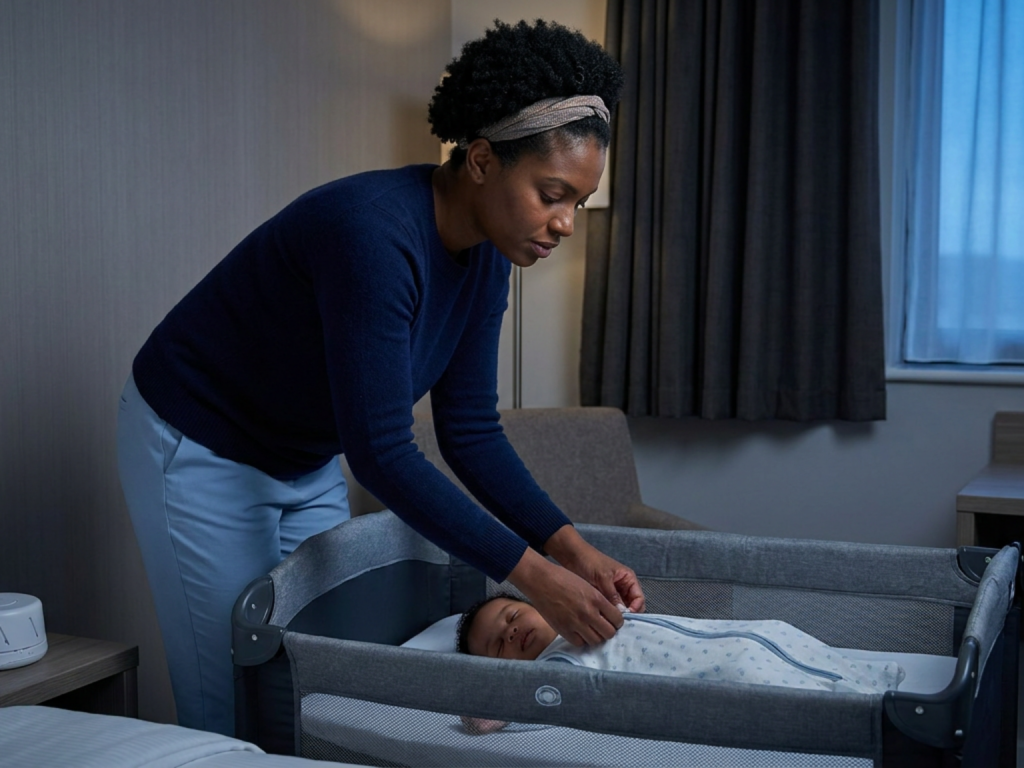
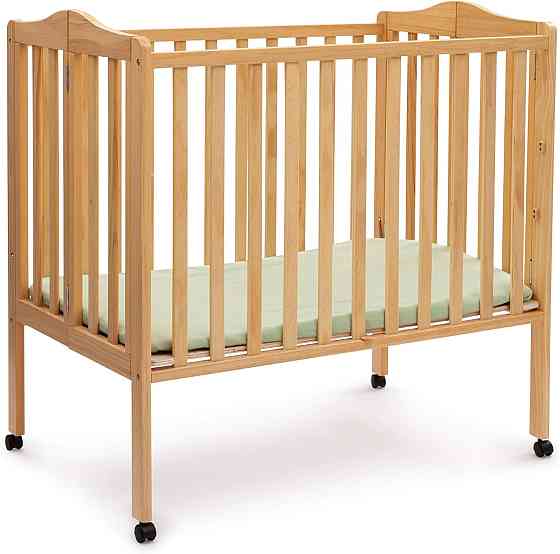
A portable sleep setup can make a major difference. Travel advice from pediatric sleep educators often emphasizes bringing a few recognizable items from home, such as a sleep sack, pacifier if used, and a beloved but safe comfort item when developmentally appropriate. For many families, a travel crib, bassinet, or play yard is the most practical anchor for sleep.
Light control is another high-yield intervention. Portable blackout solutions, layered curtains, or temporary room-darkening methods can help during naps and bedtime, especially if the destination is bright early in the morning. White noise may also reduce disruption from hallway traffic, city sounds, or family activity, provided it is used at a safe volume and placed at a distance from the baby.
If your baby is used to contact naps at home, a carrier or wrap can sometimes preserve daytime sleep during transitions, airport delays, or sightseeing. Use that option thoughtfully and still prioritize airway safety and age-appropriate supervision.
Use light and timing to support the body clock
Light exposure is one of the strongest cues for circadian rhythm. Daytime light can help babies distinguish daytime from nighttime, while reducing bright light near bedtime may support sleep onset. When crossing time zones, brief outdoor exposure in the morning or early afternoon can help shift the body clock toward the local schedule.
The best approach depends on the direction of travel and the baby’s age, but the principle is simple: use daylight to promote alertness when you want it, and create darkness when you want rest. If a time-zone change is small, many families do best by staying close to local time as quickly as practical. If the change is larger, a gradual adjustment over several days may feel gentler.
Don’t worry if the first one or two days look messy. Babies often need time to adapt, and overly rigid scheduling can backfire if it causes overtiredness. Watch for sleep cues and aim for a workable rhythm rather than perfection.
Handle naps, car rides, and plane sleep realistically
Naps often become shorter or more fragmented during travel, and that is normal. If a baby misses part of a nap, an earlier bedtime or an extra brief nap later in the day may prevent accumulated sleep debt from building too high. In travel settings, flexibility is often more helpful than trying to preserve every normal nap exactly.
Car and plane sleep require extra caution. Sitting devices are designed for travel, not routine sleep outside their intended use. Whenever possible, follow the safest available guidance for your baby’s age and the setting you are in. On flights, some babies sleep better with feeding, gentle rocking, or a familiar routine before takeoff; others need help staying calm until the cabin settles.
For older infants, a predictable “sleep window” during long transit can be easier than waiting for the perfect nap. For younger babies, feeding needs may still drive much of the schedule. Either way, a realistic expectation is key: travel sleep often works best when you accept partial naps and plan recovery time later.
Keep safe sleep standards in unfamiliar places
Safety should not change just because the location has changed. A firm, flat sleep surface is still the goal, and the baby should be placed on the back for sleep unless a clinician has advised otherwise for a specific medical reason. Room-sharing can still be appropriate in travel settings when it is done without bed-sharing and without soft bedding near the infant.
Hotel rooms, vacation rentals, and family homes vary widely. Before the first sleep, inspect the surface and surrounding area: remove loose pillows, heavy blankets, cords, and objects that could obstruct breathing. If you are using a rental crib or borrowed sleep space, check that it is sturdy and meets current safety expectations.
Do not assume that a baby who falls asleep in a stroller, swing, or car seat should remain there for an extended sleep period. If sleep continues beyond the intended transit, move the baby to a safer sleep environment as soon as you can. Safe sleep practices matter even more when travel leaves caregivers tired and distracted.
Create a backup plan for difficult nights
Even with good planning, some nights will be rough. Build a backup plan before you leave home so you are not improvising while exhausted. Decide in advance how you will respond if bedtime is late, a nap is missed, or your baby wakes repeatedly in a strange room.
Useful backups include a simplified bedtime routine, a white-noise source, an extra sleep layer for temperature control, and one or two options for soothing that you already know work at home. If your destination has multiple caregivers, agree on a shared approach so the baby receives consistent responses.
If sleep deteriorates significantly, look first at the basics: overtiredness, hunger, room temperature, light, and overstimulation. If your baby seems unwell, has feeding difficulty, abnormal breathing, or persistent sleep changes that worry you, contact a pediatric clinician rather than assuming it is just travel adjustment.
Sleep safety cautions
- Do not place a baby to sleep on soft bedding, couches, or other unsafe surfaces.
- Avoid routine sleep in sitting devices such as car seats, swings, and strollers.
- Keep pillows, loose blankets, and bulky items away from the baby’s sleep space.
- Use room-sharing rather than bed-sharing whenever possible.
- Seek medical advice if sleep changes come with illness, breathing concerns, or poor feeding.
Tools & Assistance
- Travel crib or other approved portable sleep space
- Portable blackout shades or room-darkening cover
- White-noise device used at a safe distance
- Sleep sack and familiar bedtime items from home
- Pediatrician or nurse line for individualized guidance
FAQ
Should I keep my baby on home time or local time while traveling?
Either approach can work, but many families do best by moving toward local time gradually or as soon as is practical. The best choice depends on trip length, time-zone difference, and your baby’s age.
What if my baby only sleeps during a carrier or contact nap while traveling?
That can be a helpful temporary strategy for some babies, especially during transit or busy days. Continue to prioritize airway safety and use a safe sleep space whenever feasible.
Is it okay if naps are shorter than usual on the trip?
Yes, short or uneven naps are common during travel. An earlier bedtime, an extra brief nap, or a quieter schedule can help limit overtiredness.
How can I make a hotel room better for sleep?
Use darkness, white noise, a familiar routine, and a safe portable sleep space if possible. Removing clutter and keeping the room calm also helps reduce stimulation.
Sources
- Infant Insights — Traveling with Your Baby: Essential Products for Baby Sleep On the Go
- Huckleberry Care — Adjusting baby sleep schedule while traveling
- Taking Cara Babies — My Top 5 Sleep Tips for Traveling With a Baby
Disclaimer
This article is for general educational purposes and is not a substitute for individualized medical advice. If you have concerns about your baby’s sleep, breathing, feeding, or safety during travel, consult a pediatric healthcare professional.














Please log in to leave a comment.