
Intro
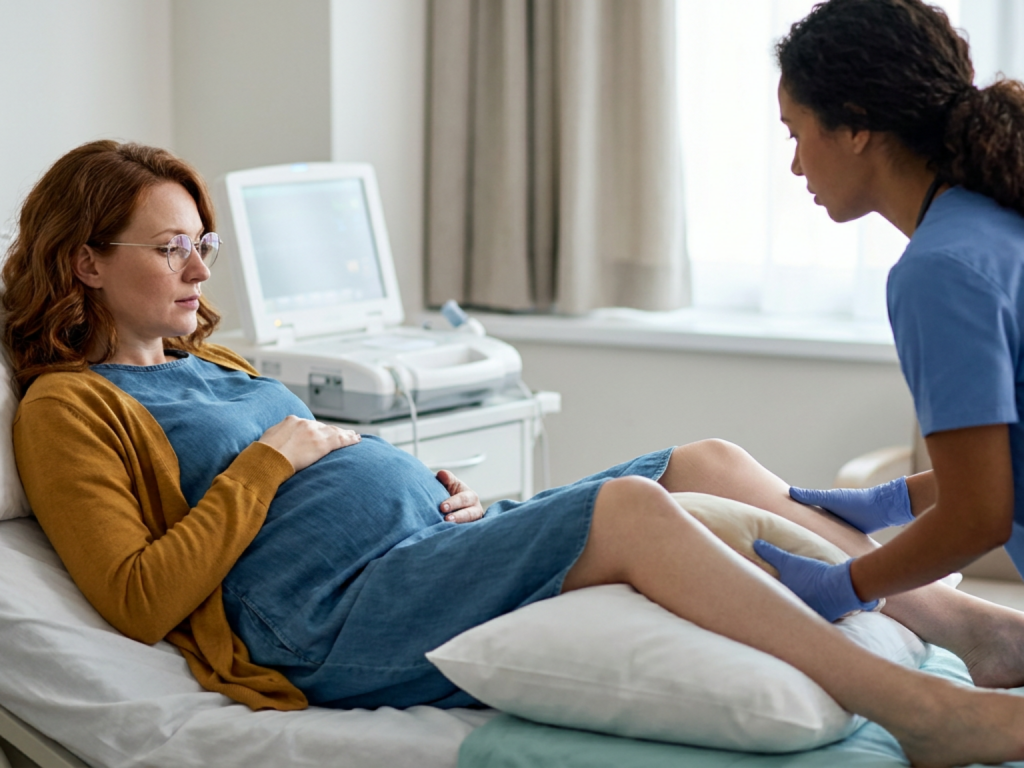
The side-lying position is a simple, adaptable posture used in pregnancy, labor, birth, postpartum recovery, infant feeding, and hands-on therapeutic care. It generally means resting on the left or right side, often with pillows, wedges, bolsters, or the support of a partner or clinician to keep the spine, pelvis, abdomen, and legs comfortably aligned.
Although it may look like a resting position, side-lying can be clinically useful. It may reduce pressure on major blood vessels in late pregnancy, improve comfort when mobility is limited, support fetal monitoring or epidural care, and make feeding or therapeutic touch safer in selected situations. As with any birth-related technique, the best use depends on the individual’s medical situation, fetal status, gestational age, and care setting.
Highlights
Side-lying can reduce pressure on the vena cava and aorta in late pregnancy, helping many people feel more comfortable than when lying flat on the back.
During labor, side-lying may support rest, fetal monitoring, epidural use, and side-lying pushing when upright movement is not possible or not desired.
For some preterm neonates, side-lying feeding has been associated with fewer choking episodes and improved milk intake compared with supine feeding in a clinical study.
Good alignment matters: pillows or bolsters under the head, abdomen, knees, ankles, and back can make the position safer and more sustainable.
What the side-lying position means
The side-lying position is any supported posture in which a person rests on one side rather than flat on the back, prone on the abdomen, upright, or semi-reclined. In maternity care, it is often used in late pregnancy, labor, birth, cesarean recovery, postpartum rest, breastfeeding, and clinical procedures. The person may lie fully lateral, slightly tilted forward, or slightly tilted backward, depending on comfort and clinical goals.
In practice, side-lying is not a single fixed pose. The upper knee may be flexed and supported by pillows, the lower leg may be straight or slightly bent, and the abdomen may be supported to reduce pulling on the uterine ligaments. A pillow behind the back can prevent rolling, while another between the knees can reduce strain on the sacroiliac joints, hips, and lumbar spine.
For a medically literate reader, the value of side-lying lies in its effect on pressure distribution, venous return, pelvic mechanics, respiratory comfort, and access for care. It can reduce compression on dependent tissues, avoid direct pressure over the gravid uterus, and allow clinicians to assess the perineum, fetal heart rate, maternal blood pressure, or neuraxial analgesia effects without requiring the person to be supine.
Circulatory and pregnancy-related benefits
In the second half of pregnancy, lying flat on the back may worsen aorto-caval compression, where the gravid uterus compresses the inferior vena cava and, to a lesser extent, the aorta. This can reduce venous return, lower cardiac output, and contribute to dizziness, nausea, pallor, sweating, hypotension, or nonreassuring fetal heart rate changes in susceptible individuals. Side-lying shifts uterine weight away from these central vessels and is often used as a first supportive measure when supine symptoms occur.
The left lateral position is commonly discussed because it may optimize venous return and uteroplacental blood flow in many situations. However, right side-lying can also be appropriate, especially if it improves comfort, relieves pain, or helps fetal positioning during labor. The key principle is avoiding prolonged, completely flat supine positioning when it causes symptoms or when clinicians advise a lateral tilt.
Side-lying can also reduce pressure on the diaphragm and abdominal wall, which may help some pregnant people breathe more comfortably. For people with pelvic girdle pain, low back pain, varicosities, edema, or hemorrhoids, lateral positioning with careful support may decrease localized pressure and make rest more achievable. It is not a treatment for underlying vascular, neurologic, or obstetric conditions, but it can be a low-risk comfort strategy when used with clinical guidance.
Uses during labor and birth
During labor, side-lying can be useful when the birthing person needs rest but still wants a position that supports physiologic labor. It may be especially helpful during active labor when contractions are intense, between episodes of upright movement, or when fatigue makes standing, walking, or squatting unrealistic. It is also often used with continuous fetal heart rate assessment, intravenous lines, blood pressure monitoring, or epidural analgesia.
Side-lying can be combined with a peanut ball or pillows between the knees to maintain pelvic openness and reduce muscular guarding. A flexed upper leg, supported at hip height, may create more space through the pelvic outlet and reduce strain on the hip. Some clinicians use alternating left and right side-lying to encourage fetal rotation when there is back labor and fetal position concern, although fetal malposition requires individualized assessment rather than a guaranteed positional correction.
Side-lying pushing position can be a calm, controlled option in the second stage of labor. The birthing person lies on one side while the upper leg is supported by a partner, nurse, midwife, or stirrup if available. This may be useful when the person has epidural-related motor weakness, significant fatigue, hypertension concerns, or a need to avoid prolonged supine pushing. Some people also find that side-lying pushing helps them sense gradual perineal stretching and reduce involuntary breath-holding.
It is important to remain flexible. If fetal heart rate patterns, maternal blood pressure, pain, descent, or rotation are concerning, the clinical team may recommend changing sides, moving upright, using hands-and-knees, adopting a semi-recumbent position, or preparing for operative birth. Positioning is supportive care, not a substitute for obstetric monitoring or timely intervention when needed.
Postpartum rest, breastfeeding, and recovery
After birth, side-lying can make rest and infant care more manageable, particularly when the perineum, abdomen, hips, or back are sore. Following vaginal birth, it can reduce direct pressure on perineal tissues affected by swelling, episiotomy, or laceration repair. Following cesarean section, a supported side-lying posture may reduce pulling across the abdominal incision when getting comfortable, although turning in bed should be done slowly and with abdominal support as advised by the care team.
Side-lying breastfeeding is a common option for nighttime feeds, cesarean recovery, or situations where sitting upright is painful. The parent and baby lie facing each other, with the infant’s nose near the nipple and the body aligned so the head does not need to twist. A rolled towel or the parent’s arm may help maintain infant position, but soft bedding, loose pillows, and unsafe sleep surfaces require caution. If the parent feels sleepy, safe infant sleep guidance should be followed, and a lactation professional can help adjust latch and positioning.
For postpartum pelvic and back discomfort, side-lying can reduce muscle tension by keeping the spine neutral and the knees supported. People with large or sensitive breasts, engorgement, mastitis symptoms, shoulder pain, or medical devices may also find this position less compressive than prone or fully supine positions. However, breast redness, fever, worsening pain, heavy bleeding, severe headache, shortness of breath, or unilateral leg swelling should prompt urgent medical advice rather than being managed by positioning alone.
Side-lying for preterm and newborn feeding support
Side-lying is also used in neonatal care, especially during bottle feeding for some preterm infants. Preterm babies often have immature suck-swallow-breathe coordination, reduced endurance, and a higher risk of oxygen desaturation or choking during feeds. A side-lying feeding posture can mimic aspects of breastfeeding mechanics and may allow milk to pool less forcefully in the pharynx than in some supine feeding approaches.
A comparative clinical study reported that neonates fed in side-lying had significantly fewer choking episodes than those fed supine, and they consumed a higher proportion of their prescribed milk volume. This finding supports the idea that side-lying can improve feeding safety and efficiency in selected preterm infants when performed by trained caregivers or under neonatal guidance.
Technique matters. The infant is usually positioned semi-elevated on the side, with the head, neck, and trunk aligned and the bottle held so milk flow can be paced. Caregivers often use external pacing, frequent pauses, and observation for stress cues such as color change, coughing, finger splaying, nasal flaring, gulping, bradycardia, desaturation, or falling asleep from fatigue. Side-lying feeding should be individualized by neonatal nurses, physicians, speech-language pathologists, occupational therapists, or lactation specialists, particularly for babies with prematurity, congenital conditions, respiratory disease, reflux concerns, or poor weight gain.
Therapeutic touch, massage, and medical-device comfort
Side-lying is valuable beyond labor and feeding. In massage therapy, physical therapy, and other supportive bodywork, it allows access to the back, hips, gluteal region, lateral thigh, shoulders, and neck without placing the client prone. This is particularly relevant in pregnancy, when prone positioning can be uncomfortable or contraindicated unless specialized equipment is used.
It can also help people who cannot tolerate pressure on the chest, abdomen, breasts, or medical devices. Expert massage resources describe side-lying as a way to avoid painful compression over pacemakers, chemotherapy ports, sensitive breast tissue, surgical sites, or abdominal discomfort. For clients with back pain or large, sensitive breasts, side-lying may create a more relaxed therapeutic environment while still allowing meaningful access to musculoskeletal structures.
Proper setup is essential. The head should be supported so the cervical spine remains neutral. The upper arm may rest on a pillow to avoid shoulder traction. The upper knee and ankle should be supported so the hip does not collapse forward, and the pelvis should remain aligned rather than twisted. In pregnancy, a small support under the abdomen may reduce lateral uterine pull. Practitioners should adjust table height, bolsters, and draping to preserve comfort, safety, and dignity.
How to set up side-lying safely
A well-supported side-lying position should feel stable, breathable, and sustainable. The person should be able to relax the jaw, shoulders, abdomen, pelvic floor, and legs without feeling that they must brace to avoid rolling. Discomfort in the lower shoulder, hip, or knee usually means more support is needed or the angle should be changed.
- Head and neck: Use enough pillow height to keep the neck neutral, not tilted toward the mattress or ceiling.
- Back: Place a pillow or wedge behind the torso if rolling backward is uncomfortable or unsafe.
- Abdomen: In later pregnancy, a small pillow under the belly can reduce ligament strain.
- Hips and knees: Place a pillow between the knees and ankles to reduce pelvic rotation and pressure points.
- Upper leg: During labor, support the upper leg at a comfortable height rather than pulling it aggressively toward the chest.
Side-lying should be changed if there is numbness, tingling, worsening pain, dizziness, shortness of breath, abnormal bleeding, or a concerning fetal heart rate pattern. In hospital or birth center settings, the care team may use lateral positioning as part of maternal resuscitation measures, epidural management, or fetal monitoring. At home, it is reasonable to use side-lying for rest and comfort, but persistent or severe symptoms deserve prompt professional evaluation.
When to seek professional guidance
- Call your maternity care team urgently for heavy bleeding, severe abdominal pain, fainting, chest pain, or shortness of breath.
- In labor, do not rely on position changes alone if fetal movement decreases or fetal monitoring is concerning.
- Preterm or medically fragile infants should use side-lying feeding only with guidance from neonatal or feeding specialists.
- After birth, fever, worsening breast redness, severe headache, one-sided leg swelling, or incision problems need medical advice.
- Stop any position that causes numbness, increasing pain, dizziness, or difficulty breathing.
Tools & Assistance
- Ask a midwife, obstetrician, nurse, or doula to demonstrate supported side-lying options for labor.
- Consult a lactation consultant for side-lying breastfeeding and safe nighttime feeding technique.
- Use firm pillows, wedges, or a peanut ball to support the abdomen, knees, ankles, and back.
- For preterm infant feeding, request assessment from neonatal nursing, occupational therapy, speech-language pathology, or lactation services.
- Work with a pregnancy-informed massage therapist or physical therapist for safe side-lying bodywork.
FAQ
Is left side-lying always better than right side-lying?
Left side-lying is often recommended to reduce aorto-caval compression, but right side-lying can also be appropriate. Comfort, symptoms, fetal monitoring, and clinician advice should guide the choice.
Can I push in a side-lying position?
Yes, side-lying pushing can be used in many births, especially with fatigue or epidural analgesia. The clinical team should help support the upper leg and monitor maternal and fetal status.
Is side-lying breastfeeding safe?
It can be safe and comfortable when latch, infant alignment, and sleep-safety precautions are addressed. If you feel sleepy or your baby is premature or medically fragile, seek individualized guidance.
Does side-lying fix fetal malposition?
Not reliably. It may help comfort and may be used as part of position changes for back labor and fetal position concerns, but persistent malposition requires professional assessment.
Why is side-lying used for some preterm bottle feeds?
It may support suck-swallow-breathe coordination and reduce choking in selected infants. Feeding plans for preterm babies should be directed by neonatal and feeding specialists.
Sources
- PubMed Central (PMC) — Advantages of Side-lying Position. a Comparative Study of ...
- AMTA Massage Therapy Journal — The Benefits of Using Side-Lying Positioning
- East West College — 6 Benefits of Side-Lying Massage Therapy
Disclaimer
This article is for general educational purposes and does not replace individualized medical advice. Consult your obstetric, neonatal, lactation, or rehabilitation care professional for guidance specific to your situation.
















Please log in to leave a comment.