
Intro
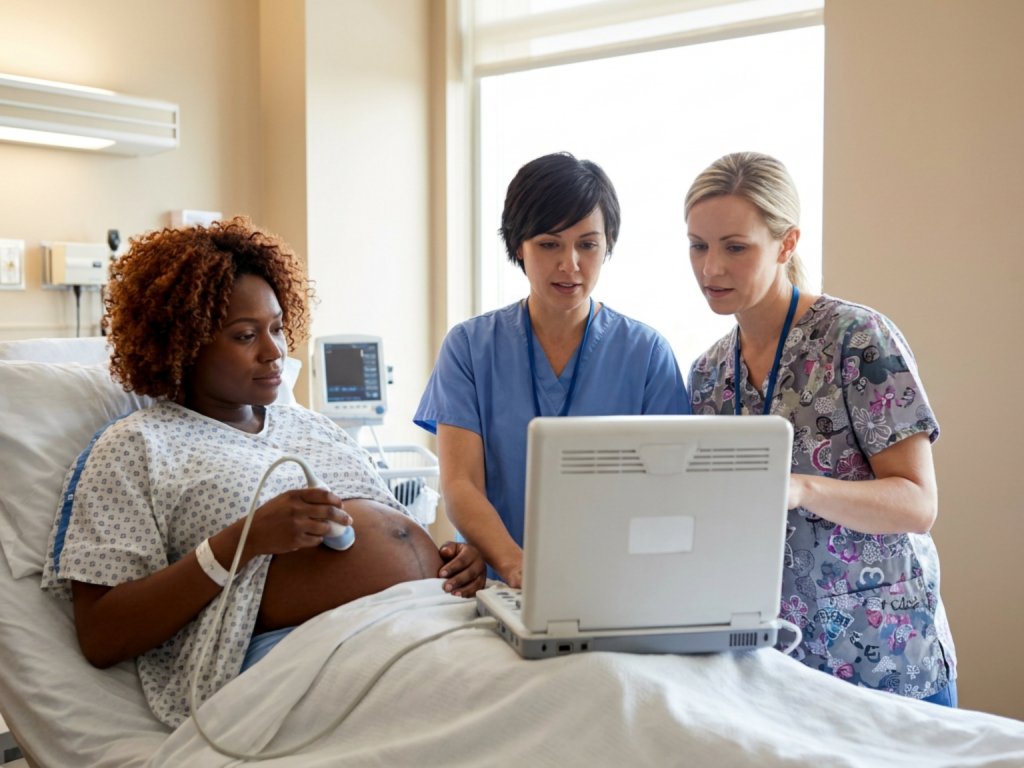
An unexpected breech presentation can turn a previously straightforward labor into a high-stakes clinical decision point. For families, the shift may feel sudden and frightening; for clinicians, it requires rapid assessment, clear communication, and a prepared team that can move between vaginal breech birth, assisted maneuvers, and urgent cesarean delivery when indicated.
Highlights
Breech presentation means the baby is positioned bottom- or feet-first rather than head-first, and it may be discovered late in pregnancy or unexpectedly during labor.
Emergency response in birth depends not only on individual skill, but also on systems: escalation pathways, role assignment, equipment readiness, and rehearsed communication.
Not every breech birth is the same; gestational age, fetal wellbeing, cervical dilation, station, type of breech, and clinician expertise all influence management.
Families can prepare emotionally and practically by discussing transfer plans, emergency cesarean capability, and preferences for communication before labor when possible.
What makes an unexpected breech different
Breech presentation describes a fetus whose buttocks, feet, or knees are positioned to enter the pelvis before the head. In many pregnancies it is identified antenatally by palpation and ultrasound, allowing time to discuss options such as external cephalic version, planned cesarean birth, or, in selected circumstances, a planned vaginal breech birth with an appropriately skilled team. An unexpected breech is different because the diagnosis may arise during labor, at full dilation, after rupture of membranes, or even as the presenting part becomes visible.
The clinical challenge is not simply that the baby is breech. It is that decisions must be made with limited time, incomplete information, and changing physiology. A frank breech with the buttocks presenting, reassuring fetal heart rate, full dilation, and a clinician experienced in breech maneuvers is a very different scenario from a footling breech with ruptured membranes, high presenting part, cord prolapse concern, or nonreassuring fetal heart rate pattern. The latter situations may leave little room for deliberation.
Families may experience this moment as a rupture in the expected story of birth. A calm explanation can help: what has been found, how the baby is tolerating labor, what options are realistic now, and what the team is doing next. Supportive communication is not a luxury in emergencies; it reduces confusion, helps consent happen under pressure, and preserves dignity when plans change quickly.
Recognition during labor and immediate assessment
Unexpected breech may be suspected when abdominal palpation, vaginal examination, or the labor pattern does not match expectations. A clinician may feel soft buttocks, a sacrum, feet, or genitalia rather than the hard skull sutures and fontanelles typical of a cephalic presentation. Ultrasound, when immediately available, can confirm fetal presentation, head position, placental location, amniotic fluid, and sometimes estimated fetal size, although management should not be delayed when a true emergency is unfolding.
The first priority is rapid maternal and fetal assessment. This commonly includes vital signs, contraction pattern, cervical dilation, membrane status, station of the presenting part, fetal heart rate assessment, and whether there are signs of cord prolapse, bleeding, uterine rupture, placental abruption, or shoulder/head entrapment risk. The team also considers parity, gestational age, prior uterine surgery, anesthesia availability, neonatal support, and whether birth is imminent.
One key distinction is whether there is time for a structured decision or whether the safest path is immediate escalation. For example, a breech discovered early in labor with stable maternal and fetal status may allow consultation, imaging, and discussion of cesarean section or transfer if the current location cannot safely support breech birth. A breech discovered when the buttocks are already distending the perineum requires a different mindset: unnecessary manipulation can worsen outcomes, and the team may prepare for controlled vaginal breech birth while also readying neonatal resuscitation after birth.
Emergency scenarios that require rapid escalation
Several breech-associated emergencies demand swift coordination. Cord prolapse is a major concern, especially with footling breech, ruptured membranes, prematurity, or a presenting part that is not well applied to the cervix. If the umbilical cord slips below the presenting part, fetal oxygenation can be compromised. Management is situation-dependent and belongs in the hands of trained clinicians, but it typically involves urgent help, minimizing cord compression, continuous fetal assessment when feasible, and expedited birth.
Head entrapment is another feared complication, particularly in preterm breech birth when the body delivers through a cervix that may not be fully dilated enough for the head. This is a true emergency requiring skilled maneuvers and, in some settings, surgical or pharmacologic support determined by the clinical team. Nonreassuring fetal heart rate pattern can also compress decision-making time, especially if labor is not close to birth or if the team lacks experienced vaginal breech support.
Other emergency scenarios may not be caused by breech but can intersect with it: postpartum hemorrhage management, placental abruption, maternal collapse, severe hypertensive complications, sepsis, or shoulder and arm complications during breech extraction. In these moments, the safest care comes from role clarity. One clinician leads the obstetric response, another monitors maternal status, another coordinates anesthesia or operating room readiness, and a neonatal team prepares for respiratory transition and resuscitation if needed.
Families should know that an emergency C-section during labor is not a sign of failure. It is a risk-control intervention when the balance of safety changes. Conversely, a vaginal breech birth may sometimes be the fastest and safest route if birth is imminent and the team has the necessary expertise. The critical issue is matching the plan to the actual clinical scenario rather than to a rigid ideology about birth.
Prepared teams: lessons from broader emergency planning
High-quality maternity emergency care depends on preparation for low-probability, high-impact events. Literature on emergency department disasters describes how fires, floods, power outages, information-technology failures, and cyberattacks can escalate rapidly from operational disruptions into hospital-level crises. Although those examples are not specific to breech birth, the principle applies directly to maternity care: emergencies are safer when teams have anticipated failure points before they occur.
Workplace emergency planning guidance emphasizes identifying hazards, establishing a chain of command, creating evacuation or shelter-in-place procedures, and planning post-emergency communication. In a birth setting, that translates into clear escalation triggers, backup communication if phones or electronic records fail, reliable access to blood products and anesthesia, and a plan for what happens if the operating room, elevator, fetal monitoring system, or electronic chart becomes temporarily unavailable.
Preparedness also means redundancy. Emergency response experts recommend multiple muster points, assigned roles, equipment shutdown procedures where relevant, training, drills, and communication strategies. For maternity units, redundancy may include a second hemorrhage cart location, manual documentation supplies, battery-supported fetal monitoring, alternative routes to theater, and clear transfer protocols. For a freestanding birth center or home birth service, it means a realistic home birth transfer plan, pre-identified receiving hospitals, transport procedures, and early thresholds for consultation rather than waiting until a crisis is obvious.
Simulation matters. A team that has rehearsed an unexpected breech, a cord prolapse, a neonatal resuscitation, and a simultaneous power outage is more likely to communicate efficiently under stress. Drills help expose hidden gaps: missing forceps, unclear neonatal call systems, staff who do not know the emergency chain of command, or delays in opening the operating room. The goal is not to create fear, but to make rare events less chaotic.
Decision-making: vaginal breech, cesarean, or transfer
When breech is discovered unexpectedly, the decision pathway is individualized. Clinicians generally weigh fetal condition, maternal condition, labor progress, type of breech, estimated fetal size, gestational age, head flexion, pelvic and obstetric history, anesthesia status, and local expertise. A planned approach differs from an improvised one: a unit that offers vaginal breech birth usually has selection criteria, informed consent processes, immediate cesarean capability, and clinicians trained in specific breech maneuvers.
If labor is early and both mother and baby are stable, cesarean birth may be recommended, particularly where vaginal breech expertise is unavailable or clinical features increase risk. If the breech birth is imminent, transferring to an operating room or another facility may be more dangerous than proceeding in place with skilled support. In a setting without surgical capability, clinicians must judge whether there is enough time for transfer and whether transport itself could create additional risk.
Families sometimes ask whether they can refuse a recommended intervention. In most healthcare systems, informed consent remains central, even in emergencies. However, the practical reality is that time may be short and recommendations may be strong. A helpful clinician will state the concern plainly: for example, the baby’s heart rate is concerning, the presenting part is high, or the cord may be compressed. They should also explain the proposed action, immediate risks, and what will happen if circumstances change again.
A birth preferences document can still be useful in emergency care, especially if it focuses on communication: who should be updated, whether the support person stays if possible, preferences for anesthesia discussion, skin-to-skin if clinically feasible, and how the family wants information after the event. Preferences should be treated as a guide, not a contract, because unexpected breech and emergency scenarios often require rapid adaptation.
Communication, consent, and emotional safety
Clinical urgency should not erase emotional safety. Parents may remember the tone of an emergency as vividly as the outcome: whether someone looked them in the eye, explained what was happening, asked for consent when possible, and returned afterward to debrief. Even short phrases can be grounding: “Your baby is breech,” “We are calling extra help,” “The heart rate is not reassuring,” or “Birth is very close, so we are preparing here.”
For medically literate families, concise technical language can be reassuring if it is paired with interpretation. Terms such as footling breech, fetal bradycardia, cord prolapse, or head entrapment should be explained in terms of immediate relevance. The aim is not to simplify away the seriousness, but to prevent families from being excluded from their own care.
Debriefing after an emergency is part of good care. This may include reviewing the timeline, why decisions were made, what was known at each point, whether alternatives existed, and what follow-up is recommended for physical and mental recovery. Some parents develop acute stress symptoms after a frightening birth, even when the baby is well. Others feel grief about losing a hoped-for birth experience. Compassionate follow-up, trauma-informed language, and referral to mental health support when needed can make recovery less isolating.
Clinicians also need support. Unexpected emergencies can involve moral distress, especially when outcomes are uncertain or systems fail. A culture of learning rather than blame encourages reporting, review, and improvement. The safest maternity services are those that combine technical excellence with humility: they assume that rare emergencies will happen someday, and they prepare accordingly.
Practical preparation for families before birth
No family can plan away every emergency, but thoughtful questions can reduce uncertainty. If breech is known or suspected late in pregnancy, ask what confirmation is recommended, whether external cephalic version is appropriate to discuss, what the local policy is for vaginal breech birth, and what circumstances would lead to planned C-section before labor. If choosing a birth center or home birth, ask specifically about breech discovery in labor, emergency transport, receiving hospital arrangements, and thresholds for transfer.
It is also reasonable to ask about the facility’s emergency systems. Who attends an obstetric emergency? Is anesthesia in-house or on call? How is neonatal support activated? What happens during a power outage or electronic record failure? These questions are not adversarial; they reflect the same emergency planning principles used across healthcare and workplace safety: identify likely hazards, assign responsibility, practice the response, and communicate clearly.
For personal readiness, pack essential documents, keep transport options realistic, and make sure the support person knows how to advocate without obstructing urgent care. Consider including a short emergency communication note in the birth plan, such as: “Please explain urgent changes in direct language; if separation is necessary, tell us where the baby and birthing parent are being taken; debrief with us afterward.”
Above all, remember that needing emergency care does not mean your body failed or that your preparation was wasted. Preparation may be what allows a sudden breech discovery to be managed with more clarity, faster mobilization, and better emotional support. The goal is not perfect control; it is safer adaptation when birth takes an unexpected turn.
Seek urgent clinical help immediately
- Call emergency services or your maternity unit immediately if a cord, foot, or unusual presenting part is visible or felt after membranes rupture.
- Do not attempt to push a cord or presenting part back in unless a trained clinician instructs you in an emergency.
- Severe bleeding, fainting, seizure, severe abdominal pain, or collapse during labor requires emergency medical care.
- A sudden change or persistent reduction in fetal movement before labor should be assessed promptly.
- If a planned out-of-hospital birth develops unexpected breech concerns, follow the clinician-led transfer plan without delay.
Tools & Assistance
- Discuss breech policies and emergency cesarean capability with your maternity care team before labor.
- Keep hospital, midwife, ambulance, and support-person contact numbers readily available.
- Prepare a concise birth preferences document focused on communication and emergency consent.
- Ask your birth setting about transfer protocols, neonatal support, and emergency drills.
- Request a postpartum debrief if an emergency or unexpected breech birth occurs.
FAQ
Can an unexpected breech still be born vaginally?
Sometimes, particularly if birth is imminent and an experienced clinician is present. In other situations, cesarean birth may be safer. The decision depends on fetal wellbeing, labor progress, breech type, and available expertise.
Is breech always an emergency?
No. Breech presentation itself is not always an emergency, especially when identified before labor. It becomes urgent when associated with cord prolapse, fetal distress, very preterm birth, unfavorable presentation, or lack of safe local support.
What should I ask if my baby is breech near term?
Ask about ultrasound confirmation, external cephalic version, planned cesarean options, whether vaginal breech birth is offered locally, and what would happen if labor starts before the plan.
How can my partner or support person help during an emergency?
They can listen for key information, ask brief clarifying questions when appropriate, stay near you if permitted, communicate your preferences, and request a debrief after the urgent situation has passed.
Why do hospitals run emergency drills for rare birth events?
Drills help teams practice roles, communication, equipment access, and escalation pathways before a real emergency occurs, reducing delays and confusion during low-probability, high-impact events.
Sources
- National Center for Biotechnology Information (NCBI) — When disasters strike the emergency department: a case series and review
- Ada County Emergency Management — Expecting the unexpected – What to consider in planning for workplace emergencies
- Workplace Safety & Prevention Services — Expect the unexpected – 16 tips to strengthen your emergency response plan
Disclaimer
This article is for general educational purposes and is not a diagnosis or treatment plan. Always consult qualified maternity and emergency healthcare professionals for personal medical advice.

















Please log in to leave a comment.