
Intro
Tracking fertility can feel straightforward when menstrual cycles arrive at predictable intervals. With irregular cycles, the same process often becomes more uncertain: ovulation may occur earlier, later, inconsistently, or sometimes not at all. That uncertainty can be emotionally taxing, especially if you are trying to conceive, trying to avoid pregnancy, or seeking to understand your reproductive health.
The good news is that irregular cycles do not make fertility tracking impossible. They do, however, require a shift away from calendar-only predictions and toward a more individualized, sign-based approach. By combining cycle history with cervical mucus observations, ovulation tests, basal body temperature, digital tools, and medical guidance when needed, many people can build a clearer picture of their fertile window.
Highlights
Irregular cycles make calendar-based ovulation estimates less reliable because ovulation does not always occur on the same cycle day.
Fertility signs such as cervical mucus, luteinizing hormone surges, and basal body temperature shifts can provide more useful information than cycle length alone.
Apps and wearables may help organize data, but their predictions should be interpreted cautiously when cycles are highly variable.
Persistent irregularity, very long cycles, skipped periods, or symptoms such as excess hair growth, acne, pelvic pain, or abnormal bleeding deserve medical evaluation.
Why irregular cycles complicate fertility tracking
A is commonly counted from the first day of menstrual bleeding to the day before the next period begins. In a typical ovulatory cycle, occurs once, and the includes the days leading up to and the day of itself. Sperm can survive in the reproductive tract for several days, while the egg remains viable for a much shorter period after release. This is why or insemination before can result in pregnancy.
With regular cycles, past can offer a rough estimate of when might occur. With , that estimate becomes less dependable. A person might ovulate on cycle day 14 one month, day 24 another month, and not ovulate at all in a later cycle. The follicular phase, which occurs before ovulation, is usually the more variable part of the cycle. The luteal phase, after ovulation, is often more consistent for an individual, although it can still vary.
This variability is the central challenge: if you do not know when ovulation is approaching, it is harder to time for conception or to identify days when pregnancy risk is higher. It can also make it more difficult to recognize whether a late period is due to delayed ovulation, an anovulatory cycle, pregnancy, stress, illness, or another factor.
The limits of calendar-based methods
Calendar-based estimate fertile days from previous ]]s. These approaches include the traditional rhythm method and structured systems such as the Standard Days method. They can be useful for some people with consistently regular cycles, but they become less reliable when varies widely.
The Standard Days method, for example, is generally designed for cycles within a narrower range, often about 26 to 32 days. If your cycles are shorter, longer, or unpredictable, a fixed may miss or classify too many days as potentially fertile. That can be frustrating if you are trying to conceive and risky if you are avoiding pregnancy.
For medically literate readers, the key concept is that s infer retrospectively from population averages and prior cycle data. They do not directly confirm follicular development, luteinizing hormone activity, or . In , the biological event you are trying to identify is precisely the part that is varying, so a static calendar rule is often inadequate.
More useful fertility signs when cycles are irregular
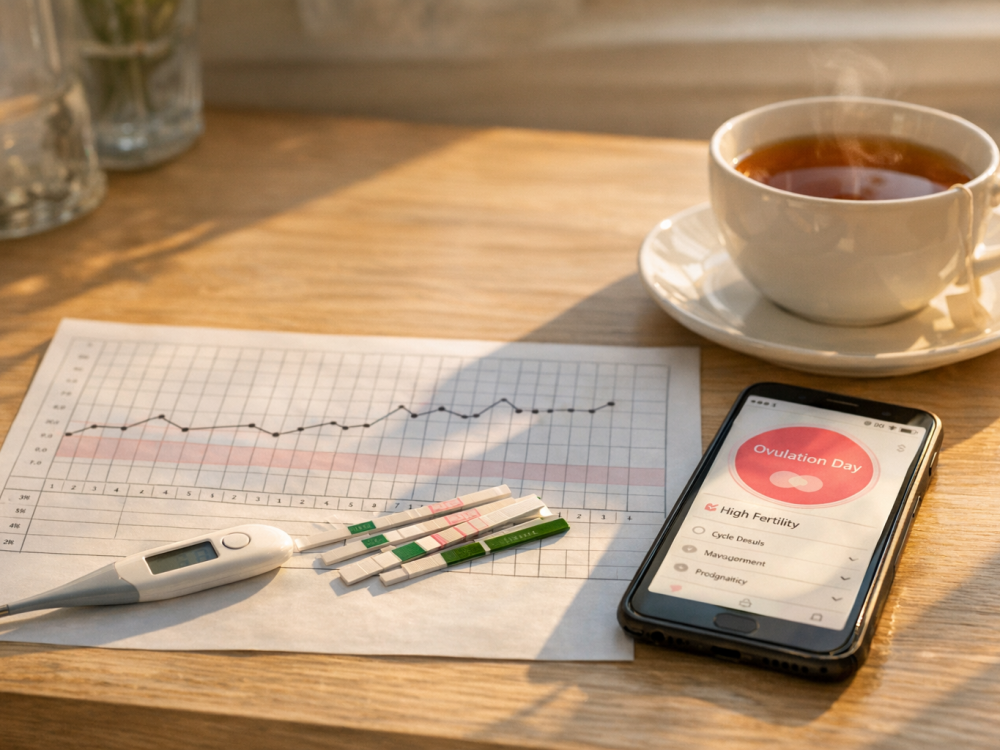
When cycles are irregular, tracking real-time physiologic markers is usually more informative than relying only on dates. Each method has strengths and limitations, and the best approach often combines several signals.
- : Estrogen changes cervical secretions before . Fertile-quality mucus is often slippery, clear, stretchy, or lubricative. For many people with irregular cycles, mucus observations can provide an earlier sign that the body may be approaching .
- predictor kits: These urine tests detect luteinizing hormone, or LH, which often surges before ovulation. They can be helpful, but people with polycystic ovary syndrome or chronically elevated LH may see confusing or repeated positives. Very long cycles may also require many test strips.
- Basal : BBT typically rises after ovulation due to progesterone. This can help confirm that ovulation likely occurred, but it does not predict ovulation far enough in advance to time intercourse by itself. Sleep disruption, illness, alcohol, travel, and inconsistent measurement times can distort readings.
- Cycle symptoms: Some people notice mittelschmerz, breast tenderness, libido changes, bloating, or mood shifts. These can be supportive clues but are not reliable proof of ovulation.
- Clinical monitoring: In fertility care, ultrasound follicle tracking and serum hormone testing may be used to assess ovulation more directly. These are medical tools and should be guided by a clinician.
Adjustments if you are trying to conceive
If you are trying to become pregnant with irregular cycles, the goal is usually to avoid missing the without turning tracking into an exhausting daily project. A practical strategy is to begin observing soon after bleeding ends and use predictor kits when mucus becomes more fertile or when your past cycles suggest may be approaching.
Because sperm can survive for several days, intercourse every 1 to 2 days during a suspected fertile period can be effective for many couples. If that feels stressful, even every 2 to 3 days across the cycle may reduce the chance of missing a delayed . The right approach depends on your relationship, energy, sexual comfort, and any medical guidance you have received.
It is also worth documenting , bleeding pattern, positive or near-positive LH tests, mucus quality, BBT shifts, and pregnancy test results. Over several cycles, this information can help distinguish delayed from absent and may be useful during a healthcare visit. If cycles are frequently longer than about 35 days, shorter than about 21 days, absent for 3 months or more, or associated with signs of endocrine imbalance, consider discussing this with a clinician rather than simply tracking longer.
Adjustments if you are avoiding pregnancy
Using fertility awareness to avoid pregnancy with requires particular caution. The more variable the cycle, the harder it is to identify infertile days confidently. Calendar-only methods are generally not a good fit for highly irregular cycles because may occur outside the predicted range.
If you prefer fertility awareness-based contraception, consider learning a structured from a qualified instructor. Methods that combine , BBT, and specific rules for opening and closing the tend to be more robust than calendar-only estimates. Even then, the method requires consistent observations, careful interpretation, and abstinence or barrier use during potentially fertile days.
If pregnancy would be medically, emotionally, or practically difficult at this time, it is wise to discuss contraceptive options with a healthcare professional. Irregular cycles do not mean you cannot get pregnant; ovulation can occur before a period returns, after a long delay, or in a cycle that seemed unpredictable.
Using apps and wearables wisely
Digital cycle tracking tools can be genuinely helpful. They make it easier to record bleeding, mucus, LH tests, BBT, sexual activity, pain, mood, medications, and other symptoms. Over time, this data can reveal patterns that are hard to see from memory alone. Scientific discussions of menstrual tracking applications also emphasize their potential role in improving reproductive health awareness and supporting conversations with clinicians.
The caution is that prediction is not the same as confirmation. Many apps estimate ]] using prior cycle lengths and algorithmic assumptions. If your cycles are irregular, the predicted may shift substantially or be wrong altogether. Apps that allow symptom-based inputs may be more useful than those that only count days.
Wearables that measure ]] trends or other physiologic parameters may reduce the burden of manual , but they still need context. A ]]]] shift may suggest ]] has already occurred; it usually does not provide the same advance notice as or LH testing. Treat app predictions as hypotheses, not medical conclusions.
When irregular cycles deserve medical evaluation
Irregular cycles are common at certain life stages, including the first years after menarche, postpartum, during lactation, and in the menopausal transition. They can also be influenced by stress, weight change, intense exercise, sleep disruption, medications, thyroid disease, hyperprolactinemia, polycystic ovary syndrome, hypothalamic dysfunction, primary ovarian insufficiency, uterine conditions, and other medical factors.
You do not need to self-diagnose the cause before seeking help. A healthcare professional may ask about cycle history, bleeding volume, pain, acne, hirsutism, galactorrhea, weight changes, eating patterns, exercise, medications, and pregnancy possibility. Depending on the situation, evaluation might include pregnancy testing, thyroid-stimulating hormone, prolactin, androgen testing, ovarian reserve markers, pelvic ultrasound, or other assessments.
If you are trying to conceive, many clinicians recommend evaluation after 12 months of trying if you are under 35, after 6 months if you are 35 or older, or sooner if you have markedly irregular cycles, known reproductive conditions, recurrent pregnancy loss, or a history suggesting an. Individual recommendations vary, so personalized medical advice is important.
When to seek medical advice promptly
- No menstrual period for 3 months or more when not pregnant, postpartum, or using a method known to suppress bleeding
- Very heavy bleeding, fainting, severe pelvic pain, or bleeding between periods that is new or worsening
- Cycles consistently shorter than about 21 days or longer than about 35 to 40 days
- Repeated positive ovulation tests without a clear temperature shift or period afterward
- Irregular cycles with excess facial hair, severe acne, nipple discharge, unexplained weight change, or symptoms of thyroid disease
Tools & Assistance
- A cycle diary or fertility app that allows mucus, LH, BBT, bleeding, and symptom tracking
- Ovulation predictor kits used strategically rather than continuously in very long cycles
- A basal thermometer or validated temperature-tracking wearable
- Consultation with an OB-GYN, reproductive endocrinologist, midwife, or fertility awareness educator
- Pregnancy tests when a period is late or ovulation timing is unclear
FAQ
Can I ovulate if my periods are irregular?
Yes. Irregular cycles can still include ovulation, but the timing may vary. Some irregular cycles may also be anovulatory, meaning ovulation does not occur.
Is a fertility app enough for irregular cycles?
An app can help organize observations, but its predicted fertile window may be inaccurate if it relies mainly on past cycle length. Symptom and test data are usually more informative.
Are ovulation predictor kits reliable with PCOS?
They can be harder to interpret in PCOS because LH may be elevated or surge more than once. A clinician can help decide whether LH testing is useful for your situation.
Does a BBT rise prove I ovulated?
A sustained BBT rise suggests progesterone activity after ovulation, but it is not perfect proof. Illness, poor sleep, alcohol, travel, and measurement inconsistencies can affect results.
When should I get help if I am trying to conceive?
Seek individualized advice sooner if cycles are very irregular, absent, or associated with concerning symptoms. Age, medical history, and how long you have been trying also matter.
Sources
- Cleveland Clinic — How to Track Ovulation With Irregular Periods
- Mayo Clinic — Rhythm method for natural family planning
- PubMed Central — Menstrual Cycle Tracking Applications and the Potential for Improving Reproductive Health Outcomes
Disclaimer
This article is for informational purposes only and does not replace medical advice, diagnosis, or treatment. Consult a qualified healthcare professional for personal guidance about irregular cycles, fertility, contraception, or pregnancy concerns.

















Please log in to leave a comment.