
Intro
Reading habits do not appear all at once. They grow through repeated, pleasant experiences with books, stories, and conversation. For children, the goal is not to force speed or perfection, but to make reading feel familiar, rewarding, and emotionally safe. When a child feels that books belong in everyday life, reading is more likely to become a lasting habit rather than a school-only task.
Research consistently points to a few supportive ingredients: easy access to books, choice, adult read-alouds, discussion, repetition, and a print-rich environment. Children are more likely to read when they can find texts that match their interests, when adults scaffold the experience, and when reading is part of warm social interaction. This article explains practical ways to encourage reading habits at home, in school, and in the community, while also noting when a child may need extra assessment or support.
Highlights
Reading habits are built through routine, access, and positive emotion, not pressure alone.
Children often read more when they can choose books that match their interests and developmental stage.
Adult read-alouds, shared discussion, and repeated reading can strengthen confidence and fluency.
Libraries, book-rich homes, and classrooms with varied texts make reading easier to return to.
If reading difficulty is persistent, it is wise to seek professional guidance rather than assuming laziness or poor effort.
Why reading habits matter in childhood
Reading habits help children build vocabulary, background knowledge, attention, and comprehension over time. They also support academic readiness because reading is not only about decoding words; it is also about understanding language, memory, and flexible thinking. A child who reads regularly is more likely to encounter new ideas, structures, and ways of using language.
Just as important, reading can become a source of comfort and autonomy. A story can give a child a break from performance pressure while still keeping the brain active. Many children are more willing to return to reading when it feels enjoyable, predictable, and emotionally safe. The evidence base on reading motivation suggests that social and emotional factors matter: children often thrive when reading is linked to shared attention, conversation, and a sense of belonging.
It can help to think of reading habits as a developmental skill. They are shaped by repeated experiences, not by one perfect intervention. A child who hears stories, sees adults read, and has books within reach is learning that reading is part of ordinary life.
Make books easy to reach and easy to choose
Access is one of the simplest and strongest ways to encourage reading. Children read more when books are available in the spaces where they already spend time: on a bedside table, in a basket near the sofa, in a classroom reading corner, or in a backpack for waiting moments. Evidence from reading-for-pleasure research shows that having books of one’s own, and having access to a wide range of books, can improve motivation.
Choice matters too. Children are more engaged when they can select books that match their interests, maturity level, and mood. A reluctant reader may prefer animal facts, graphic novels, jokes, short chapters, sports stories, or books connected to a hobby. A varied collection reduces the chance that reading will feel like a single narrow task.
Adults can also improve access by making the environment visually inviting. A print-rich environment means that words, labels, books, posters, and story materials are easy to notice and use. This does not require expensive materials. A small shelf, a few regular library visits, and a predictable place to keep books can make a meaningful difference.
- Keep a few books in every common reading location.
- Offer different formats, such as picture books, audio-supported books, comics, and short nonfiction.
- Visit the library regularly and let the child browse without rushing.
- Rotate books so the collection feels fresh.
Create a calm routine rather than a reading battle
Children are more likely to build habits when reading happens at predictable times. A routine lowers the amount of decision-making needed each day. It may be five minutes after breakfast, a story before bed, or a quiet reading time after school. The exact timing matters less than the consistency and the tone.
Short sessions are often enough, especially for younger children or for children who are still building attention endurance. It is better to end while the experience is still positive than to continue until everyone feels tense. A child who associates books with conflict may avoid them, even when the child has the ability to read.
It also helps to use gentle structure. For example, one adult can say, “First we choose a book, then we read one page together, then you tell me your favorite part.” This type of clear routine supports executive function, which includes planning, initiation, and self-monitoring. Children often do better when the steps are predictable and the expectations are simple.
For some families, a literacy reward can help, especially when it is tied to the act of reading rather than to performance. A sticker, extra story time, or choosing the next library visit can reinforce the habit without turning reading into a test.
Use read-alouds, discussion, and repetition to deepen interest
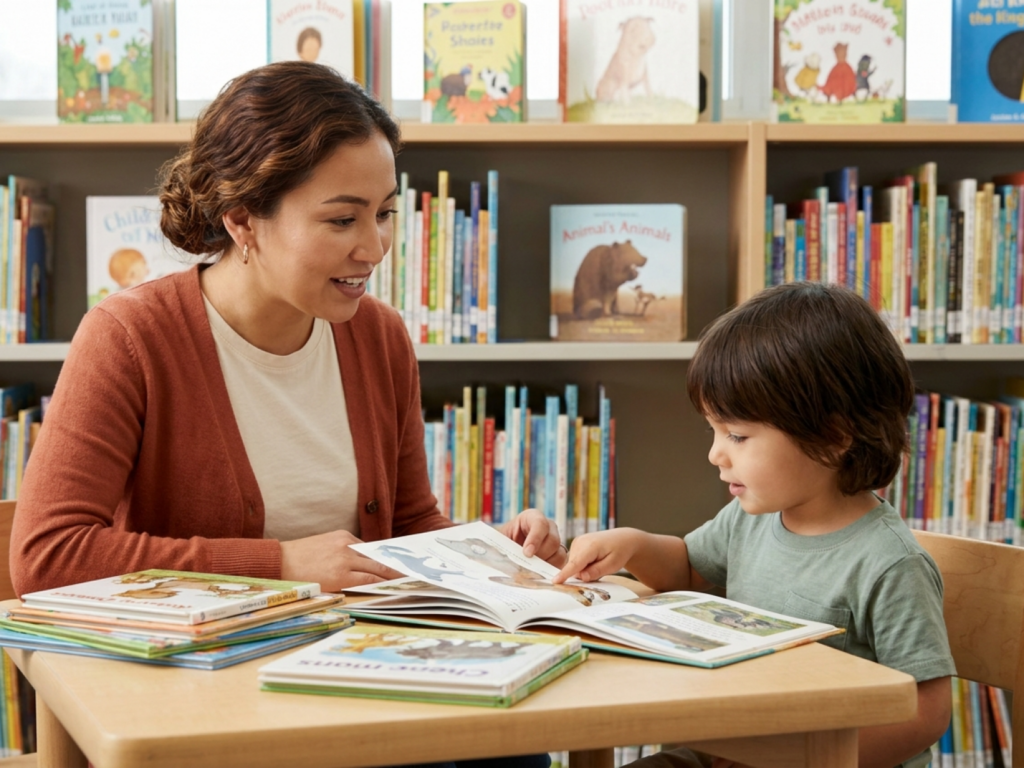
Shared reading is one of the most effective ways to support motivation. Research on reading development shows that read-alouds, adult scaffolding, repeated reading, and book discussions can all strengthen engagement. When an adult reads with expression, pauses for questions, and helps a child connect the story to their own life, the child is learning that reading is interactive rather than solitary and difficult.
Conversation is especially powerful. Ask open questions such as: “What do you think will happen next?” or “Which character seems most like you?” These prompts support comprehension and make the child an active participant. For younger children, even naming pictures, predicting what comes next, and retelling a story in simple terms can build language skills.
Repeated reading can also help. Many children enjoy hearing the same story many times, and that repetition supports familiarity, confidence, and fluency. A child who already knows the plot can focus more on expression, vocabulary, and meaning. This is not a sign of boredom; it is often part of how young readers consolidate learning.
Book discussions with siblings, caregivers, teachers, or peers add a social layer. Reading becomes a shared experience rather than a private task, and social interaction is a well-supported ingredient in reading motivation.
Build a reading culture at home, in school, and in the community
Children are influenced by what the adults around them treat as normal. If they see caregivers reading for information, enjoyment, or rest, they are more likely to view reading as a natural part of life. A family can build a reading culture by keeping books visible, talking about stories casually, and making library visits a regular routine rather than a special event.
Schools can reinforce this by giving time for independent reading, using diverse materials, and asking students about their interests. The Reading for Pleasure report emphasizes that children respond well when they feel their preferences are respected. A classroom library with many genres, levels, and formats can reduce the feeling that reading is only about assignments. Teachers can also support choice by offering students several book options for the same theme or topic.
Community spaces matter too. Libraries, book clubs, and local reading events can expand access for children who do not have many books at home. For some families, borrowing books is the most practical way to keep materials fresh and affordable. Children often become more interested when reading is connected to real places and real people rather than only to worksheets.
In this sense, encouraging reading habits is not just an individual task. It is a shared environment that tells the child, repeatedly, that books belong here.
When a child resists reading or struggles persistently
Some resistance is ordinary. A child may be tired, distracted, or simply not in the mood. However, if a child repeatedly avoids reading, becomes unusually distressed, or shows persistent trouble with sounding out words, remembering basic letter patterns, or understanding what was read, it is sensible to look more closely. The issue may relate to vision, hearing, language development, attention, or learning profile rather than motivation alone.
This is where careful observation is important. A child who says words incorrectly, loses place on the page, skips lines, or tires very quickly may be showing signs that reading demands are too difficult at the current level. In some cases, families and schools consider a specific learning disorder assessment or broader evaluation to understand the child’s needs better. That process should be guided by qualified professionals, not by guesswork.
Support can still be warm and encouraging during evaluation. Keep reading aloud to the child, offer easier texts, and avoid shaming. A child who struggles with reading still deserves access to stories, information, and meaningful conversation. If there are concerns about hearing, vision, speech-language development, or emotional wellbeing, consult the appropriate healthcare professional or school specialist.
Responding early can prevent frustration from hardening into avoidance. The goal is not to label a child quickly, but to understand what kind of support will make reading feel possible again.
When to seek professional help
- Reading difficulty that is persistent, severe, or worsening should be discussed with a pediatrician, school specialist, or other qualified professional.
- A child who seems to struggle with vision, hearing, language, attention, or memory may need a broader evaluation.
- Do not assume that avoidance means laziness; it may reflect frustration, fatigue, or an unmet learning need.
- If reading causes marked distress or affects school participation, ask for timely support.
Tools & Assistance
- Local public library or school library
- Read-aloud time built into the daily routine
- A small at-home book basket with mixed genres
- Teacher or librarian recommendations based on the child’s interests
- Pediatrician, school psychologist, or speech-language professional if concerns persist
FAQ
How much reading time is enough for a child?
There is no single perfect amount. Short, regular reading that stays calm and enjoyable is often more sustainable than long sessions that end in conflict.
What if my child only wants the same book over and over?
Repetition is normal and often helpful. Re-reading can build confidence, fluency, and comprehension before a child is ready to explore new texts.
Should I correct every mistake while my child reads?
Not always. Too much correction can reduce confidence. Gentle support, modeling, and encouragement are often more helpful than constant interruption.
What books are best for reluctant readers?
Books linked to the child’s interests, with manageable length and appealing format, are usually a good starting point. Choice matters more than trying to pick a single ideal type.
When should I ask for help about reading problems?
If difficulties are persistent, intense, or affect school life, ask a healthcare professional or school specialist for guidance rather than waiting and hoping they disappear.
Sources
- Institute of Museum and Library Services — Research on Motivation, Literacy, and Reading Development: A Report of the Commission on Reading Motivation
- UK Department for Education — Research evidence on reading for pleasure
- ERIC — Children's and Young People's Reading Habits and Preferences: The Reading for Pleasure Report
Disclaimer
This article is for general informational purposes only and is not a medical diagnosis or treatment plan. If a child has persistent reading difficulties, distress, or related concerns about vision, hearing, language, or learning, consult a qualified healthcare professional or school specialist.

















Please log in to leave a comment.