
Intro
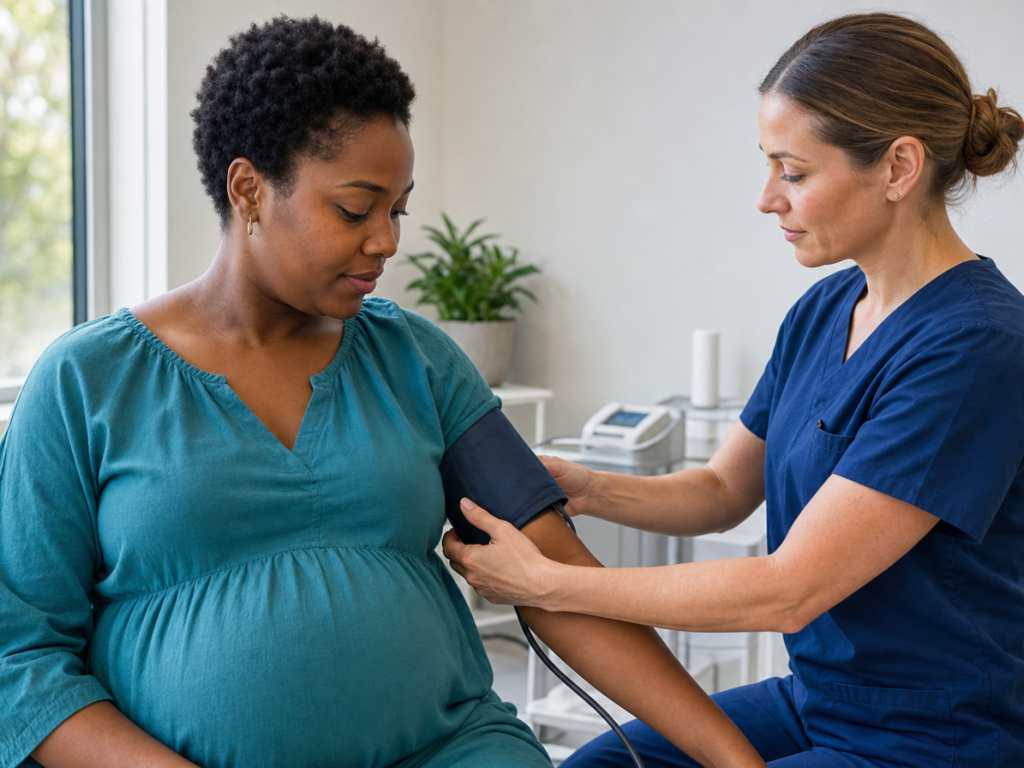
Blood pressure monitoring is one of the simplest, most repeated, and most clinically meaningful parts of prenatal care. For many pregnant people, each reading is normal and uneventful. For others, a rising blood pressure may be an early signal of a hypertensive disorder of pregnancy, including preeclampsia, a condition that can affect the pregnant person, placenta, and baby.
Preeclampsia can feel especially unsettling because it may develop after a period of feeling well, and some people have few symptoms at first. Careful monitoring cannot remove all risk, but it can help clinicians detect concerning patterns earlier, decide when more testing is needed, and guide maternal and fetal surveillance. If you are monitoring at home, the goal is not to diagnose yourself; it is to collect reliable information and know when to contact your maternity team.
Highlights
Preeclampsia is typically defined by new elevated blood pressure after 20 weeks of pregnancy, often with protein in the urine or signs of organ involvement.
Accurate technique matters: cuff size, arm position, rest time, and device validation can all influence blood pressure readings.
Home blood pressure monitoring can support earlier recognition of concerning trends, but it should be linked to clear instructions from a healthcare professional.
Warning symptoms such as severe headache, visual disturbance, right upper abdominal pain, shortness of breath, or sudden swelling deserve urgent medical advice even if a single reading seems borderline.
A high reading is a prompt to repeat correctly and contact care when advised; it is not a reason to adjust medication or make treatment decisions without clinical guidance.
Why blood pressure monitoring matters in pregnancy
Blood pressure reflects the force of blood against artery walls, recorded as systolic pressure over diastolic pressure. In pregnancy, clinicians watch these values closely because hypertensive disorders can develop even in people who have never had high blood pressure before.
Preeclampsia is a pregnancy-specific condition most often arising after 20 weeks of gestation. The World Health Organization describes it as new high blood pressure after 20 weeks with proteinuria, meaning excess protein in the urine, although clinical practice also considers other evidence of maternal organ dysfunction or fetal compromise. The condition can progress and, in severe cases, may lead to complications such as seizures, stroke, liver or kidney injury, placental problems, fetal growth restriction, or preterm birth.
Regular prenatal visits are designed partly to detect these changes before they become emergencies. A single reading rarely tells the whole story. Clinicians interpret blood pressure alongside gestational age, previous readings, symptoms, urine results, blood tests, fetal growth, and other risk factors.
How preeclampsia is usually detected
Detection is based on a combination of measurements and clinical assessment. Blood pressure is central, but it is not the only piece of information. A typical evaluation may include:
- Blood pressure measurement: repeated correctly to confirm whether elevation is persistent.
- Urine testing: dipstick screening or laboratory testing to assess proteinuria.
- Blood tests: platelet count, liver enzymes, kidney function, and sometimes additional markers depending on local practice.
- Symptom review: headache, visual changes, upper abdominal pain, nausea or vomiting, breathlessness, reduced urine output, or sudden swelling.
- Fetal assessment: growth ultrasound, amniotic fluid assessment, Doppler studies, non-stress testing, or biophysical profile when clinically indicated.
Some people with preeclampsia feel unwell; others feel completely normal. This is why routine checks are so valuable. If you are told your readings are elevated, your maternity team may ask you to attend triage, repeat measurements, provide urine, or have blood tests. These requests are precautionary and are meant to clarify risk, not to frighten you.
What counts as an elevated reading
Many maternity services use 140/90 mmHg or higher as a threshold for hypertension in pregnancy, while severe-range blood pressure is often considered around 160/110 mmHg or higher. Exact definitions and action plans can vary by guideline, setting, and individual risk profile. The important point is that pregnancy blood pressure interpretation should be handled by clinicians who can place the numbers in context.
If one reading is high, technique should be checked and the measurement repeated after rest, unless symptoms or very high values require immediate escalation. Anxiety, pain, caffeine, recent activity, talking during measurement, or an incorrect cuff size can contribute to misleading readings. However, it is safer to report concerning results than to dismiss them as stress.
People with chronic hypertension, kidney disease, autoimmune disease, diabetes, previous preeclampsia, multifetal pregnancy, or other risk factors may have a personalized monitoring plan. In some high-risk pregnancies, clinicians may recommend preventive strategies such as low-dose aspirin, but this should only be started, stopped, or adjusted under professional guidance.
Taking a reliable blood pressure reading at home
Home monitoring can be empowering when it is done with the right equipment and clear instructions. Evidence reviews suggest that self-monitoring may help with earlier detection and more frequent surveillance, although certainty of evidence varies and not all approaches have been equally studied. It works best as part of a shared plan with your midwife, obstetrician, or physician.
To improve accuracy:
- Use a blood pressure monitor validated for pregnancy and, where relevant, for preeclampsia.
- Choose the correct cuff size for your arm circumference.
- Sit quietly for several minutes before measuring.
- Keep your back supported, feet flat on the floor, and arm supported at heart level.
- Avoid talking during the reading.
- Follow your care team’s advice on timing, number of readings, and when to report results.
Wrist monitors are generally more technique-sensitive and may be less reliable if not positioned correctly. Upper-arm devices are commonly preferred in maternity care, but the specific device should match local recommendations. NHS England guidance emphasizes using approved, validated digital devices in maternity services and ensuring that patients have information about warning symptoms and escalation pathways.
Digital monitoring: helpful, but not a substitute for care
Digital blood pressure monitoring may involve a home device, an app, a text-based reporting system, or remote review by a clinical team. These systems can reduce unnecessary travel for some people and may help maternity services identify concerning trends sooner. They can also support continuity for those with known hypertension or increased risk of preeclampsia.
However, digital monitoring is only as safe as the system around it. Before relying on home readings, you should know:
- Which device to use and whether it is validated for pregnancy.
- How often to measure.
- What numbers require a repeat reading.
- What numbers require same-day contact or urgent assessment.
- Which symptoms require help regardless of the blood pressure number.
- Who reviews submitted readings and how quickly.
If you are entering readings into an app, do not assume that every value is reviewed instantly unless your service explicitly says so. If you feel unwell or have severe-range readings, use the urgent contact route provided by your maternity team rather than waiting for routine digital review.
Symptoms that should change the plan
Blood pressure monitoring is important, but symptoms matter too. Preeclampsia can involve the brain, liver, kidneys, lungs, blood clotting system, and placenta. A person may need assessment even if the home monitor shows only a mild elevation or if the reading seems normal but symptoms are significant.
Contact your maternity unit, obstetric triage, emergency service, or local urgent care pathway promptly if you develop severe or persistent headache, flashing lights or blurred vision, chest pain, shortness of breath, severe upper abdominal or right-sided rib pain, sudden swelling of the face or hands, fainting, confusion, or seizures. Reduced fetal movements should also be assessed according to your local maternity guidance.
It can be hard to decide whether a symptom is “bad enough,” especially when pregnancy already brings headaches, swelling, nausea, and fatigue. A supportive rule is: if a symptom feels unusual, severe, persistent, or worrying, seek professional advice. You are not overreacting by asking for help.
What happens after a concerning reading
If your blood pressure is elevated, your care team may ask you to repeat the measurement, attend a clinic or maternity triage, or have additional tests. The aim is to determine whether the reading is isolated, whether hypertension is persistent, and whether there is evidence of preeclampsia or another condition.
Possible next steps may include urine protein testing, blood tests, review of symptoms, fetal heart rate monitoring, ultrasound assessment of fetal growth, and medication if clinically indicated. In some cases, admission is recommended for closer observation. In others, enhanced outpatient monitoring may be appropriate.
The only definitive cure for preeclampsia is delivery of the placenta, but timing is a careful balance between maternal safety and fetal maturity. Clinicians may recommend close monitoring, antihypertensive treatment, corticosteroids for fetal lung maturation if preterm birth is possible, magnesium sulfate in severe cases to reduce seizure risk, or planned birth when benefits outweigh risks. These decisions are individualized and should be made with your healthcare team.
Making monitoring less stressful
Repeated blood pressure checks can be emotionally draining. Some people feel reassured by data; others feel anxious before every cuff inflation. Both reactions are understandable. A practical plan can reduce uncertainty.
Ask your clinician to write down your personal thresholds and contact instructions. Keep readings in a consistent log, including time of day, arm used, symptoms, and any unusual circumstances such as pain or recent activity. Try not to measure repeatedly outside the recommended schedule unless you have been told to do so; frequent unscheduled checks can increase anxiety and produce confusing variation.
If you are worried about preeclampsia because of a previous pregnancy, family history, or current high-risk status, tell your team. Emotional safety is part of good maternity care. Clear communication, reliable equipment, and a known escalation pathway can make monitoring feel less like a burden and more like a protective tool.
Seek urgent medical advice
- Blood pressure around 160/110 mmHg or higher, or any severe-range reading according to your care plan.
- Severe or persistent headache, visual disturbance, confusion, fainting, or seizure.
- Chest pain, shortness of breath, or severe upper abdominal or right rib pain.
- Sudden swelling of the face or hands, especially with other symptoms.
- Reduced fetal movements or any major change in your baby’s usual movement pattern.
Tools & Assistance
- A pregnancy-validated upper-arm digital blood pressure monitor with the correct cuff size.
- A written home monitoring plan from your midwife, obstetrician, or physician.
- A blood pressure and symptom log to bring to prenatal appointments.
- Your maternity triage or urgent obstetric contact number saved in your phone.
- Regular prenatal visits for blood pressure, urine testing, and fetal assessment when indicated.
FAQ
Can home blood pressure monitoring diagnose preeclampsia?
No. Home readings can identify concerning patterns, but diagnosis requires clinical assessment, which may include repeated blood pressure measurement, urine testing, blood tests, symptom review, and fetal evaluation.
Is one high blood pressure reading dangerous?
One high reading may reflect technique, stress, or activity, but it should not be ignored. Repeat it as instructed by your care team and follow your escalation plan, especially if symptoms are present or the reading is severe.
Should everyone monitor blood pressure at home during pregnancy?
Not necessarily. Some people benefit from home monitoring because of risk factors or previous readings, while others are appropriately monitored at routine visits. Ask your maternity team what is right for your pregnancy.
Can preeclampsia occur without protein in the urine?
Yes. Proteinuria is a classic feature, but clinicians may also consider other signs of organ involvement, abnormal blood tests, symptoms, or fetal concerns when assessing possible preeclampsia.
What should I do if my monitor gives very different readings?
Check cuff position, arm support, rest quietly, and repeat according to your instructions. Bring the device to a clinic appointment if possible so it can be compared with clinical equipment.
Sources
- Cochrane Database / PMC — Setting and techniques for monitoring blood pressure during pregnancy
- NHS England — Recommendations for digital blood pressure monitoring in maternity services
- World Health Organization — Pre-eclampsia
Disclaimer
This article is for general medical education and does not replace individualized care. If you have high blood pressure readings, concerning symptoms, or worries about preeclampsia, contact your healthcare professional or local maternity unit promptly.












Please log in to leave a comment.