
Intro
Balance is not a single skill that suddenly appears when a child starts walking. It is a developing neuro-motor function that depends on muscle strength, joint range, sensory integration, attention, confidence, and repeated movement experience.
Highlights
Postural control develops from head and trunk stability in infancy toward refined balance reactions in school-age children.
Vision, proprioception, and vestibular input mature on different timelines, so balance can look uneven during growth spurts or new motor stages.
Most children improve gradually with active play, but persistent regression, asymmetry, frequent unexplained falls, or delayed milestones should be discussed with a healthcare professional.
By around nine years of age, many children show more adult-like use of sensory information for balance, although performance continues to refine through adolescence.
What postural control means in childhood
Postural control is the ability to keep the body oriented and stable while still, moving, or preparing to move. In children, it is built through continuous interaction between the central nervous system, musculoskeletal growth, sensory feedback, and the environment. A baby lifting the head during tummy time, a toddler stopping before a step, and a school-age child landing from a jump are all using postural control.
Balance has two broad components. Static balance is the ability to maintain a position, such as sitting, standing, or standing on one foot. Dynamic balance is the ability to control the center of mass while the body moves, such as during crawling, walking, climbing, turning, or catching a ball. Children also develop anticipatory postural adjustments, which are small preparatory muscle activations that occur before movement. For example, the trunk and leg muscles may activate just before a child reaches forward, throws, or steps over an obstacle.
This development is closely related to Motor skills development by age, but balance is not identical to strength or coordination. A child may have enough leg strength to stand but still need time to organize vestibular input, proprioceptive feedback, visual cues, and trunk control. That is why balance often improves in waves: a new motor skill appears, looks unsteady for a while, then becomes smoother with practice.
Infancy: birth to 18 months
During infancy, balance develops from proximal stability outward. Newborns have limited voluntary postural control and rely heavily on reflexive movement patterns, caregiver support, and brief bursts of head control. Over the first months, improving neck and trunk activation allows the infant to lift the head, orient visually, and tolerate prone and supported sitting positions.
Research describing the first 18 months highlights several important transitions. Around 3 months, infants show meaningful progress in head and upper trunk control. Around 6 months, sitting becomes more stable for many infants, although protective responses and reaching while sitting are still maturing. Around 9 to 10 months, many infants are developing more complex postural strategies during crawling, pulling to stand, cruising, and transitions between positions. Around 13 to 14 months, independent standing and early walking often become more organized, with anticipatory postural adjustments becoming more evident.
These ages are approximate, not diagnostic boundaries. Some healthy infants walk earlier, and others walk later while still following an appropriate developmental trajectory. Clinicians consider the whole pattern: symmetry, muscle tone, feeding and breathing history, vision and hearing, opportunity for floor play, and whether skills are progressing. Independent walking by 18 months is a commonly discussed milestone, but families should seek individualized advice rather than using one age alone to judge development.
Toddlers and preschoolers: practice, falls, and rapid change
Toddlers often look fearless and unstable at the same time. Their base of support is wide, steps are short, arms may be held away from the body, and stopping or turning can be awkward. This is usually a sign of a nervous system actively calibrating. The child is learning how much force is needed, how quickly the body sways, and how to recover when the center of mass moves outside the base of support.
Between ages 2 and 5, balance becomes more adaptable. Children climb stairs with improving control, jump with two feet, begin brief single-leg stance, run with fewer falls, and negotiate playground surfaces. Preschool coordination development depends on repeated safe exposure to uneven ground, climbing, squatting, reaching, dancing, and ball play. Visual guidance remains important; many young children become more unstable when vision is reduced or when the surface is compliant.
Some clumsiness is expected, especially during fatigue, excitement, illness, or growth. However, developmental coordination difficulties may be suspected when a child is consistently much less coordinated than peers, avoids movement because it feels hard, struggles with dressing or playground participation, or has frequent falls that do not improve with age and practice. A pediatric physical therapy evaluation can help clarify whether the issue is strength, range of motion, sensory integration, motor planning, vestibular function, vision, or another medical factor.
School age: sensory integration becomes more efficient
In school-age children, postural control becomes more refined because sensory systems are used more flexibly. The visual system provides information about orientation and movement in relation to the environment. Proprioception gives feedback from muscles, tendons, and joints about body position. The vestibular system, located in the inner ear, detects head motion and gravitational orientation. Mature balance requires the brain to weigh these inputs differently depending on the task.
A child standing on a firm floor in daylight can rely on all three systems. A child walking in the dark must rely more heavily on proprioceptive and vestibular information. A child standing on a soft mat receives less precise information from the feet and ankles, so vision and vestibular input become more important. Studies of healthy children suggest that the ability to integrate these sensory streams continues to mature through childhood, with many measures approaching functional maturity around nine years of age.
This does not mean every nine-year-old should balance like an adult. Attention, anxiety, sleep, musculoskeletal alignment, physical activity, and sport experience still matter. School-age learning difficulties, attention regulation, or sensory processing differences can also influence how a child performs in busy environments such as classrooms, gymnasiums, or playgrounds. Balance is therefore best understood as both a motor skill and a context-dependent behavior.
Adolescence: growth, strength, and sport-specific control
Adolescence brings another period of recalibration. Rapid growth can temporarily change limb length, mass distribution, flexibility, and leverage. A teenager may seem less coordinated during a growth spurt because the nervous system is adapting to a body with different proportions. Strength, reaction time, and sport-specific neuromuscular control generally improve with maturation and training, but they do not improve equally in every child.
Postural control across the lifespan is often described as an inverted U-shaped pattern: performance is lower in children, improves toward young adulthood, and declines later in life. In adolescence, balance moves toward adult efficiency, especially when the child has varied movement experiences. Running, swimming, cycling, martial arts, dance, skating, climbing, and ball sports each challenge balance in different ways. No single activity is required; variety helps the brain learn adaptable strategies.
Families and coaches should be cautious about interpreting awkwardness as laziness or lack of effort. Pain, recurrent ankle sprains, dizziness, headache after impact, joint hypermobility, low energy availability, visual problems, and fear of falling can all affect balance. Concussion awareness in children is particularly important because dizziness, imbalance, headache, visual disturbance, or difficulty concentrating after a head injury should prompt medical guidance before returning to sport.
How families can support balance safely
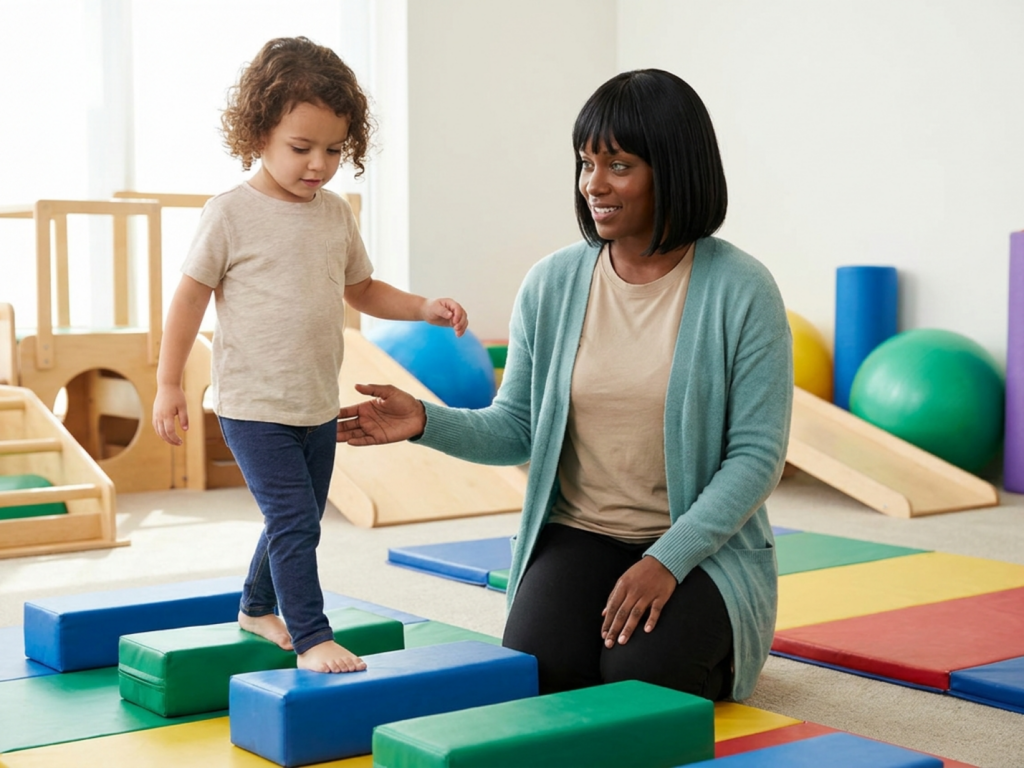
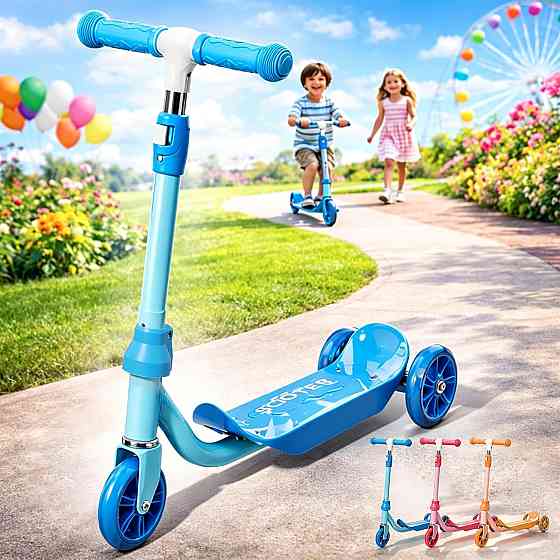
Children build balance through movement that is challenging but not overwhelming. For infants, supervised tummy time, floor play, reaching, rolling, and supported transitions encourage head and trunk control. For toddlers, safe active play for toddlers may include climbing low structures, stepping over cushions, pushing toys, walking on varied but safe surfaces, and practicing stairs with close supervision. For preschool and school-age children, obstacle courses, balance beams close to the ground, hopping games, scooter boards, swimming, playground play, and dancing can all be useful.
The goal is not to drill balance in a stressful way. A supportive environment lets the child try, adjust, and succeed often enough to remain engaged. Shoes should fit well, but barefoot play in safe indoor settings can give rich proprioceptive feedback. Sleep, nutrition, vision correction, and treatment of pain or chronic illness also matter because balance is sensitive to overall health.
Child safety basics by age still apply. A child practicing balance needs supervision matched to developmental level, safe surfaces, and realistic expectations. Avoid forcing positions a child cannot enter independently, using unsafe baby equipment for prolonged periods, or comparing siblings too closely. If a child loses acquired motor skills, develops a new limp, has persistent asymmetry, shows unusual fatigue, or falls far more than peers, families should contact a pediatric clinician. Developmental surveillance and screening can identify children who may benefit from early intervention, rehabilitation, vision or hearing assessment, or other specialist care.
Seek medical advice promptly
- Loss of acquired motor skills, new weakness, or persistent asymmetry should be assessed.
- Dizziness, imbalance, vomiting, headache, or confusion after a head injury needs medical guidance.
- Frequent unexplained falls, fainting, or episodes that look like seizures warrant prompt evaluation.
- Delayed sitting, standing, or walking should be discussed with a pediatric clinician in context.
- Pain, limping, refusal to bear weight, or swollen joints should not be treated as simple clumsiness.
Tools & Assistance
- Routine developmental surveillance with a pediatric clinician
- Vision and hearing assessment when balance concerns persist
- Pediatric physical therapy evaluation for motor delay, falls, or gait concerns
- Occupational therapy assessment when balance affects play, dressing, handwriting, or school tasks
- Safe, supervised active play matched to the child’s age and abilities
FAQ
Is it normal for toddlers to fall often?
Some falling is expected as toddlers learn to walk, run, stop, and turn. Falls should gradually decrease, and persistent frequent falls, injury, asymmetry, or loss of skills should be discussed with a clinician.
At what age does balance become mature?
Many children show more adult-like sensory integration for balance around nine years of age, but refinement continues with growth, practice, attention, strength, and activity experience.
Can poor balance be related to vision or the inner ear?
Yes. Vision, proprioception, and vestibular function all contribute to postural control. Persistent dizziness, motion sensitivity, visual complaints, or imbalance may require professional assessment.
Should parents train balance every day?
Most children benefit from regular active play rather than formal drills. If a child has motor delay, pain, neurologic symptoms, or significant clumsiness, a professional can recommend individualized activities.
Sources
- PubMed Central — Development of postural control and maturation of sensory systems in healthy children
- PubMed — Development of postural control during the first 18 months of life
- Scientific Reports — Lifespan changes in postural control
Disclaimer
This article is for general medical education only and does not diagnose or treat any child. For concerns about balance, falls, dizziness, motor delay, or regression, consult a qualified healthcare professional.














Please log in to leave a comment.