
Intro
Child safety is not about expecting parents to prevent every bump or scare. It is about matching the environment, supervision, and teaching to a child’s developmental stage so that normal curiosity does not become a preventable injury.
Because children’s motor skills, judgment, impulse control, and risk perception change rapidly, safety planning works best when it is age-based. The guidance below is practical and medically cautious: it can support everyday decisions, but it should not replace advice from your child’s pediatrician or a qualified healthcare professional, especially for children with medical, developmental, mobility, sensory, or behavioral differences.
Highlights
Safety needs change as children move from reflexive newborn behaviors to mobile toddler exploration, school-age independence, and adolescent risk-taking.
The most effective prevention combines environmental controls, close supervision, repeated teaching, and developmentally appropriate responsibility.
Car restraints, water safety, fire prevention, safe storage of weapons and medications, and pedestrian safety remain core priorities across childhood.
A child’s age is only a starting point; temperament, neurodevelopment, medical conditions, and family circumstances can change the level of support needed.
Why age-based safety works
Children are not simply smaller adults. Their injury risk is shaped by neurodevelopment, body proportions, mobility, language comprehension, and executive function. An infant has a large head relative to the body and limited ability to reposition during sleep. A toddler can climb before understanding consequences. A preschooler may repeat a rule but still run toward a ball in the street. A teenager may understand risk intellectually while being strongly influenced by peers, sleep deprivation, and novelty seeking.
Age-based child safety therefore begins with anticipating the next skill, not reacting after it appears. If a baby is starting to roll, the changing table is no longer a safe place for unattended moments. If a toddler is pulling to stand, furniture tip-over prevention becomes urgent. If a child is beginning to walk to school, pedestrian safety needs repeated practice in real traffic environments.
It also helps to understand how children learn by age. Younger children learn through repetition, modeling, and immediate routines; older children can use discussion, planning, and problem-solving. Safety rules become more effective when they match attention span, language level, and emotional regulation.
Infants: birth to 12 months
For infants, the safety plan is mostly environmental because babies cannot understand rules or protect themselves. The highest priorities are safe sleep, falls, choking, burns, motor vehicle safety, and caregiver readiness. Babies should sleep in a safe sleep space according to current medical guidance from their clinician, and caregivers should avoid soft bedding, pillows, and loose items in the sleep area unless specifically advised otherwise.
Falls often happen during ordinary care. Keep one hand on an infant on changing tables, beds, sofas, and exam-style surfaces. Once rolling begins, assume the baby can move unexpectedly. Use safety straps as a backup, not as the only protection. Never place an infant seat or carrier on a high surface.
Choking prevention starts before solid foods. Keep small objects, button batteries, magnets, coins, and medication packaging out of reach. When complementary foods are introduced around 6 months, caregivers should ask the pediatrician about safe textures, allergen introduction, and choking hazards. This connects closely with Child nutrition basics by age, because oral-motor readiness and feeding safety develop together.
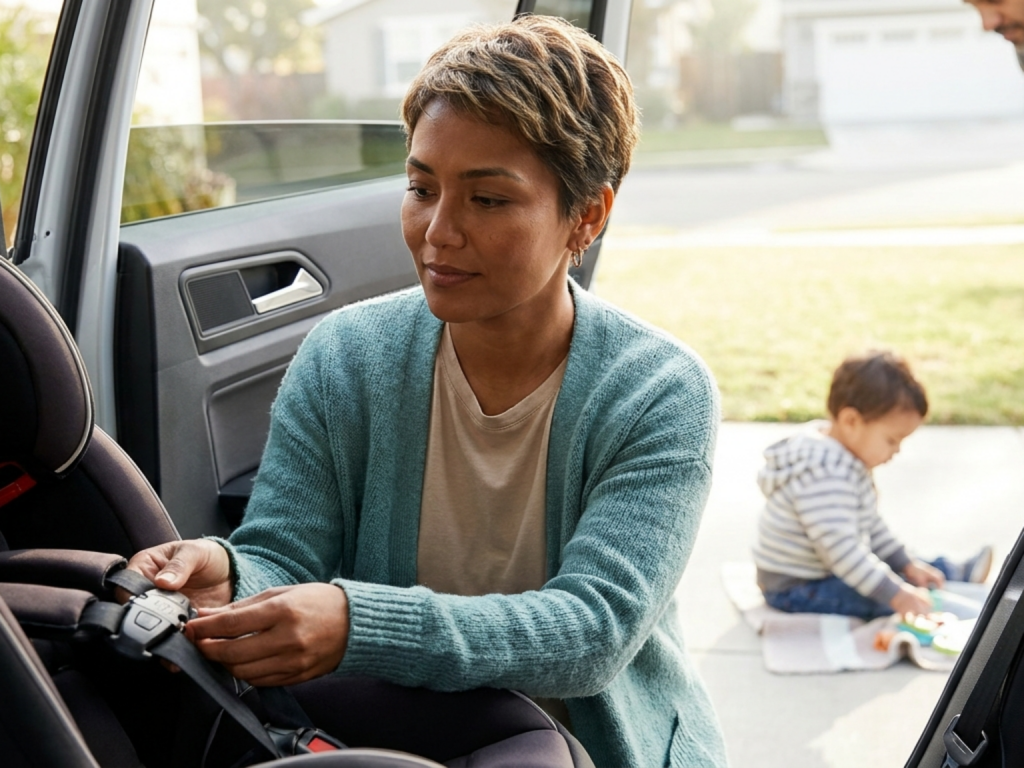
In cars, infants need an appropriate rear-facing car seat installed according to the seat manual, vehicle manual, and current pediatric guidance. For water, even a few centimeters can be dangerous; bathing requires constant touch supervision. Caregivers should also consider infant CPR training and know local emergency numbers.
Toddlers: 1 to 3 years
Toddlers are fast, curious, impulsive, and developmentally normal toddler behavior often includes climbing, grabbing, mouthing, and resisting limits. This is the age when environmental controls become especially important. Install safety gates at stairs, use window guards where appropriate, lock away medications and cleaning products, and secure heavy furniture and televisions to reduce tip-over injuries.
Poisoning prevention should be systematic. Store medications, cannabis products where legal, alcohol, detergents, pesticides, and personal care products in locked or latched areas, ideally high and out of sight. Child-resistant packaging is helpful but not childproof. If exposure is suspected, contact poison control or emergency services promptly rather than waiting for symptoms.
Water safety is critical. Toddlers can drown silently and quickly, so supervision near bathtubs, pools, buckets, toilets, ponds, and beaches must be uninterrupted and within arm’s reach. Teach simple water rules such as “wait for a grown-up,” but do not rely on instruction, flotation devices, or swimming lessons as substitutes for supervision.
Burn prevention includes turning pot handles inward, keeping hot drinks away from table edges, using back burners when possible, and supervising near ovens, grills, fireplaces, irons, and hair tools. Around streets and driveways, hold hands and use physical boundaries. At this age, repeated caregiver calm follow-through is more effective than long explanations.
Preschoolers: 3 to 5 years
Preschoolers can understand simple rules but still have immature impulse control and limited danger prediction. They may know that cars are dangerous yet chase a toy into a road. They may remember “don’t touch” but test a hot surface minutes later. Safety teaching should be brief, concrete, and practiced in the actual setting.
Car and street safety should become a routine: stop at the curb, look left-right-left, listen, and cross with an adult. Use correct car restraints for the child’s size and the seat’s instructions, following pediatric recommendations. Children should not graduate early from harnesses or booster seats simply because they ask to.
Outdoor play safety includes age-appropriate playgrounds, soft landing surfaces, and close supervision. Check equipment for height, openings that could trap a head or limb, hot surfaces, and broken parts. Helmets are essential for bicycles, scooters, and similar wheeled toys, and they should fit correctly.
This is also the stage to teach body safety, emergency basics, and what to do if separated from a caregiver. Use clear language: private parts are private, secrets about safety are not okay, and trusted adults can help. Stranger danger is best taught as safe behavior rather than fear of all unfamiliar people; for example, “ask the adult caring for you before going anywhere with anyone.” Guns, knives, matches, lighters, and tools must be locked away, because curiosity is expected at this age.
School-age children: 6 to 12 years
School-age children gain independence, physical skill, and peer influence. Safety planning shifts from constant proximity to structured responsibility, practice, and check-ins. They still need adult oversight because judgment, attention, and hazard recognition continue to mature.
Pedestrian and bicycle safety should be rehearsed. Children need to learn predictable routes, traffic signals, driveway awareness, helmet use, and the limits of drivers’ visibility. Many children cannot reliably judge vehicle speed and distance until later in childhood, so caregivers should be cautious about independent street crossing.
Sports and recreation safety include proper equipment, hydration, sun protection, concussion awareness, and rest. A child with a head injury, loss of consciousness, repeated vomiting, worsening headache, confusion, seizure, or unusual sleepiness needs urgent medical assessment. Coaches and caregivers should not return a child to play after a suspected concussion without appropriate professional guidance.
Home safety remains relevant. Fire escape plans should be practiced, smoke and carbon monoxide alarms checked, and children taught how to call emergency services. Safe storage of firearms, sharp objects, medications, and hazardous chemicals continues to matter even when a child seems responsible. Digital safety also begins here: discuss privacy, respectful communication, cyberbullying, and asking for help if something online feels frightening or confusing.
For learning concerns in school-age children, safety instructions may need visual supports, repetition, occupational therapy input, or school collaboration. Individualizing the plan is not overprotective; it is prevention.
Adolescents: 13 to 18 years
Adolescents need a different safety conversation: respectful, specific, and collaborative. They are developing autonomy, identity, and abstract reasoning, but their prefrontal executive systems are still maturing. This can make risk assessment inconsistent, particularly with peers, emotional stress, substances, or sleep loss.
Motor vehicle safety becomes central. Seat belts should be nonnegotiable. Teens who drive need graduated, legally compliant limits around passengers, nighttime driving, phones, alcohol, cannabis, and fatigue. Caregivers can use written driving agreements that define expectations and consequences before conflict occurs.
Discuss substance safety without shame. Alcohol, nicotine, vaping products, cannabis, opioids, and other drugs can impair judgment, increase injury risk, and interact dangerously with medications or mental health conditions. Medications at home should remain secured, especially opioids, sedatives, stimulants, and other prescription drugs with misuse potential.
Adolescents also need guidance on consent, sexual health, online privacy, self-harm risk, and mental health emergencies. If a teen expresses suicidal thoughts, threatens self-harm, shows severe intoxication, or has sudden behavioral changes, caregivers should seek urgent professional help. Safety is strengthened when teens know they can call a caregiver for help without immediate humiliation or punishment.
Balance matters. Adolescent limits and autonomy should grow together: more freedom when safety behaviors are demonstrated, and more structure when risk increases.
Children with medical, developmental, or sensory differences
Age alone may not predict safety needs for children with epilepsy, diabetes, autism spectrum disorder, ADHD, intellectual disability, motor impairment, sensory processing differences, vision or hearing impairment, or complex medical technology. A child may be chronologically school-age but need toddler-level environmental protections for elopement, water danger, choking, or impulsive climbing.
Families should consider a written safety plan with the pediatrician, therapists, school team, and other caregivers. This may include seizure precautions, medication storage, emergency action plans, feeding and aspiration precautions, safe transportation positioning, medical identification, and supervision plans for playgrounds, pools, and field trips.
For children who elope or have limited danger awareness, layered prevention is usually needed: door alarms, secure fencing where appropriate, identification, neighbor awareness, school protocols, and water hazard mapping. For children with sensory sensitivities, fire alarms, helmets, car restraints, or medical devices may require gradual desensitization and professional support.
Caregivers deserve support, not blame. If the usual safety advice does not fit your child, ask for individualized recommendations. Pediatricians, occupational therapists, physical therapists, child psychologists, certified child passenger safety technicians, and local safety programs can help adapt the environment while preserving dignity and participation.
Seek urgent help when safety may already be compromised
- Call emergency services for drowning, breathing difficulty, severe burns, major bleeding, loss of consciousness, seizure, or suspected serious head injury.
- Contact poison control or emergency services immediately after a possible ingestion of medication, chemicals, button batteries, magnets, or unknown substances.
- Seek urgent mental health support if a child or teen talks about self-harm, suicide, or feeling unsafe at home or online.
- Do not delay medical care because symptoms seem mild after a fall, crash, submersion event, or suspected poisoning.
- If a safety plan is difficult to maintain because of caregiver stress, housing conditions, or a child’s special needs, ask healthcare or community services for support.
Tools & Assistance
- Schedule age-based safety discussions during well-child visits with your pediatrician.
- Use a certified child passenger safety technician to check car seat or booster installation.
- Take an infant and child CPR course through a reputable local organization.
- Store poison control and emergency numbers in phones and visible home locations.
- Create a written home safety checklist for water, fire, medications, furniture, firearms, and outdoor play.
FAQ
At what age can children be trusted around water?
There is no universal safe age. Water supervision depends on swimming ability, judgment, environment, and medical factors. Young children need constant close supervision, and older children still need clear rules and adult oversight.
Are safety devices enough to prevent injuries?
No. Gates, locks, alarms, helmets, and car restraints reduce risk, but they work best with active supervision, maintenance, and repeated teaching.
How often should I update my child’s safety plan?
Reassess whenever your child gains a new skill, changes schools or caregivers, starts a sport, begins using devices online, or approaches driving age. Well-child visits are a good time to review.
What if my child has developmental delays or high impulsivity?
Use developmental ability rather than age alone. Ask the pediatrician, school team, or therapists for an individualized safety plan that addresses supervision, communication, sensory needs, and emergency response.
Sources
- PeaceHealth — Health and Safety, Ages 2 to 5 Years
- Kids and Teens Pediatrics — Child Safety: Essential Tips for Parents to Keep Their Kids Safe and Healthy
- Safe Kids Worldwide — Safety Tips
Disclaimer
This article is for informational purposes only and does not replace medical, developmental, or emergency advice. Consult your child’s healthcare professional for guidance tailored to your child and call emergency services for urgent safety concerns.
















Please log in to leave a comment.