
Intro
For many caregivers, bathing a baby raises practical questions: How often is enough? Will less frequent bathing affect hygiene? Could frequent bathing dry the skin? In most cases, babies do not need a daily full bath. The appropriate routine depends on age, mobility, skin condition, diapering, feeding-related messes, and what helps your baby remain comfortable.
A gentle, safe approach is usually more important than following a rigid schedule. Between baths, you can clean areas that commonly collect milk, sweat, saliva, or stool. Always prioritize water safety, temperature control, and close supervision, and consult your baby's healthcare professional if you have concerns about the skin or bathing routine.
Highlights
Most newborns and young infants need a full bath about three times a week, not every day.
Daily bathing may be acceptable when a baby enjoys it, but it is optional and can worsen dryness in sensitive skin.
Between baths, clean the face, neck folds, hands, and diaper area as needed.
Never leave a baby alone in or near bath water, even for a moment.
How often does a baby need a bath?
For most newborns and young infants, a full bath approximately three times per week is sufficient. The Mayo Clinic notes that newborns do not require daily baths and that about three baths weekly is generally enough until a baby becomes more mobile. MedlinePlus similarly describes bathing every three days as adequate for many infants.
This recommendation refers to full-body immersion or tub bathing. It does not mean a baby should remain unclean between baths. Milk, saliva, perspiration, stool, urine, and skin-fold moisture can be removed with targeted washing whenever necessary. A brief, focused clean is often all that is needed on days without a full bath.
There is no universal schedule that suits every family. A baby who has frequent spit-up, significant sweating, a diaper leak, or visible soil may need additional cleaning. Conversely, a baby with very dry or sensitive skin may benefit from fewer baths and shorter bathing sessions. Your baby’s age, skin findings, and medical history should guide adjustments.
Newborns need a gentler routine
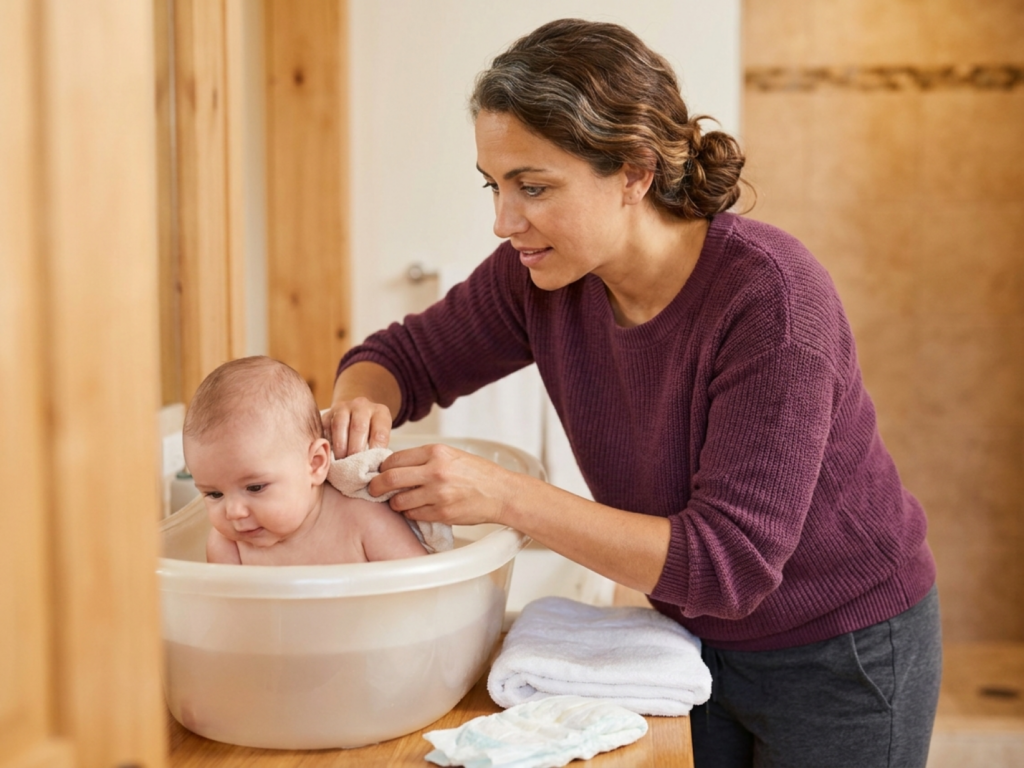
During the newborn period, the skin barrier is still developing, and babies can lose body heat rapidly when undressed or wet. Until the umbilical cord stump has separated and the area is healing appropriately, many clinicians recommend sponge bathing rather than placing the baby in a tub. Follow the specific instructions provided by your maternity or pediatric care team.
A newborn sponge bath safety routine should include a warm room, a stable flat surface, and all supplies within reach before undressing the baby. Clean one area at a time, keep the rest of the body covered, and dry promptly. Do not improvise by leaving a baby on a raised surface while reaching for soap, towels, or clothing.
Once tub bathing is appropriate, use a shallow amount of warm water and support the baby’s head and neck throughout. The water should feel warm rather than hot. Test it with the inside of your wrist or elbow, and consider checking with a bath thermometer if you are uncertain. Avoid relying solely on a faucet’s temperature setting because water temperature can fluctuate.
Newborn hair usually does not need shampoo at every bath. A small amount of mild cleanser may be enough when needed, while the scalp can otherwise be rinsed gently. Caregivers seeking more detailed guidance may review information about mild baby shampoo and gentle scalp cleansing.
Why daily bathing is not usually necessary
Frequent bathing can remove surface lipids and natural moisturizing factors that help maintain the epidermal barrier. In babies with xerosis, eczema-prone skin, or a history of irritation, repeated exposure to hot water, fragranced products, or prolonged soaking may increase dryness, scaling, or discomfort. This is one reason that less frequent full baths are often recommended.
Bath duration and technique matter as much as the number of baths. Keep the session brief, use warm rather than hot water, and avoid scrubbing. A fragrance-free, mild cleanser can be used sparingly on areas that are visibly dirty. Plain water is often adequate for less soiled areas. Bubble baths, heavily perfumed products, essential oils, and adult cleansers may irritate infant skin and should generally be avoided unless a healthcare professional recommends a specific product.
After bathing, pat the skin dry instead of rubbing, paying attention to the neck, armpits, groin, and other folds. If your baby’s skin is dry, a healthcare professional may recommend applying a bland emollient soon after drying. Do not assume that every rash is caused by dryness or treat persistent inflammation without professional advice. The appearance, distribution, and duration of a rash can have several explanations.
Overwashing baby risks include infant skin barrier disruption and increased irritation, particularly when bathing is combined with vigorous rubbing or multiple cleansing products. If the skin becomes persistently red, cracked, weepy, markedly scaly, or painful, ask your baby’s clinician for guidance.
Keeping a baby clean between baths
On non-bath days, a targeted wash is usually sufficient. The NHS specifically identifies the face, neck, hands, and bottom as areas that can be cleaned between baths. Use a soft, clean cloth with warm water, and gently wipe away residue rather than scrubbing it off.
- Face: Wipe milk, saliva, or spit-up from the cheeks and around the mouth. Use separate clean areas of the cloth for each eye if cleaning near the eyelids.
- Neck folds: Inspect folds where milk and moisture can collect. Clean gently, then dry thoroughly.
- Hands: Babies often keep their hands near their mouths, so remove visible food, milk, or dirt from the palms and between the fingers.
- Diaper area: Clean stool and urine promptly during diaper changes, using the approach recommended by your healthcare professional. Dry carefully before applying any clinician-recommended barrier product.
- Skin folds: Check under the arms and in the groin for trapped moisture, but avoid repeatedly cleaning or rubbing normal skin that is not dirty.
These brief cleaning episodes do not need to become full baths. Separating hygiene from a formal bathing ritual can reduce skin exposure to water and cleanser while still addressing areas that need attention. It can also be more manageable when a caregiver or baby is tired.
When can a baby bathe more often?
As babies become more mobile, crawl, eat solid foods, play outdoors, or sweat more, they may need more frequent bathing. A bath after substantial dirt or food residue is reasonable, but increased activity does not automatically make daily bathing necessary. Clean the areas that are soiled and consider whether a short rinse is enough.
The NHS notes that if a baby enjoys bathing, daily baths are acceptable. This balanced guidance is useful: daily bathing can be a pleasant family routine, but it is not a hygiene requirement for most infants. If you bathe daily, reduce potential irritation by keeping the water comfortably warm, limiting the duration, using cleanser selectively, and moisturizing when advised.
Some babies become calm and sleepy after a bath, while others become cold, overstimulated, or upset. Watch your baby’s cues. Shivering, mottled skin, persistent crying, fatigue, or difficulty settling may indicate that the session is too long, the room is too cool, or the routine is not currently comfortable. Stop, dry, dress, and warm the baby appropriately, and seek advice if you are worried.
Babies with eczema, recurrent rashes, prematurity, healing skin, or other medical conditions may need an individualized bathing plan. Ask the clinician who manages the condition whether there are preferred cleansers, bath additives, emollients, or frequency limits.
Bath safety matters every time
Water safety is the most important part of any bathing schedule. Never leave a baby unattended in a bath, even if the water is shallow, even if the baby is in a support seat, and even if you only intend to step away briefly. A caregiver should remain within arm’s reach and keep hands available to support the baby. If you must leave, take the baby with you.
Prepare everything first: towel, clean diaper, clothing, washcloth, and any product you plan to use. Place the bath on a stable surface, keep electrical devices away from water, and prevent access to hot water controls. A baby can drown silently and quickly, so supervision cannot be replaced by a bath seat, flotation device, camera, or another child.
Use a bath basin or tub designed for infants and follow its safety instructions. Do not fill the tub while the baby is in it. Check the water before placing the baby inside, and keep the baby away from running water because temperature changes can cause burns. Lift the baby securely with both hands when transferring them in and out; wet skin is slippery.
After the bath, wrap the baby in a towel, dry skin folds, and dress promptly to reduce heat loss. The goal is a calm, brief routine in which the baby remains warm, supported, and continuously supervised.
When to ask a healthcare professional
Contact your baby’s healthcare professional if you are unsure when tub bathing should begin, especially after premature birth, hospitalization, surgery, or a concern involving the umbilical cord. Professional advice is also appropriate when bathing seems to worsen a skin problem or when you need help selecting a cleanser or moisturizer.
Seek prompt medical guidance for a rash that is rapidly spreading, blistering, bleeding, oozing, associated with fever, or causing significant pain. A baby who appears unusually lethargic, has breathing difficulty, or has signs of serious illness needs urgent evaluation rather than changes to the bathing routine.
For routine questions, bring details that help the clinician assess the situation: the baby’s age, how often bathing occurs, water temperature if known, products used, bath duration, where the skin changes are located, and whether symptoms improve between baths. Photographs may be useful if the appearance changes before the appointment, but they do not replace an examination when one is needed.
Essential bathing warnings
- Never leave a baby alone in or near bath water, even for a few seconds.
- Do not depend on bath seats, flotation devices, or older children for supervision.
- Keep the baby within arm's reach and prepare all supplies before bathing.
- Avoid hot water, prolonged soaking, vigorous scrubbing, and strongly fragranced products.
- Ask a healthcare professional about persistent rash, broken skin, or special medical circumstances.
Tools & Assistance
- A shallow infant tub or basin placed on a stable surface
- A clean washcloth, towel, diaper, and clothing prepared before undressing the baby
- A bath thermometer or a wrist or elbow check for comfortably warm water
- A fragrance-free mild cleanser used selectively when needed
- Your baby's pediatric clinician or health visitor for individualized advice
FAQ
Can I bathe my newborn every day?
Daily bathing is usually unnecessary and may dry sensitive skin, but it can be acceptable if the baby enjoys it and the routine is brief and gentle. Ask your clinician for guidance if your newborn has a medical condition or skin concern.
What should I wash between full baths?
Clean the face, neck folds, hands, and diaper area as needed. Also remove visible milk, stool, urine, sweat, or food from other areas without turning every cleaning episode into a full bath.
How long should a baby's bath last?
Keep baths brief enough that the baby remains warm and comfortable. There is no required duration; stop if the baby becomes cold, distressed, or overtired.
Is a bath seat safe for an infant?
A bath seat does not prevent drowning and cannot replace hands-on supervision. Keep the baby within arm's reach at all times and follow the safety instructions for the tub.
What if my baby's skin becomes dry after bathing?
Reduce heat, duration, scrubbing, and unnecessary cleanser, and discuss a suitable bland emollient with your healthcare professional. Persistent, painful, cracked, or inflamed skin should be evaluated.
Sources
- Mayo Clinic — Baby bath basics: A parent's guide
- NHS — Washing and bathing your baby
- MedlinePlus — Bathing an infant
Disclaimer
This article provides general educational information and is not a substitute for medical advice, diagnosis, or treatment. Consult your baby's healthcare professional for individualized guidance, especially if your baby has a skin condition or other medical needs.
















Please log in to leave a comment.